Former Assassin's Creed director doesn't think the current way of making big budget games is 'tenable': 'I think the future lies in smaller teams'
"There's this theory that says that whenever humans create something that surpasses a hundred people, it completely changes the dynamic of it."

(Image credit: Ubisoft)
It's no secret that major studios are struggling to put out successful games. Between increasing development turnarounds, ballooning budgets, cancellations and mass layoffs, the industry is finding it harder to reliably bring projects to conclusion, leading to fewer blockbusters coming out each year.
Various reasons have been aired for these problems, ranging from overeager profit chasing, to mismanagement and the malign influence of private equity, alongside broader market influences like audiences playing fewer new games. But former Assassin's Creed director Alexandre Amancio thinks the problems are more fundamental than these influences. Indeed, he believes they go right to the heart of how gaming's biggest studios are currently structured.
(Image credit: Ubisoft)
Specifically, Amancio believes the industry could solve some of the problems it has by working more like the film industry, where teams are brought together for specific projects rather than being maintained as a consistent studio. "The gaming industry has treated itself as being part of the software industry, but it is kind of a weird hybrid. I think the future lies in taking that learning from the film industry, where you have core teams that are complemented with either outsourcing or with co-dev for specific needs. You get the right crew for the right project at the right time."
Keep up to date with the most important stories and the best deals, as picked by the PC Gamer team.
To a certain extent, this would simply be making official what the games industry often does anyway. Completed projects are often followed by layoffs at a developer as it reverts to a design phase and attempts to cut its production expenditure. But formalising this would at least allow developers to prepare for such eventualities. A big difference, however, is that film production generally takes weeks, sometimes months, whereas game development takes years, even in its most rapid form, meaning developers have little choice but to put down roots.
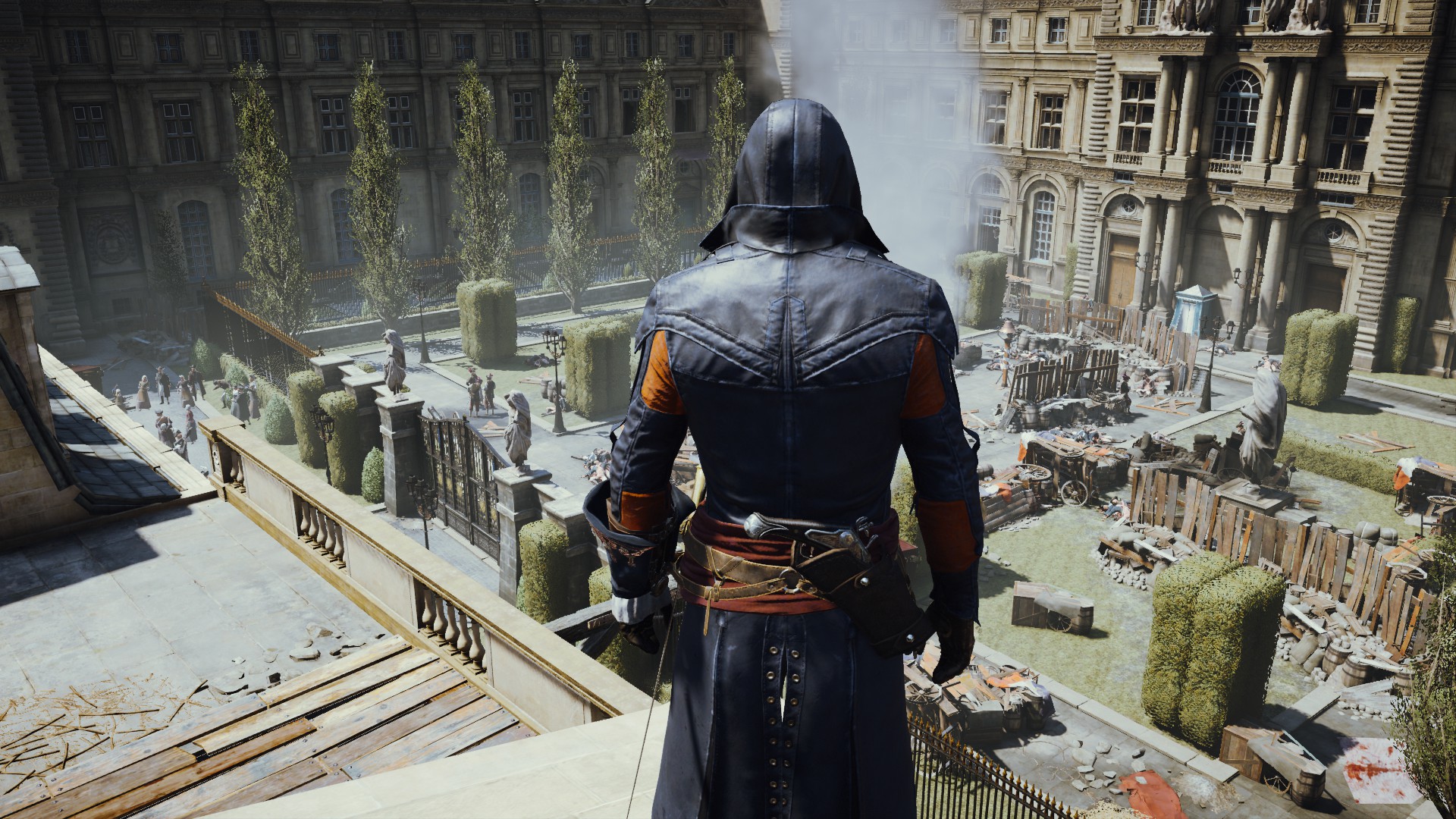
Amancio also shared some insights into his work on Assassin's Creed: Unity, which he says he would like to make differently if he could go back now. "When we began making Unity, two games started emerging. One game was a traditional Assassin's Creed game, with the main protagonist carving his path through the French Revolution, but we also wanted to make a co-op game:
"We found a clever way of hiding a character creation system within Assassin's Creed. Instead of having just one blood ancestor in the Animus, it's a database of millions of people, and you're searching for an ancestor. So the more you describe that ancestor, the more it reduces the search until you find a match."