10 of the coolest tech products we saw at CES 2026
Phones, robot vacuum cleaners, AI-powered headphones, and more.
We’ve kicked off the year with a visit to CES 2026, where companies from all over the world gathered to showcase their latest tech products. From new phones and TVs to robots and handheld gaming consoles, there’s a lot to see.
However, some of these products grabbed more attention than others. Here are the 10 coolest ones we saw at the show in Las Vegas.
Sylvox Frameless Pro is the king of outdoor entertainment
Paul Jones / Android Authority
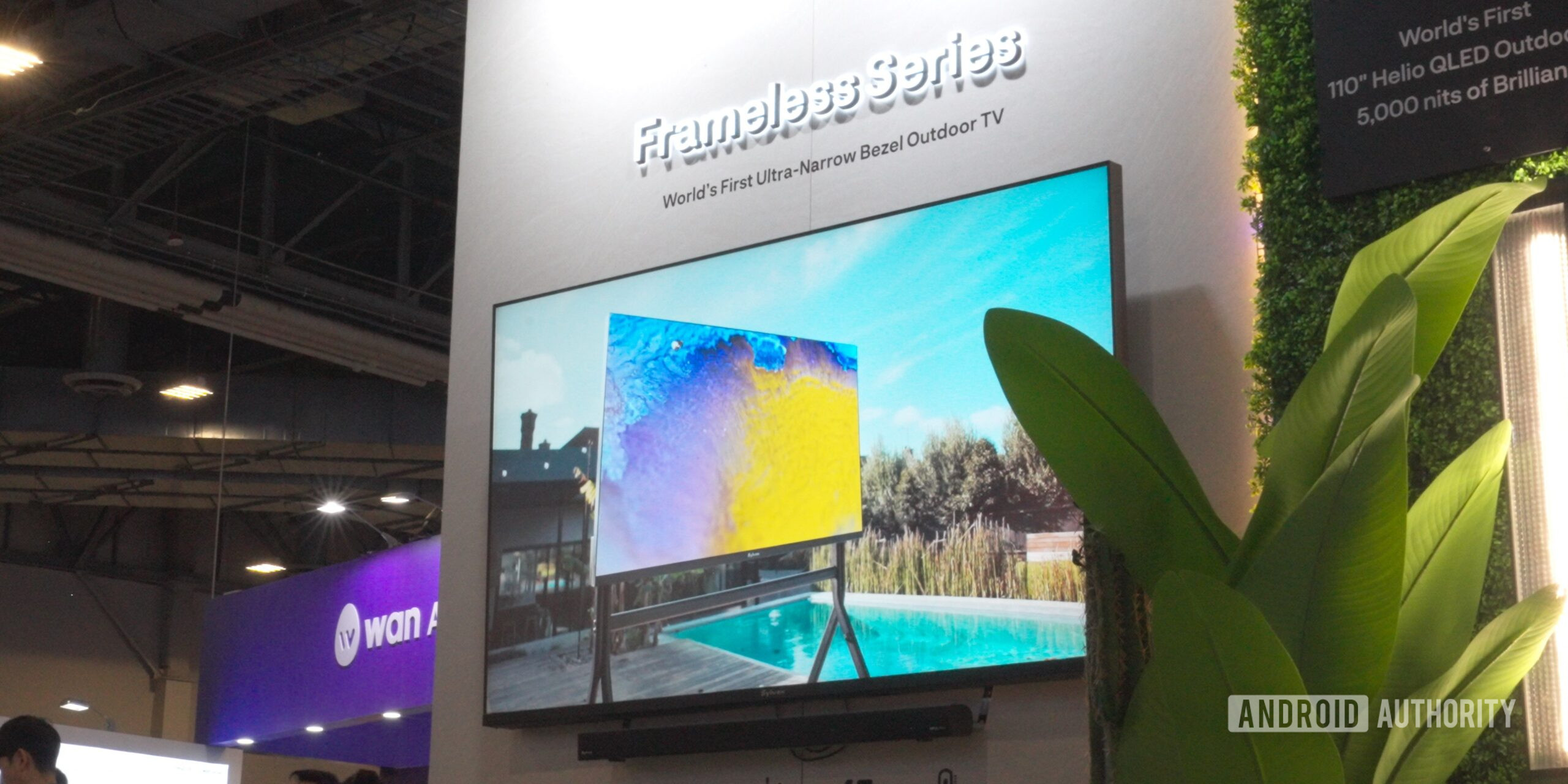
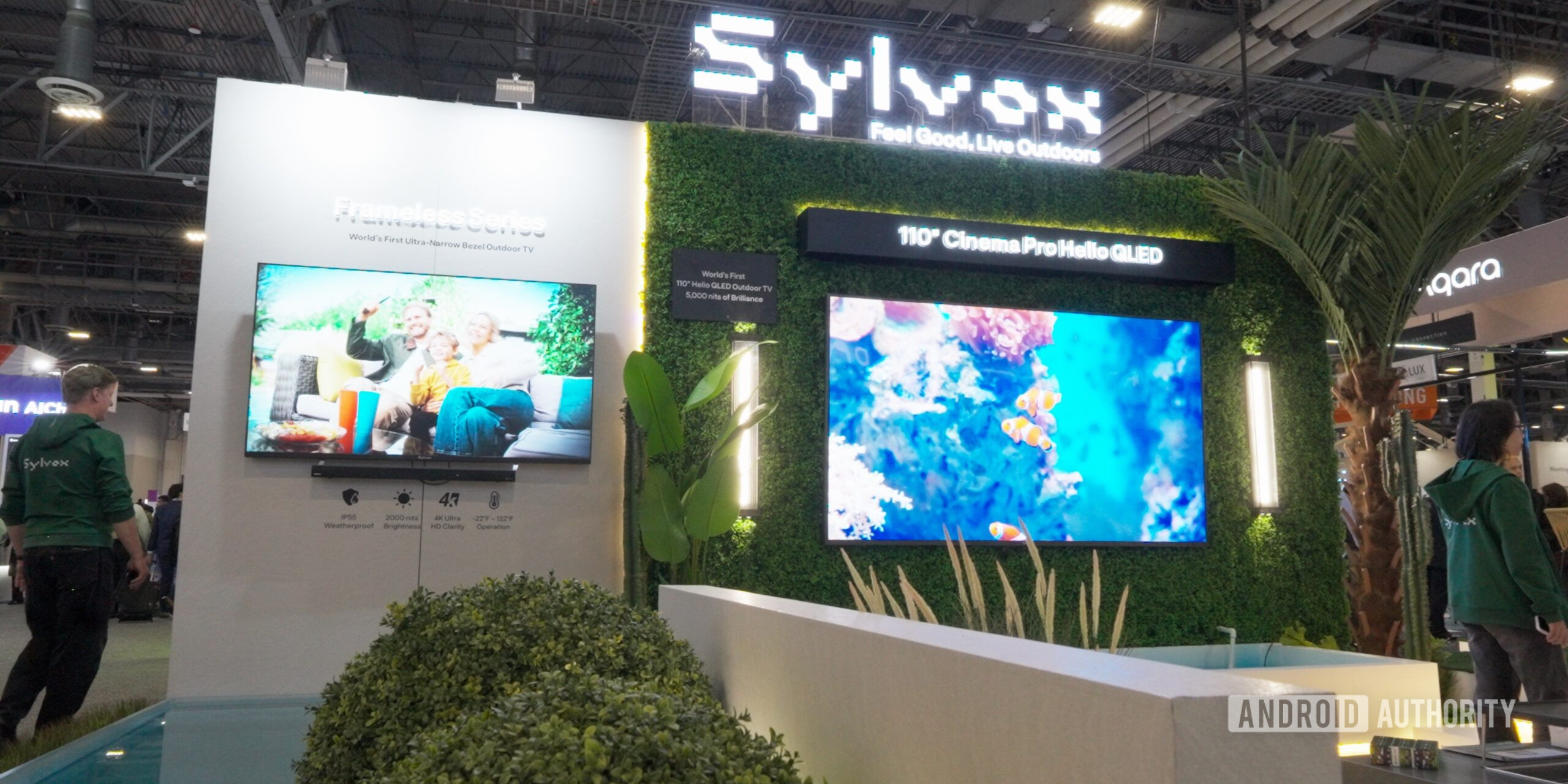
We were very impressed with Sylvox’s booth at CES 2026, as the company managed to create an outdoor-living world inside the hall. They did it to showcase the world’s first frameless outdoor TV, which features a 95% screen-to-body ratio, allowing it to visually blend into its surroundings. You can place it on a terrace, in a courtyard, or in a refined patio space, and it becomes part of the architecture rather than a distraction.
And it isn’t just beautiful. It’s built to live outside full-time, enduring temperatures ranging from -22°F to 122°F. It can handle humidity, dust, and rain like a boss. It delivers sharp 4K visuals with up to 2,000 nits of brightness and anti-glare features, so the picture stays crystal clear outdoors. It’s a great option for individuals who value both looks and performance.
We were able to see firsthand how big of a difference there is between standard indoor TVs and those made by Sylvox that are designed for outdoors. We saw a water test, where a TV kept running happily under flowing water. We also saw the difference in outdoor visibility between a Sylvox TV and a standard indoor TV, most of which max out at 350 nits of brightness, making them less than ideal for watching under intense light.
Paul Jones / Android Authority
The Frameless Pro isn’t the only thing the company announced. We also got to see the company’s flagship product, the Cinema Pro. It’s a massive 110-inch outdoor theater experience powered by Helio QLED. It combines Mini LED backlighting with Quantum Dot color for intense contrast, deep blacks, and vibrant color, and reaches up to 5,000 nits.
Outdoor TVs are still new to many people. But after stepping inside this booth, it became clear that Sylvox is making technology that doesn’t just survive outside, but belongs there.
Mammotion LUBA 3 AWD and SPINO S1 Pro will save you time
Edgar Cervantes / Android Authority
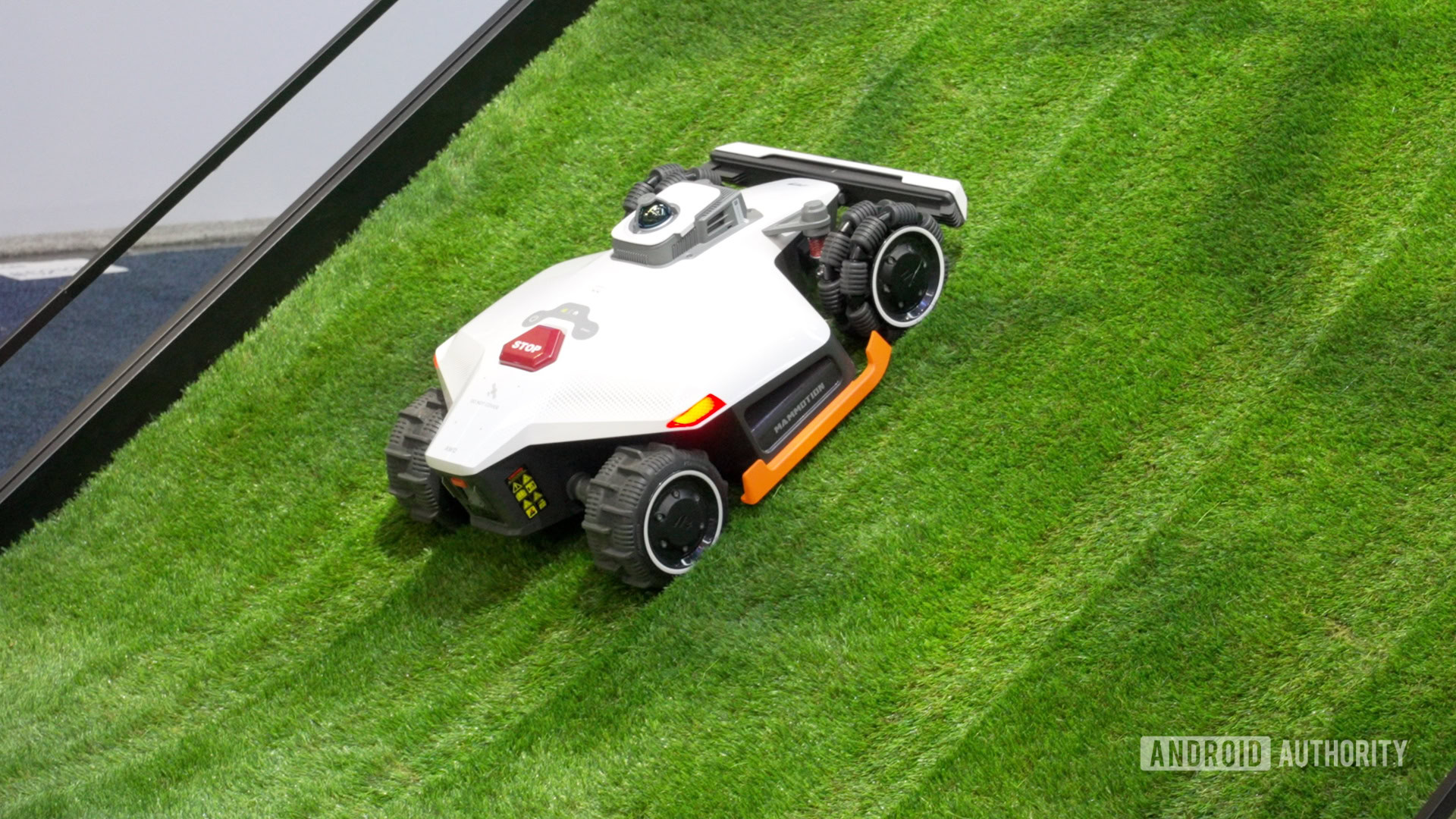
Mammotion is the biggest global brand in the wire-free lawn mower category according to research firm Frost & Sullivan, and for good reason. A few of their products caught our eye at CES 2026, with one of them being the LUBA 3 AWD — the new generation of the company’s flagship LUBA AWD series.
One of the most impressive things about this product is that it features the world’s first Tri-Fusion Navigation System. It combines 360° LiDAR, dual-camera AI vision, and NetRTK for centimeter-level precision in any terrain, weather, or lighting. And thanks to its four independent motors, the LUBA 3 AWD can handle slopes up to 80%.
This robotic lawn mower offers a 15.8-inch cutting width, dual 6-blade cutting disks, two 165W motors, and a 15Ah max battery with fast charging capabilities. And to top it off, it can mow up to 1.75 acres a day.
Mammotion
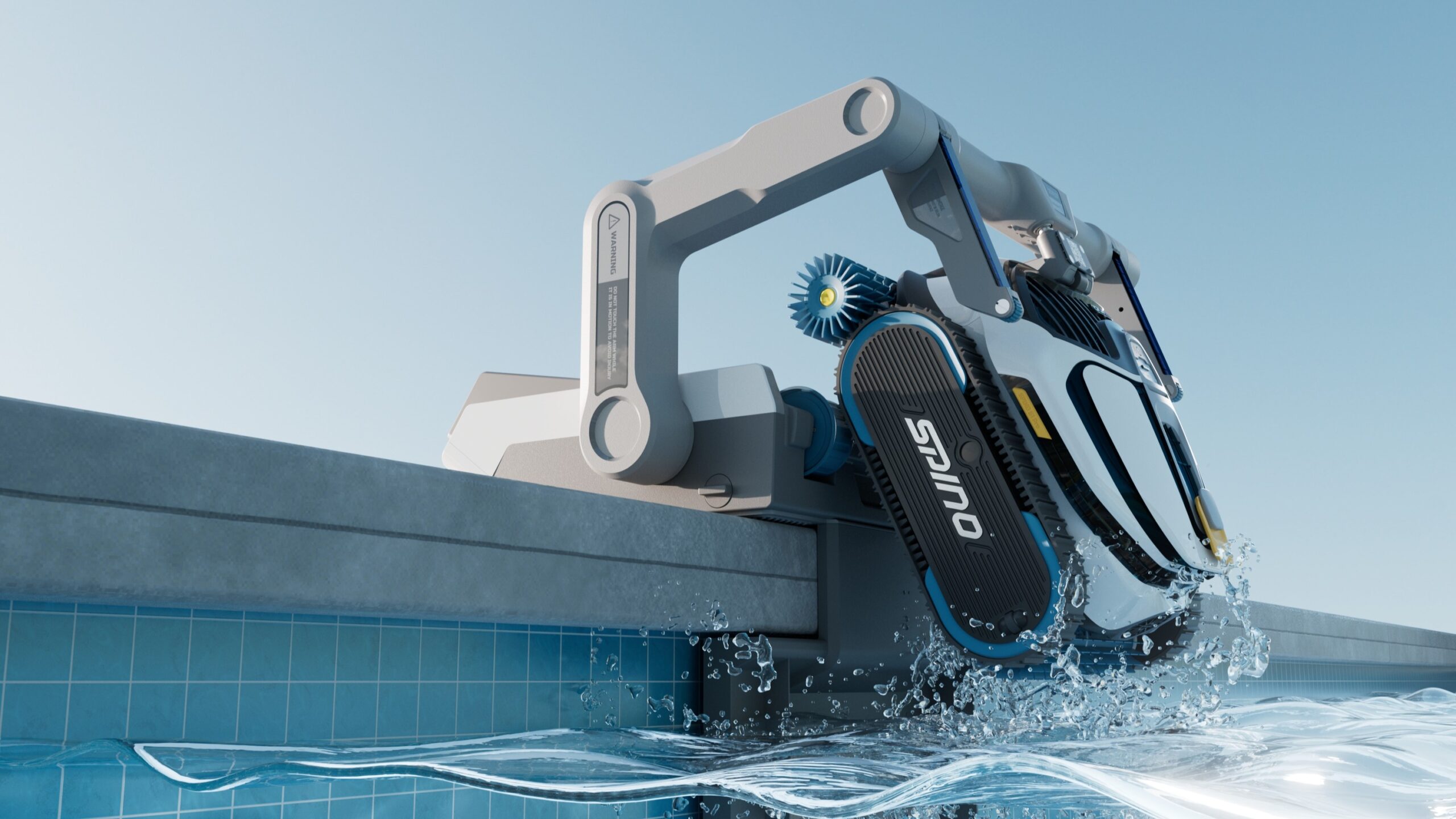
In addition to the LUBA 3 AWD, we were also impressed with the SPINO S1 Pro — a game-changing robotic pool cleaner with several impressive features. The coolest one just might be the automatic shore landing. Thanks to a robotic arm, users won’t have to pull the robot out of the pool to charge it. It will all be done automatically, which is a world first.
The SPINO S1 Pro also offers superior mobility compared to its competition. It has five brushless motors and caterpillar threads, which means it can handle almost anything, including slopes, corners, and curves. Thanks to its AI-vision camera and multi-sensor fusion, the SPINO S1 Pro can identify the underwater environment, spot dirt, detect pool edges, identify step contours, and then adjust cleaning paths with targeted repasses.
At CES 2026, Mammotion didn’t just announce new products, but also showed us a vision for intelligent, autonomous modern living, where robotic solutions give you back what matters most: your time and your focus on life.
XGIMI’s new AI glasses are light and customizable

C. Scott Brown / Android Authority
XGIMI took the wraps off the Memo One AI glasses under its new MemoMind sub-brand. They are designed to prioritize all-day comfort, so they are very light and don’t feel intrusive. What makes them interesting is that they are powered by a multi-LLM hybrid OS that automatically selects the most suitable AI model based on the task at hand. The AI models in question include OpenAI, Azure, and Qwen.
There’s a lot these glasses can do. They can handle tasks like translation, summarization, reminders, note-taking, and even contextual guidance. The battery is said to last a full day of use, and the included charging case extends its use for up to a week. They also feature dual-eye displays, built-in speakers, and can be customized to your personal taste with eight different frame styles.
These aren’t the only smart glasses the company announced at CES, though. It also revealed the Memo Air Display, which aren’t as feature-packed and only come with a single-eye (monocular) display. We don’t know how much these will cost yet, but we do know the Memo One model will set you back around $600.
TCL NOTE A1 NXTPAPER combines the best of both worlds
Edgar Cervantes / Android Authority
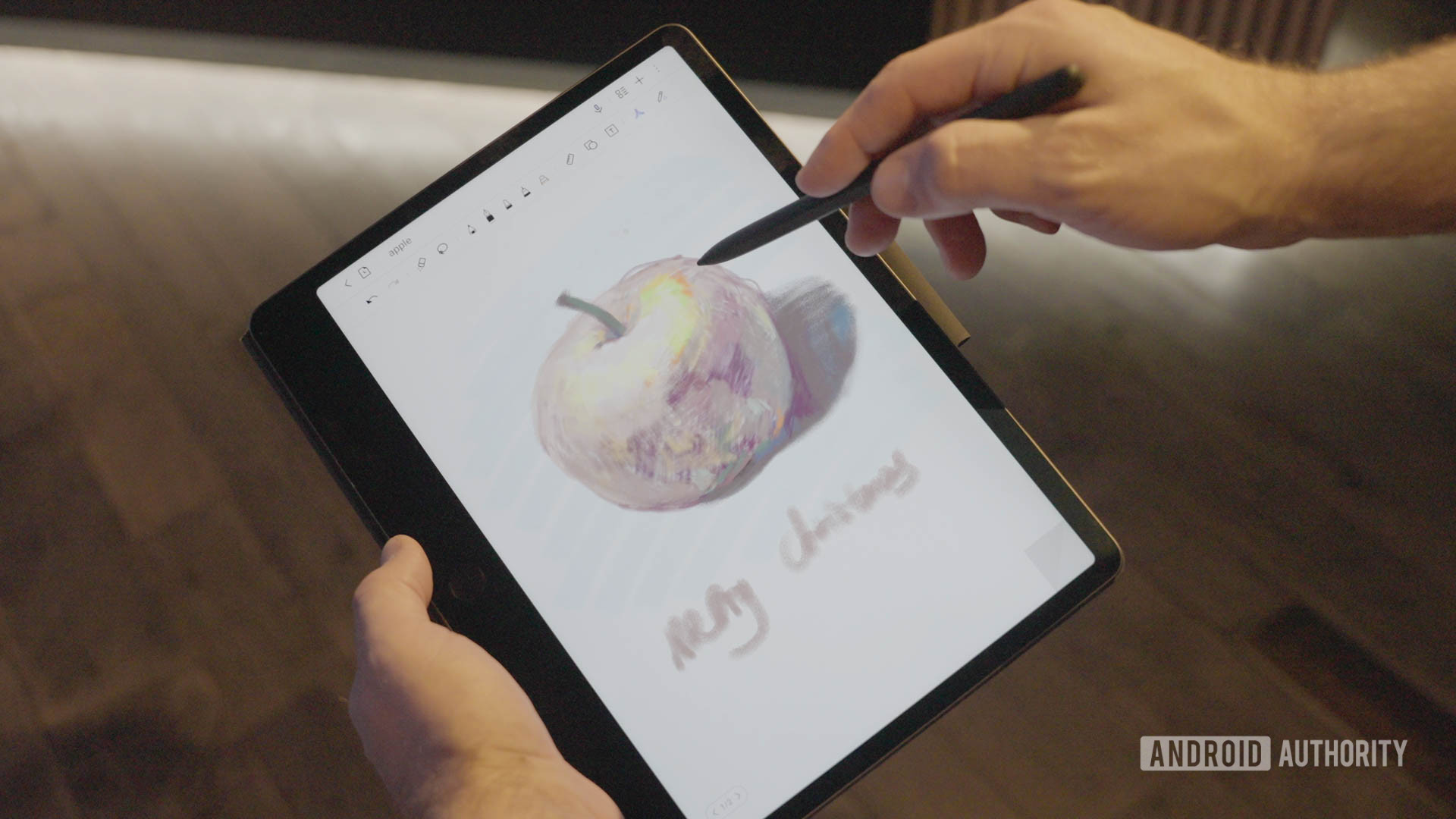
Most E-Ink tablets are fantastic for reading and note-taking, but feel sluggish for everything else. Standard Android tablets are powerful, but their glossy screens are battery hogs and harsh on the eyes. TCL’s NOTE A1 NXTPAPER sits perfectly in the middle: it’s a hybrid device that offers the speed of a tablet with the paper-like comfort of an e-reader.
The secret is TCL’s 11.5-inch NXTPAPER Pure display. To be clear, this isn’t traditional E-Ink — it’s a specialized matte LCD that eliminates glare and blue light while retaining a smooth 120Hz refresh rate and full color. This means you get a flicker-free, reflection-resistant experience that is TUV-certified for eye comfort, without the lag usually found on E-Ink devices.
Under the hood, it packs a MediaTek G100 processor, 8GB of RAM, and 256GB of storage. It’s incredibly portable at just 5.5mm thick and 500g, yet still fits an 8,000mAh battery with 33W fast charging.
A T-Pen Pro stylus is included in the box for all your sketching needs, and security is handled by a front-mounted fingerprint scanner. The device is set to launch in late February for $549, though early adopters can snag it for less on Kickstarter right now.
Roborock Saros Rover can walk up stairs
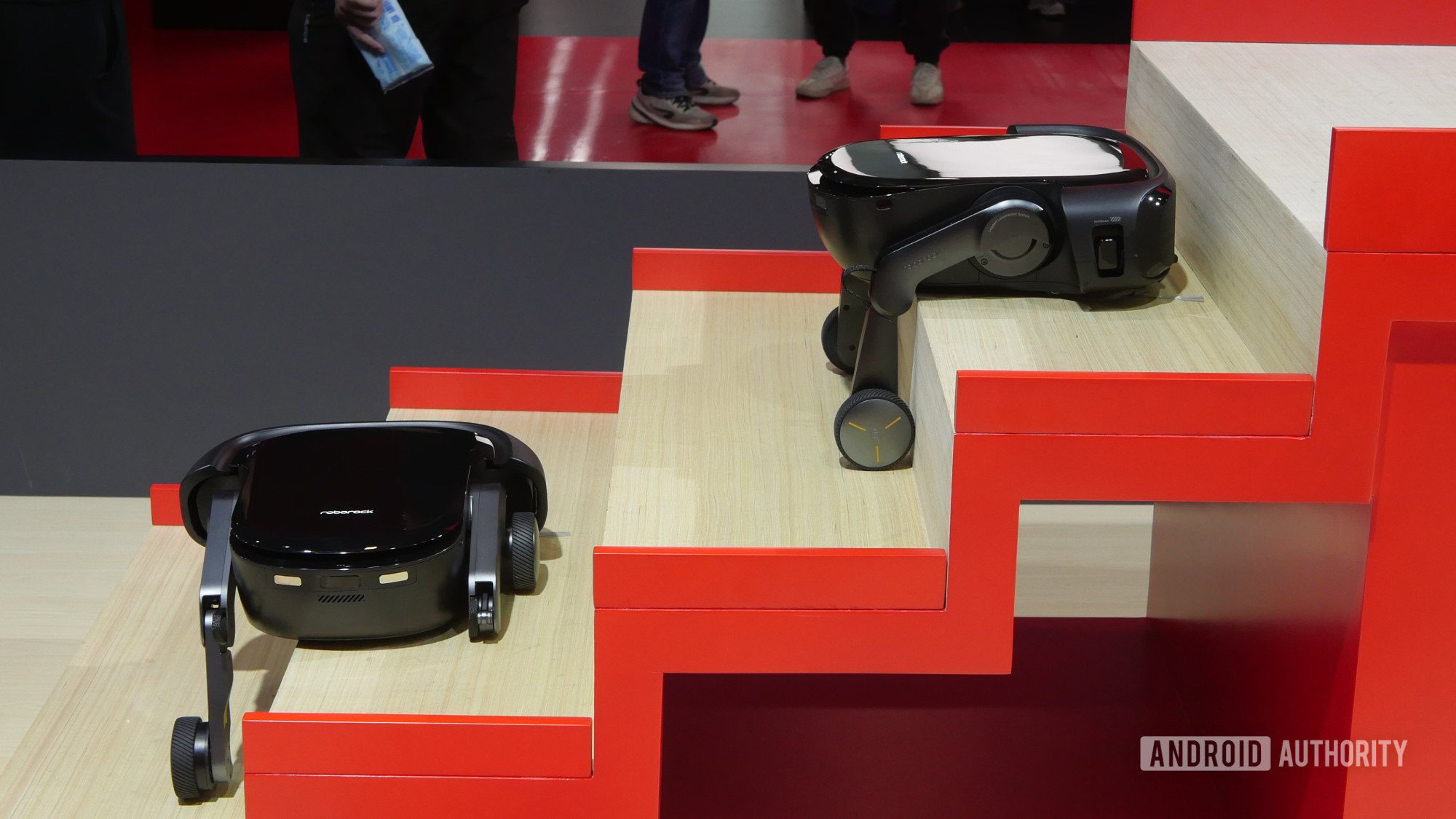
At CES 2026, Roborock gave us a glimpse into the future of automated cleaning. The Roborock Saros Rover isn’t just designed for your ground floor; it can actually climb stairs and clean the floors above as well.
Granted, this isn’t the first stair-climbing robot we’ve seen, but Roborock’s solution is far more practical than those from competitors like Eufy and Dreame. Instead of relying on a separate shell that carries the robot upstairs, the Saros Rover features a pair of hinged legs with wheels. These allow it to climb up a staircase, even if it’s curved.
Stephen Schenck / Android Authority
What’s more, the Saros Rover actually cleans each step as it ascends, which is a feature the competition can’t match at this moment. It’s impressive how balanced the robot remains when perched on its two legs, all thanks to Roborock’s software that runs on the device.
Now for the bad news. The Saros Rover is still in development, so you can’t get it yet. However, Roborock has confirmed this isn’t just a concept — the device will be released. There’s no word on a specific launch date yet, and while pricing remains a mystery, you can bet it will cost a pretty penny.
HyperShell X Ultra will keep you moving

Ryan Haines / Android Authority
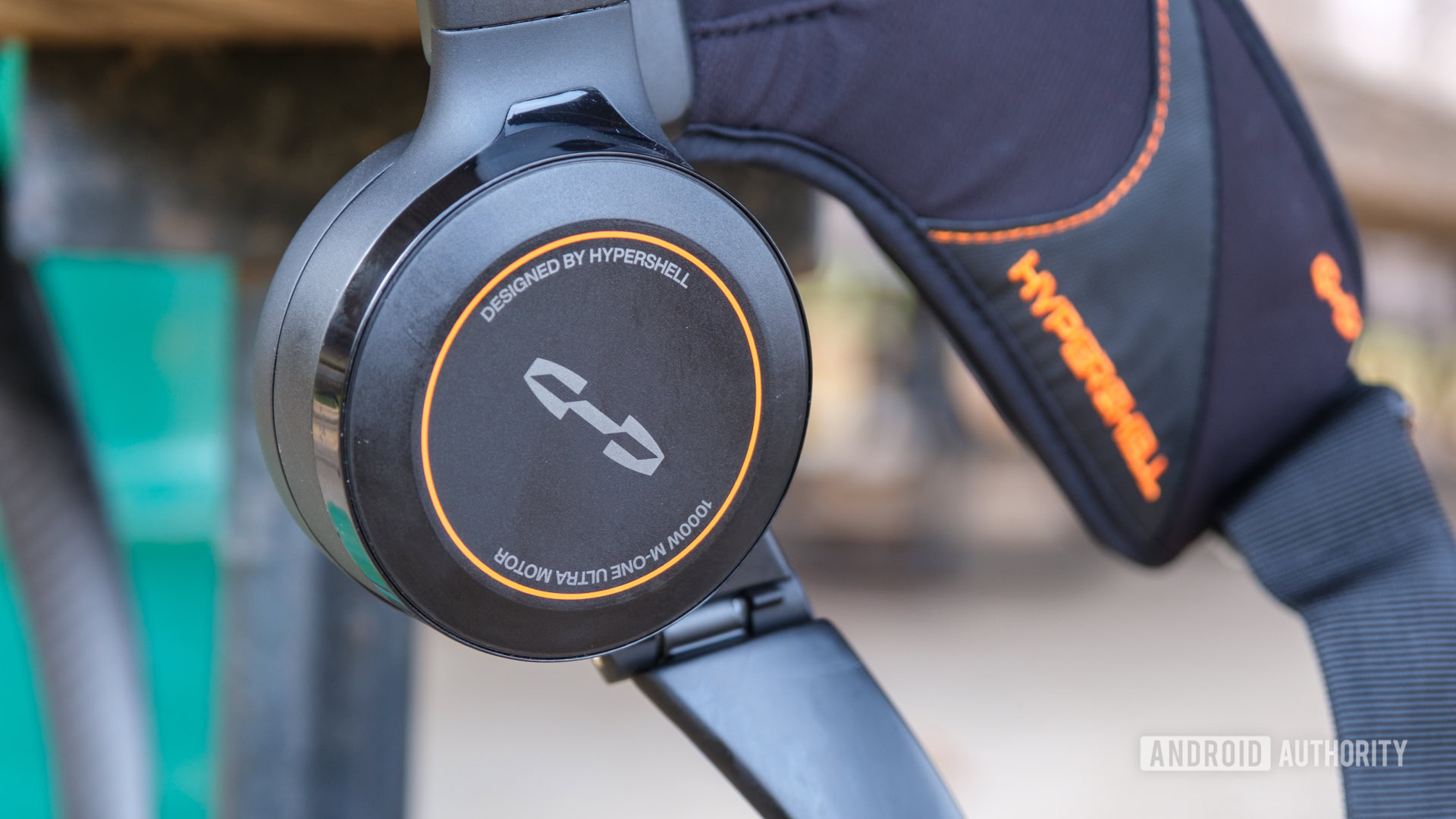
At CES 2026, HyperShell showed off its wearable exoskeleton called the X Ultra. It’s designed to help your legs feel lighter, reduce fatigue, and keep you moving comfortably, even when you are covering serious distances.
The X Ultra is HyperShell’s flagship model and features a lightweight carbon and titanium build, a powerful motor, and smart assistance that adapts to how fast you move. It also offers a long battery range and multiple modes for different environments. The experience feels natural instead of mechanical, so you just feel stronger and more supported while staying active.
Ryan Haines / Android Authority
We really liked how HyperShell demoed their product at CES. Instead of just showing them at its booth, the company actually handed out 100 units directly to select journalists and influencers to wear while walking the endless CES halls. It also took people outside Las Vegas for the ultimate field test. Our team participated in a hike at Red Rock Canyon, so we could try the suits on real terrain and in real conditions. And let me tell you, the exoskeletons really made a difference.
At the show in Vegas, HyperShell proved that exoskeletons are ready for the real world and made us believe that 2026 could be a breakout year for wearable robotics.
Puwell Showmo MileFlask Kit is designed for remote environments
Paul Jones / Android Authority
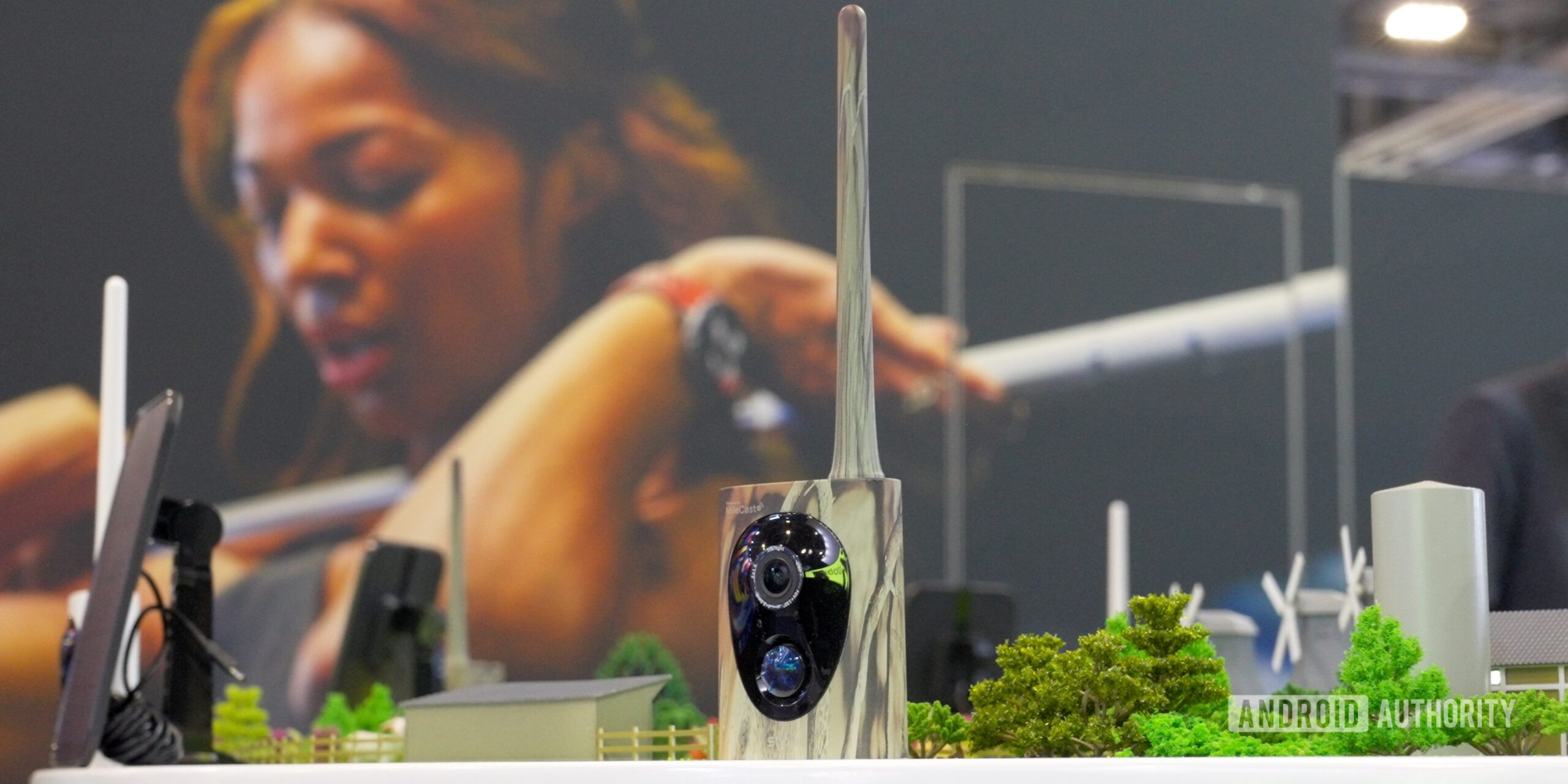
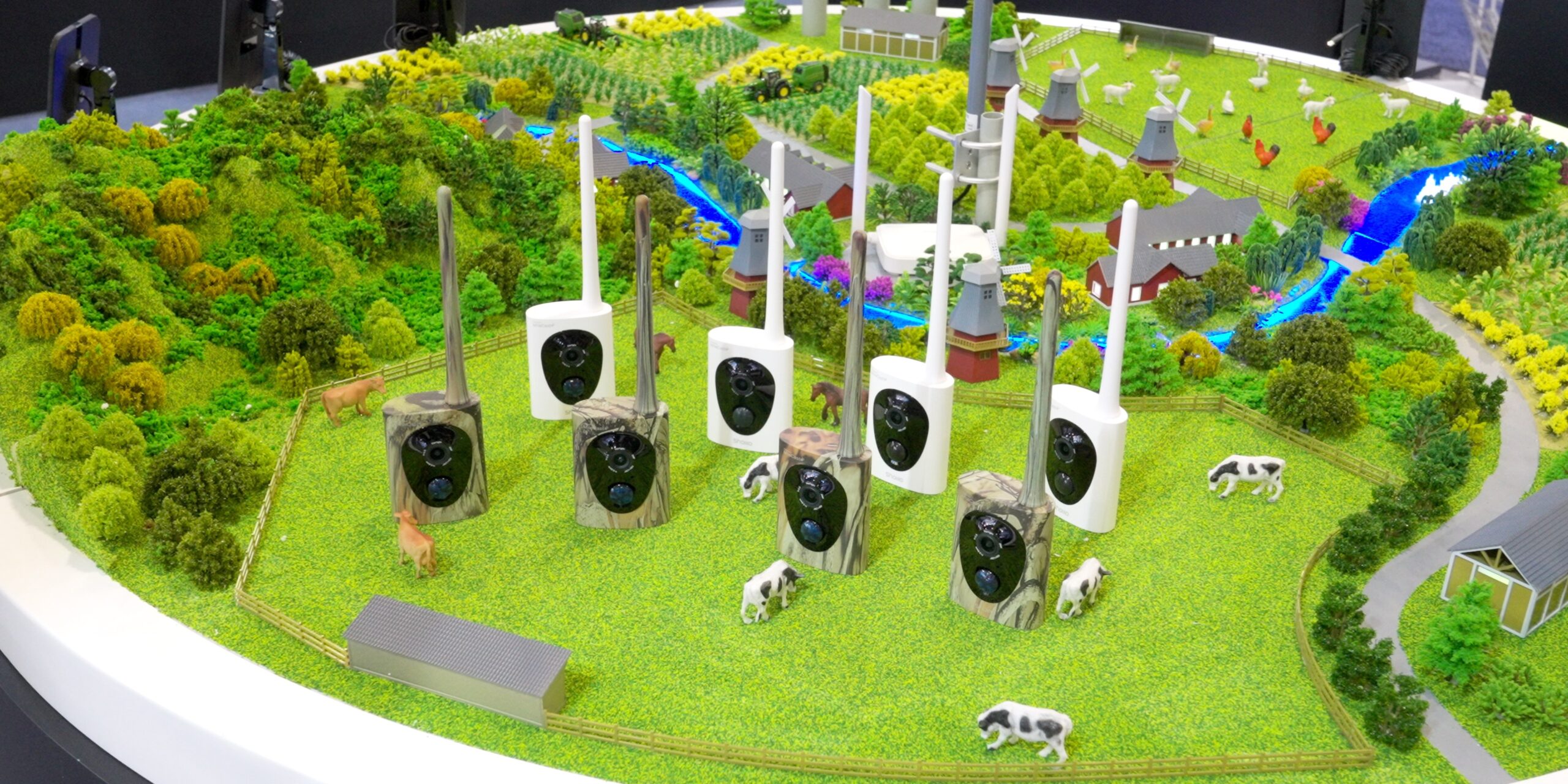
What happens when you want to keep an eye on your property but don’t have power or connectivity? This is where almost every smart camera or product falls apart, and it’s a problem Puwell’s Showmo MileFlask tech is built to solve.
It’s designed for truly remote environments like farms, ranches, and energy sites. The company’s outdoor cameras are rugged and solar-powered, so they work in just about any weather condition. All the footage is stored locally on an indoor base station, making sure the footage is accessible even if a camera gets stolen or damaged. And thanks to the company’s MileCast Plus Engine tech, it can deliver stable HD video transmission from up to one mile away.
Paul Jones / Android Authority
We spoke to the company’s CEO at CES, who stated that they are confident in this product because it has been battle-tested and validated in a real outdoor environment. We were able to see a livestream from one of the security cameras from a ranch half a mile away, and the transmission was very stable and clear thanks to the Wi-Fi HaLow technology that’s used.
The Showmo MileFlask Kit is built for people who want to keep an eye on their whole property, not just their driveway. If you own an estate in a rural area, this is the system for you.
Razer’s new headphones see the world around you
Razer took the wraps off its Project Motoko concept in Las Vegas, and we really liked what we saw. At first glance, they look like a standard pair of high-end Bluetooth headphones, but there’s much more than meets the eye.
These are AI-powered headphones equipped with built-in cameras that see the world around you to assist with daily tasks. Razer believes that headphones might actually be better suited for this job than smart glasses, and while the jury is still out regarding this, the concept does seem interesting.

Joe Maring / Android Authority
You trigger the assistant by saying “Hey, Motoko” and then ask whatever you need. Whether you have a general question, need walking directions, or want facts about a monument standing right in front of you, Motoko analyzes the visual data to give you an answer. The company confirmed that Project Motoko supports major AI platforms, including ChatGPT and Gemini, making it platform-agnostic.
Please note that this is still strictly a concept at this point. There’s no guarantee it will hit the market, and Razer could ditch the idea altogether. No pricing is available yet, but we’ll keep you updated if this sci-fi dream becomes a reality.
Lenovo’s gaming handheld with SteamOS
Ryan Haines / Android Authority
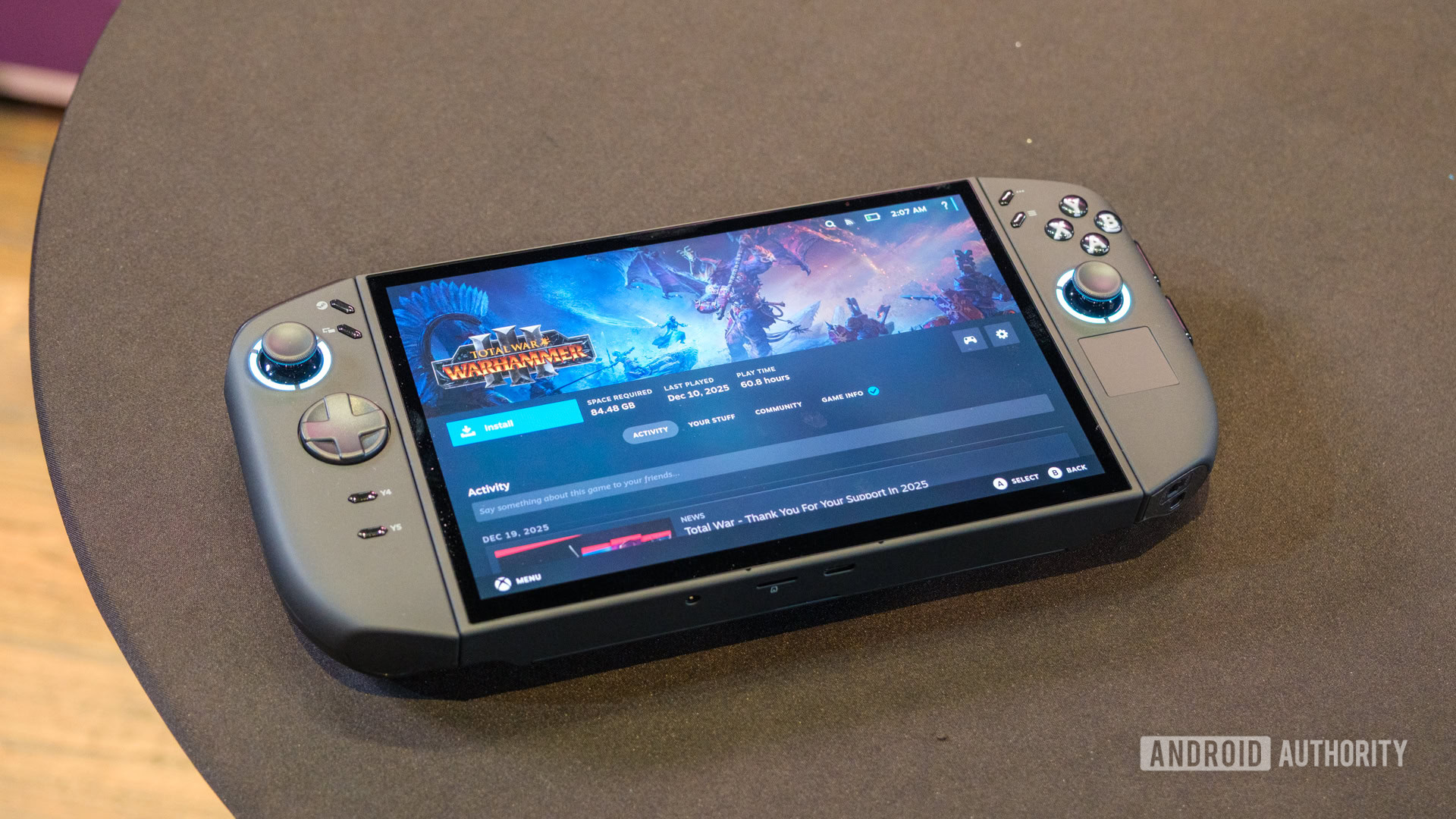
This one is for all you gamers out there. Lenovo announced a new version of the Legion Go 2 in Vegas, and the big news is that it’s powered by SteamOS. While the Windows variant of the handheld has been out for a while, this new model is strictly for those who want a more streamlined, console-like experience.
Outside of the software, the new model is the same as the Windows one. It’s powered by the AMD Ryzen Z2 Extreme processor, paired with up to 32GB of RAM and 2TB of storage. There is a microSD card slot on board if you need more storage.
The display is still a standout feature: an 8.8-inch screen with a 144Hz refresh rate, ensuring a buttery-smooth visual experience. It also keeps the detachable controllers with Hall effect joysticks, dual USB-C ports, and a massive 74Wh battery. Lenovo claims this is the most powerful handheld to natively ship with Valve’s operating system.
If you want one, you’ll have to wait until June — and be prepared to pay for the privilege. Interestingly, the SteamOS version is actually $150 more expensive than the standard Windows model, starting at $1,200.
Samsung Galaxy Z TriFold is the ultimate productivity phone
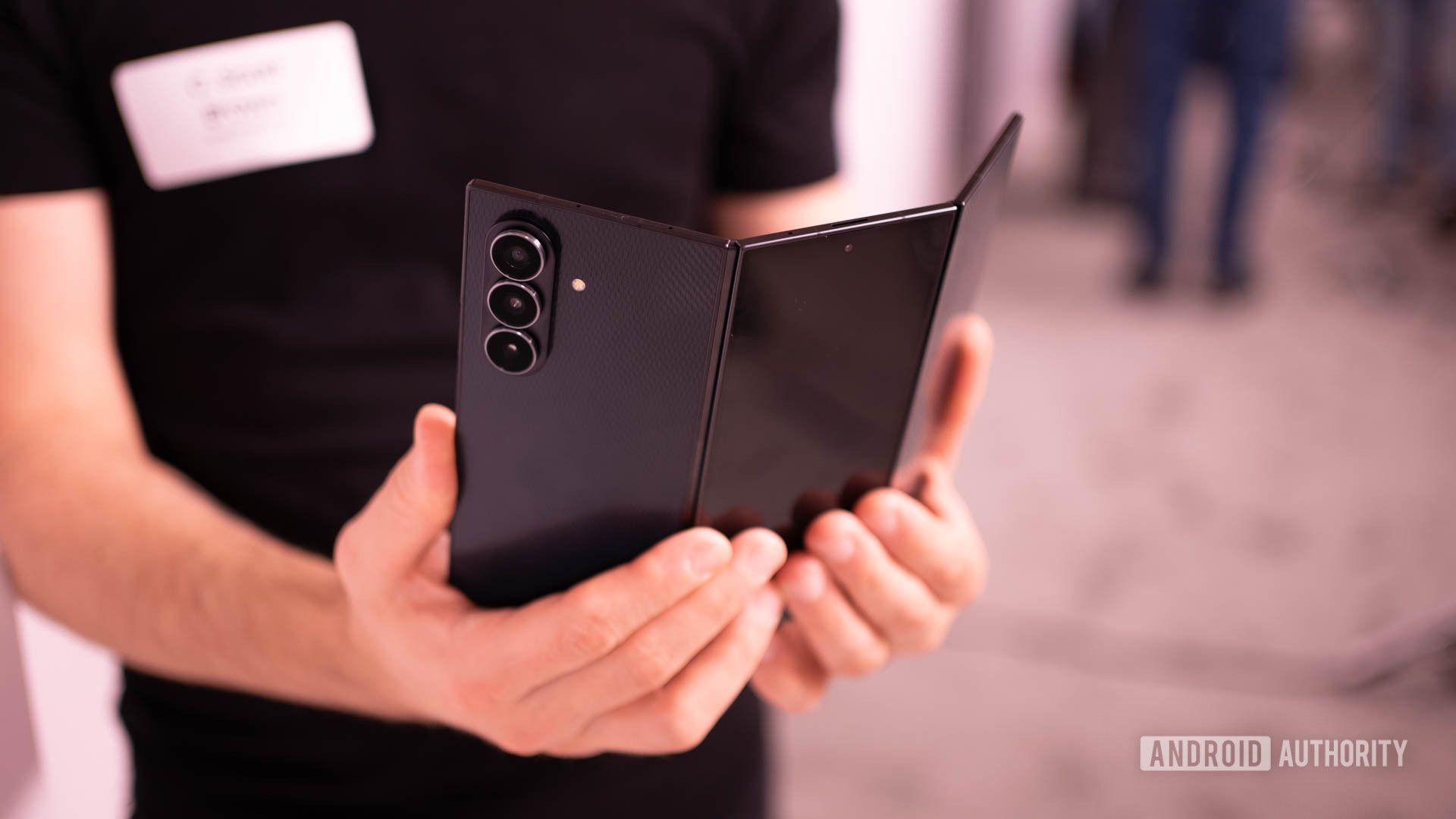
Samsung technically announced its first tri-fold smartphone last month in Korea, but it made its grand Western debut at CES 2026. This device truly blurs the lines between a phone and a tablet, featuring a massive 10-inch display that folds down into a standard 6.5-inch panel.
What’s interesting is the approach Samsung took with this device. While the phone physically has three 6.5-inch sections, it’s actually designed for two main modes: a compact phone (folded) with a single screen or a massive tablet (unfolded) that makes use of all three panels. It skips the “intermediate” mode found on competitors like the HUAWEI Mate XT.
As you would imagine, it’s a beast of a device. It’s powered by the Snapdragon 8 Elite Mobile Platform for Galaxy, paired with 16GB of RAM and up to 1TB of storage. It also packs a 5,600mAh battery with 45W wired and 15W wireless charging.
Lanh Nguyen / Android Authority
The complexity of the phone with two hinges comes with a catch, which is that there is a risk of folding it incorrectly. To combat this, Samsung included a smart auto-alarm system — if you start folding it the wrong way, the phone issues visual warnings and tactile vibrations to stop you before you cause damage.
In terms of design, the Galaxy Z TriFold is a marvel of contrasts. Unfolded, it is incredibly thin at just 3.9mm (slimmer than the 4.2mm Galaxy Z Fold 7). But folded up, it’s quite chunky at 12.9mm and weighs a hefty 309g.
It’s not a phone for everyone, but it showcases Samsung’s ambition to push the foldable industry forward. It is already available in South Korea and is expected to hit the US market in the first quarter of this year.
This article contains sponsored content. We thank our partners Sylvox, Mammotion, HyperShell, and Puwell for their support at CES 2026.
Follow