13 must-see moon events in 2026: Eclipses, supermoons, conjunctions and more
SOURCE:Space.com|BY: Jamie Carter
Here are the best lunar events to see in 2026, including eclipses, supermoons and conjunctions.
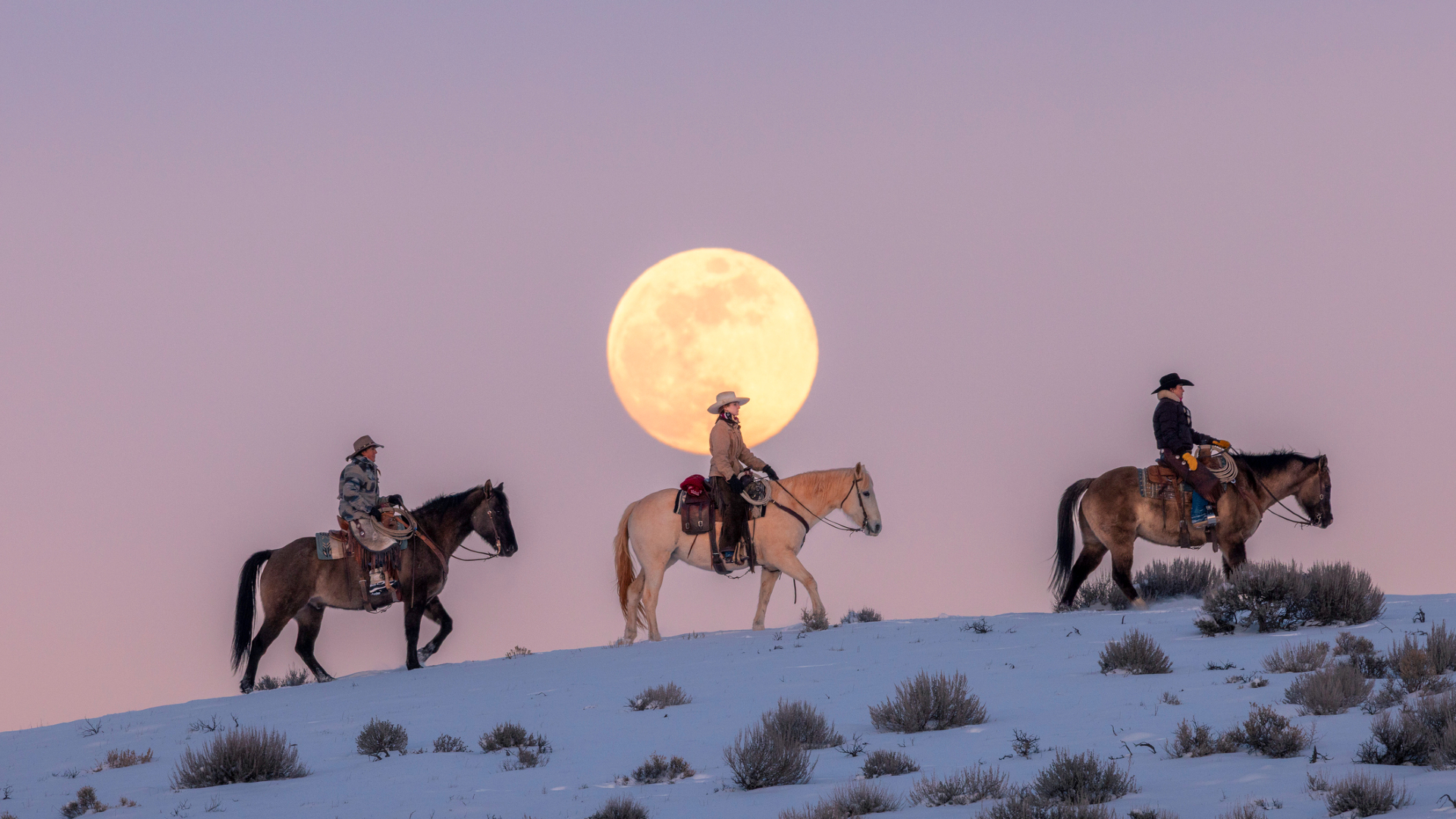
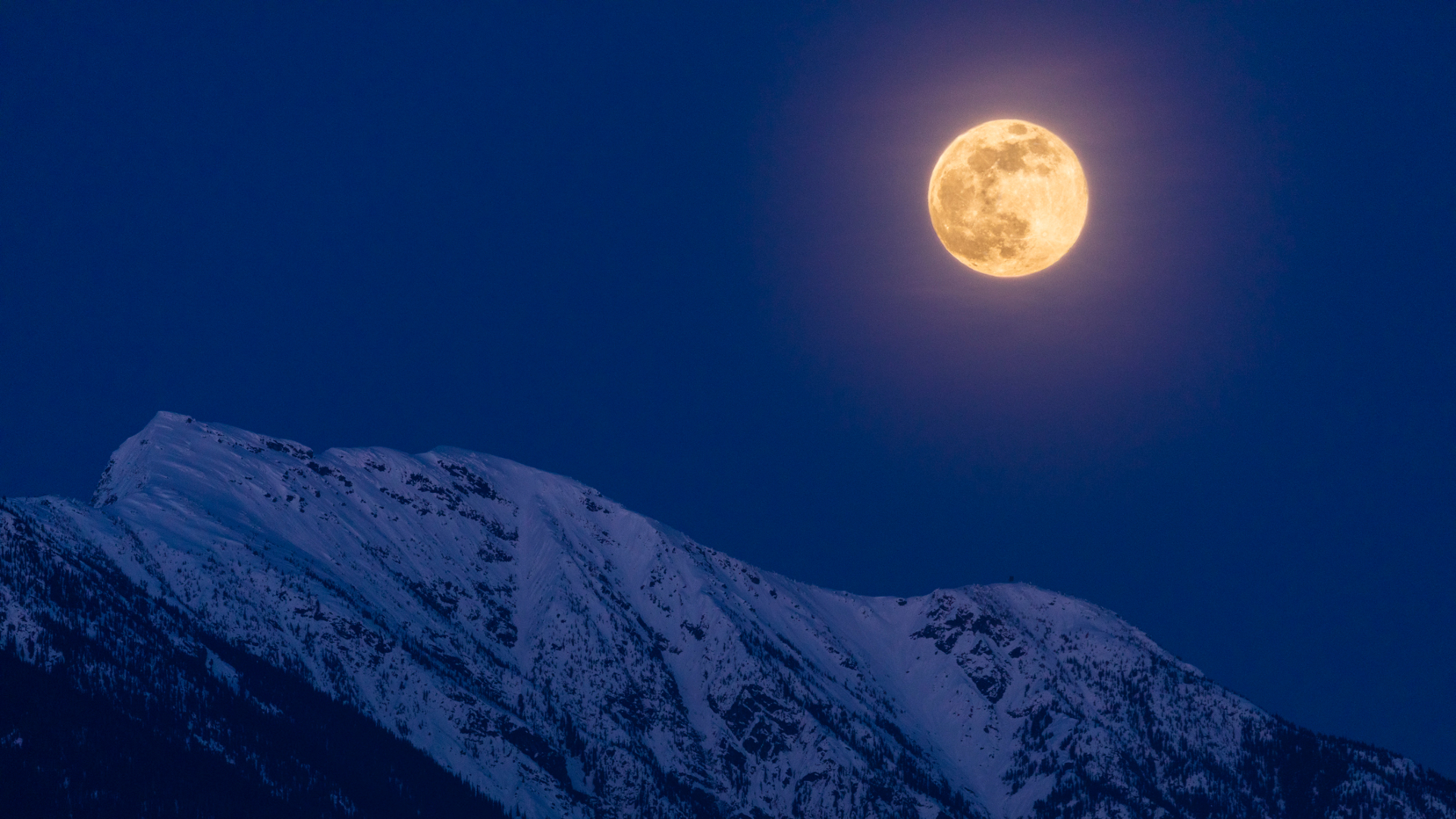
Two winter supermoons will bookend 2026. (Image credit: RichVintage/Getty Images)
A bevy of supermoons, a dramatic total solar eclipse and a "blood moon" total lunar eclipse are some of the highlights of the coming lunar year, which will also include plenty of beautiful close conjunctions of the crescent moon and planets.
Here are some dates for this year's moon-gazing diary.
1. The year's first supermoon: Jan. 3, 2026 (dusk)
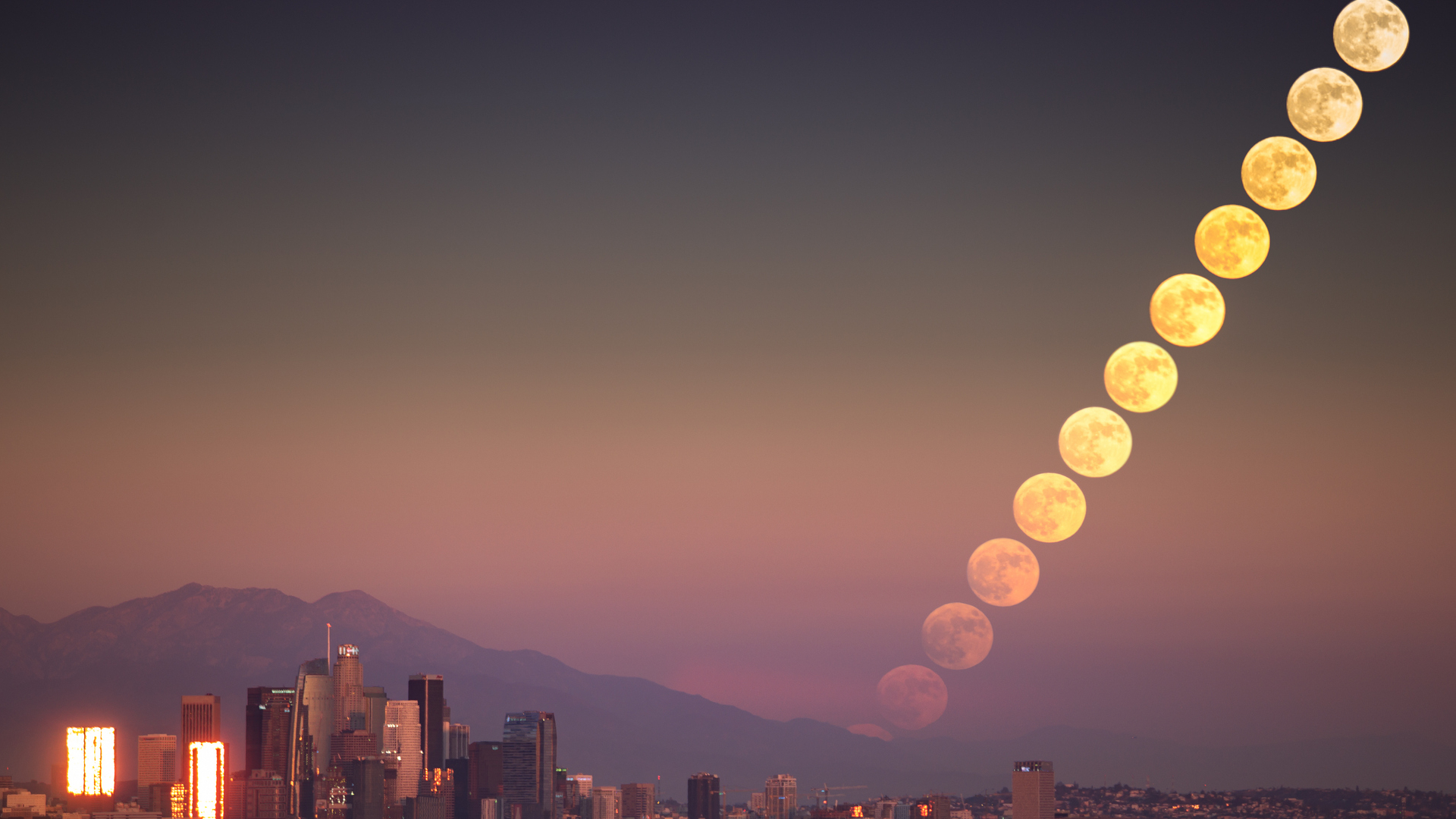
See a supermoon on Jan. 3, 2026. (Image credit: Hal Bergman via Getty Images)
The first full moon of 2026, January's Wolf Moon, will be a supermoon, meaning it will appear larger and brighter because it will be at or near its closest point to Earth in its elliptical orbit. Although it's the first of three supermoons in 2026, it's the last in a series of four from the back end of 2025.
2. "Ring of fire" annular solar eclipse: Feb. 17, 2026 (daytime)
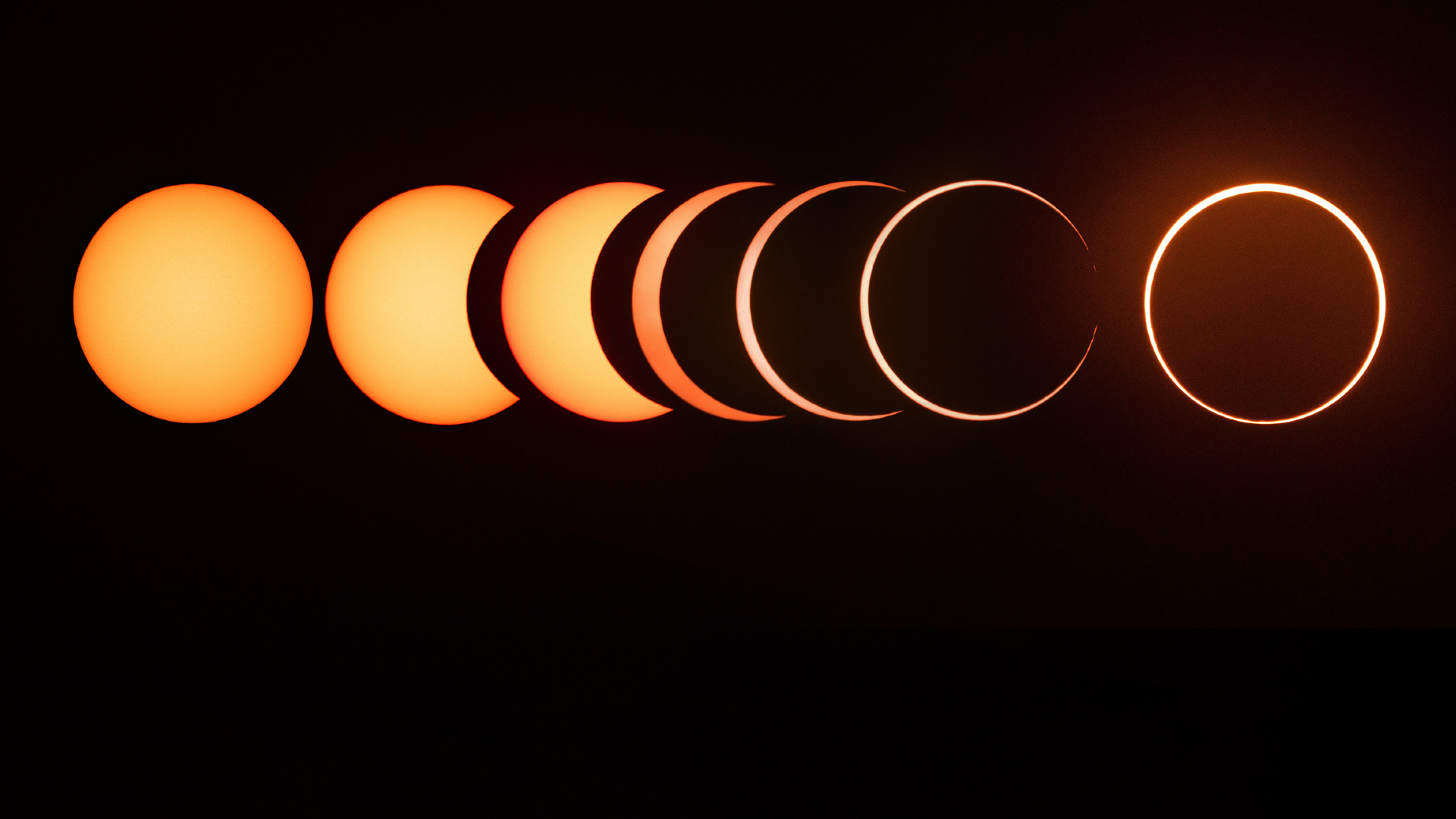
An annular solar eclipse will occur on Feb. 17, 2026. (Image credit: goh keng cheong via Getty Images)
Will anyone be able to see the "ring of fire" annular solar eclipse on Feb. 17, 2026? The moon will eclipse up to 96% of the sun's center for up to 2 minutes, 20 seconds, but only for scientists at a few research stations — the French-Italian Concordia Station in the interior and the Russian Mirny Station in Queen Mary Land on the Davis Sea coast. A partial solar eclipse will be seen across Antarctica and from parts of southern Africa and Argentina.
Crescent moon and Mercury: Feb. 18, 2026 (after sunset)
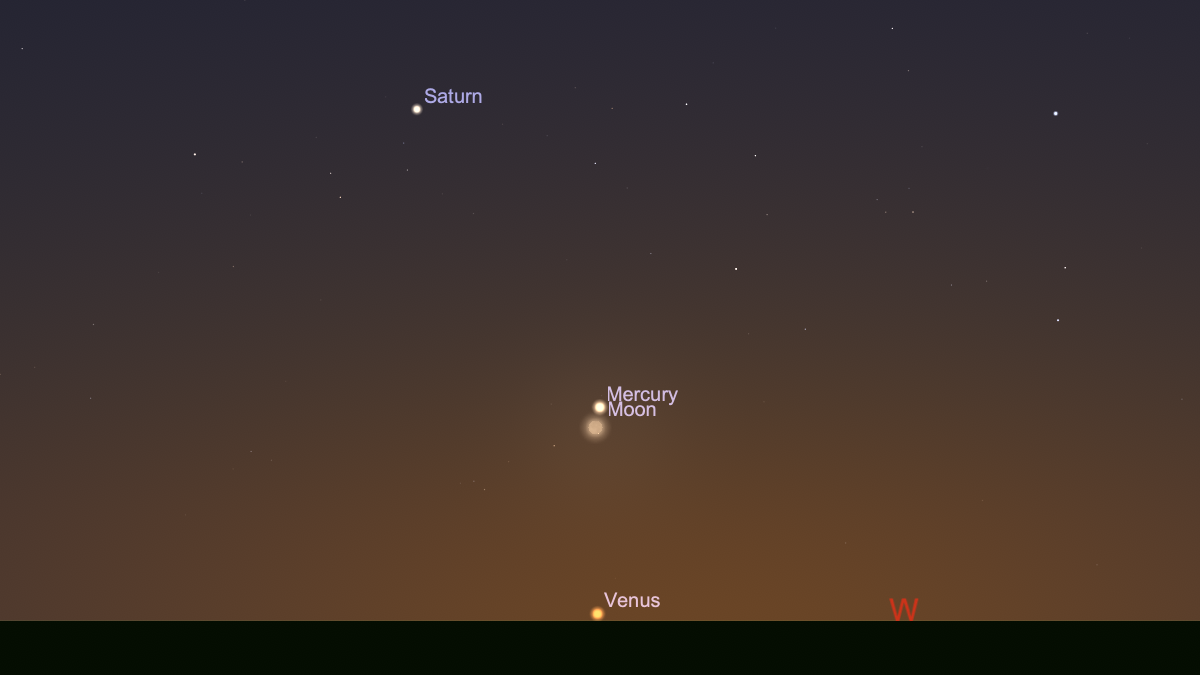
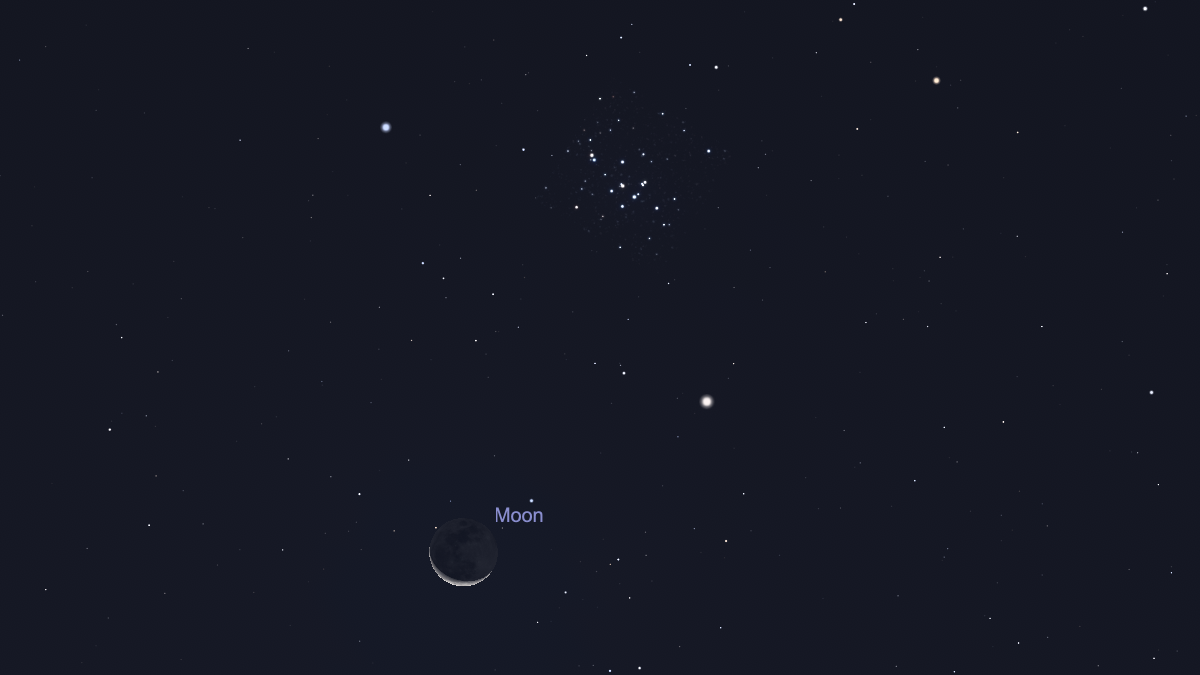
See a young moon and Mercury on Feb. 18, 2026. (Image credit: Stellarium)
About 45 minutes after sunset on Feb. 18, something relatively rare will be on show: a conjunction between a superslim crescent moon and the elusive planet Mercury. Visible low in the western sky, the moon will be barely 2%-lit, so you'll likely need binoculars to see it. Below will be Venus, with Saturn above.
Breaking space news, the latest updates on rocket launches, skywatching events and more!
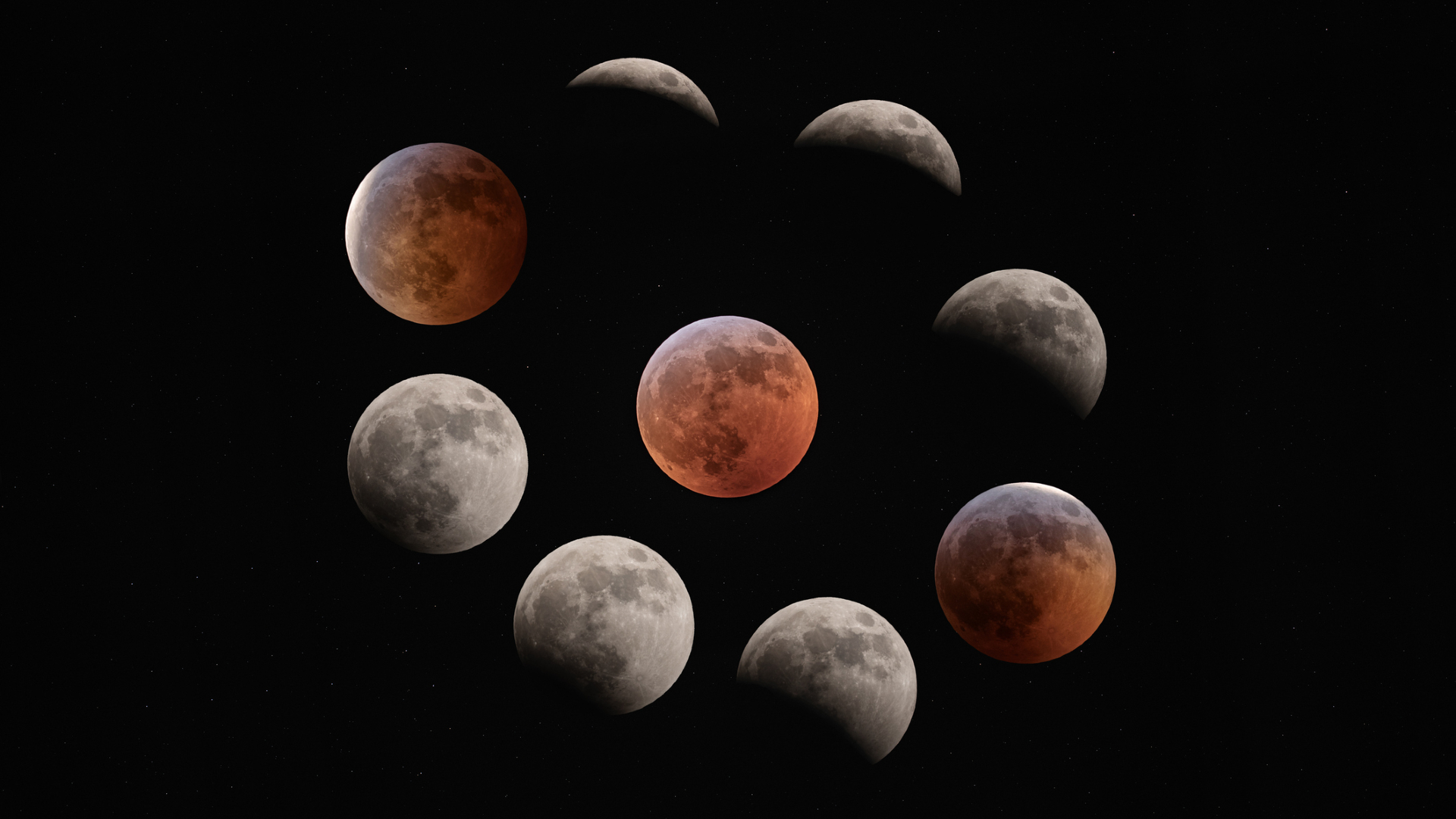
4. "Blood moon" total lunar eclipse: March 2-3, 2026 (night to early morning)
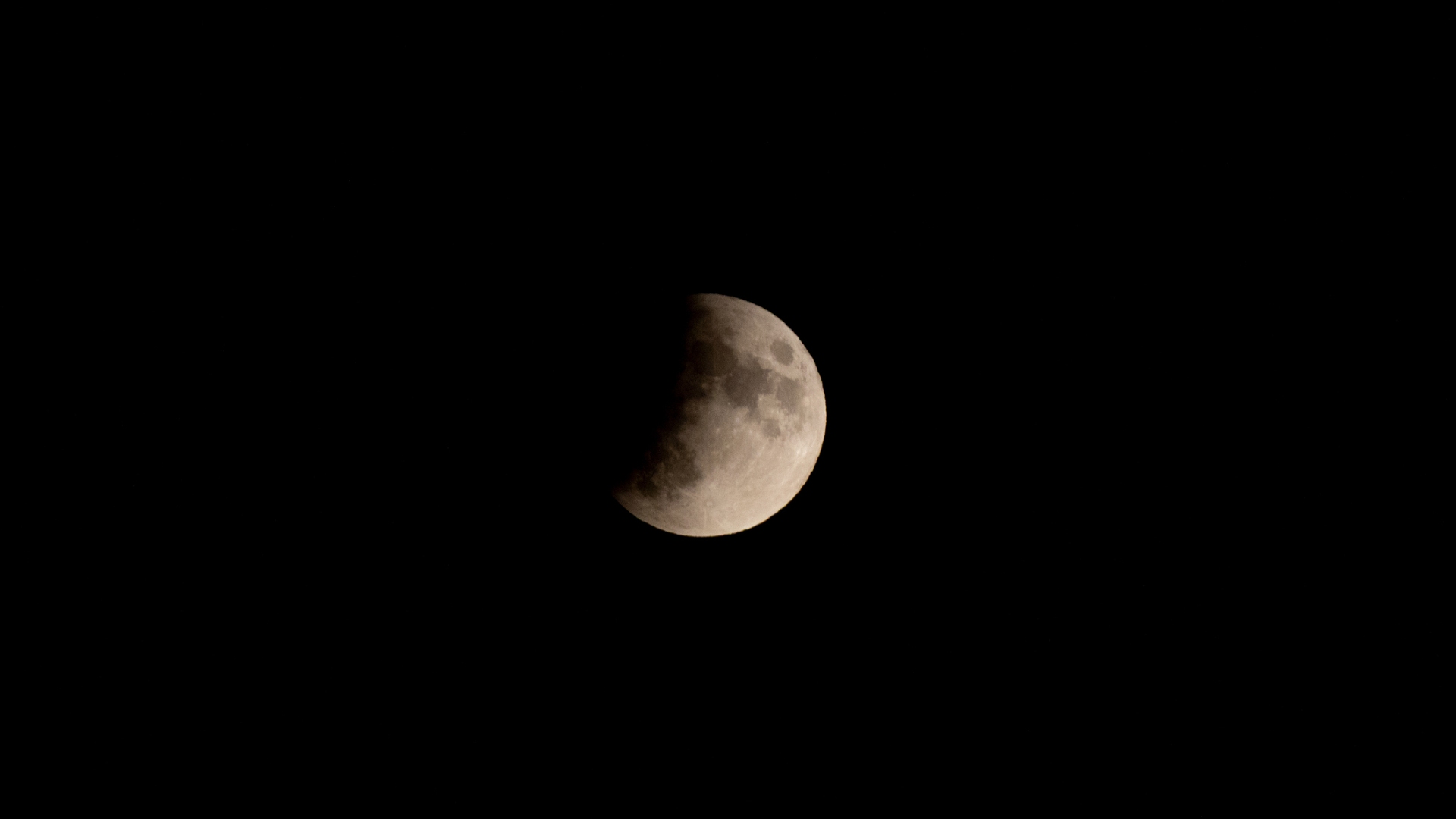
Don't miss the total lunar eclipse on March 2-3, 2026. (Image credit: Jonkman Photography via Getty Images)
Total lunar eclipses often come in threes. There were two in 2025, one of which wowed skywatchers in North America, and the final in the trio comes in early March 2026 — the last until 2029. During this event, the full Worm Moon will transit Earth's shadow to become a reddish-orange "blood moon" for 58 minutes as seen from parts of western North America, Australia, New Zealand, East Asia and the Pacific.
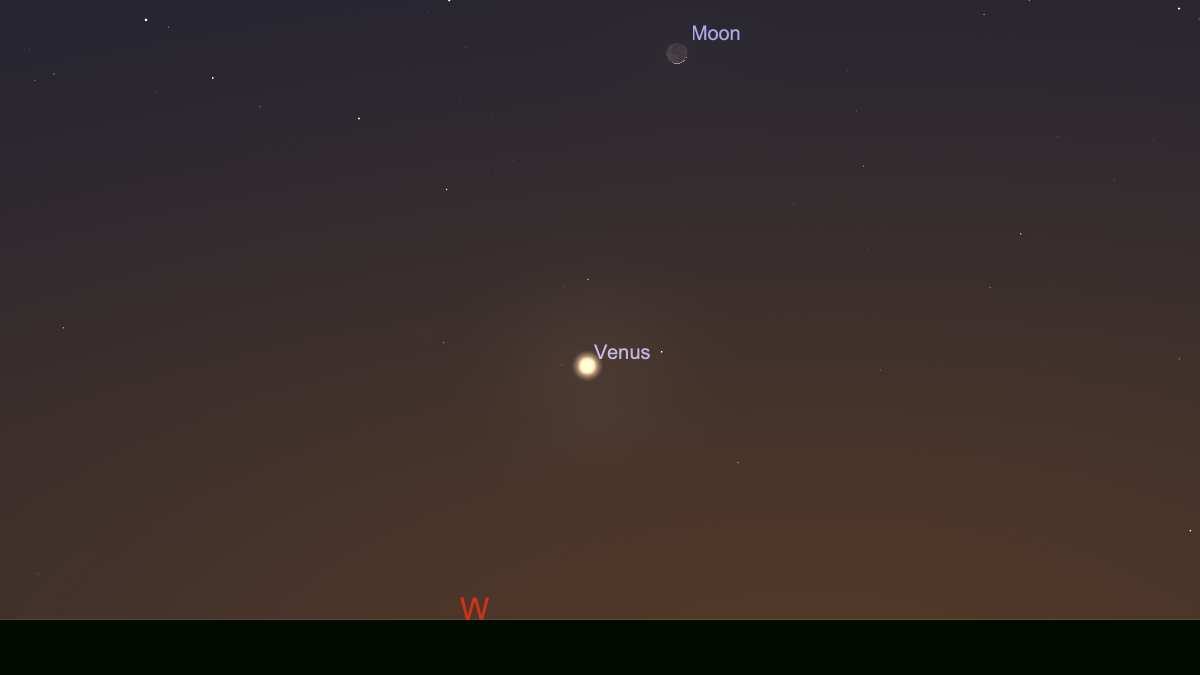
5. Crescent moon and Venus: March 20, 2026 (after sunset)
See the crescent moon close to Venus on March 20, 2026. (Image credit: Stellarium)
The sight of a young moon close to a bright planet will be on offer about 45 minutes after sunset on March 20, when a 5%-lit waxing crescent moon will hang above the bright planet Venus. Find an unobstructed western horizon, and take along a pair of binoculars.
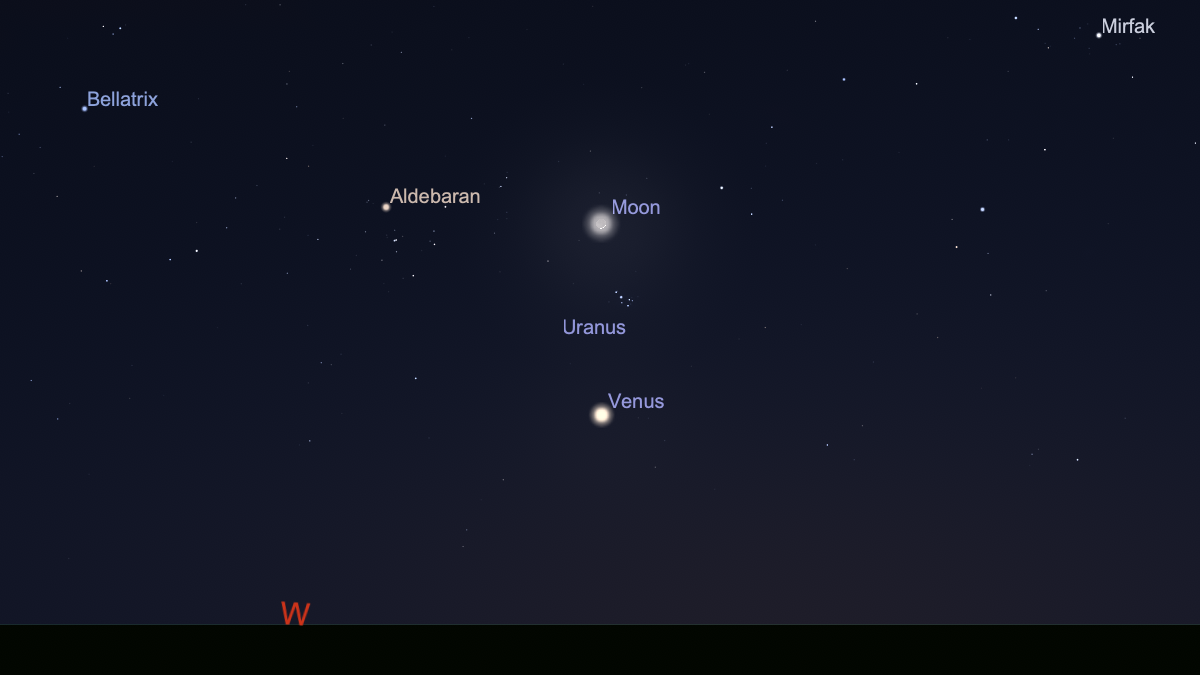
6. Crescent moon, Venus and the Pleiades: April 19, 2026 (after sunset)
See a crescent moon, Venus and the Pleiades on April 19, 2025. (Image credit: Stellarium)
Look west an hour after sunset on April 19 for a spectacular panorama close to the sinking stars of Orion as a 9%-lit waxing crescent moon gets close to the Pleiades (also known as the "Seven Sisters" star cluster), with bright Venus below.
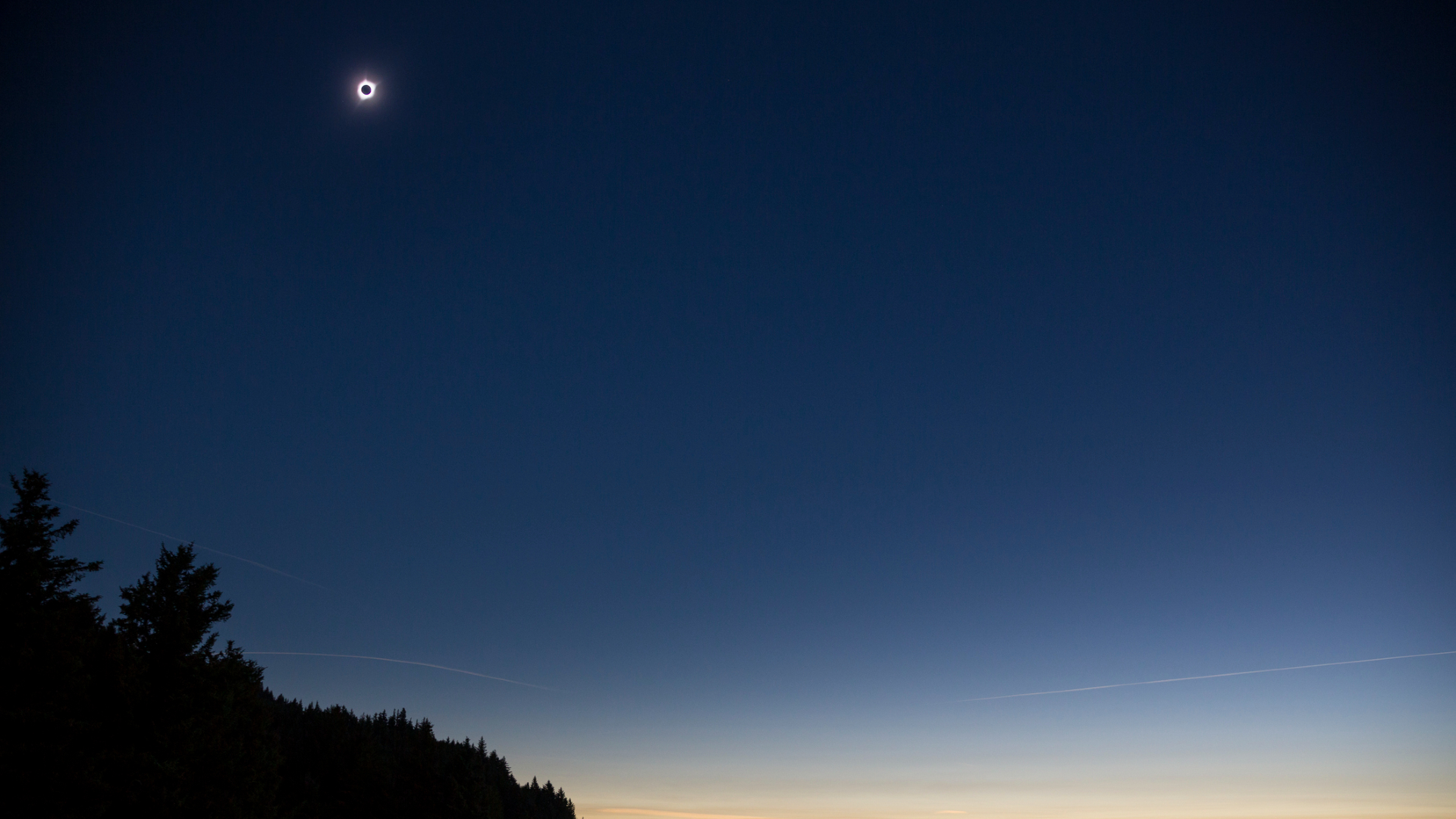
7. Total solar eclipse: Aug. 12, 2026 (daytime)
A total solar eclipse will be visible from parts of Europe on Aug. 12, 2026. (Image credit: Tegra Stone Nuess via Getty Images)
Even though it won't be visible, the moon will arguably perform its greatest trick of all on Aug. 12, 2026, when its silhouette will perfectly block the sun for up to 2 minutes, 18 seconds, as seen from eastern Greenland, western Iceland and northern Spain. All of Europe will experience a deep partial solar eclipse, while North America will see a small partial eclipse.
8. Partial lunar eclipse: Aug. 27-28, 2026 (after dark)
Don't miss the partial lunar eclipse on Aug. 27-28, 2026. (Image credit: Apostoli Rossella via Getty Images)
The second lunar eclipse of 2026 — which will be visible from North America, South America, Europe and Africa — won't quite live up to the first in March. Although the moon will enter Earth's central shadow in space, a 4% sliver of it won't, causing the lunar surface to turn mostly reddish. Although there will be no totality, the edge of Earth's shadow will gradually move across the moon and back again, which is always a grand sight.
9. Moon in the Beehive Cluster: Sept. 8, 2026 (before sunrise)
See a crescent moon close to M44 on Sept. 8, 2026. (Image credit: Stellarium)
Look east about 45 minutes before sunrise to see a lovely 9%-lit waning crescent moon just beneath the Beehive Cluster, also known as M44, which contains about 1,000 stars and is located 600 light-years from the solar system. You'll need binoculars to see M44 properly.
10. Moon in conjunction with Saturn: Sept. 26, 2026 (after sunset)
See the moon close to Saturn on Sept. 26, 2026. (Image credit: Stellarium)
Saturn will be prominent in the night sky in late 2026, but it will become most noticeable when the moon passes close by. That happens in the east on Sept. 26, just before the moon turns full.
11. A crescent moon and Jupiter: Oct. 6. 2026 (before sunrise)
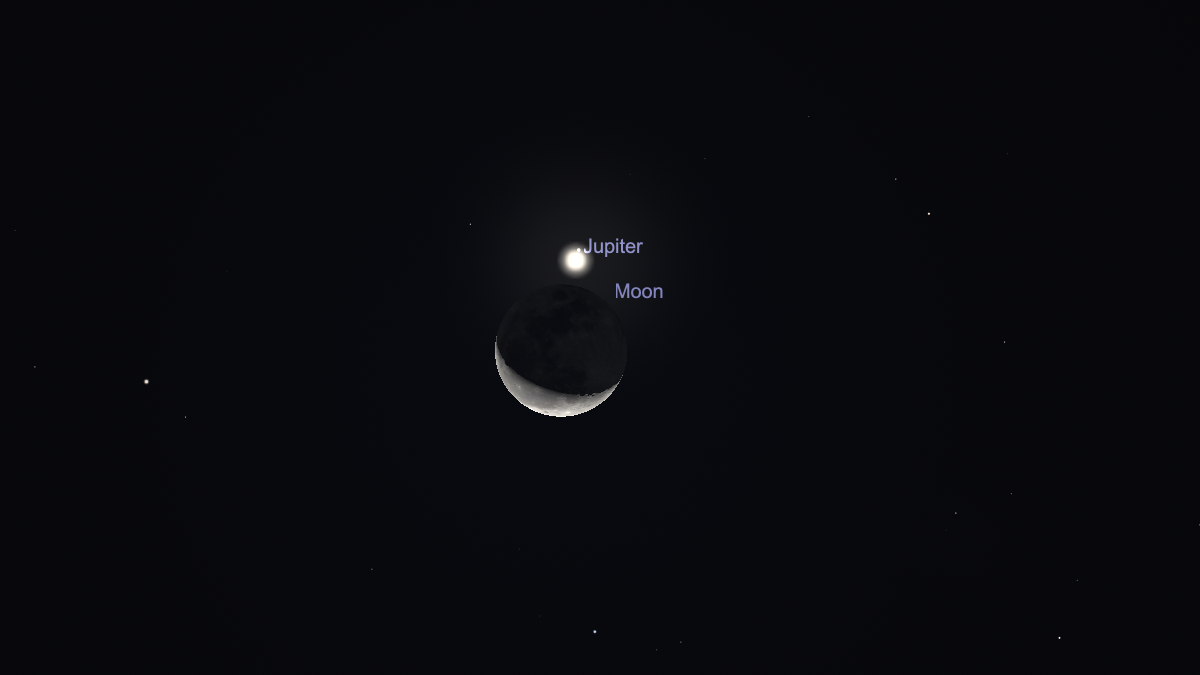
See a crescent moon close to Jupiter on Oct. 6, 2026. (Image credit: Stellarium)
Here comes a rare and special sight: a very close conjunction of the moon and Jupiter, with just 10 arc seconds (three-thousandths of a degree) separating them. Best seen in the east about 90 minutes before sunrise, the moon will be about 20% lit, with "Earthshine" visible on its night side, closest to the giant planet.
12. A crescent moon close to Mars and Jupiter: Nov. 2, 2026 (before sunrise)
The moon and Mars will be in close conjunction on Nov. 2, 2026. (Image credit: Stellarium)
Mars won't be in the night sky for much of the first half of 2026, but by October, it will be visible in the southeast before sunrise. On Nov. 2, 2026, the Red Planet will be visited by a 43%-lit waning crescent moon, with Jupiter just below.
13. The closest supermoon since 2019: Dec. 23, 2026 (dusk)
Don't miss the supermoon on Dec. 23. (Image credit: Cavan Images via Getty Images)
In 2026, there will be three supermoons — on Jan. 3, Nov. 24 and Dec. 23 — but one is a standout. The full moon on Dec. 23 will be the closest full moon to Earth since 2019. At just 221,668 miles (356,740 kilometers) from our planet, it will edge out the Feb. 19, 2019, supermoon by about 60 miles (100 km), making it the biggest and brightest full moon in nearly eight years. However, two supermoons will come even closer on Feb. 10, 2028, and March 30, 2029.
Jamie is an experienced science, technology and travel journalist and stargazer who writes about exploring the night sky, solar and lunar eclipses, moon-gazing, astro-travel, astronomy and space exploration. He is the editor of WhenIsTheNextEclipse.com and author of A Stargazing Program For Beginners, and is a senior contributor at Forbes. His special skill is turning tech-babble into plain English.
You must confirm your public display name before commenting
Please logout and then login again, you will then be prompted to enter your display name.