18,000 years ago, ice age humans built dwellings out of mammoth bones in Ukraine
Some people in Ukraine weathered the harshest moments of the last ice age by creating shelters made partly of mammoth bones and tusks.
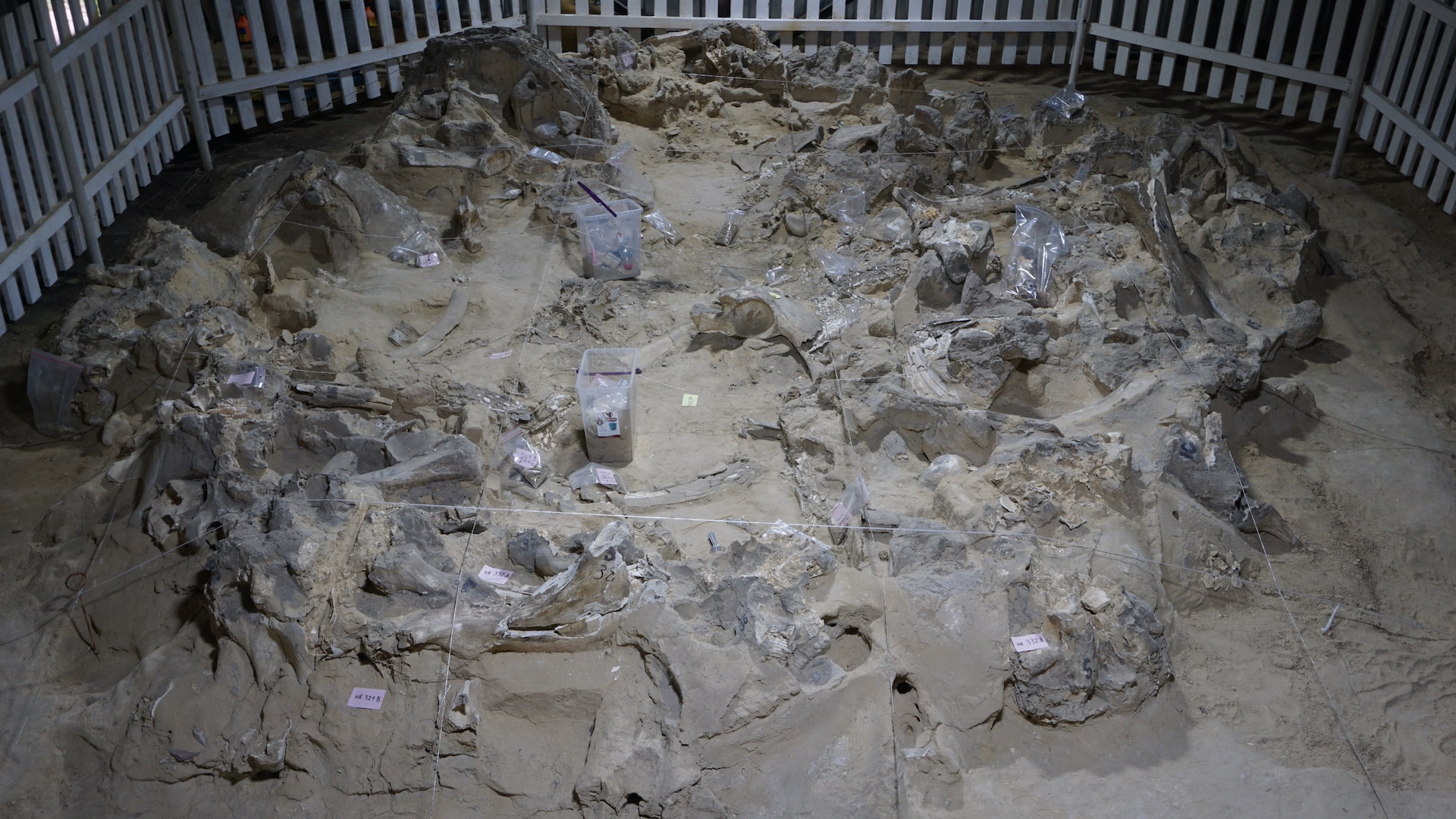
Some of the remains of the mammoth shelters from the last ice age. (Image credit: Pavlo Shydlovskyi)
Around 18,000 years ago, ice age people in what is now Ukraine likely weathered the extremely harsh climate by building parts of their shelters out of mammoth bones, a new study finds.
The mammoth dwellings show how communities thrived in extreme environments, turning the remnants of giant animals into protective architecture," the archaeologists wrote in a statement.
To investigate these questions, archaeologists re-examined the site to try and get a better idea of when it was built and how long it stayed in use. They dated the remains of about a dozen small animals found near the mammoth dwellings to try and get a more precise chronology.
The largest structure at Mezhyrich dates to 18,323 to 17,839 years ago, the team reported in the study, published on Nov. 21 on the publishing platform Open Research Europe. These dates are just after the Last Glacial Maximum (26,500 to 19,000 years ago), the coldest part of the last ice age. The researchers noted that the dwelling may have been used for up to 429 years. This indicates that the "shelters were practical solutions for survival rather than permanent settlements," they wrote in the statement.
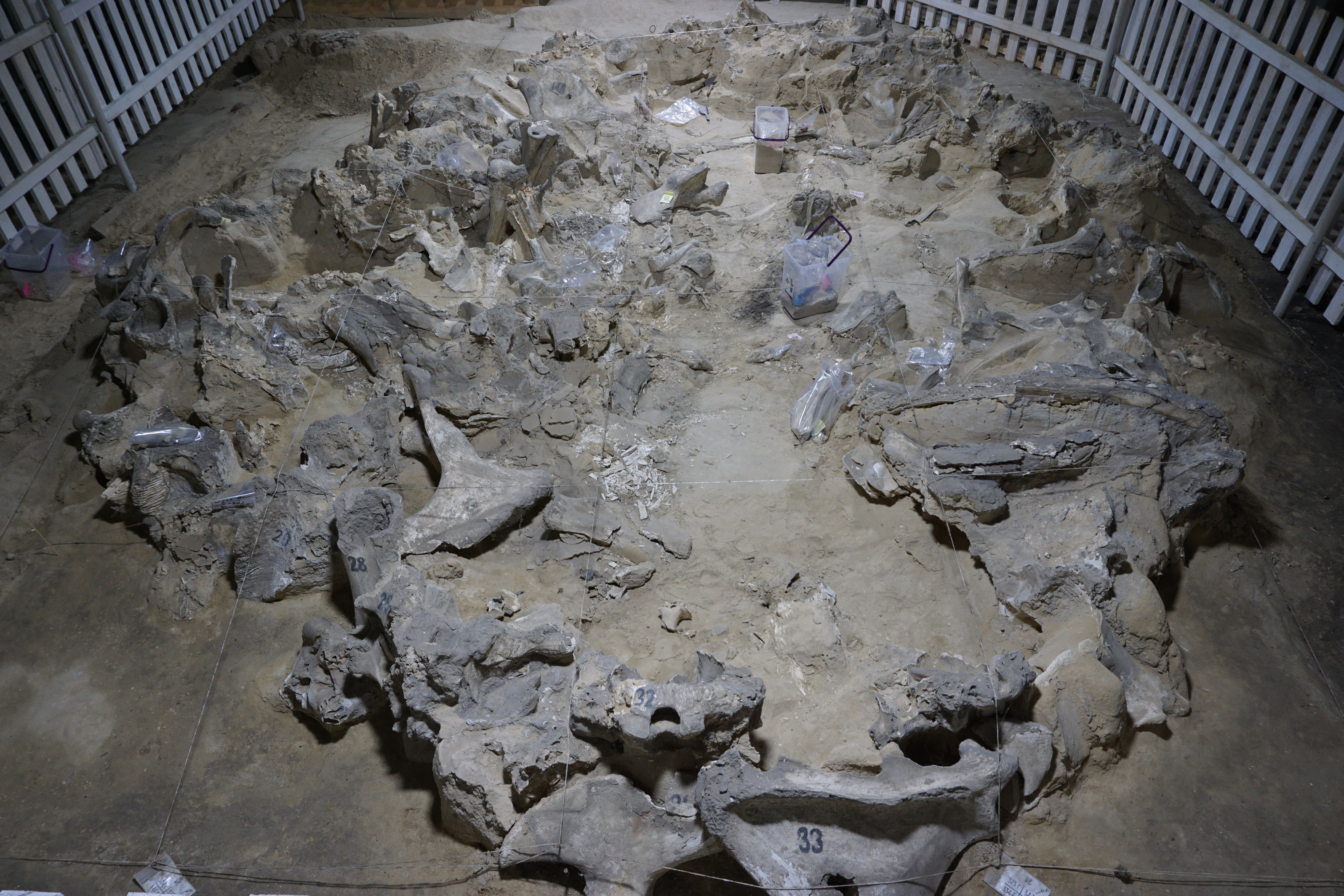
Mammoth bones were used to help make shelters in Ukraine. They would have protected people during the harshest parts of the last ice age. (Image credit: Pavlo Shydlovskyi)
The foundation of the shelters may have had "mammoth skulls and large long bones, set vertically into the ground [which] formed a kind of plinth or 'foundation,'" study co-author Pavlo Shydlovskyi, an archaeology professor at the Taras Shevchenko National University of Kyiv, told Live Science in an email.
A wooden framework may have covered parts of the shelter, along with hides from smaller animals or possibly birch bark. In addition, "tusks and large flat bones were placed on the upper part of the structure [the roof] functioning as weights and wind protection," Shydlovskyi said.
Get the world’s most fascinating discoveries delivered straight to your inbox.