3 ways Google makes switching between all my devices effortless
I’m not loyal to Google. I’m loyal to convenience, and Google just happens to deliver on its promises.

Guest Post / Android Authority
Google’s ecosystem has quietly become the backbone of my everyday workflow. From jotting down quick ideas in Google Keep to drafting articles in Docs or unwinding on YouTube, I rely on Google’s tools more than I sometimes realise. These apps follow me everywhere, slipping into my day-to-day routine without much thought — until I actually stopped and considered how much I depend on them.
That moment came recently when I started thinking about moving away from Google’s services. It wasn’t because I disliked them; I was simply curious whether I could simplify my setup or reduce my reliance on one company. But as someone who reviews multiple smartphones every year — and constantly switches between iOS, Android, Windows, and Mac — it didn’t take long to realise that walking away from Google would make my workflow significantly more chaotic.
Other platforms exist, and some offer great privacy features or more advanced tools, but none of them work quite as naturally with the multi-device lifestyle I live.
What keeps you in Google's app and service ecosystem?
37 votes
Google is everywhere I need it
Edgar Cervantes / Android Authority
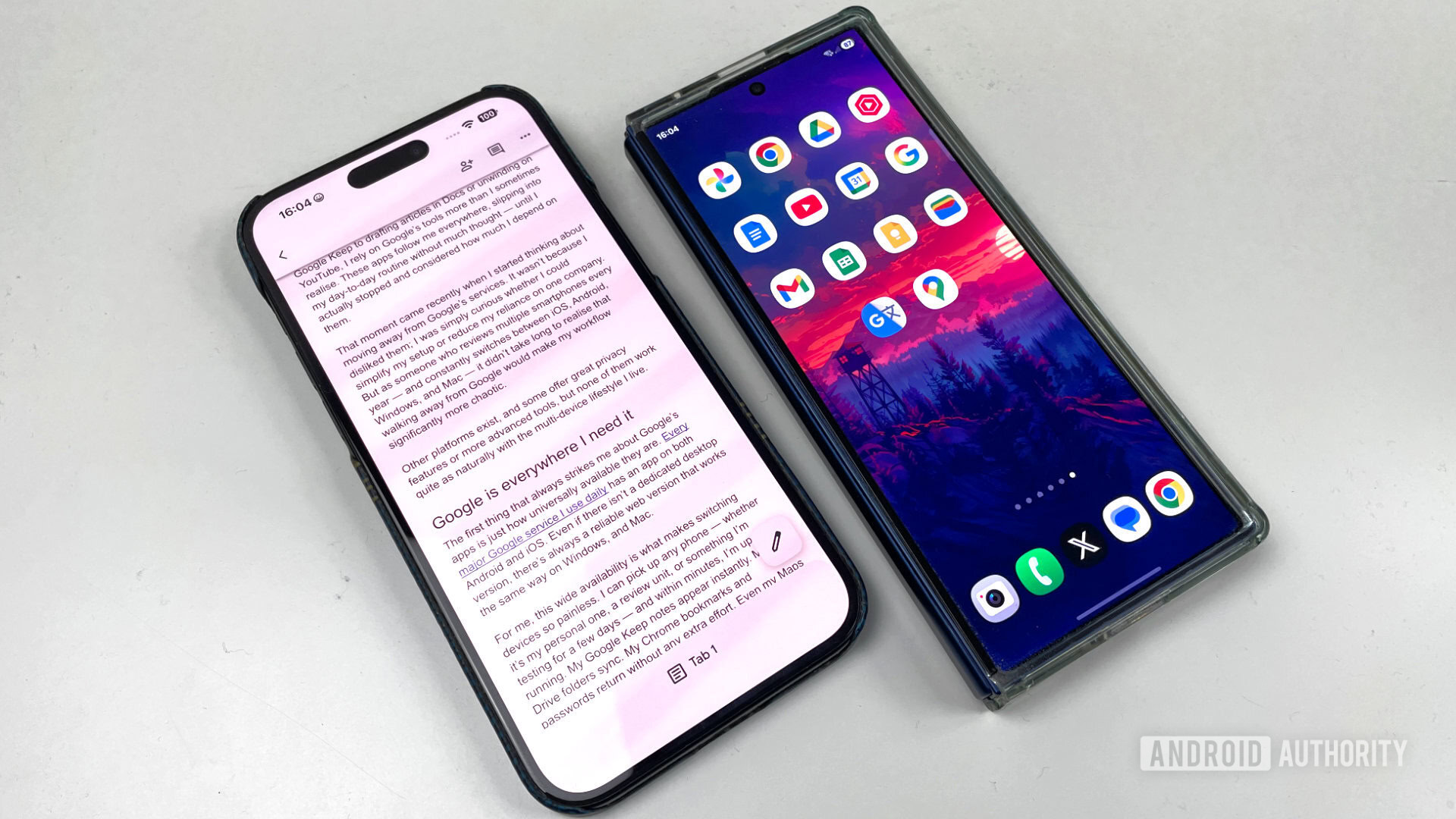
The first thing that always strikes me about Google’s apps is just how universally available they are. Every major Google service I use daily has an app on both Android and iOS. Even if there isn’t a dedicated desktop version, there’s always a reliable web version that works the same way on Windows and Mac.
For me, this wide availability is what makes switching devices so painless. I can pick up any phone — whether it’s my personal one, a review unit, or something I’m testing for a few days — and within minutes, I’m up and running. My Google Keep notes appear instantly. My Drive folders sync. My Chrome bookmarks and passwords return without any extra effort. Even my Maps locations and Photos library show up exactly where I left them.
That consistency is something I’ve grown used to, almost without noticing. When you constantly move between devices as I do, you quickly realize how valuable it is to sign in once and have everything fall into place.
Google’s apps aren’t always the most feature-packed tools, but they tick all the essential boxes.
And that’s genuinely how I feel. Google’s apps aren’t flashy, and they rarely lead the pack in terms of advanced features, but they give me everything I need. They sync instantly, they load fast, and they behave the same way no matter where I’m using them. When I’m bouncing between platforms day in and day out, reliability and simplicity matter more to me than a long list of niche features.
I’ve tried switching to other app suites over the years, and while some impressed me — especially the more privacy-focused ones — almost all eventually became more complicated or more expensive. Many require premium plans for basic storage. Others lack proper cross-platform support. And some simply don’t integrate as seamlessly, which slows me down when I’m trying to work quickly between devices.
Google has a huge collection of apps I rely on
Guest Post / Android Authority
I joke about Google’s habit of killing apps — there’s an entire website dedicated to listing everything Google has shut down, and it’s almost comedic how long that list has become. But despite that, I still trust Google’s core services more than anyone else’s.
Part of that comes from years of using them without major issues. Outages are rare. Sync problems are almost nonexistent. And the apps that matter most — Gmail, Calendar, Drive, Docs, Photos, YouTube — aren’t going anywhere anytime soon.
I’ve tried other platforms, but none give me the same balance of flexibility and reliability. Google’s apps cover almost every part of my life: entertainment, productivity, backups, navigation, browsing, and more. It sounds dramatic, but Google really does provide a toolbox for almost every digital task I perform.
Google provides a toolbox for almost every digital task I perform.
For example:
- When I’m out shooting photos for reviews, Google Photos automatically backs everything up.
- When I get home, I start drafting scripts or articles in Docs — sometimes on my laptop, sometimes on my phone, and when I switch back to my laptop later, the document will already be there, waiting for me.
- If I’m travelling and using a completely different device, everything is still in sync.
That level of continuity makes hopping between devices almost frictionless. I’ve had moments where I tried to piece together a similar setup using other platforms — Microsoft’s suite, Apple’s ecosystem, or more privacy-conscious services like Proton. But no matter how much I tried, everything felt slightly disjointed. Something always broke. Something didn’t sync. Something didn’t support a platform I needed.
Google, on the other hand, has been weirdly consistent. As long as I stick to the major apps — the ones everyone knows, loves, and uses — the experience is smooth and stable. And that stability is incredibly valuable when your entire workflow relies on switching devices at a moment’s notice.
The integration is so smooth, it makes leaving difficult
Joe Hindy / Android Authority
Another reason Google remains so deeply rooted in my daily routine is how tightly everything integrates — especially on Android.
I know Android is open source, but the reality is that a lot happens behind the scenes. Manufacturers must pre-install certain Google apps to access the Google Play Store. That’s why you sometimes end up with duplicate apps on Android phones — one from Google, one from the manufacturer. But in recent years, many manufacturers have reduced the bloat and leaned more heavily on Google’s apps. As a result, Google’s services often become the default choice for millions of people, including me.
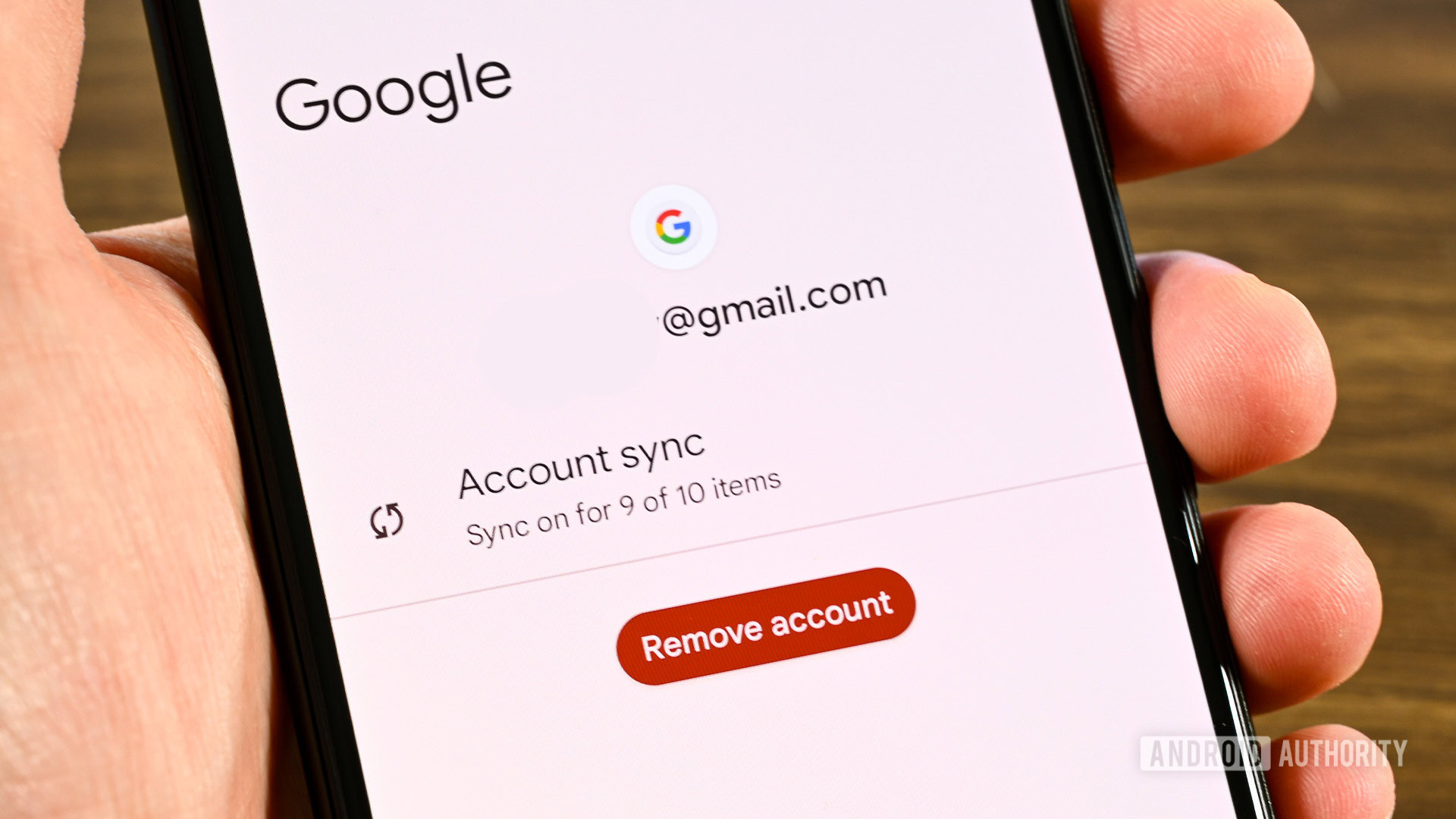
Once you sign into your Google account on a new device, the magic happens almost instantly.
And once you sign into your Google account on a new device, the magic happens almost instantly. You’re already logged into Gmail, Maps, YouTube, Photos, Drive — everything. You might not even realize how deeply these services embed themselves into your device until you try using a phone without signing in. Suddenly, half your shortcuts disappear.
What genuinely surprised me, is how well this experience translates to iOS. I expected everything to feel clunky or half-baked, but Google’s apps on iPhones and iPads are some of the most polished versions available. In many cases, they even outperform their Android counterparts.
All I have to do is sign into one Google app on iOS, and the rest quietly authenticate in the background. Chrome syncs my tabs and passwords. YouTube remembers everything. Drive loads my files. It just works, exactly the way I want it to. That kind of integration is very hard to walk away from.
Competitors come close, but not close enough
Robert Triggs / Android Authority
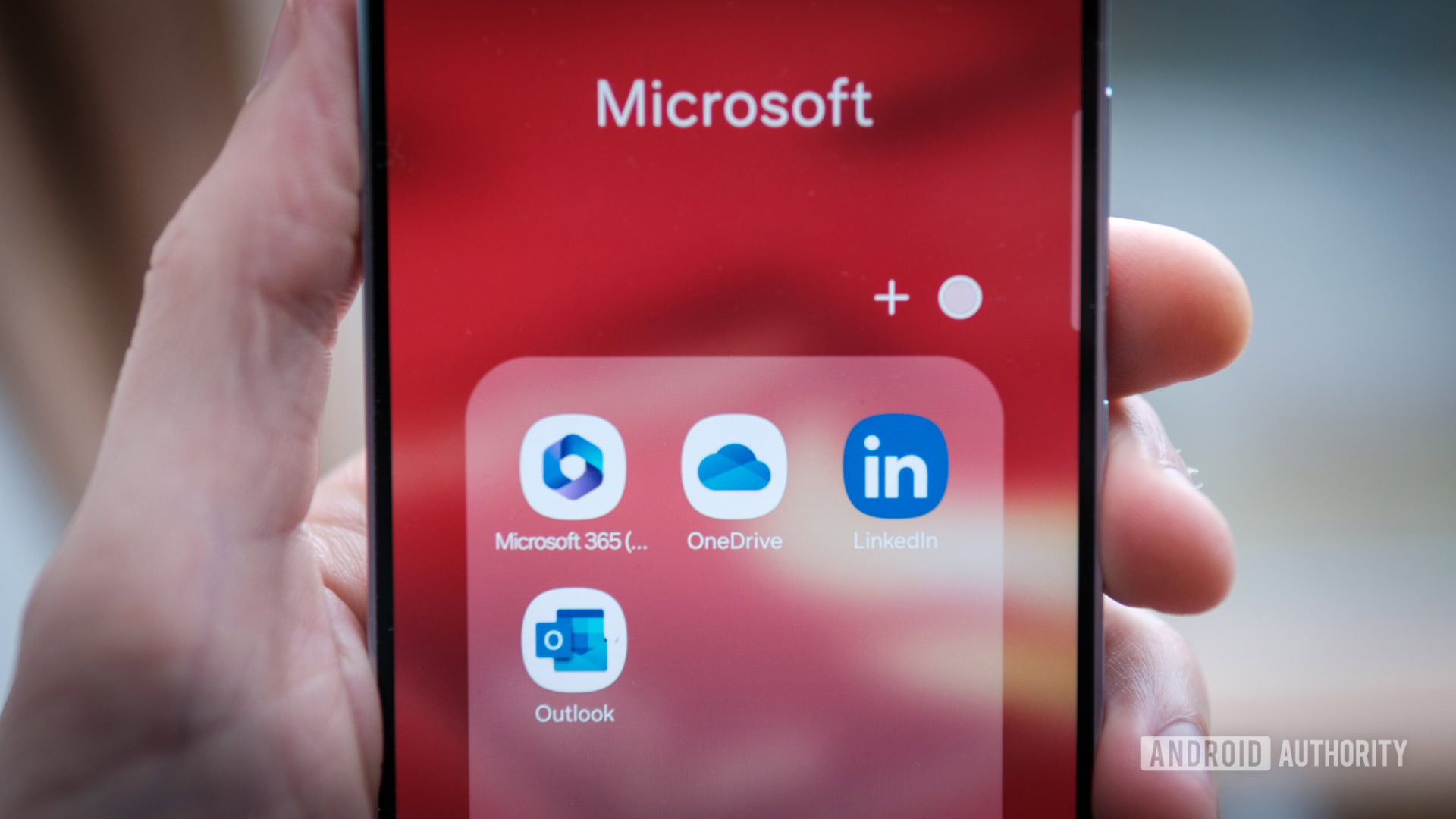
Google isn’t the only company offering a full suite of apps. Microsoft has an entire ecosystem of tools — OneDrive, Outlook, Word, Teams — that work extremely well, especially if you’re heavily invested in Windows. I’ve used them, and they’re great for productivity. But the mobile experience can be inconsistent, and syncing isn’t always as instantaneous.
Proton is another alternative I genuinely like. Its privacy-first approach is refreshing, and I admire the work the company is doing. Proton Mail and Proton Drive are excellent. But their ecosystem isn’t as broad, and it doesn’t match Google’s seamless cross-platform integration. It’s getting better every year, but it’s not quite at the point where I could rely on it exclusively.
Despite wanting to reduce how deeply embedded I am in Google’s ecosystem, I keep coming back to the same conclusion: no other company offers the same combination of reliability, convenience, and true multi-platform support. And with prices for cloud services constantly increasing, switching to alternatives often ends up being more expensive.
For now, Google remains the practical choice for my multi-device lifestyle. It’s not perfect. It sometimes frustrates me. And I’m sure I’ll revisit the idea of switching again in the future. But until something better comes along, Google still makes moving between all my devices so effortless that replacing it feels more trouble than it’s worth.
Follow
Thank you for being part of our community. Read our Comment Policy before posting.