$40,000 for a loss in round one of qualifying. Welcome to the $111m Australian Open
Tennis Australia’s record-breaking prizemoney makes it the second-largest pool of the four grand slams.
$40,000 for a loss in round one of qualifying. Welcome to the $111m Australian Open
The Australian Open dreams of French duo Arthur Bouquier and Selena Janicijevic ended in a little more than an hour on the opening day of qualifying on Monday – but all was not lost.
The pair still pocketed $40,500 for their straight-sets losses. The hefty paydays are part of a tournament that this year will distribute $111.5 million in prizemoney.
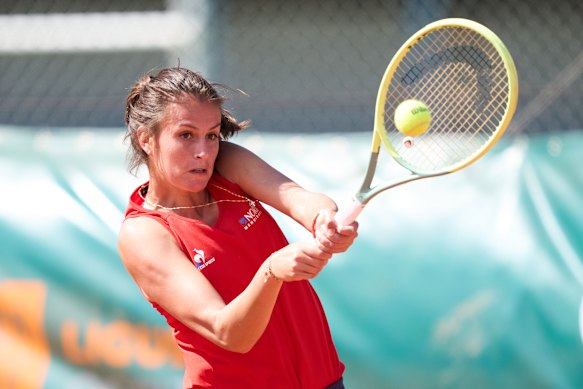
France’s Selena Janicijevic is $40,500 richer after losing her Australian Open qualifying match on Monday.Credit: Getty Images
Those who are knocked out in the first round of qualifying on Monday and Tuesday will still take home a handy amount of money for one day’s work – a 16 per cent increase on last year. The prizemoney for losing in the second and third rounds of qualifying is $57,000 and $83,500, respectively.
While $40,500 is a lot of money, the cost for players to reach that level is also very high.
Win three qualifying matches, make it to the tournament proper and things look brighter still: players losing in the opening round of the Australian Open will collect $150,000.
Handy increases come with every win after that, and the men’s and women’s champions will each win $4.15 million.
The Open’s inflated prize pool was announced last week and makes the tournament second among the four grand slams for total prizemoney, behind the US Open’s $US85 million ($126.8 million).
The total increase in prizemoney across all rounds of the Australian Open is $15 million, also 16 per cent, and the qualifying rounds get the second-biggest increase in prizemoney. The only round to see a larger increase is for the tournament winners, up 19 per cent from 2025, $3.5 million to $4.15 million.
The announcement follows pressure from top players, including world No.1s Aryna Sabalenka and Carlos Alcaraz, who in July signed a letter to all four grand slam organisers requesting a greater share of revenue. It was the second letter sent by top players and followed the filing of an antitrust lawsuit by the Professional Tennis Players Association in New York in March, also seeking more money for players from the men’s and women’s tours.