5 things I like about the Hydrow Wave smart rowing machine — and 2 I don't
SOURCE:TechRadar|BY: Roland Moore-Colyer
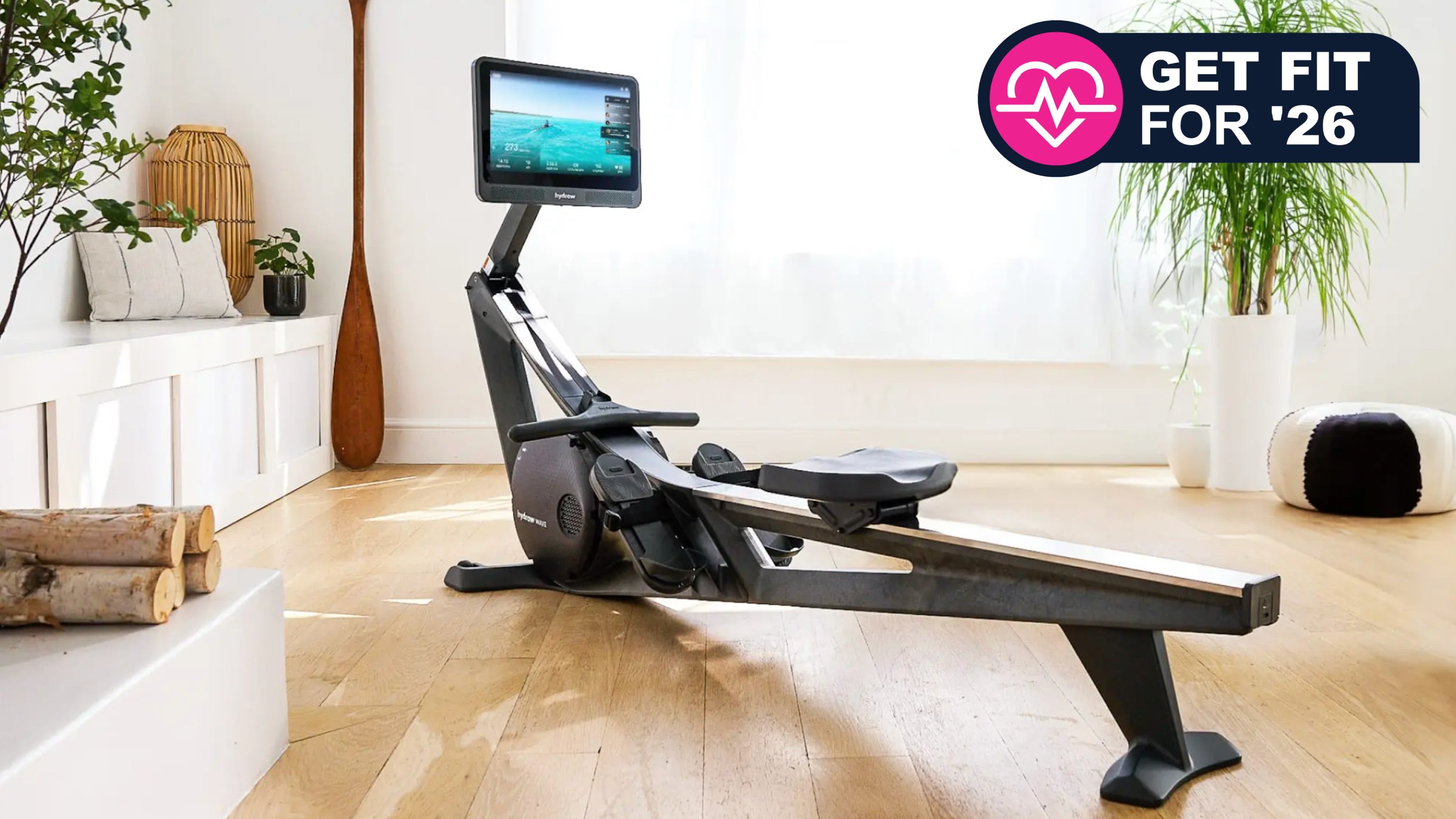
A fantastic smart rowing machine that'll work for just about anyone, providing they can pay the premium.
(Image credit: Hydrow / TechRadar)
Get Fit for '26
This article is part of our Get Fit for '26 series, in which our writers talk about the wellness and fitness challenges and experiences they've taken on, and the ones set to shape the year ahead. You can read all the articles in the series here.
Using a smart rowing machine, or even rowing in general, wasn’t on my 2026 predictions or resolutions, but as brutally tough as rowing can be, I’m rather glad it is.
I’ve been using the Hydrow Wave, the company’s more compact smart rowing machine, since November last year, and while I’ve very much at the beginning of my journey with rowing as a fitness-building and fat-burning activity, I’ve already got a suite of thoughts about the Hydrow Wave and Hydrow’s smart rowing experience.
In short, I think it’s an excellent machine and one of the best pieces of kit I’ve used in a while, even as a tech journalist who gets access to a lot of gadgets. But it’s not perfect. So read on for what I like about the Hydrow Wave training experience – and my reservations.
The Good
1. Rowing at home is great
(Image credit: Hydrow)
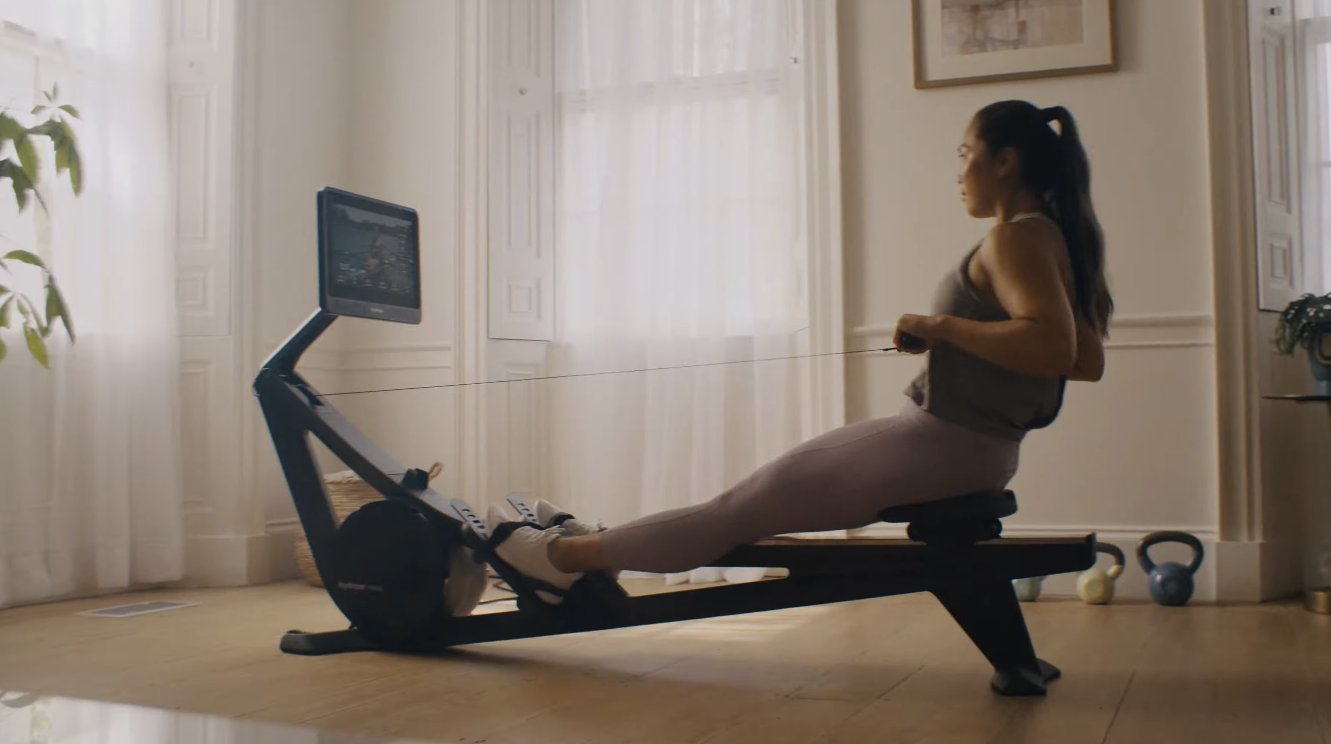
Putting aside the connectivity and smart features of the Hydrow Wave for a moment, having a rowing machine at home is really rather good.
Rowing is one of those rare activities that offers ‘whole body’ exercise, with pushing with your legs, rotating through your hips and pulling with your arms leading to some 85% of muscle groups being exercised, according to British Rowing. At the same time, it’s low-impact exercise, in that it doesn't strain your joints – though it absolutely works your muscles – which makes it ideal for near-daily use.
Equally, rowing is hard work; a 10-minute session will burn more calories than some 30 minutes of running, an even short burst of vigorous rowing will have your muscles burning and your lungs gulping air.
Having easy access to this level of exercise, without the need to drag oneself to a gym, or even go outside is fantastic. And while I’ve yet to see my soft middle become a ripping six pack, my use of the Hydrow Wave so far has made my biceps pop a bit, and kept me from putting on excess weight over an indulgent holiday period. Generally, it's made me feel fitter and stronger.
Sign up for breaking news, reviews, opinion, top tech deals, and more.
While I have dumbbells at home, access to a rowing machine really is a bit of a game changer, and if you have any ambitions of building a home gym, I think the Wave makes a great core machine to build your setup around.
Of course, one can get a lot of the benefits of rowing with a simpler, cheaper rowing machine, but where Hydrow machines come into their own is the dedicated coaching and workout sessions, like Peloton.
Going from beginner sessions to those for advanced fitness enthusiasts and competitive rowers, there’s coaching delivered by professional rowers and Olympians that help you understand rowing techniques, building power, and take you through workouts. The latter is especially handy, as you get someone telling you when to boost your effort, when to slow down, and giving you reminders to watch your form and focus on certain elements of the row.
This is also useful during the cooldown period, where the athletes will often suggest drills to refocus on your form and stretch out the relevant muscle groups.
Occasionally, some of these pre-recorded sessions will dive a little too deep into wellness and mental health advice for my tastes, but they still proved to hold my interest and removed me from the idea that I was rowing in a room alone. And the range of different athletes have their own approach to coaching and encouragement; I don’t have a favourite per se, but it’s early days.
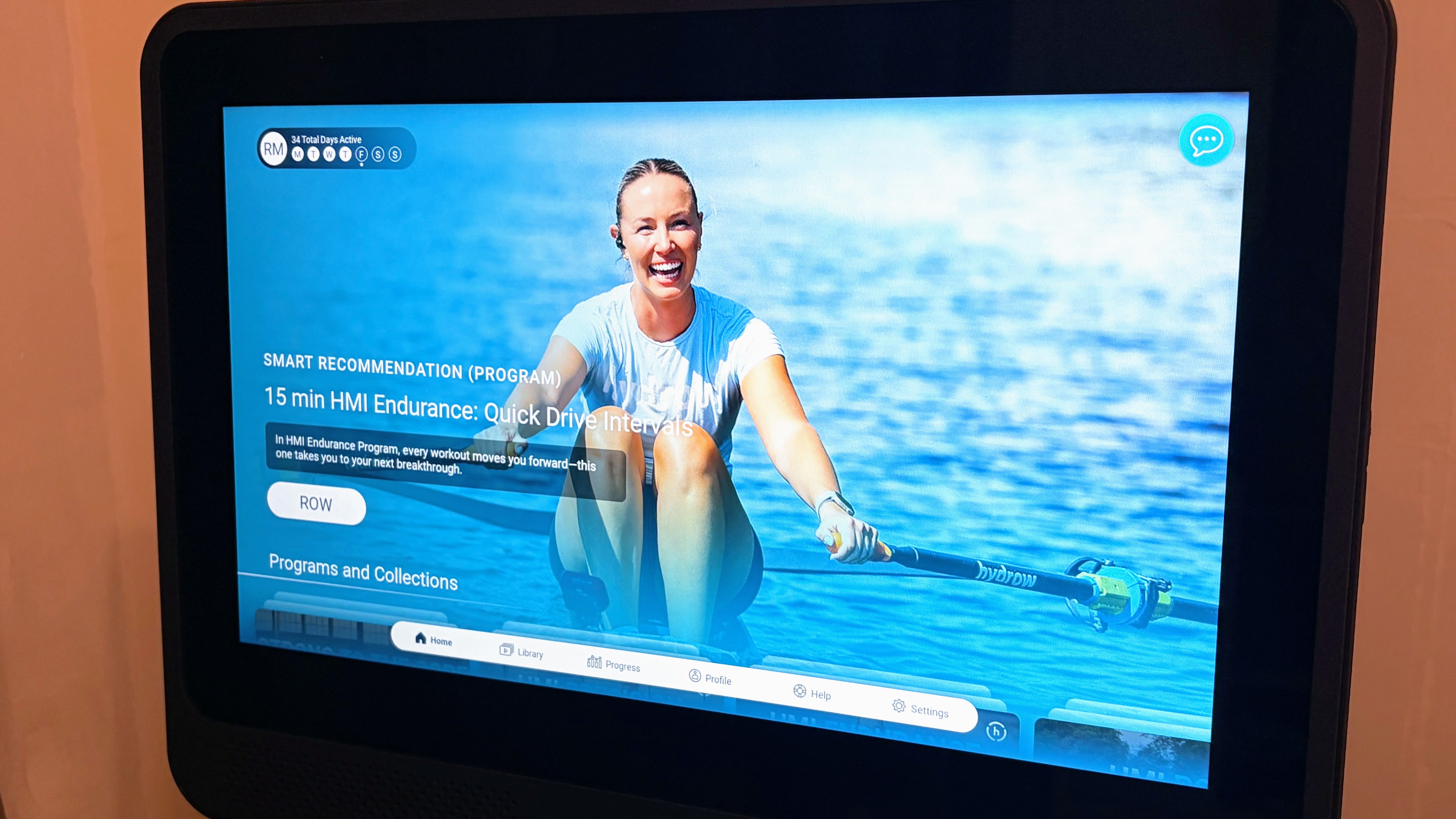
There’s also a huge amount of workouts to choose from, to the extent they can get a little overwhelming; the interface could do with just a little more refinement in narrowing down some workouts and noting which you have done before, though you can do this by selecting certain filters.
I’ve been working though a lot of them to help boost my strength and endurance, but there’s also the option to 'just row' for a set time at a select location – could be a river, lake or the sea – which I often do to get in a little workout while I listen to an audiobook or podcast.
On top of this, there are live rowing sessions with instructors operating like Peloton workouts, though I don't feel like I’m at the level to try those yet. And then there’s whole workout programs and seasonal challenges – there's plenty more content to get my teeth into.
3. Insightful Hydrometrics
(Image credit: Future)
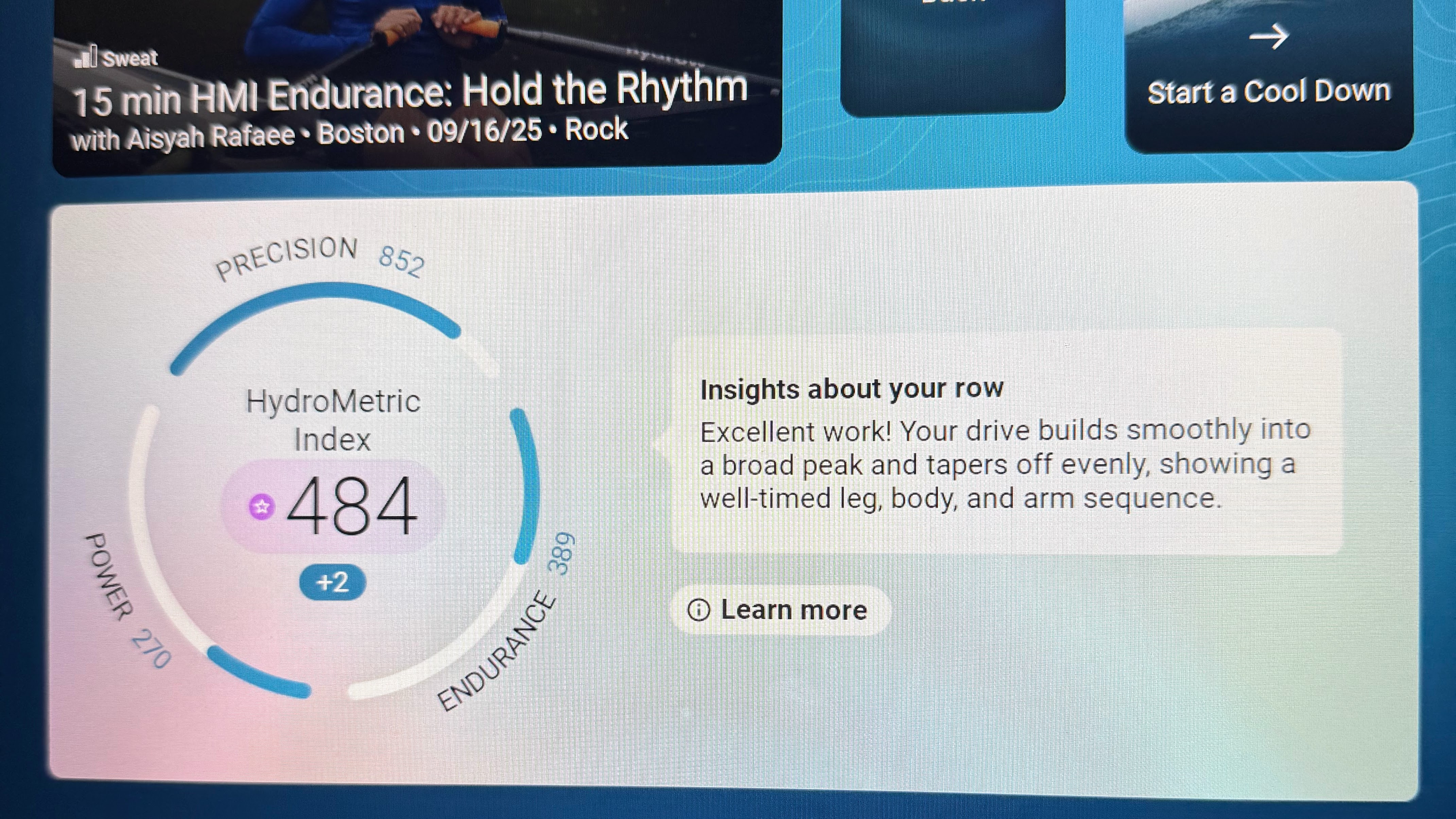
The really smart element of Hydrow rowing machines come in the form of its 'Hydrometrics'. While the Wave didn’t originally have access to this tech, it's brought it in as part of Hydrow's paid-for service.
Hydrometrics provide a score for each of your main workouts, tracking stroke precision, endurance and power, then smartly feeding back your performance. This can range from a simple note such as ‘well done you’re rowing correctly and strongly’ to pointing out where you might be losing power in your stroke, or building power too late. It’s a very handy reminder to work on one’s rowing form, especially as that’s the key to ensuring a proper full-body workout with the tech.
It’s a simple feedback mechanism but it is properly useful, and means you can’t just brute force your way through a workout if you want to achieve a high score. For example, you could generate more power by over-using your arms, but ultimately your precision would drop.
The flipside is it has made me feel a little frustrated at myself, as I started to nail the technique, only to lose it a little as I pushed harder. But this has me really wanting to focus on perfecting my technique and rowing precision, which should benefit me in the long term.
4. Genuinely useful app and connectivity
(Image credit: Hydrow)
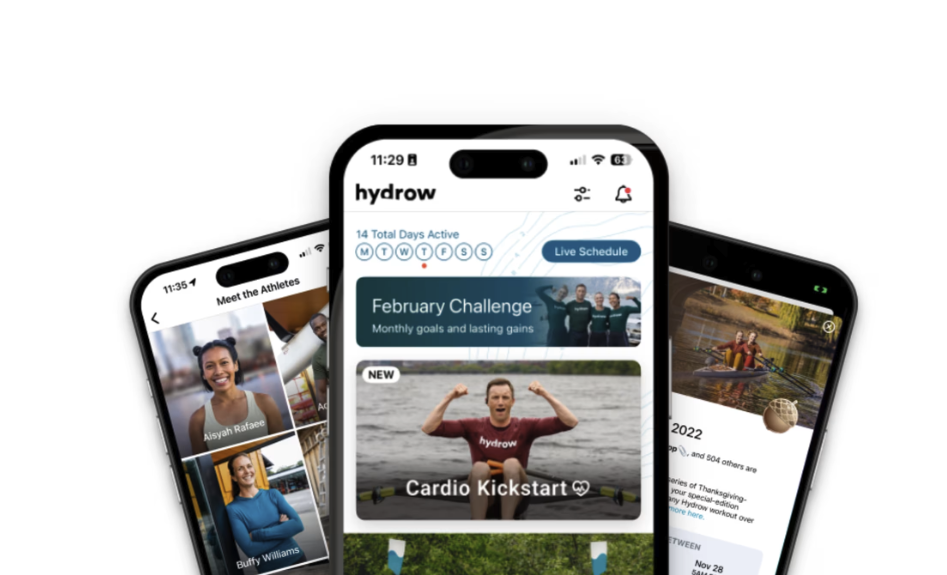
Building on the Hydrometrics score, the Hydrow app gives users a neat way to track their progress and look back on workout results and scores. I found the app far easier to navigate than the 16-inch touchscreen on the Wave, especially when it came to digging into my completed workouts.
There’s a whole lot of depth to plumb in the app too, from setting goals to scheduling workouts and more. It could almost be overwhelming, but it’s designed neatly enough to let you access the information you want without having to jump through masses of virtual hoops.
Device connectivity is also suitably robust, with the option to connect Bluetooth headphones or speakers to the Hydrow Wave, as well as sync your Apple Watch, Garmin, Strava and other fitness trackers and services. This isn’t something I’ve fully explored yet, but it’s there for me when I feel I’m ready to take my rowing and fitness to a new level.
5. A refined design
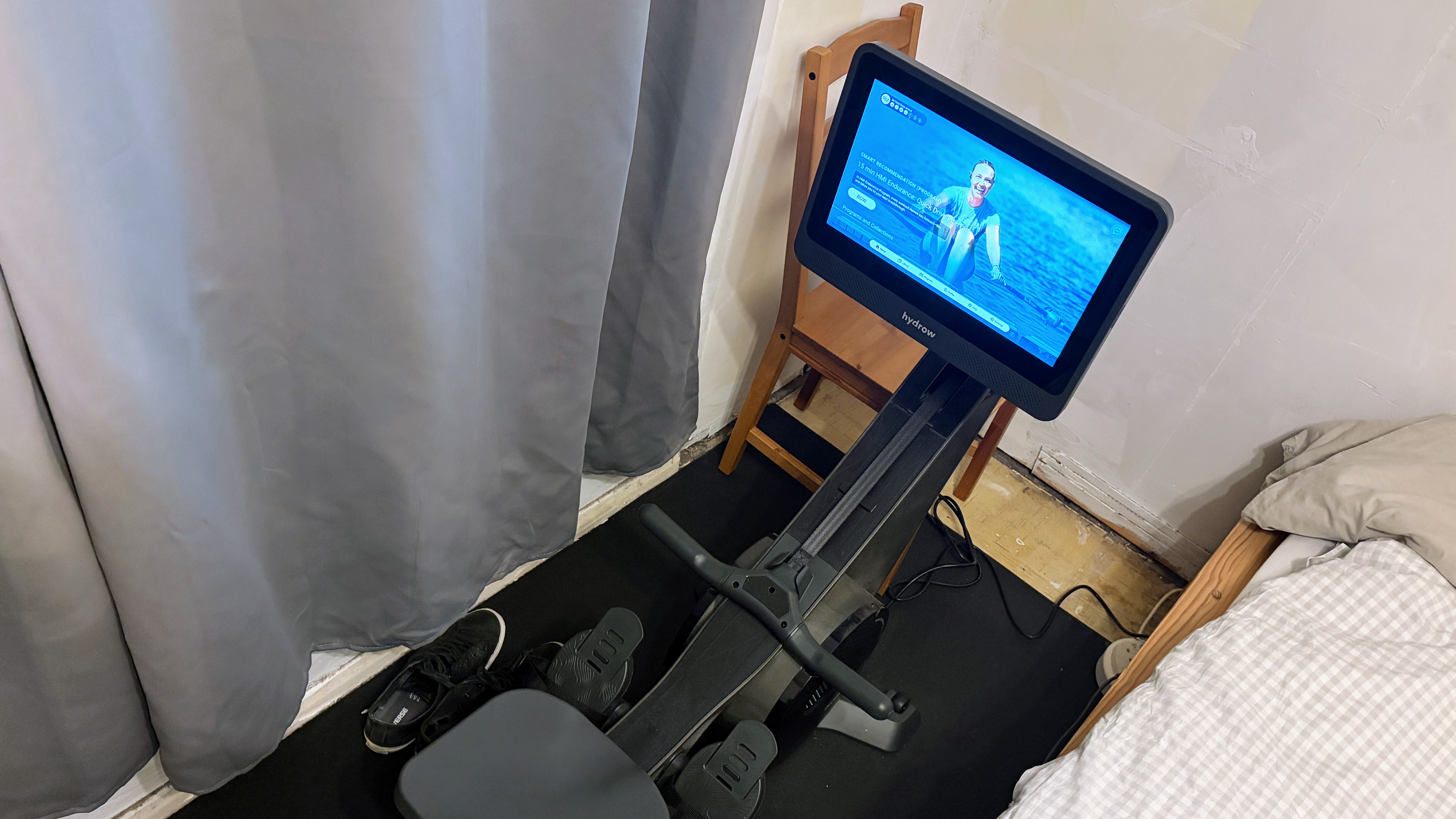
The Hydrow Wave is a rather neat rowing machine... the state of my dated apartment less so. (Image credit: Future)
I’m a fan of the overall look of the Hydrow Wave. While it lacks the more professional boat-like look of the Origin and Arc machines, but I still think it looks rather slick compared to the bulky, boxy rowing machines that you’d encounter down a local gym.
The Wave uses an aluminum and steel frame, combined with a flat anthracite polymer body, and sports a mounted 16-inch Full HD touchscreen. It has a neat blend of practicality meets refined tech. At the same time it’s a solid feeling machine, with no wobble when my large frame is rowing hard.
It’s also rather quiet, with polyester webbing connecting the rowing handle to an electromagnetic drag mechanism, which can be tweaked to provide more or less resistance. You’ll still hear the rowing action but it’s a lot quieter than some of the chain and flywheel systems of more traditional rowing machines.
The Bad
1. Size does matter
(Image credit: Hydrow)
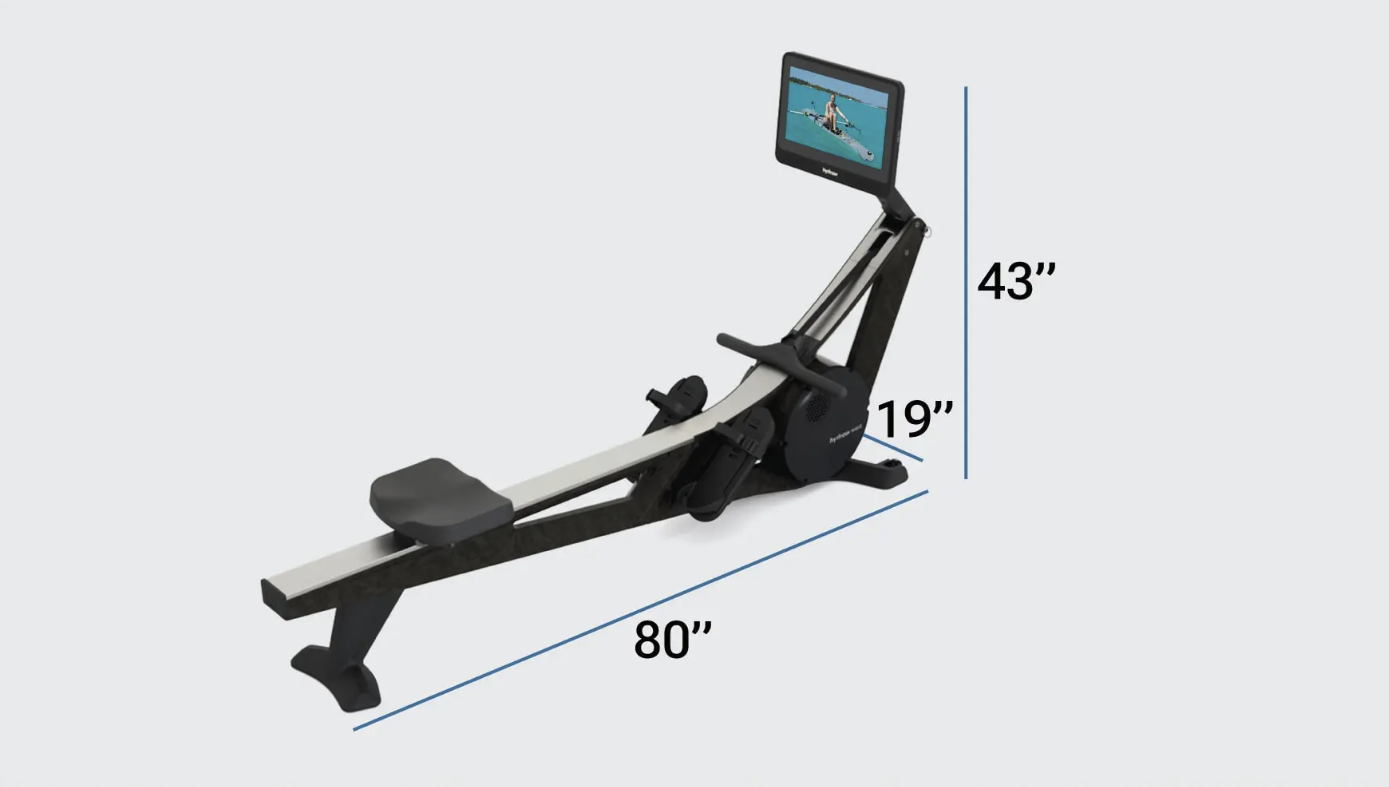
While I like the design, there’s no getting away from the size of a rowing machine. The Wave is the smallest one in the Hydrow range, but it’s still 80 inches long, 19 inches wide and 43 inches tall. This was something that didn't really register with me until the evening before the Wave was to be delivered.
Now I live in a small one-bed apartment, that’s not only in need of renovation (hence you’ll not see many photos of my Wave setup here) but also has things like built-in wardrobes taking up space. As such, I found the only spot I could place my Wave was at the bottom of my bed.
It actually works quite well there, once I moved a few things around. And as I live alone, it’s only me who has to make do with stepping over the machine to open my windows and so on. But there’s no doubt that the Wave is still a big exercise machine to have in a limited space.
At 46kg, it’s also heavy too, especially as the weight is mostly towards the front end, so moving it around isn’t really practical unless you're feeling strong. It can be stored upright with the addition of a wall-mounted “Vertical Anchor” but I don’t have one of those, and don’t see it as a practical solution to my current setup.
I’d love to see a foldable version of the Wave, perhaps with telescopic elements and the use of more composite materials. Other home rowing machines sport compact, foldable designs which can be stored upright out of the box, without extra kit.
2. Premium price
(Image credit: Hydrow)
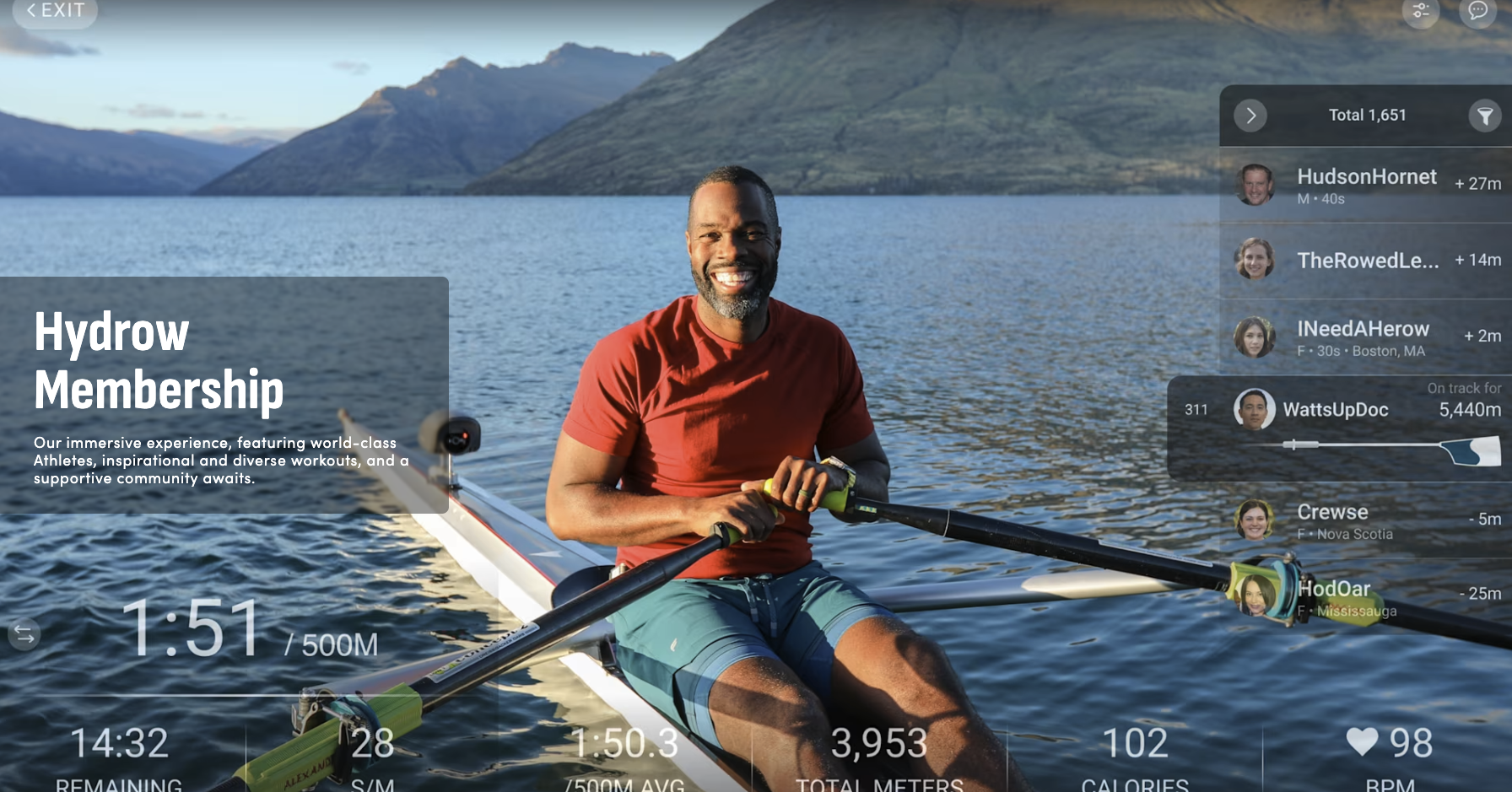
At $1,995 / £1,435 (there no Australian availability yet) the Wave isn’t the cheapest rowing machine by any stretch of the imagination. Plus to really make the most of it, you need to have a Hydrow membership which comes in at $50 / £50 a month; I’ve seen gym memberships for less than that.
So I feel like the Wave, and indeed other Hydrow models are a pricey proposition. And while you could skip the membership, you’re then left with a simple rowing machine that just displays a few metrics on a blue background. To me this feels a little tight fisted, as I think Hydrow could have thrown in a few guided workouts or at least some non-athlete rowing videos as part of the package.
I do appreciate that funding videos and workouts from professional athletes is likely not cheap, so Hydrow needs to make the money back. And that a basic gym membership won’t get you such coaching and other tracking tools. But a bit of give and take would be appreciated.
Still, I do think Hydrow is offering a premium product here, so a premium price is to be expected; it’s what Apple does, after all, and the pricing structure is comparable to Peloton. It's certainly cheaper than the Peloton Row.
The bottom line
Despite my reservations around cost and size, I’m still a big fan of the Hydrow Wave. I think it’s a slick rowing machine that has a lot of smart features and workouts to dive into. While I’ve done a good range of rowing sessions, I’m still very keen to explore it further and can’t see me not having rowing in my future fitness activities.
So there's more to explore and a lot more workouts to be done that have me puffing away as my muscles feel the burn.
Let me know in the comments below if you’re a keen rower, and if you’ve tried a Hydrow or any other smart rowing machine.
Roland Moore-Colyer is Managing Editor at TechRadar with a focus on phones and tablets, but a general interest in all things tech, especially those with a good story behind them. He can also be found writing about games, computers, and cars when the occasion arrives, and supports with the day-to-day running of TechRadar. When not at his desk Roland can be found wandering around London, often with a look of curiosity on his face and a nose for food markets.
You must confirm your public display name before commenting
Please logout and then login again, you will then be prompted to enter your display name.