51st US state: Trump aims for western hemisphere dominance — Is Canada next?
US President Donald Trump's actions in Venezuela and Greenland signal a clear intent to dominate the Western Hemisphere. This has sparked fears in Canada of potential annexation. Experts warn that Canada's vast resources and strategic location make it a target. The article urges Canadians to prepare for potential military coercion and a shift from partnership to a frontier of conquest.
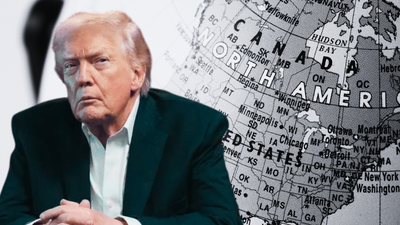
US President Donald Trump's New Year's operations in Venezuela, involving the capture of Venezuelan President Nicolás Maduro, have sparked political tensions in the western hemisphere.
His intent to dominate the region is ever more clear. With his aggressive attempts towards purchasing Greenland, Trump has sparked the fear of national security in the region.It is no longer about the rhetoric. Trump has now moved on to head-on direct interventions.
Greenland Showdown: NATO Troops To ‘STORM' Arctic Island After Trump's 'Will Do Something' Threat
But Greenland is not alone. In an editorial published in the Canadian news outlet, The Globe and Mail, the renewed fear of annexation of Canada to become the "51st state of the US" has been highlighted, raising arguments regarding Trump's intentions towards the region."Canadians must acknowledge the real risk that Mr Trump will use military coercion against our country," read the article, directly addressing the threats that potentially lie ahead for the country.So is Canada next?
Western hemisphere dominance
"This is our hemisphere," US secretary of state Marco Rubio addressed the press on the Trump Administration’s military operation.The editorial highlighted the geographical relevance of the western hemisphere and how it perfectly aligns with Trump's idea of maintaining US hegemony alongside Russia and China.
"With its oil, minerals and water, Canada is a vital resource hinterland in the U.S.’s part of the map," the authors added.Under the "Trump Corollary" to the Monroe Doctrine, Canada is no longer seen as a sovereign partner, but as a strategic asset to be secured through coercive force to ensure American global preeminence."It’s all about changing the calculus," said Thomas Homer-Dixon, one of the authors, "If there is an attempt to use military coercion against us, it needs to be clear that it’s going to be enormously costly," Bloomberg reported.
From Atlantic to Arctic
Trump made it very clear that he carried out the operations in Venezuela for its oil. Trump's recent seizure of a Russia-flagged oil tanker in the North Atlantic only substantiates the claims. His administration claimed the ship contained sanctioned Venezuelan oil.On Sunday, Trump, on a post on Truth Social, also threatened to cut off the Venezuelan oil supply to Cuba. His occupational ambitions are clear.In the Arctic region, Trump's interest in Greenland is also risky for Canada.
The two nations share very similar traits, but one of the most crucial ones is that they are part of Nato, the US-led military alliance that Trump seeks to dominate."I think many officials in Ottawa just find it hard to believe that we’re in this space, no matter what the evidence is," Bloomberg quotes Wesley Wark, a former adviser to the Canadian government on security and border issues.Ottawa must confront a reality where its vast natural resources and Arctic positioning make it a target for the same "transactional" conquest seen in Venezuela and Greenland.