A dead man's archive: What the Epstein files unleashed in 2025
SOURCE:Times of India|BY:MANYA JAIN
What was meant to close the book instead exposed how deeply Epstein’s world had been protected, how many powerful people passed through it, and how difficult it is to tell the truth once secrecy has been institutionalised.
.
In 2025, the Jeffrey Epstein case returned not with a verdict or a confession, but with boxes of documents — late, incomplete and often unreadable — released under a law meant to force long-promised transparency.
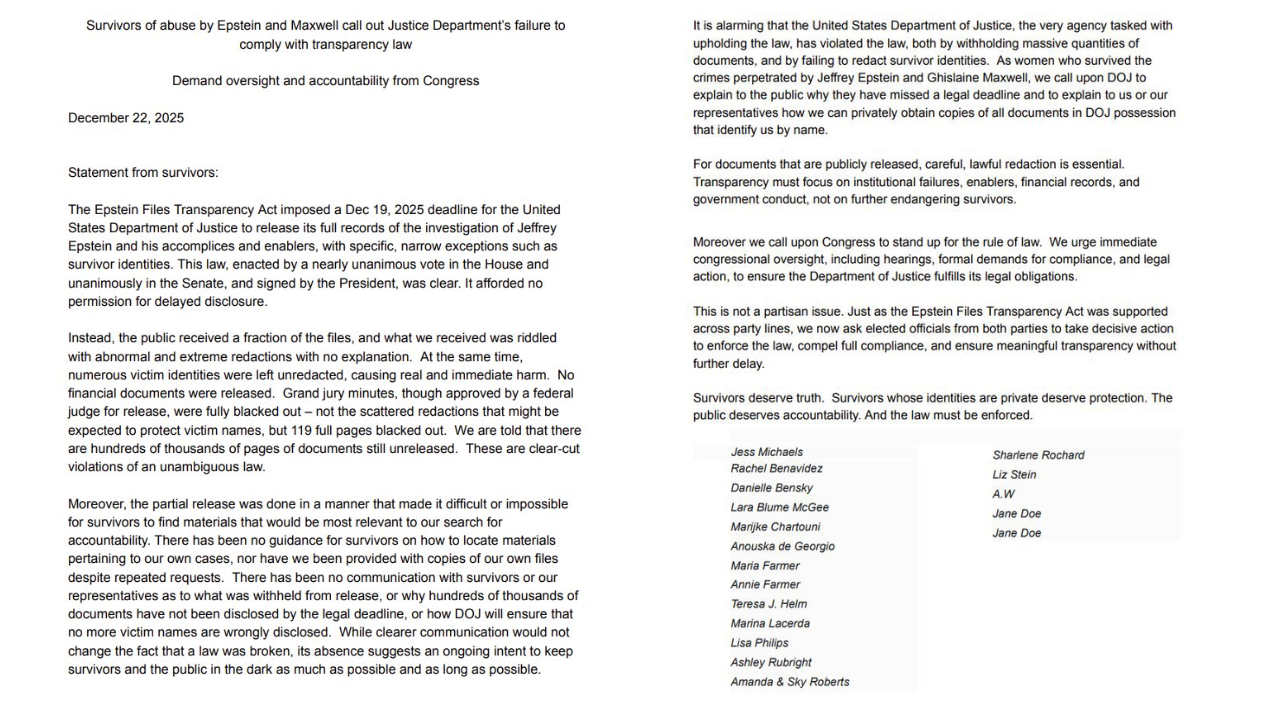
Instead, the disclosures felt like a slow unraveling of a story Washington never finished telling.The records arrived in fragments. DOJ missed deadlines. Agencies admitted they were still discovering more material. Documents were relased and along with it clarifications that some of what was released was untrue. Page after page was blacked out. For survivors, however this was familiar- a system promising clarity with no accountability.
DOJ Epstein Files Expose HORRIFIC Amazon Purchases, Reveal Predator Pattern | FULL LIST OUT
Slowly, it became clear that this was no longer just about Epstein, or even about sex trafficking alone. It was about how long his world operated in plain sight, how many institutions bent around it, and how difficult it is to tell the truth once secrecy has hardened into habit. As more names surfaced, the scandal widened, not because the files delivered answers, but because they revealed how many of those involved had gotten away.
The Justice Department has helped turn the Epstein case into one of the most combustible scandals of 2025, reviving what he once dismissed as a “pretty boring case” by the president into a chaotic collision of flight logs, photos, redactions and denials.
2025: Year the Epstein files blew up
This was supposed to be the year Trump finally put Epstein behind him. Instead, 2025 turned into a slow‑motion detonation: a law he signed, a deadline his own Justice Department missed, and a drip‑drip of documents so wild that even the FBI has had to publicly label some of them “fake” and DOJ has to release them as ████████.Each new release has landed like a grenade online — a stray line in an FBI memo here, an incriminating flight log there, a grainy photo from Epstein’s island that gets screenshotted, shared and ripped out of context within minutes. What emerges is not a neat conspiracy board, but a chaotic, deeply uncomfortable picture of how power actually works when nobody expects the receipts to ever see daylight.
Epstein Files Transparency Act- backfired?
On paper, the Epstein Files Transparency Act sounded straightforward: Congress orders the Justice Department to cough up everything it has by December 19, 2025; Trump signs it, daring critics to find anything that sticks.
It was meant to project confidence — a president so sure of his innocence he is willing to open the vault.Then the clock ran out. By Christmas week, the DOJ was forced to admit that the FBI had “uncovered over a million more documents potentially related to the Jeffrey Epstein case,” and that actually obeying the law would take “a few more weeks.”The department broke its own deadline.Democrats accused the administration of slow‑walking the release to shield Trump, while survivors wondered why a system that once bent over backwards to protect Epstein still seems incapable of moving at full speed for his victims.
The next twist in this exclusive mess isn’t what the files reveal, but how little they let readers actually see. Justice Department releases have run into the hundreds of thousands of pages, but so much is blacked out that survivors call the redactions “abnormal,” like a system still guarding the powerful even as it pretends to confess.The DOJ has felt compelled to warn in its own public statements that the collection includes “untrue and sensationalist” allegations about Trump, a rare moment where the state essentially tells citizens: yes, these papers are real — but no, you cannot trust all of them. A note from Epstein to Larry Nassar gushes about their shared “love of young, nubile girls,” and name‑drops “our president.” The FBI later labeled the letter “fake,” but only after it had been released, shared and embedded in the online folklore of the case, another example of how once you open Pandora’s archive, you can’t control what escapes.
“Donald J Trump raped her…”
Buried somewhere deep in that mountain of documents is a sentence that can run shivers down one’s spine.In an October 2020 FBI intake report, a former limo driver recounts a woman’s claim: “Donald J Trump had raped her along with Jeffrey Epstein.” In the same document, he describes a mid‑1990s ride where Trump, on a phone call, allegedly kept repeating the name “Jeffrey” and references to “abusing some girl,” leaving the driver so disturbed he nearly pulled the car over to confront him.Legally, this is a raw, untested allegation: not a conviction, not even a charge, just one more claim preserved in the cold language of a federal intake. Alongside there sits the Jane Doe complaint filed in January 2020 in the Southern District of New York. The plaintiff alleges Epstein abused her as a teenager and recalls being 14 when Epstein introduced her to Trump, elbowing him and saying, “This is a good one, right?” as Trump smiled and nodded. Again: allegation, not adjudication — but enough for the citizens.
In early 2024, Trump tried to slam the door shut with a single post.
“I was never on Epstein’s Plane, or at his ‘stupid’ Island,” he wrote, blaming any evidence to the contrary on AI and Democratic smears. It was simple, absolute and easily shareable — the perfect message for a chaotic age.The files tell a messier story. A January 7, 2020 email from the Southern District of New York, only made public this year, notes that Trump was “listed as a passenger on at least eight flights between 1993 and 1996” on Epstein’s private jet.
Four of those flights included Ghislaine Maxwell; one flight’s manifest lists only two names: Trump and Epstein.The same email says Trump at times travelled with Marla Maples, Tiffany and Eric Trump — very normal‑sounding family details grafted onto an increasingly abnormal context. The logs do not prove criminal conduct, but they shred the carefully cultivated image of Trump as the guy who barely knew Epstein and only crossed paths with him at a couple of parties.
On paper, at least, they were in the same airspace a lot more often than that.
Inside the island: Masks, “Lolita” and Trump‑brand condoms
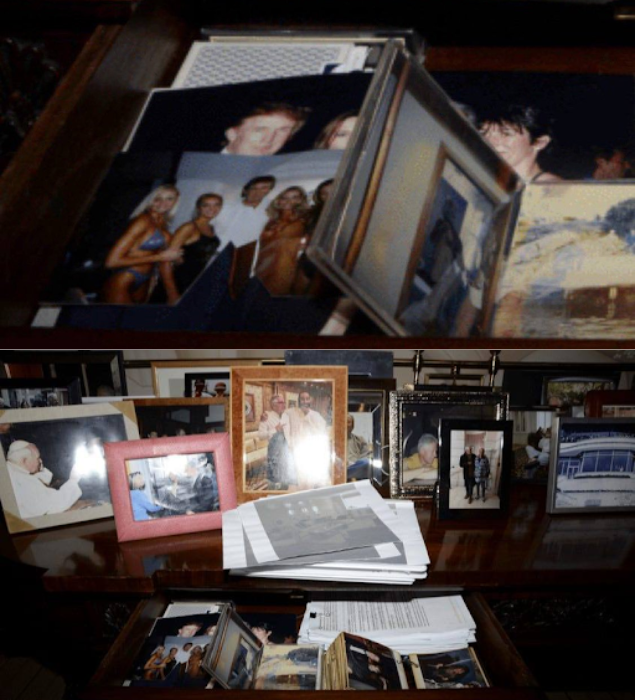
If the files provide the words, the photos deliver the mood. On December 3, Democrats on the House Oversight Committee dropped around 70 images from Epstein’s US Virgin Islands estate. A room where masks stare down from the walls. The bland luxury of a place where terrible things happened and then just… stopped.
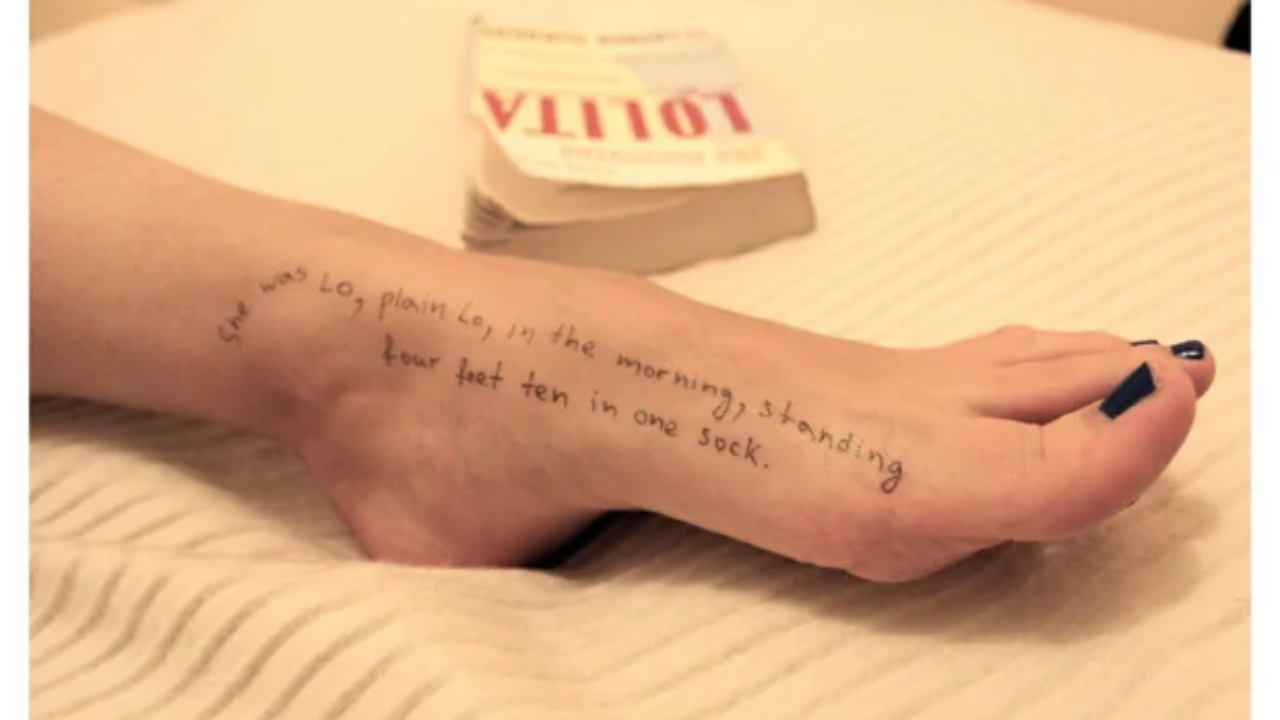
A bowl of novelty condoms branded with Trump’s caricature — “Trump condom 4.50,” promising “I’m HUUUUGE!” — sitting in Epstein’s island home, a frat‑house joke anchored in a place synonymous with alleged abuse.Another photo shows Trump with a group of women, their faces all blacked out, his visible — an almost too‑on‑the‑nose metaphor for how the scandal has played out: the powerful man in full view, the women anonymized by the system.Other images go straight to the core of Epstein’s psychology. Close‑ups of a foot and a neck inked with quotes from “Lolita,” a book about a middle‑aged man’s obsession with a young girl, now literally written on bodies in Epstein’s orbit.
There are passports and IDs from Russia and the Czech Republic, text messages promising to “send u girls now,” complete with ages and measurements — the cold logistics of exploitation rendered in screenshots.
“Too old” at 23
For years, Epstein managed to describe himself in absurdly gentle terms. “I’m a sex offender, not a predator,” he told a reporter in 2011, “It’s the difference between a murderer and a person who steals a bagel.”
The 2025 files tear that euphemism to shreds.In a 2007 grand jury interview, an FBI agent records a witness’s description of Epstein’s “preferences”: thin, blonde, attractive — and young. One potential recruit was rejected as “too old” at 23, a horrifyingly-casual sentence that captures the moral universe he inhabited. A handwritten note from a 2019 interview says Epstein was “asking for ID to girl, wanted make sure under 18,” complaining that someone had “messed up by bringing more older girls.
”
Celebrity orbit: Clinton, Andrew, Musk and the rest
When everyone knows “this guy”
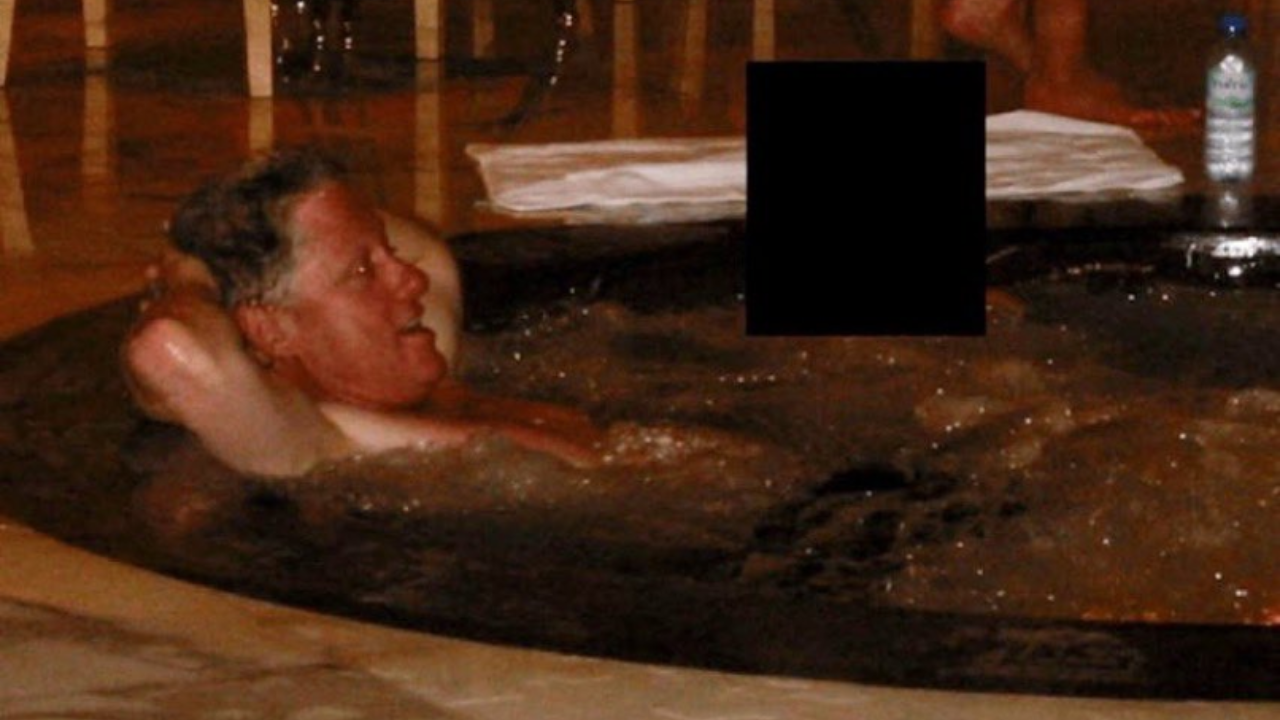
As the files expand, so does the cast list. December’s releases include numerous pictures of Bill Clinton — sometimes alone with a redacted figure in a hot tub, sometimes just drifting through Epstein’s world like an uninvited extra in someone else’s nightmare. Clinton has responded by urging authorities to release everything instead of letting the story “trickle out,” a conspicuous show of confidence that still doesn’t answer why he was around Epstein so much in the first place.Then there is Andrew Mountbatten‑Windsor, formerly Prince Andrew, who has already lost his royal title and paid a multimillion‑dollar settlement to Virginia Giuffre while insisting he did nothing wrong. New references in the documents suggest he asked Ghislaine Maxwell to find “friendly and discreet and fun” girls and to arrange meetings with “inappropriate friends,” deepening the portrait of a royal who treated Epstein’s network as a kind of private concierge service.
The wider orbit is a roll‑call of late‑20th‑century influence. Michael Jackson. Mick Jagger. Bill Gates. Woody Allen. Noam Chomsky. Sergey Brin. Steve Bannon. Elon Musk. None of them has been charged with Epstein‑related crimes, and investigators stress that showing up in a contact book or a photograph is not proof of guilt. But politically and culturally, the message is that in the rarefied world Epstein moved through, everybody knew “this guy” until suddenly nobody did.
What is the Epstein case, really?
Strip away the redactions, the politics and the memes, and the Epstein case is about something simple. A wealthy financier spent years paying underage girls for “massages” that became abuse, then used those girls to recruit other girls, building a pipeline of vulnerable teenagers into his homes in Palm Beach, New York and beyond.In 2005, Florida police finally opened a criminal investigation after one 14‑year‑old’s parents came forward, only to watch a 60‑count federal case shrink into a secret 2008 plea deal that gave Epstein 13 months of lenient detention and immunity for his “co‑conspirators.”
It took a decade, a landmark newspaper investigation and a second federal indictment in New York to bring him back into custody in 2019 — and then he died in his cell before any jury could hear the full story.The files now surfacing in 2025 are the aftershocks of those decisions: notes, emails, interviews and photos preserved by systems that, for years, bent over backwards to keep them out of sight. What makes this year different is that, for the first time, the country is seeing them in bulk.We understand now that the Epstein case wasn't just a trafficking network - it was a creepy of the wealthiest out there.
The one who couldn't get away: Ghislaine Maxwell
If Epstein built the machine, Ghislaine Maxwell helped oil it. The Oxford‑educated socialite moved through Manhattan and London as if born to make introductions, and by most accounts, she did: bringing Epstein into rooms with presidents, princes and billionaires he might never have reached on his own.Arrested in 2020, she was convicted in 2021 of sex trafficking and related charges for recruiting, grooming and sometimes directly participating in the abuse of underage girls, and sentenced to 20 years in prison. Victim statements now visible in the files describe her as “a psychopath” with “a complete lack of remorse” who was “both charming and manipulative” during the grooming process — the kind of person who could make horror feel like an opportunity.In 2025, even from prison, Maxwell tried to rewrite the script, asking a federal court to vacate or soften her sentence and telling the world that meeting Epstein was “the greatest regret” of her life. The Supreme Court refused to hear her appeal; she was quietly moved to a minimum‑security facility in Texas after meeting deputy US attorney general Todd Blanche about her ties to Epstein.
How we got here — and what 2025 exposes
Beneath the daily drip of headlines lies a simple, damning arc.
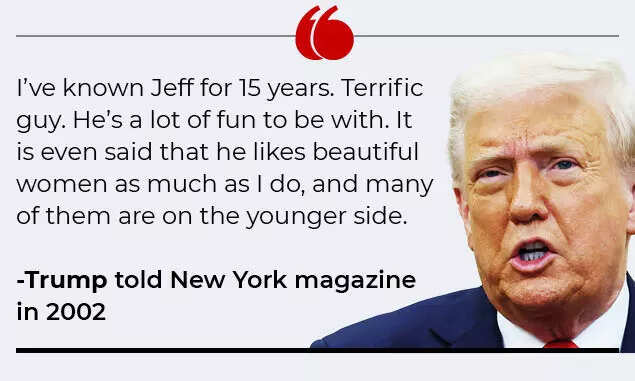
In the 2000s, a wealthy man exploited girls and bought himself a sweetheart deal. In the 2010s, journalism and public pressure finally forced a second look, only for him to “commit suicide” before facing a jury. In the 2020s, the files he left behind are being opened under a president who once called him a “terrific guy” and now insists the entire saga is a boring distraction.
The 2025 releases show just how many powerful people passed through Epstein’s world, how easily institutions bent to accommodate him, and how hard those same institutions now struggle to tell the truth without incriminating themselves.For all the noise, only two people at the center of this story have ever faced sex‑trafficking charges: Epstein, dead in a New York cell, and Maxwell, counting the days in Texas. The rest — presidents, princes, billionaires, rock stars — live in a gray zone of association, their names scattered across flight manifests and photos, waiting for the next unsealed page to either drag them in or let them drift back into the shadows.