‘A man of war’: Russia pounds Ukraine; high-stakes Trump–Zelenskyy talks in focus — 10 key points
SOURCE:Times of India|BY:TOI WORLD DESK
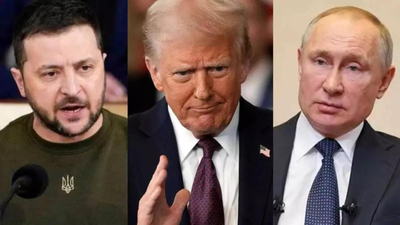
Ukraine faced a severe Russian aerial assault on Kyiv, killing at least two and injuring dozens, just hours before President Zelenskyy's crucial diplomatic meeting with US President Trump. The strikes, described by Zelenskyy as Moscow's response to peace efforts, highlight the ongoing conflict as Ukraine prepares to present a revised peace plan to Trump.
Russia-Ukraine war
Ukraine entered a critical diplomatic weekend under fire. Hours before President Volodymyr Zelenskyy was due to travel to Florida for talks with US President Donald Trump, Russia launched one of its longest and heaviest aerial assaults on Kyiv this year, killing at least two people, injuring dozens more and knocking out power and heating across large parts of the capital.Also read: Kyiv hit by massive Russian missile and drone attackStanding alongside Canadian Prime Minister Mark Carney in Halifax, Nova Scotia, Zelenskyy said the strikes stripped away any pretence of Moscow’s interest in peace. “We want peace,” he said. “And he’s a man of war,” describing Russian President Vladimir Putin after nearly 10 hours of missile and drone attacks on civilian and energy infrastructure.
'UKRAINE WAR WON'T END': Russia CRUSHES Trump, European Hopes After 'SLAYING' 500,000 Troops
The bombardment comes as Zelenskyy prepares to present a revised 20-point peace plan to Trump at Mar-a-Lago: A proposal shaped through weeks of intensive US-Ukraine negotiations but still lacking Moscow’s approval.
Trump has already warned that any deal “doesn’t have anything until I approve it.”
Russia’s hours-long assault on Kyiv
Russia pounded Kyiv and surrounding regions with waves of ballistic missiles and attack drones beginning around 1.30am local time, setting off air-raid sirens and explosions that echoed through the city for hours. Ukraine’s air force said Moscow launched 519 drones and 40 missiles in a bombardment that lasted nearly 10 hours.
Fires broke out in multiple districts, thick smoke hung over the skyline, and air-defence systems thundered through the night.
Local authorities said energy and civilian infrastructure were the primary targets. The scale and duration made it one of the most sustained attacks on the capital this year, disrupting daily life and leaving much of the city without electricity or heating amid freezing temperatures.
Civilian toll and destruction
At least two people were killed one in Kyiv and one in its suburbs while more than 30 others were wounded, including two children. Seven locations across the capital were hit.
An 18-storey residential building in the Dnipro district caught fire, while a 24-storey block in Darnytsia was also struck. Additional blazes erupted in Obolonskyi and Holosiivskyi districts. Ukrainian Interior Minister Ihor Klymenko said more than 10 residential buildings were damaged. In the wider Kyiv region, emergency crews rescued a person trapped under the rubble of a destroyed house in Vyshhorod, underscoring the reach of the strikes beyond the capital.
Power, heating and energy hit
Energy infrastructure was badly affected. Zelenskyy said electricity and heating were unavailable in several districts of Kyiv and the surrounding region. Ukraine’s largest private energy company, DTEK, reported “extensive power outages,” leaving hundreds of thousands of customers without power. Oleksiy Kuleba, a senior government minister, said more than 40% of residential buildings in Kyiv had no heating as temperatures dropped.
Repair crews began work where possible, while others waited for air-raid alerts to end. Zelenskyy said rescuers and engineers were operating under fire, highlighting Ukraine’s vulnerability as air-defence shortages persist.
Zelenskyy: ‘Putin doesn’t want peace’
Zelenskyy framed the attack as Moscow’s answer to diplomacy. “This attack is again, Russia’s answer on our peace efforts. And this really showed that Putin doesn’t want peace,” he said in Canada.
On social media, he wrote: “Russian representatives engage in lengthy talks, but in reality, Kinzhals and ‘shaheds’ speak for them.” He added: “This is the true attitude of Putin and his inner circle. They do not want to end the war and seek to use every opportunity to cause Ukraine even greater suffering.
” The language marked one of his sharpest assessments ahead of talks with Trump.
Canada stopover and allied backing
En route to Florida, Zelenskyy stopped in Halifax for talks with Canadian Prime Minister Mark Carney and a conference call with European leaders.
Carney announced CAN$2.5 billion (US$1.8 billion) in fresh economic assistance to support Ukraine’s reconstruction and unlock further financing from the IMF and World Bank. “The barbarism that we saw overnight, the attack of Kyiv, shows just how important that we stand with Ukraine during this difficult time,” Carney said.
Zelenskyy later wrote that “strong positions are needed both at the front and in diplomacy” to prevent Putin from evading a just end to the war.
High-stakes Trump meeting in Florida
Sunday’s meeting at Trump’s Mar-a-Lago residence will be Zelenskyy’s first in-person encounter with the US president since October, when Trump declined Kyiv’s request for long-range Tomahawk missiles. Zelenskyy is seeking Trump’s approval for a new 20-point peace plan aimed at ending the nearly four-year-old war. Trump has been non-committal, saying: “So we’ll see what he’s got.” Ending the Ukraine war has been central to Trump’s self-described role as a “president of peace,” but he has acknowledged frustration with both sides over stalled progress.
What the 20-point plan proposes
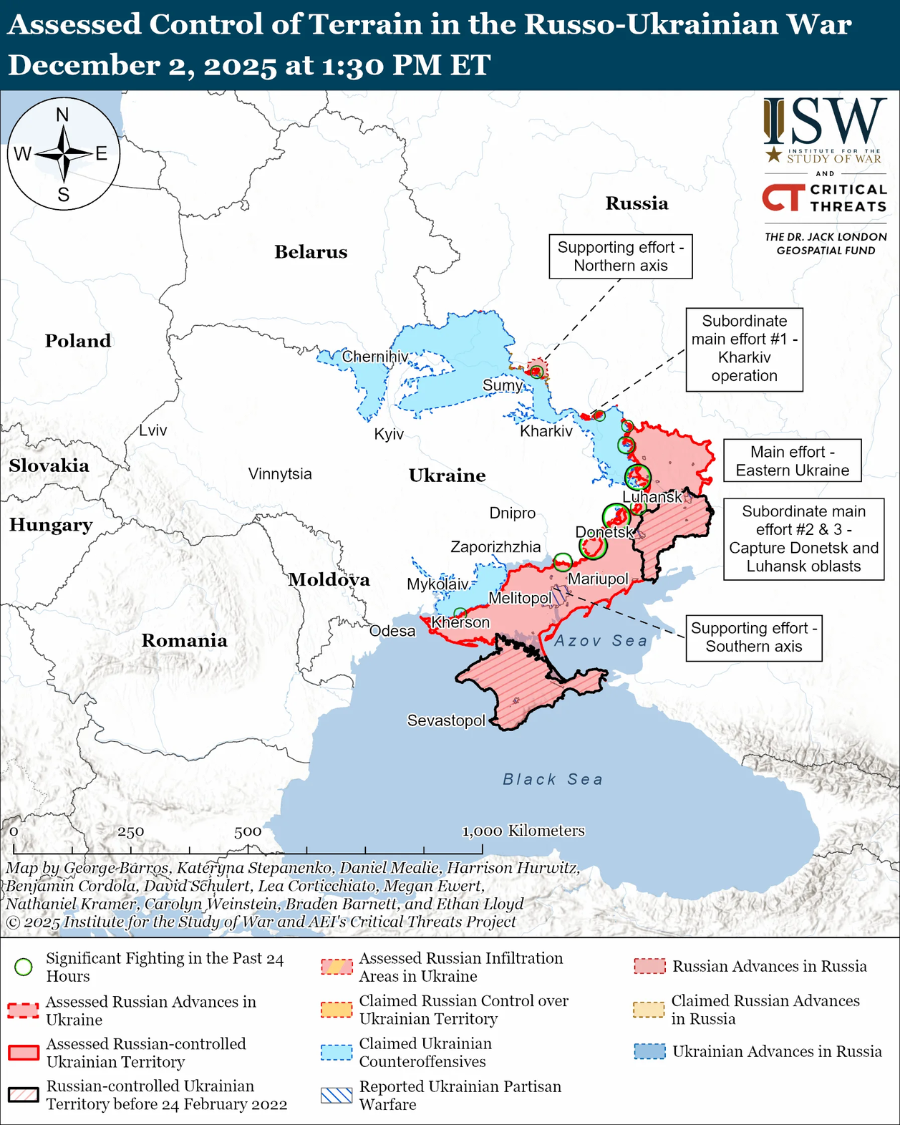
The revised plan emerged after weeks of US-Ukraine negotiations and replaces an earlier 28-point draft criticised for favouring Moscow. It would freeze fighting along current front lines and could involve the creation of demilitarised buffer zones. The proposal contains Kyiv’s clearest acknowledgement yet of possible territorial concessions but does not envisage Ukraine withdrawing from the roughly 20% of Donetsk region it still controls — a core Russian demand.
Zelenskyy has described the document as a “foundational” basis for ending the war, though it still lacks any formal response from the Kremlin.
Security guarantees at the core
Security guarantees are Zelenskyy’s top priority in Florida. “Security guarantees must be simultaneous with the end of the war, because we must be confident that Russia will not start aggression again,” he said. Ukraine is pushing for guarantees that would mirror Nato's Article 5, meaning a collective response if Russia attacks again, though details would be set out in a bilateral agreement with the US.
Zelenskyy has stressed that without binding guarantees, any ceasefire would risk collapse.
Air-defence shortages, exposed by the latest assault, have only sharpened Kyiv’s case.
Territorial concessions and red lines
Zelenskyy has signalled willingness to compromise, including withdrawing troops from parts of Donetsk not currently occupied by Russian forces, provided any pullback is reciprocal and results in demilitarised zones. He has also said Ukraine would no longer pursue Nato membership in exchange for security guarantees.
However, Kyiv rejects withdrawing from all of Donetsk, Russia’s central demand. Zelenskyy has repeatedly said Ukraine’s constitution requires any border changes to be approved by referendum, insisting that “the fate of Ukraine should be decided by the people of Ukraine.
”
Russia’s pressure and regional fallout
The Kremlin released footage of Putin in military fatigues receiving battlefield briefings, with Russia claiming control of Myrnohrad in Donetsk and Huliaipole in Zaporizhzhia — claims Ukraine rejected as “not supported by facts.” Putin said that if Kyiv refused peace, Russia would achieve its aims “by military means.” The strikes also triggered regional alerts: Poland scrambled fighter jets and temporarily closed airports, though no airspace violation was reported.
The message, as Zelenskyy sees it, was unmistakable — diplomacy under fire, on the eve of a decisive meeting.(With inputs from agencies)