A uni, casino and low-rise housing: The Docklands that might have been
Previously unseen cabinet papers have revealed secret warnings given to the Victorian government about what is now one of the city’s most maligned suburbs.
In the final years of the ailing John Cain and Joan Kirner governments, a very different vision for Docklands was taking shape.
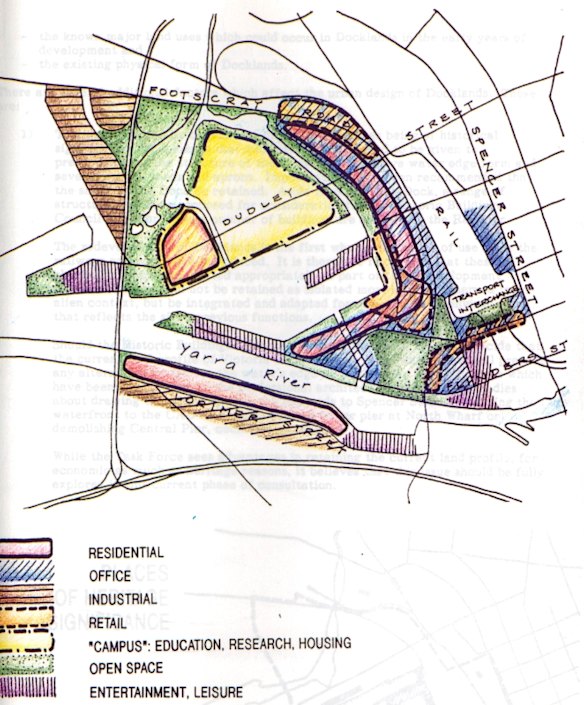
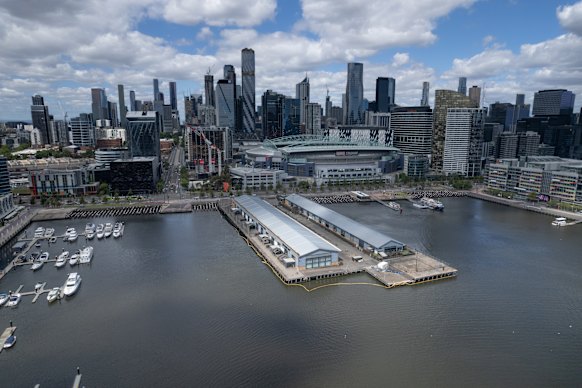
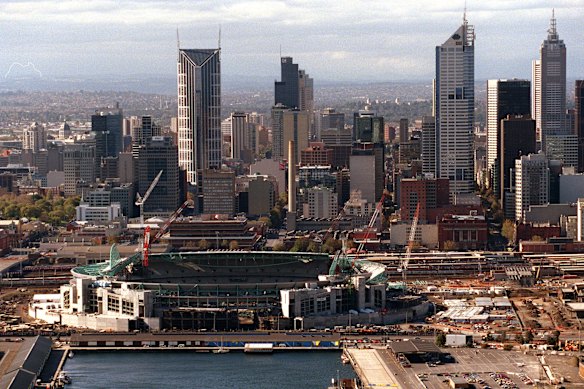
There was to be no stadium, but there would be a university. There would be few towering high-rise apartment buildings, and instead a focus on medium-density housing.
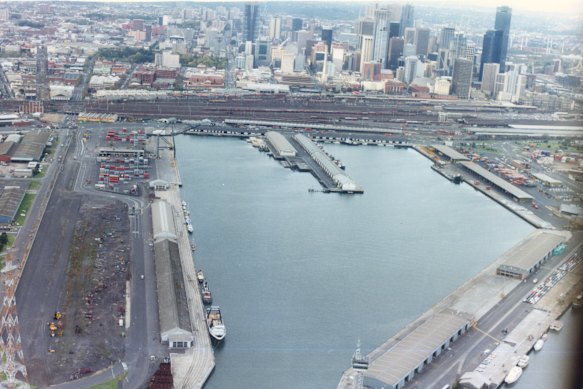
Docklands in September 1990. Credit: Jason Childs
The government’s vision for the waterfront – then a wasteland of empty warehouses, rotting wharves and sheds that hosted underground raves – was slated to include at least 10 per cent public housing and a technology hub.
The plan featured ideas for an open casino “set in parkland”, a native wetland at the mouth of Moonee Ponds Creek and public squares forming “links in a chain of open space”.
However, secret state cabinet papers from 1990 to 1992 – released for the first time on Thursday and reviewed by The Age – reveal a project already mired in controversy, long before Docklands became the most maligned suburb of Melbourne.
Blistering rebukes from a top public servant describe the languishing Labor government’s moves to progress Docklands development legislation as “beyond comprehension” in the midst of a massive real estate slump and economic crisis.
The Olympic dream
In 1990, the government was planning to introduce legislation that would create the Docklands Authority to oversee the area’s renewal.
Melbourne was bidding for the 1996 Olympics, and the reinvention was part of the city’s pitch; the site would host the athletes’ village.
But cabinet papers from August 1990 – one month before Melbourne lost the bid to Atlanta – show there was deep division within the government.
In a scathing internal briefing from August 3, 1990, the Department of the Premier and Cabinet warned that creating the authority was “irresponsible in the current economic climate” and would fuel unrealistic development expectations.
John Hartigan, of the department’s development branch, wrote: “The government is faced with competing priorities for capital funds for new initiatives, such as infrastructure in the 28 outer suburban growth areas, and will clearly be struggling to meet much publicised capital commitments such as a new museum and library.
“How one can justify raising expectations concerning a new massive property project like Docklands in the midst of possibly the largest real estate slump in recent history is beyond this department’s comprehension.”