After every economic norm is blithely tossed aside, what’s the future?
Everybody who claims to know where the AI revolution will lead is either lying or deluded. Investors are flying blind.
Opinion
By Clive Crook
December 30, 2025 — 5.00am
Ten years ago I praised a book by Mervyn King, former governor of the Bank of England, on the subject of “radical uncertainty”. Back then, I agreed with King that radical uncertainty – the kind that statistical analysis can’t deal with – was a pressing issue for financial regulators. After the extraordinary year just ending, the challenge is no longer so confined.
Over the past 12 months, the US has seen every norm of economic policy – trade policy, fiscal policy, monetary policy – blithely tossed aside. At the same time, the US economy stands at the bleeding edge of what might be as consequential an economic revolution as the transition from farming to manufacturing, or from manufacturing to services – except that the AI revolution could happen much faster. I’ve been writing about economic policy for more decades than I care to remember. Never have I witnessed anything remotely like this past year’s surge of disruption.

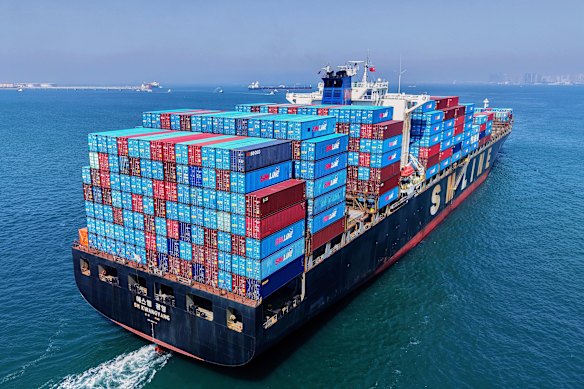
The US economy stands at the bleeding edge of what might be as consequential an economic revolution as the transition from farming to manufacturing, or from manufacturing to services.Credit: Getty Images
Where will it lead? Everybody who claims to know is either lying or deluded. That’s the point of radical uncertainty. The models that guide expert predictions rest on data that has never encountered shifts like these – certainly not all at once. Measures of risk based on established patterns are essentially useless.
If the economy crashes next year, it will be the most over-determined collapse ever seen, with far too many causes to choose from. (Talk about abundance.) Yet far from crashing, maybe the economy is on the cusp of a productivity revolution, powerful enough to overwhelm every choice, good or bad, that President Donald Trump’s administration and its successors might make. Nobody knows. This is as radical as uncertainty gets.
Current confusion over the state of the US economy seems emblematic. In the past few days, official statistics have told us that America’s economy is powering ahead (in the third quarter, gross domestic product grew at an impressive annual rate of 4.3 per cent) even as unemployment appears to be going up (leading the Federal Reserve, concerned about a possible downturn, to cut another 25 basis points from its policy rate earlier this month).