AMD leaves the door open to experimental FSR Redstone support on RDNA 3
At CES 2026, AMD used an interview with PCWorld to restate its official position on FSR Redstone while softening the edges around it.
(Image credit: PCWorld via YouTube)
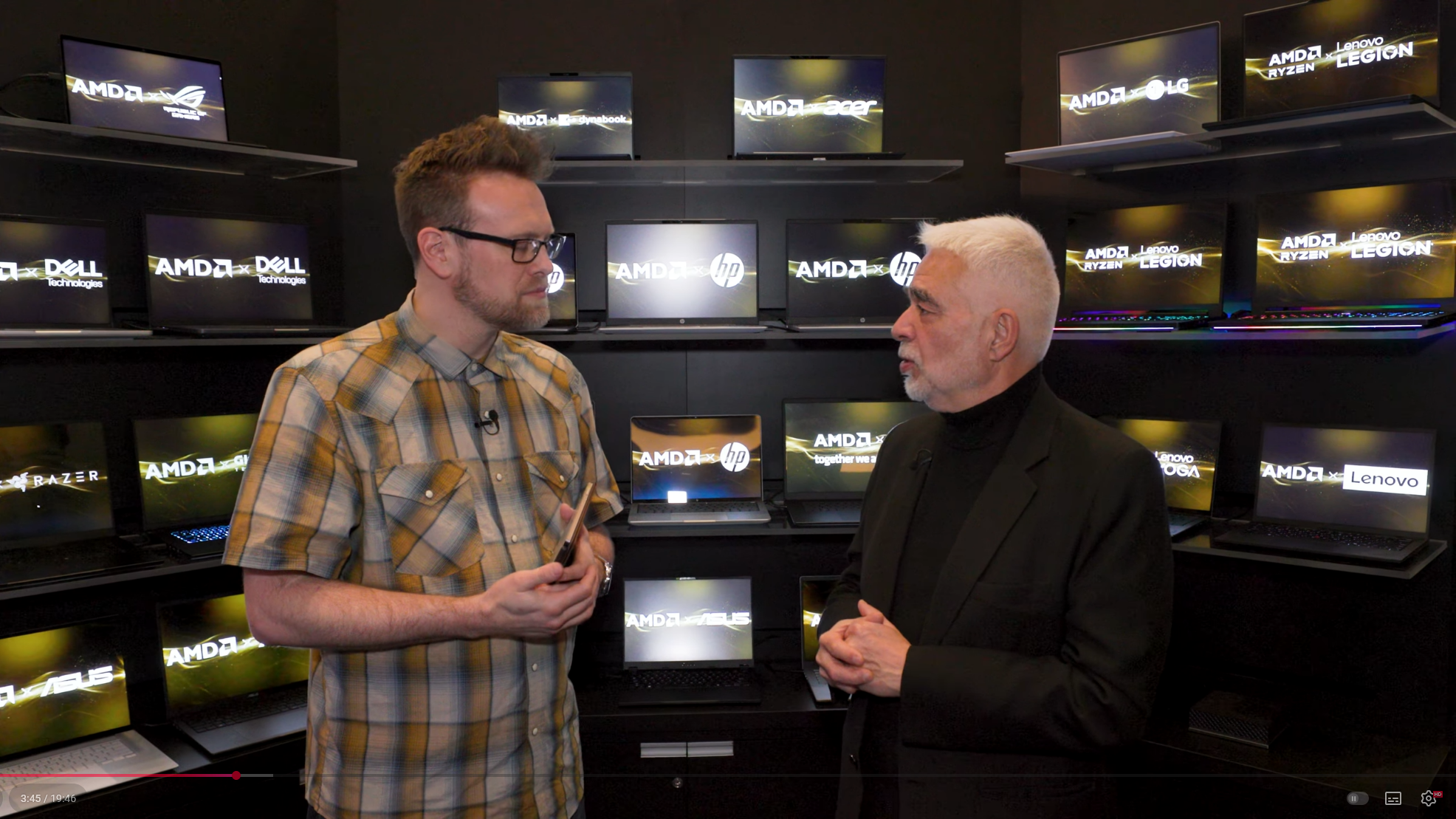
At CES 2026, AMD used an interview with PCWorld to restate its official position on FSR Redstone while softening the surrounding edges. During the interview, AMD Chief Software Officer and head of graphics software Andrej Zdravkovic said the full Redstone feature set remains tied to RDNA 4 hardware. At the same time, he stopped short of shutting down the idea of an experimental Redstone build for RDNA 3 users who are trying to make it work on their own.
Redstone bundles several ML-driven graphics features, including upscaling and frame generation, under a single umbrella. AMD has been clear that these features are designed around the performance characteristics of RDNA 4. Zdravkovic reiterated that position, saying the decision is not about artificial product segmentation, but whether the hardware can deliver a consistent experience across a wide range of games and systems. If enabling a feature degrades performance or image quality, AMD does not see value in shipping it.
Zdravkovic also explained that frame generation and similar ML workloads must complete within a single frame budget. If the GPU cannot do that fast enough, the result can be counterproductive. “If you don’t have enough time to do… the machine learning operations required, then you have to reduce the frame rate… to double it,” he said, describing a scenario where the feature undermines its own purpose.
Inevitably, the conversation switched to community experimentation. Asked about users who are already forcing parts of Redstone to run on RDNA 3 GPUs, Zdravkovic said, “all the power to them,” noting that such hacks may work on a specific machine or in a specific title. “I’m a geek myself, so I would do that for any technology,” he added.
Could AMD offer a beta or prototype Redstone build for RDNA 3? Not right now, according to Zdravkovic — such a release is “currently not in the plan,” but he did thank PC World “for the hint” and expressed interest in thinking through how such a prototype might work. AMD also emphasized that it continues to improve older architectures where it makes sense. Zdravkovic said the company is “definitely not going to withhold anything that really makes a difference,” but only when the net result is a clear improvement to gameplay quality or responsiveness.
