AMD's dual-cache Ryzen 9 9950X3D2 appears in first benchmark leaks — gaming-focused CPU features 192MB of L3 cache stacked across both CCDs
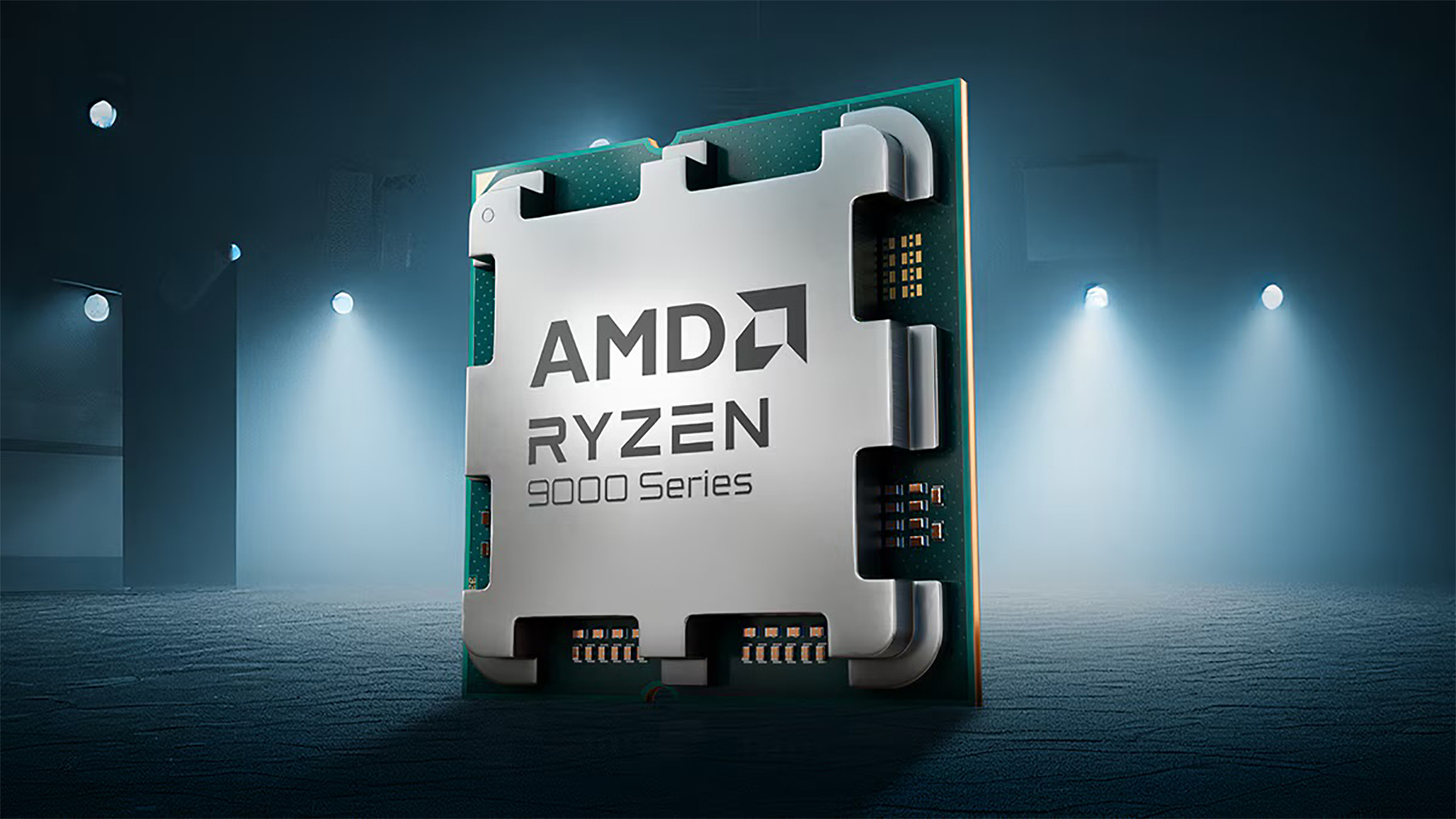
AMD is preparing a new flagship gaming chip, the Ryzen 9 9950X3D2, which is said to have 192MB of L3 cache thanks to its dual-cache design that will add 3D V-Cache across both CCDs. The CPU originally leaked months ago, but it has finally appeared on benchmarking databases PassMark and Geekbench, with amicable scores to boot.
(Image credit: AMD)
In late October, AMD's mid-cycle Zen 5 refresh leaked, giving us a glimpse at two new X3D CPUs the company has in store for CES 2026. One of those was the Ryzen 7 9850X3D, a higher-boosting version of the existing 9800X3D, and which has been featured in several leaks over the past few weeks. The other chip was a lot more mysterious: a supposed dual-cache Ryzen 9 9950X3D2, but updates on it went radio silent ever since — today, it has finally reappeared on both PassMark and Geekbench.
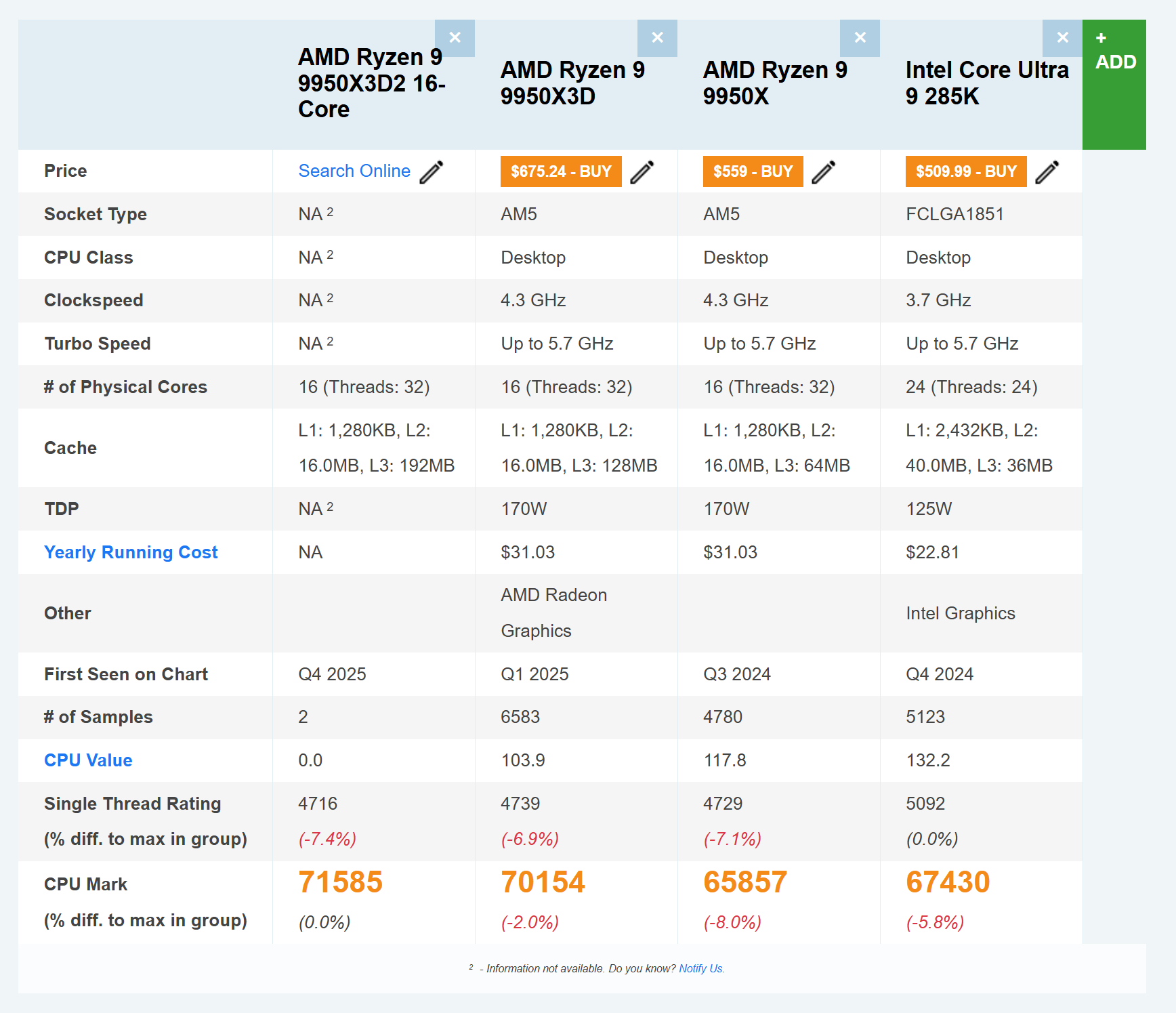
In PassMark, the 9950X3D2 achieved a multi-score rating of 71,585 and a single-core rating of 4,716. Both of those numbers are within the margin of error of the 9950X and 9950X3D, but a bit far from the highest-scoring CPUs on the database. Keep in mind that PassMark listings can be fabricated, so take all this with a heavy grain of salt.
(Image credit: Future)
The 9950X3D2 is reported to carry a whopping 192 MB of total L3 cache, which PassMark confirms, achieved by stacking it across both CCDs. It features the same 16-core, 32-thread layout as the 9950X and 9950X3D, but instead of 3D V-Cache on just one chiplet, it's present underneath both. This doubles the otherwise 96 MB L3 cache (32 MB L3 + 64 MB X3D) to 192 MB.
This would be the first time the chipmaker has achieved such a feat, rounding out an impressive generation as Zen 5 already made a massive leap by fully unlocking these SKUs. That was made possible by putting the extra 3D V-Cache under the CCD instead of on top, allowing for better thermal and power efficiency. Now, doubling that cache can lead to even more (albeit slight) gains in gaming workloads.