In 1975, the world decided that the mechanical watch was on the way out.
The “Quartz Crisis” had arrived, bringing with it Japanese-made digital watches that were cheaper, more accurate, and required zero maintenance.
To the masses, the intricate gears and springs of a Swiss timepiece suddenly looked like an expensive, indulgent passion, much like a five-day Test match looks to a generation raised on the three-hour adrenaline hit of the Indian Premier League’s Twenty20.
But the Swiss watch did not die. It stopped trying to be a timepiece and metamorphosed into an instrument of heritage, art, and status.
Quartz might dominate the market, but the mechanical would own the soul.
I have been astonished, gratified and heartened by the response to my article on the Boxing Day Test farce. It resonated with past players, coaches and fans alike.
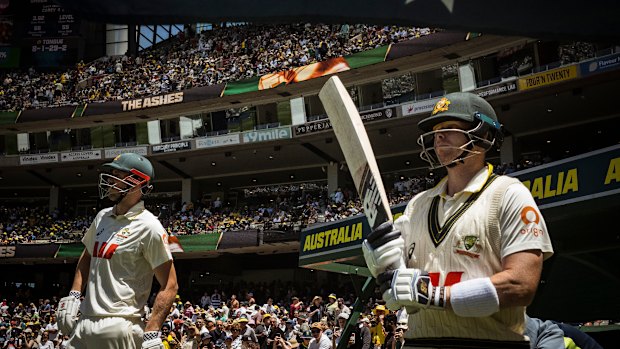
Cameron Green and Steve Smith take the field at the MCG last week.Credit: Chris Hopkins
The most encouraging inference is that Test cricket remains valuable to a significant supporter base and is worth saving.
What all cricket-playing countries need to understand is that the health of Test cricket is good for everyone. No one, not even India, can play cricket in a vacuum. For the IPL to succeed, it needs top-class international players to make it the stunning spectacle it is.
As we begin 2026, Test cricket is in its own “Quartz Crisis”. The franchise model is the undisputed economic engine of the sport, dictating the calendar and the bank accounts.
Loading
To survive this century, Test cricket must stop trying to compete with the “digital” speed of T20 and instead proudly embrace its identity as the “analogue” masterpiece.
This reinvention is not just about survival. It is about transforming a format that risks obsolescence into a curated luxury, one that appeals to connoisseurs who value depth over dazzle.
Drawing lessons from the Swiss watch industry’s revival, Test cricket can pivot by protecting its talent, bridging financial chasms, and marketing its unique narrative. Yes, the challenges are stark, and the path forward demands bold action from administrators, players, and fans.
To begin this resurrection, several structural changes must be prioritised.
Firstly, all countries need to work collaboratively as never before. It is in every nation’s interest for Test cricket to survive and thrive.
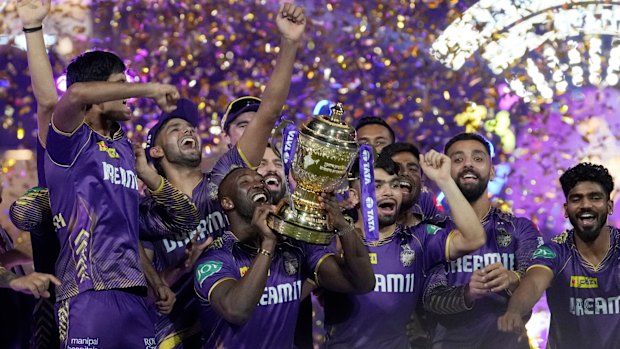
Where the money is: The IPL has become the richest competition in cricket.Credit: AP
India, in particular, must show magnanimity and leadership. In sharing their cricketing riches with all, they will ensure their pre-eminence in cricket is enshrined and permanently secured.
By becoming cricket’s benevolent banker (and donating even half their annual interest income of over $150 million), they will benefit as much, or more, than anyone.
The success, and therefore the riches, of the IPL has been built on the back of great players from everywhere.
A competition of only Indians would not have been as successful or as valuable. India must also recognise its responsibilities to the cricket world from whom it is taking cricketers for its IPL, but prohibiting its own from participating in the national T20 leagues of others.
The health of Test cricket is good for everyone. No one, not even India, can play cricket in a vacuum.
Secondly, the indiscriminate and detrimental proliferation of T20 leagues the world over must stop. No serious cricket lover wants to see players owned by franchises and lent occasionally back to their country.
The ICC must decide which are the world’s premier T20 leagues and only support, say, three or four of these, with a clean window of six weeks.
The home boards of participating players should be handsomely compensated with at least 35 per cent of the players’ fees as royalties for their investment in developing talent.
All other leagues should be unrecognised, hopefully into oblivion. We must arrest the haemorrhaging of Test cricketers into the mushrooming T20 leagues.
Due to this talent drain, Test cricket is losing its master craftsmen to the lucrative allure of burgeoning T20 leagues. Just as the Swiss industry had to protect its watchmakers from defecting to consumer electronics, cricket boards are watching their stars prioritise short-format riches over the red-ball grind.
Test match fees pale in comparison to franchise paydays, especially outside the big three nations (India, Australia and England). Test cricketers at their peak are choosing the security of multiple T20 contracts over the uncertainty of Test duties.
The West Indian Test team is virtually a third XI with so many first-choice players prioritising franchise cricket over the assured poverty of playing the longer form.
To address such issues, Test cricket must adopt a “Swiss” solution: treat the format as a protected heritage item rather than a mass-market product.
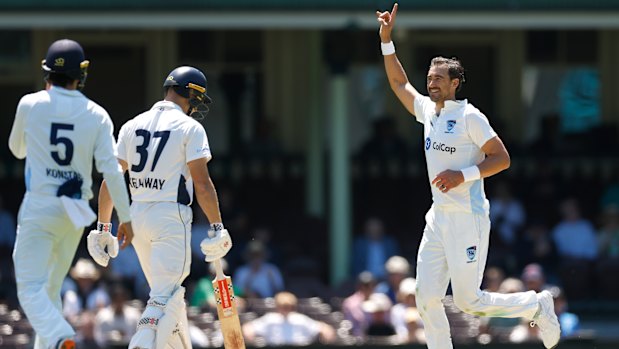
Australia’s Test success has been built on a strong Sheffield Shield competition.Credit: Getty Images
The ICC is debating a $20 million Test cricket fund, much like a luxury brand subsidising its most intricate workshops.
This is a good start, but it will cost many multiples of this figure to safeguard the future of the original format.
This fund aims to guarantee a minimum wage, establishing a floor of about $20,000 per Test for every player, regardless of their home board’s wealth. It would remove the hosting expense by covering touring costs for smaller boards, ensuring that a Test becomes a financial asset, not a liability.
Additionally, an “artisan” bonus could emulate the Board of Control for Cricket in India’s (BCCI) 2025 incentive scheme, which pays players up to Rs 45 lakh ($75,000) per match if they prioritise red-ball cricket.
India’s modern-day great Jasprit Bumrah.Credit: Getty Images
Such measures would level the playing field.
Thirdly, all Test-playing countries must be able to organise viable domestic red-ball competitions, something essential to developing strong Test teams.
Countries without a vital domestic competition have no chance of producing consistently competitive teams. The ICC must oversee and assist South Africa, the West Indies and Pakistan with the infrastructure to run robust national competitions.
The game cannot afford more countries to follow the West Indies into international irrelevance.
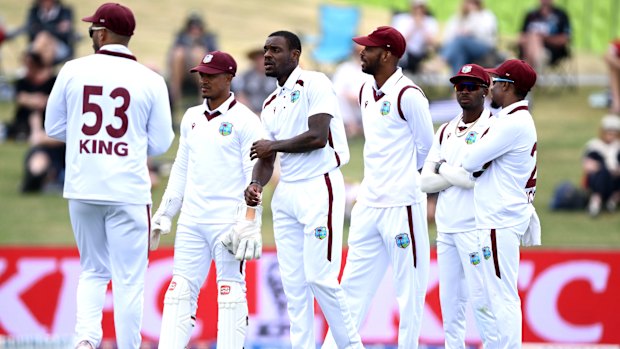
The once-powerful West Indies are ranked eighth in men’s Test cricket, above only Bangladesh, Ireland, Zimbabwe and Afghanistan.Credit: Getty Images
The ICC should also consider a “buddy” system where countries share data, expertise, and work closely on development programs, including matches with each other, to ensure the pipeline of red-ball cricketers is maintained. Australia and New Zealand are an obvious pairing.
The West Indies has dropped off the radar due to a lack of funding and diminishing infrastructure; a lack of talent is not their problem as they continue to develop competitive youth teams. England and the West Indies would be a good partnership, as would India and South Africa.
Pakistan, Bangladesh, and Sri Lanka would come under the auspices of the ICC itself, to ensure their competitiveness.
Fourthly, the World Test Championship must be elevated to a “major” on the Test cricket calendar. The final should be played as a best-of-three series on a home-and-away basis, with the top-ranked team hosting the first and third game.
This would elevate the event’s prestige and provide a fitting climax to the cycle.
Beyond finances, revitalisation requires a cultural shift. Test cricket must move from a “default” format to a “curated” one, with fewer but higher-quality series.
Administrators could schedule Tests in prime windows, avoiding clashes with major T20 leagues, and enhance the spectator experience through innovative broadcasting, such as immersive VR views or in-depth analytics that highlight the strategic nuances.
Marketing plays a crucial role: position Test cricket as the “slow food” of sports, a counter-culture against “fast” everything.
Loading
In an era of instant gratification, there is a growing appetite for narratives that unfold over days, building tension through sessions of ebb and flow.
Promote iconic venues like Lord’s, Mumbai, or the MCG as heritage sites, and celebrate milestones like centuries or five-wicket hauls with reverence and financial rewards.
Education and grassroots investment are equally vital. Introduce young players to Test cricket through programs that emphasise endurance and skills required to succeed against the moving or spinning ball, countering the T20 focus on power-hitting.
By fostering a dedicated community, the format can build a sustainable ecosystem, much like Swiss watch collectors who cherish rarity over ubiquity.
I don’t claim that all my above suggestions are practicable or affordable.