'Anaconda strategy': Will Xi Jinping risk it all over Taiwan in 2026?
SOURCE:Times of India|BY:TOI WORLD DESK
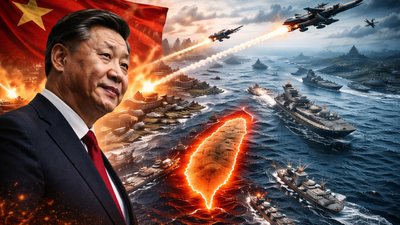
China's military drills near Taiwan, timed with the approaching 2027 deadline, signal Beijing's growing assertiveness under President Xi Jinping. The US is bolstering Taiwan's defenses amid concerns about delayed weapons and industrial capacity. Analysts warn of China's 'Anaconda strategy' and the potential for miscalculation, as Xi Jinping faces pressure to achieve 'reunification'.
Will 2026 become the year when Chinese President Xi Jinping decides that the long-promised “reunification” of Taiwan can no longer wait?Driving the newsChina’s latest round of live-fire military drills in the air and seas around Taiwan landed with unusually sharp timing: just as the calendar flipped another year closer to 2027, a date that looms larger for US defense planners than almost any other.
‘3, 2, 1, FIRE!’: China Rockets ROAR On Day 2 Of Taiwan War Games Yet Trump Says He Isn't 'WORRIED'
Beijing described the exercises as a “stern warning” to separatist forces. They included simulated aerial strikes, naval live-fire exercises and maneuvers designed to demonstrate the People’s Liberation Army’s ability to encircle and isolate the island. Taiwan’s aviation authority warned the drills disrupted flight safety, affecting hundreds of flights and tens of thousands of passengers.The drills followed Washington’s announcement of the largest-ever US arms package for Taiwan - more than $11 billion - approved under President Donald Trump’s administration. The package includes HIMARS rocket systems, howitzers, anti-tank missiles, drones and other systems intended to strengthen Taiwan’s ability to fight asymmetrically against a far larger force.
While Chinese exercises of this type are often planned well in advance, the sequencing matters. Beijing reacted furiously to the arms sale, with a Chinese embassy spokesperson warning that such moves “risk turning Taiwan into a powder keg” and accelerate the possibility of conflict in the Taiwan Strait.Why it matters
For the better part of five years, the US military has planned around a single assumption: that China wants the capability to take Taiwan by force as soon as 2027. That belief has driven everything from force posture to industrial policy - even if intelligence officials stress that “ready by 2027” does not mean “invade in 2027.”
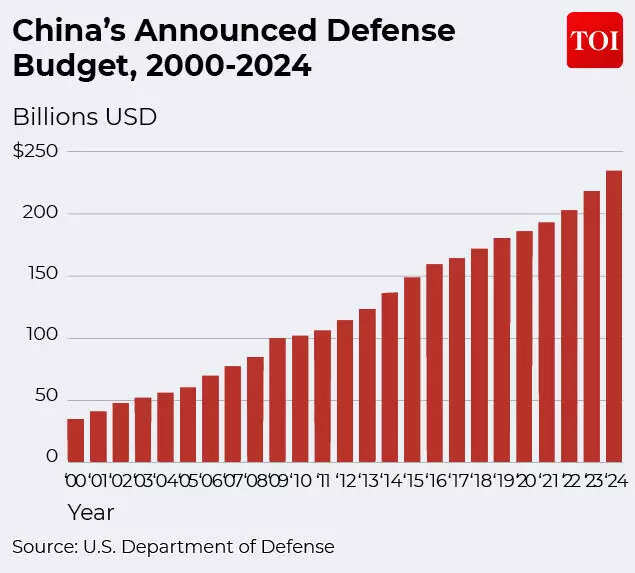
The timeline has already reshaped US strategy. Washington has expanded access agreements and infrastructure across the Pacific, poured billions into domestic semiconductor manufacturing, rushed arms to Taipei and repositioned naval and air assets with a Taiwan contingency in mind.
But the urgency of those moves has not always matched the calendar. With 2027 now just around the corner, Pentagon planners worry about a convergence of unfinished business: delayed weapons deliveries, a strained defense industrial base, and Pacific infrastructure projects still moving at peacetime speed.
“We’re not punching out ships any faster. Submarines aren’t getting submerged into the ocean any faster,” Mike Kuiken, a Hoover Institution fellow and member of the US-China Economic and Security Review Commission, told Axios. “There’s a real convergence of issues coming in 2027 as we think about whether or not we’re going to be prepared.”
The big picture: China’s ‘Anaconda strategy’Taiwan sits at the center of several overlapping global fault lines: great-power rivalry, semiconductor supply chains and the credibility of US security guarantees in Asia.
The island produces the bulk of the world’s most advanced chips, making any conflict there a shock to the global economy. Randy Schriver, a former US assistant secretary of defense, has said the US decision to invest heavily in domestic chipmaking was explicitly shaped by the 2027 timeline.At the same time, Beijing increasingly sees Taiwan not just as a territorial issue, but as a test of China’s rise - and of whether the US-led order can still block Beijing’s ambitions.
Bloomberg Opinion columnist Hal Brands has described China’s approach as an “Anaconda strategy”: tightening pressure through cyberattacks, disinformation, diplomatic isolation and economic coercion until Taiwan yields. Undersea cables have been cut. Cyber intrusions are constant. Beijing squeezes Taiwan’s remaining diplomatic partners and blocks its participation in international bodies.The logic, Brands argues, is that isolation and demoralization can achieve what a risky amphibious invasion might not.FlashbackThe current moment is often framed through what US defense officials call the “Davidson window,” named after Adm Philip Davidson, the former head of US Indo-Pacific Command. In 2021, Davidson warned that China sought the capability to seize Taiwan “in the next six years.”Two years later, then-CIA director Bill Burns said intelligence showed Chinese President Xi Jinping had “instructed the People’s Liberation Army to be ready by 2027 to conduct a successful invasion.”
Those statements hardened 2027 into a planning assumption in Washington - one that still shapes war games, budgets and alliance consultations.Between the linesReadiness is not intent - and US intelligence agencies continue to stress that distinction. Officials believe Xi wants the option of invasion by 2027, not necessarily the order on his desk.That nuance matters because Beijing has many tools short of war.
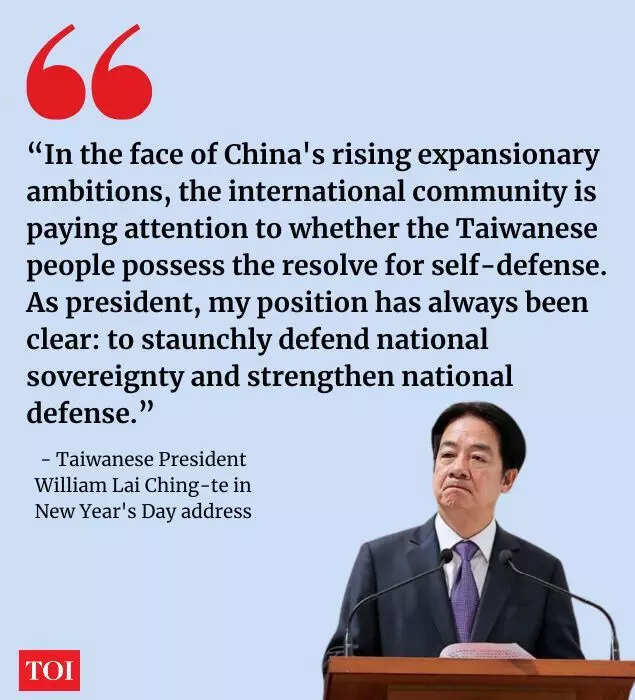
Analysts increasingly focus on scenarios like a quarantine or blockade, customs inspections that choke trade, or intensified gray-zone pressure that stops short of crossing a clear red line.The Economist’s Patrick Foulis warns that after a strong 2025, China’s leadership faces “a year of temptation” in 2026. With the Communist Party’s next five-year congress approaching in 2027 - when succession questions will loom - some of Xi’s advisers may argue that the strategic conditions for coercing Taiwan will never be better.Those conditions include what Beijing perceives as US ambivalence, polarized politics in Taiwan, and broad international support - roughly 70 countries - for “reunification by all means,” as Chinese diplomats phrase it.But temptation cuts both ways. Foulis also argues that hubris has been a recurring feature of Xi’s rule, from wolf-warrior diplomacy to zero-Covid. Overreach on Taiwan could trigger a regional arms race or a catastrophic war that derails China’s long-term rise.What they’re sayingChinese officials have left little doubt about how they view US arms sales. Embassy spokesperson Liu Pengyu told Axios the package “grossly violates the one-China principle and the three China-US joint communiqués,” adding: “The Taiwan question is at the core of China’s core interests, and is the first red line that must not be crossed in China-US relations.”Taipei’s message is defensive and resolute. A spokesperson for Taiwan’s de facto embassy in Washington said the island remains committed to maintaining the status quo, but “facing mounting aggressive acts from the other side, President Lai has said that Taiwan must make the best possible preparations for worst-case scenarios and be ready, regardless of the timeline.”
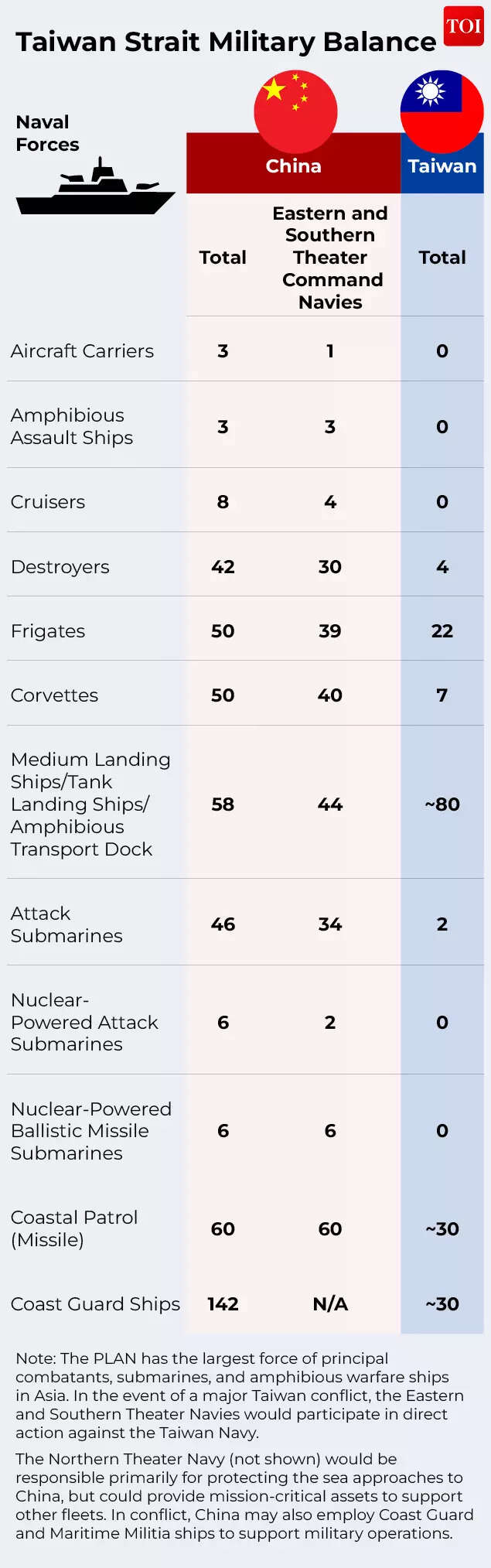
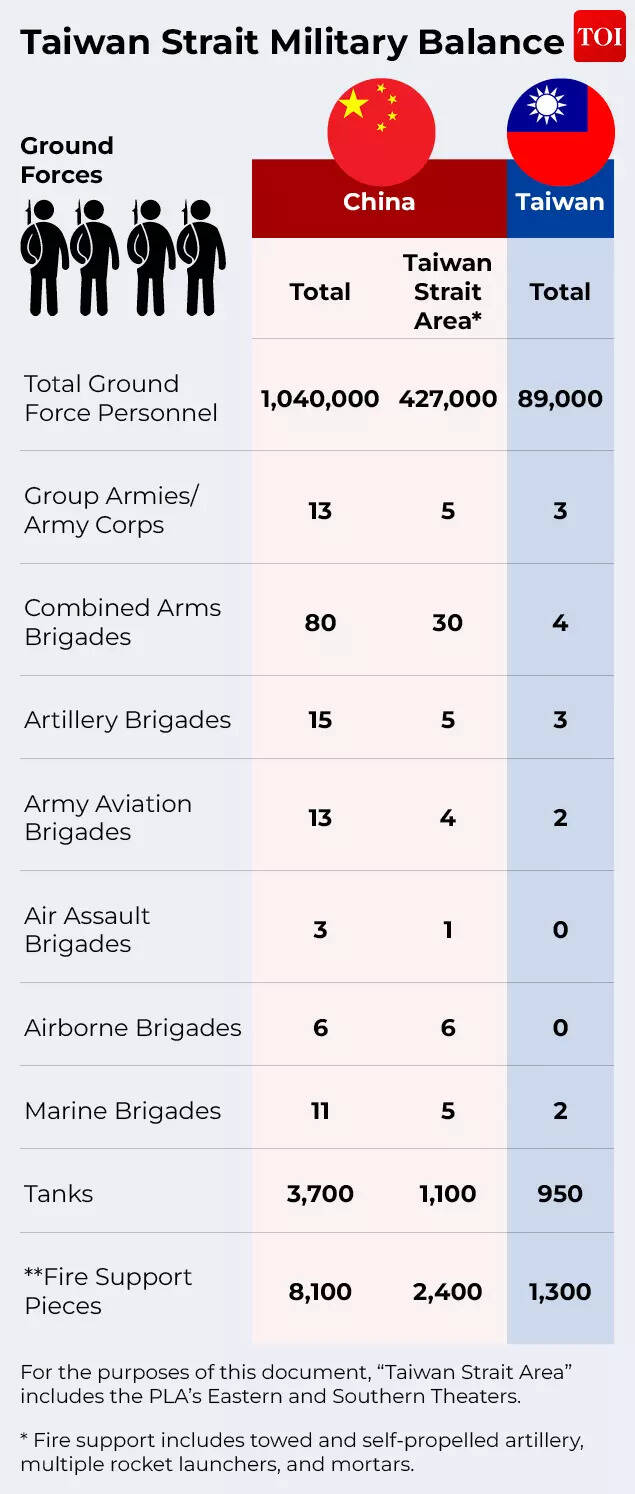
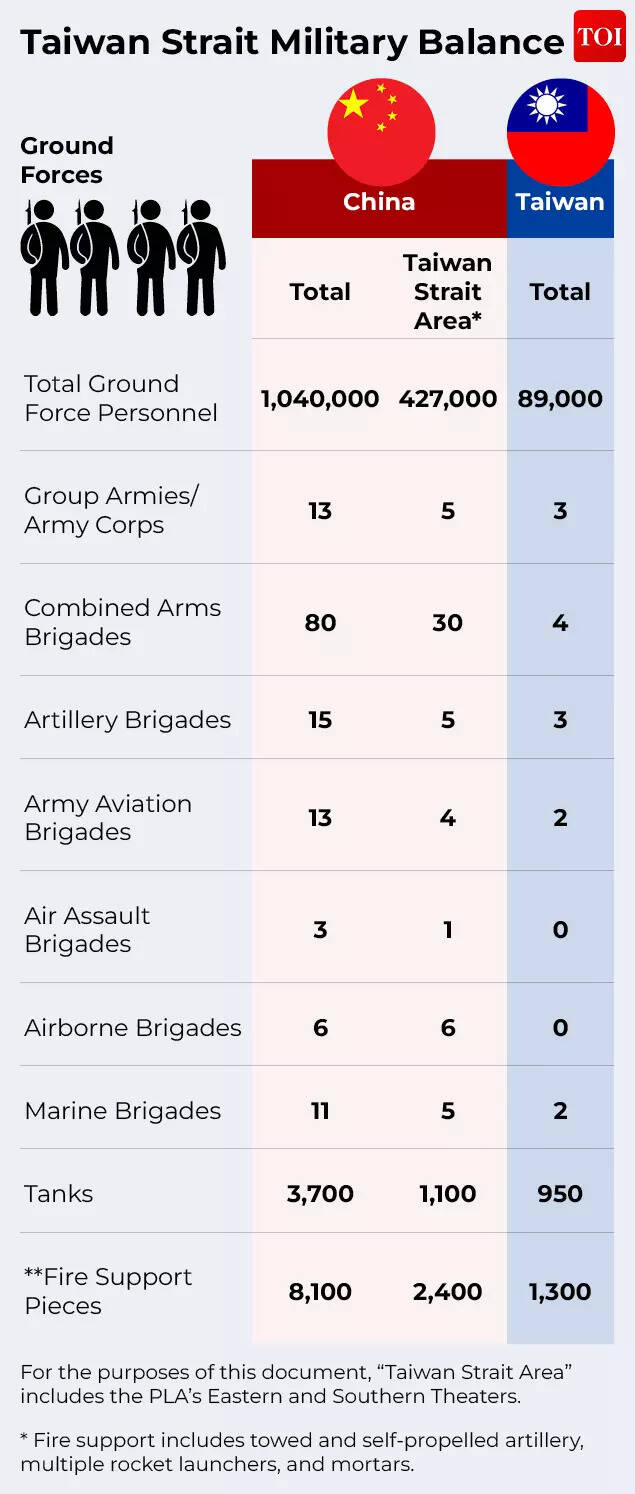
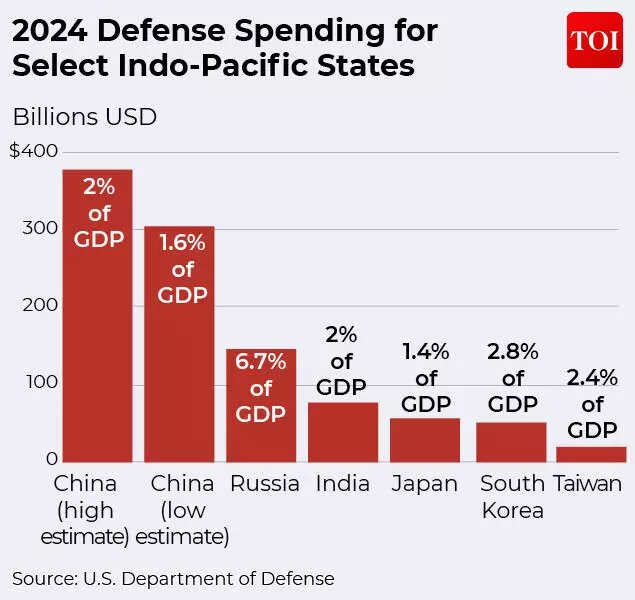
President Lai Ching-te has pledged to raise defense spending toward 3% of GDP, invest in mobile missile systems and drones, and conduct urban resilience drills designed to prepare civilians for sustained pressure.Trump, for his part, has sought to play down the immediate risk. Asked about the Chinese drills, he emphasized his relationship with Xi and said, “I don’t believe he’s going to be doing it.” He also dismissed the exercises as routine: “They’ve been doing naval exercises for 20 years in that area,” according to Bloomberg.Zoom inMilitarily, Taiwan remains one of the hardest targets on earth. Rough seas, narrow beaches, mountainous terrain and dense urban centers complicate any amphibious assault. Taiwan’s forces are increasingly optimized for asymmetric defense - mobile missiles, sea mines and drones designed to turn the strait into a killing zone.And any invasion would almost certainly draw in the US - and likely Japan - raising the risk of a major-power war.
That reality underpins deterrence, even as Beijing’s capabilities grow.Yet deterrence is not static. US officials privately worry about the defense industrial base. Taiwan will not receive all of its F-16V fighter jets by the end of 2026 as originally promised. Pacific infrastructure projects - airstrips, ports and fuel depots - remain incomplete.Ely Ratner, who oversaw Indo-Pacific security policy in the Biden administration, has said much of the construction is still happening at peacetime pace - a mismatch with the compressed timeline.The regional angleChina’s pressure campaign is not confined to Taiwan. The Wall Street Journal has reported that Beijing is pairing domestic propaganda - what Mao once called “the pen” - with intimidation of Taiwan’s supporters - “the gun.”That includes sharp warnings to Japan after Prime Minister Sanae Takaichi suggested a Taiwan contingency would involve Tokyo. Chinese coast guard vessels have probed disputed islands, drones have flown near Japan’s westernmost territory, and officials have quietly discouraged Chinese tourism to Japan.
The goal, analysts say, is isolation: cutting off Taiwan diplomatically and psychologically, while testing whether its partners will blink.Reality check: The danger aheadHistory suggests that wars often begin not with certainty, but with miscalculation. Overconfidence in Beijing, defeatism in Washington, or panic in Taipei could each prove destabilizing.As a New York Times analysis noted recently, the widening gap between China’s confidence and America’s self-doubt increases the risk that each side misunderstands the other’s resolve.
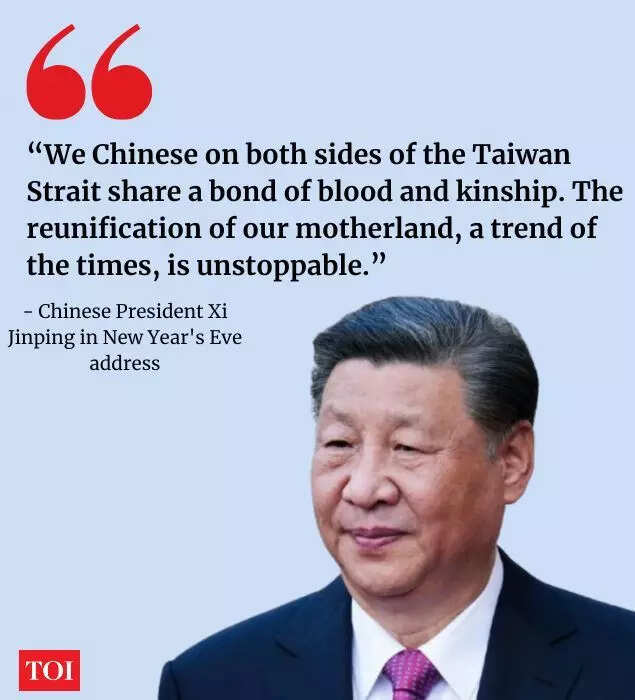
Xi has made Taiwan a personal legacy issue, folded into his vision of national rejuvenation. Yet he has also shown patience, preferring to wait until conditions tilt decisively in his favor.The question hanging over 2026 is whether restraint will still seem wiser than action. Temptation does not guarantee invasion. But as the clock ticks toward 2027, the margin for error is shrinking.Despite the drumbeat of drills and deadlines, most analysts do not see an imminent invasion.
China’s leadership understands the staggering risks: military failure, economic sanctions, capital flight and a rupture with the world’s advanced economies.
Many believe Xi still prefers a peaceful outcome - or at least one that avoids a shooting war. Polls in Taiwan, however, show a supermajority now identify exclusively as Taiwanese, suggesting Beijing is losing the “hearts and minds” battle.That demographic and political reality may increase pressure on Xi over time.
Taiwan is a legacy issue for him, central to his vision of national rejuvenation. But patience has long been part of Chinese statecraft.What nextThe next two years are likely to bring more of what the region is already seeing: Larger drills, sharper rhetoric, deeper gray-zone pressure - and more arms flowing to Taiwan.For Washington, the challenge is closing the gap between plans and capabilities before 2027 arrives. For Beijing, the challenge is resisting the temptation to believe its moment has arrived.Bottom line: 2027 is less a countdown clock than a stress test - of deterrence, alliance cohesion and Xi’s judgment. The danger is not just war by design, but miscalculation driven by confidence in Beijing and doubt in Washington.