Animal Crossing defined cozy gaming — yet cruelty made the original special
Tom Nook and your neighbors have no trouble insulting you right to your face.
Skipping town and starting over somewhere new is never easy, and being immediately placed into indentured servitude and called annoying by all your neighbors certainly doesn’t help. But that’s exactly how 2002’s Animal Crossing begins. Somehow, I find this to be one of the most charming introductions to a game series ever made, and, on a nostalgic lark, I recently ventured back to start a new town. As someone who also just began a fresh Animal Crossing: New Horizons island ahead of the 3.0 update, it was hard not to compare its opening with that of the original, especially because the differences are hilariously stark.
As soon as the most recent installment begins, Timmy and Tommy praise you for your decision to purchase a getaway package, let you choose your island layout, and customize your character. Nook gives you just two simple tasks once you arrive. You’re told that Nook Inc. will always be there to support you, and Tom calls the island his most exciting venture yet as he dubs you the resident representative, a position that comes with a shocking amount of power.
Conversely, players begin Animal Crossing aboard a train on their way to a new town, but unlike those partaking in the all-inclusive getaway package, there is absolutely zero plan. You haven’t made any arrangements for a place to live, and have barely any money to your name — two facts basically everyone you meet will make fun of you for endlessly. Despite thinking you’re an idiot, Rover, a cat you meet on the ride, offers to call up his real estate buddy Tom Nook and arrange some housing for you.
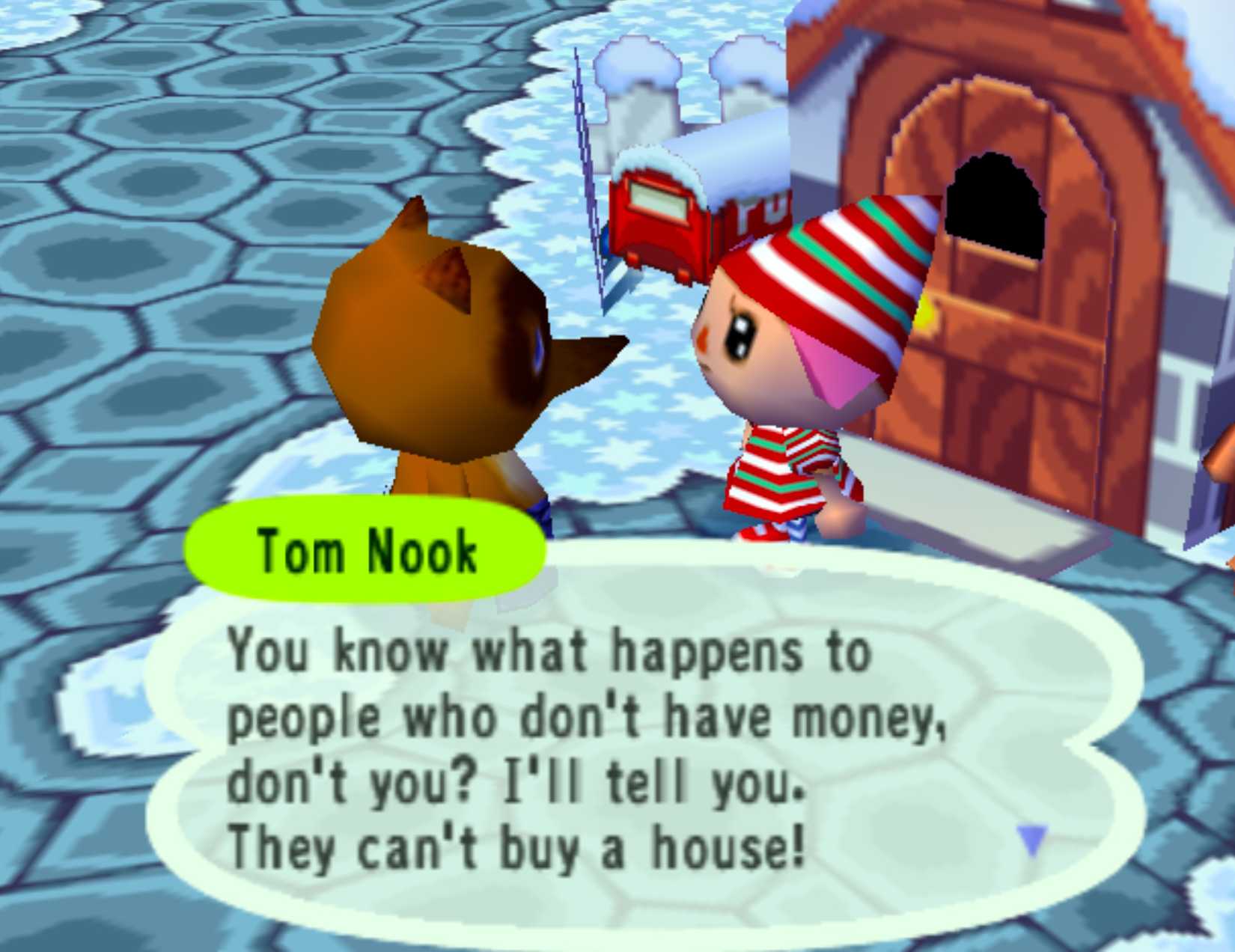Image: Nintendo via Polygon
Upon arrival, Tom Nook laughs in your face about moving to a town without a place to live before showing you a set of four glorified shacks to choose from. It feels much less whimsical than the tent in New Horizons, as does Tom Nook’s reaction to realizing the player is broke. In the newest installment, he lets you pay off your first debt at your own pace with easily-earnable Nook Miles; in the original, he immediately puts you to work in his shop to earn your stay.
This labor is what serves as the game’s tutorial, showing off many of its features, particularly ones players may not know how to engage in without being told, like sending letters and posting on the bulletin board. All of this is framed as tasks for Nook — delivering furniture to your neighbors (who then explain how to decorate), sending them advertisements in the mail, and planting greenery around Nook’s shop all show you how you can spend your time. It’s also all wrapped up in one of the biggest overarching game mechanics: Repaying debts to Tom Nook.
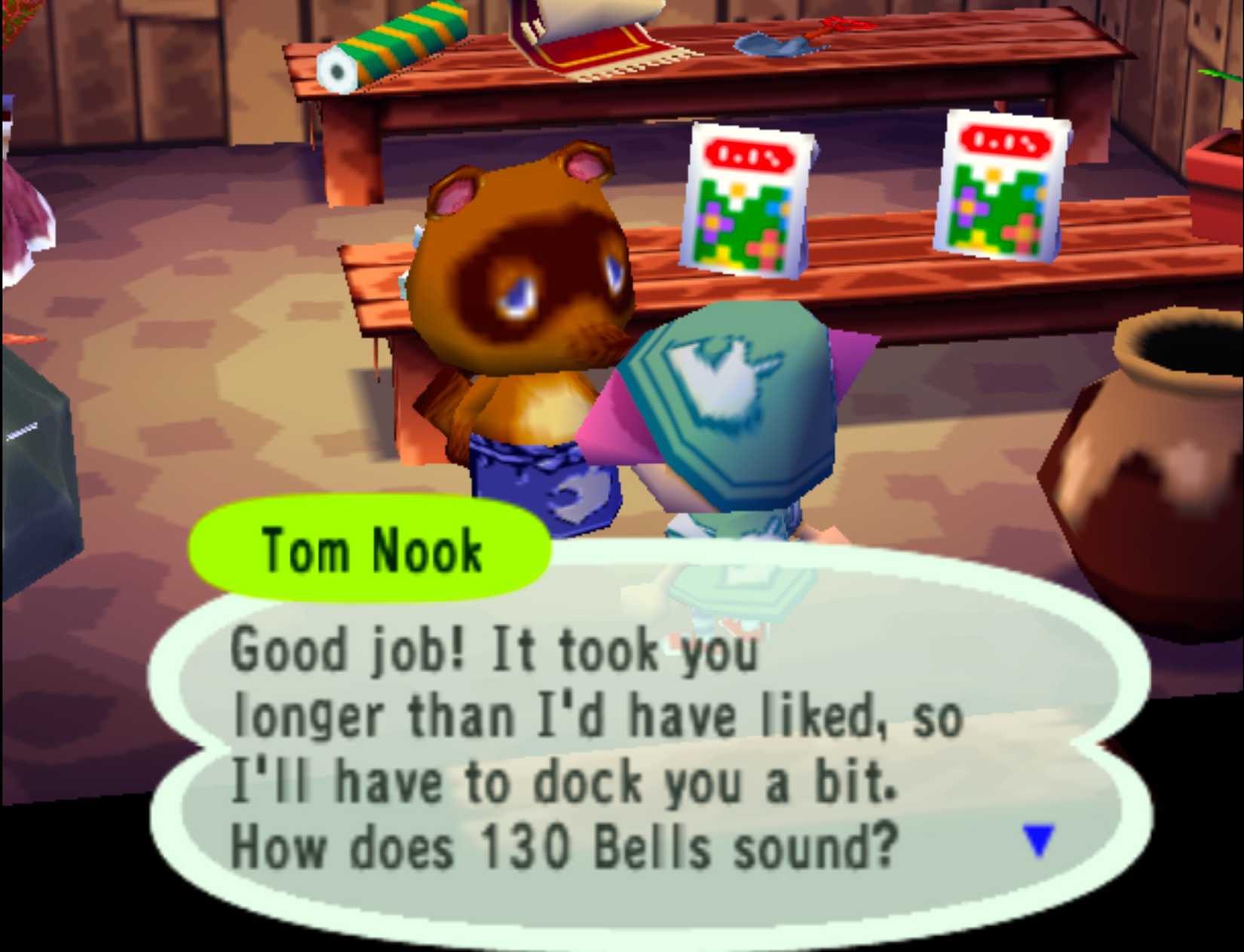Image: Nintendo via Polygon
Over two decades later, I can’t pin down precisely what it is about this series of chores that is immediately engrossing. Perhaps it’s the idea of having to work for something, but entirely at my own pace, or the way it takes me all over the map of this serene new place I get to call home. Maybe it’s just subconscious “I can fix them” impulses being placed upon my mean neighbors. Whatever it is, the menial tasks and quirky characters immediately endeared me to the game when I was a kid and made me want to keep playing, and still do today.
If you count the entire process of earning your island in New Horizons a high enough rating for K.K. Slider to perform as a tutorial — which I’d argue it is — the introduction to Animal Crossing is much briefer, taking only an hour or so to complete versus several real-life days. Though it’s shorter, and almost everyone you talk to calls you weird or stupid, it serves its purpose just as well as its modern counterpart — it’s simply trying to accomplish something different.
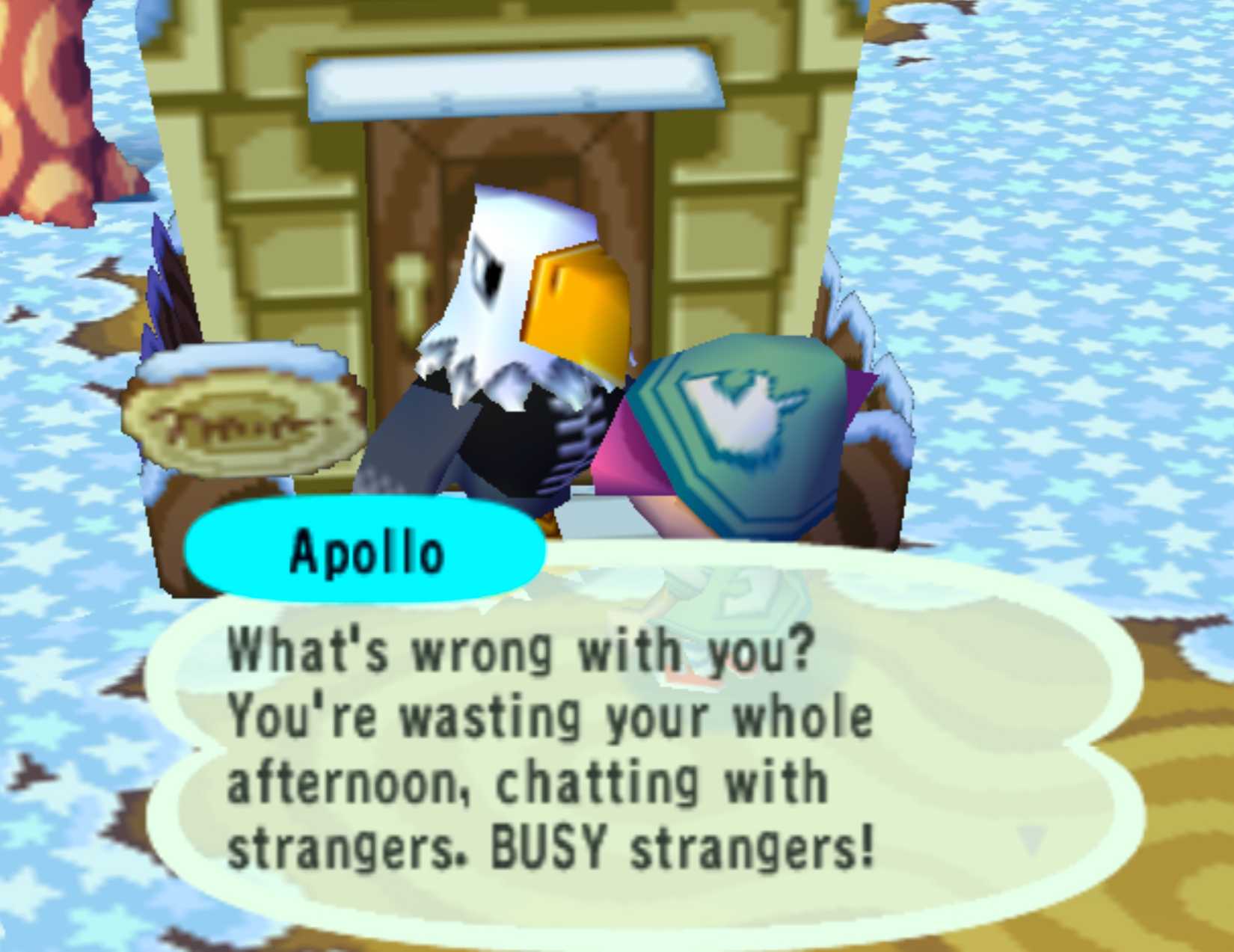Image: Nintendo via Polygon
Just as New Horizons’ island vibe is that of a welcoming community everyone has come together to build — especially you, the resident representative — Animal Crossing centers on the experience of moving to a new place. It’s all about slowly getting your neighbors to open up to you, making your house into a home, and enjoying whatever surprises the day brings (even if it's a villager that’s just placed their home in the middle of your garden) that are out of your control.
Whether one of these concepts is better than the other is in the eye of the beholder; personally, I consider it a sort of apples versus oranges situation. Island life undoubtedly has less bite than previous Animal Crossing incarnations, especially the original game, but I’ve never been too fussed about the gradual softening of the series. It makes sense to me that characters like Tom Nook would lighten up over time, and I’d rather see each game evolve rather than carbon copy its predecessor.
Regardless of preference, it’s genuinely impressive how the beginning of Animal Crossing perfectly encapsulates its genre — one which, at the time of its release, was a category unto itself. While there had been a few prior cozy games like Harvest Moon, there had never been anything as broad and free of consequences, with such a wide array of gameplay elements. In just an hour, Animal Crossing succinctly shows you what you’re in for: You’re going to do a lot of work, and you’re going to love it.