Another 16-pin GPU power connector gets scorched, but this time it's not an RTX 5090 — User finds their Sapphire Nitro+ 9070 XT with scorched pins
The decisions to put a 16-pin power connector on a non-Nvidia GPU has started to show its consequences on the RX 9070 XT. Sapphire's Nitro+ variant uses a 12v-2x6 connector, which has burnt down thrice already, making this the fourth case so far, joining the first ASRock Taichi card that broke the dam.
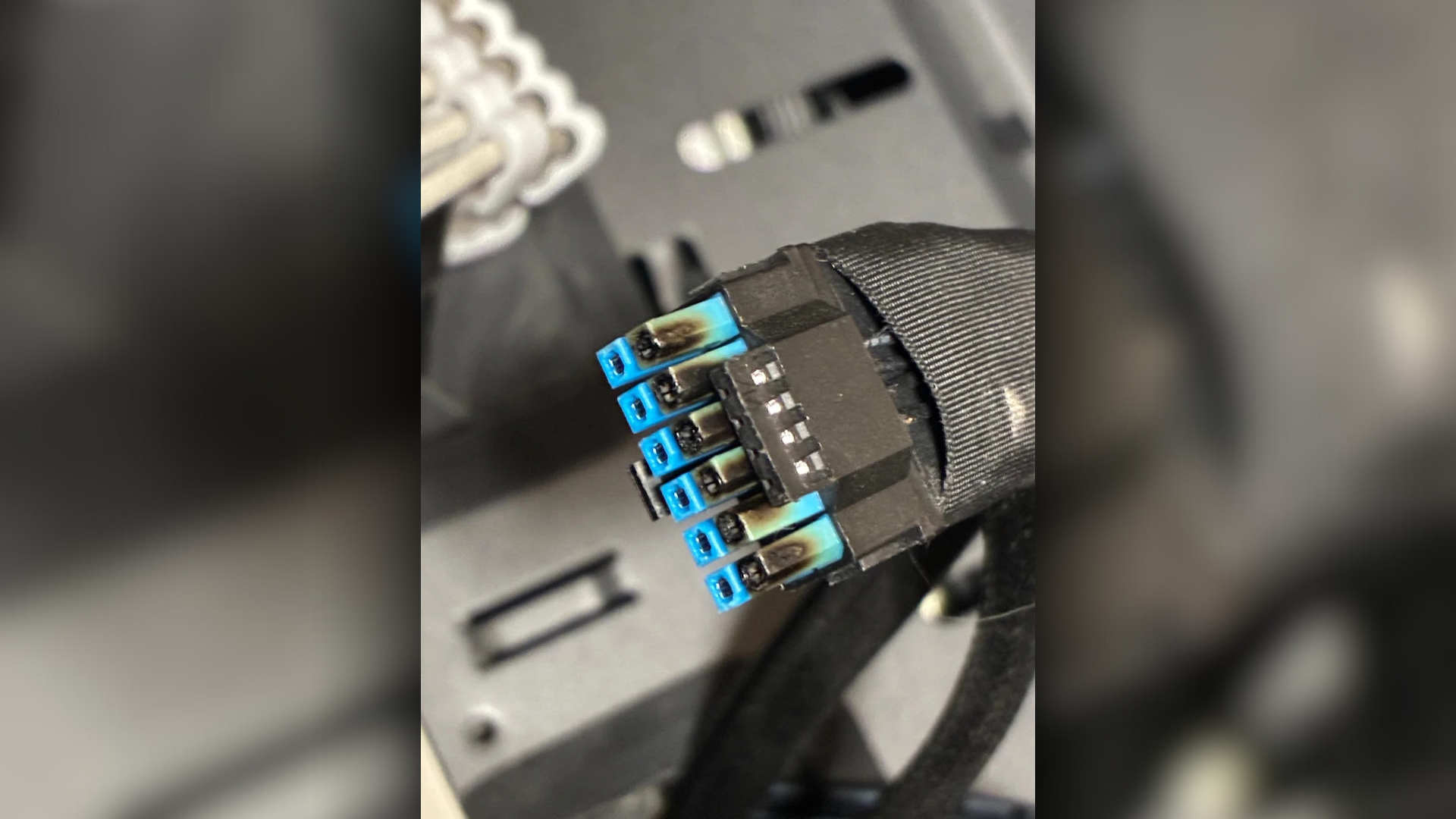
(Image credit: u/divinethreshold on Reddit)
A few months ago, we covered the first reported case of a 16-pin power connector meltdown for AMD's RX 9070 XT. Usually, it's Nvidia's RTX 4090 and 5090s that face the fire, but Sapphire has adopted the same 16-pin power connector on one of its RDNA 4 GPUs. Today, another report has surfaced on Reddit where a user found their Nitro+ RX 9070 XT with a considerably scorched connector after experiencing a period of system instability.
Another one bites the dust - Sapphire 9070XT Nitro+ 12V HPWR FAIL from r/radeon
Usually, we're left to guesstimate what happened in a certain case, but here it's pretty clear that the pins in the bottom didn't make proper contact with the GPU's female plug, leading to increased load on the top row. Despite the fact that the RX 9070 XT is a midrange card with only 304W of TGP, the electrical load was too much for just half of the pins, so they got scorched. Otherwise, the 12V-2x6 connector is rated for up to 600W of power.
We've covered several reports pertaining to melting 16-pin power connectors, the most recent of which was an RTX 5090. For AMD's RX 9070 XT, though, every single case has exhibited the same issue: the top row of the 16-pin power connector is what burns out. The first case was a ASRock Taichi card back in August, then Sapphire's Nitro+ design made rounds once in October, and twice in November, leading us to the fourth case for the same variant today; fifth overall.
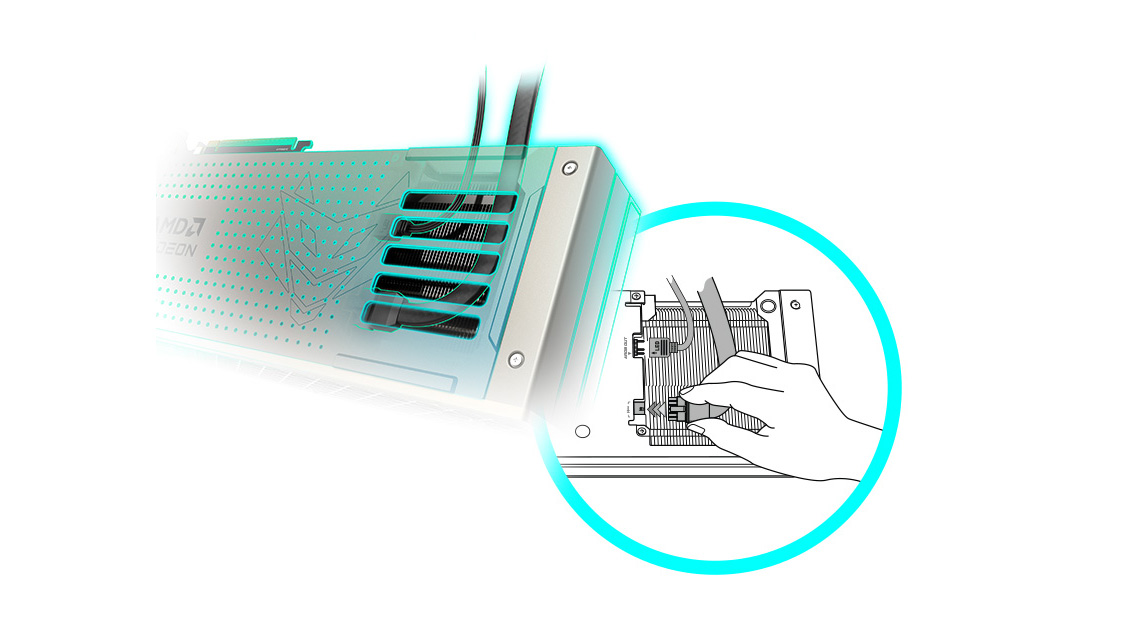
Sapphire employs an aesthetics-first approach for the power connector, putting it inside the card which requires an L-shaped bend on the cable (Image credit: Sapphire)
The damage is easily visible in all these cases because Sapphire provides a blue-tipped 16-pin to 8-pin adapter that most people use with their older power supplies. This adapter essentially takes what's a 32-pin connection (16 on either side) to an 80-pin connection, which more than doubles the points of failures. It's simple math; the more factors there are in an equation, the more likely it's to break down with even the slightest of errors.
