Astronomers detect rare 'free floating' exoplanet 10,000 light-years from Earth
Astronomers have detected a "free floating" rogue planet the size of Saturn drifting through the Milky Way some 10,000 light-years from Earth.
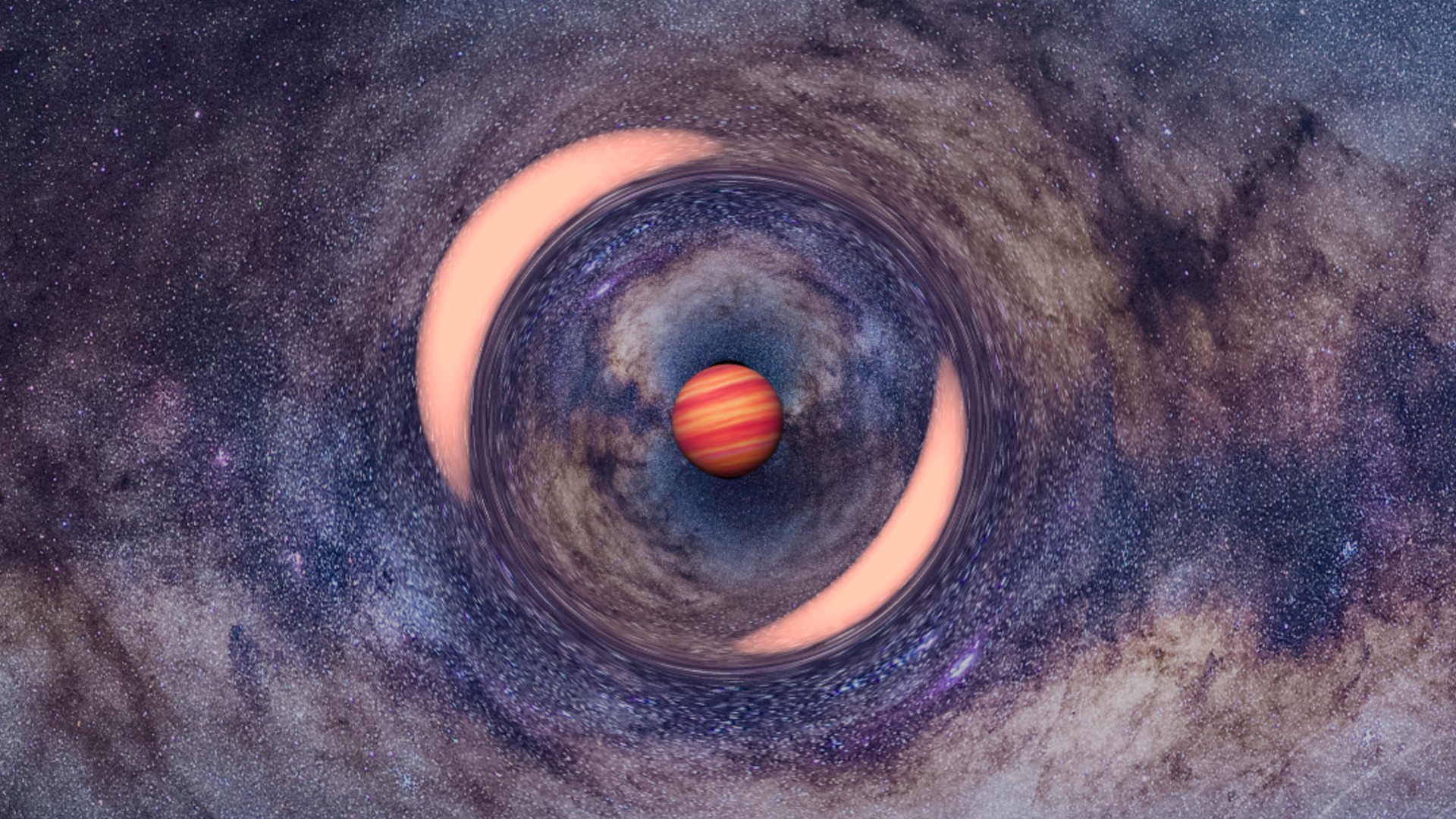
An illustration of a free-floating planet gravitationally microlensing a distant star in the galactic center. Two magnified images of the source star surround the planet, a phenomenon known as an Einstein ring. (Image credit: J. Skowron, K. Ulaczyk / OGLE)
Rogue planets — worlds that drift through space alone without a star — largely remain a mystery to scientists. Now, astronomers have for the first time confirmed the existence of one of these starless worlds by pinpointing its distance and mass — a rogue planet roughly the size of Saturn nearly 10,000 light-years from Earth.
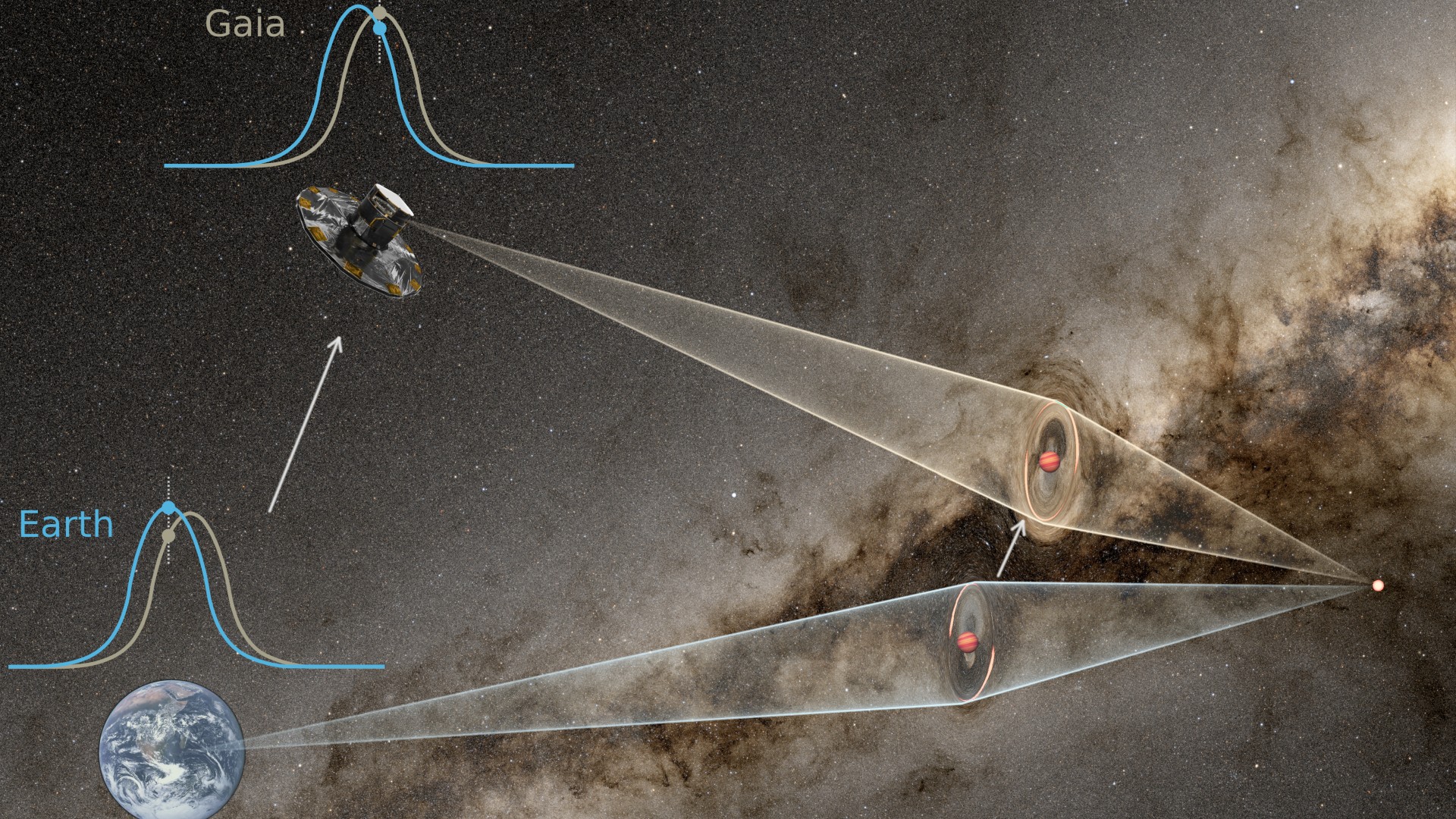
Planets are typically found bound to one or more stars. However, in 2000, astronomers detected the first signs of a "rogue planet" — a free-floating world that orbited no star. Then, in 2024, researchers detected an object distorting the light from a distant star, simultaneously from both Earth and space using several ground-based observatories as well as the European Space Agency's now-retired Gaia space telescope. These observations helped scientists estimate that the object was a newfound world found about 9,950 light-years from Earth in the direction of the Milky Way's center, with a mass about 70 times larger than Earth. (Saturn, on the other hand, is about 95 Earth masses.)
More data on rogue planets could help shed light on how all planets form, and how and which kinds go rogue. Previous research suggests that chaotic interactions between worlds early in the development of planetary systems around stars can sling planets outward. Passing stars may also disrupt planetary systems, hurling worlds into the void. In addition, some rogue planets may form directly by themselves from the same clouds of gas and dust that birth stars.
Rogue planets are difficult to spot because they do not emit enough light for the current generation of telescopes to detect. Right now, the only way to discover these wandering worlds is with the help of gravitational fields, which warp the fabric of spacetime.
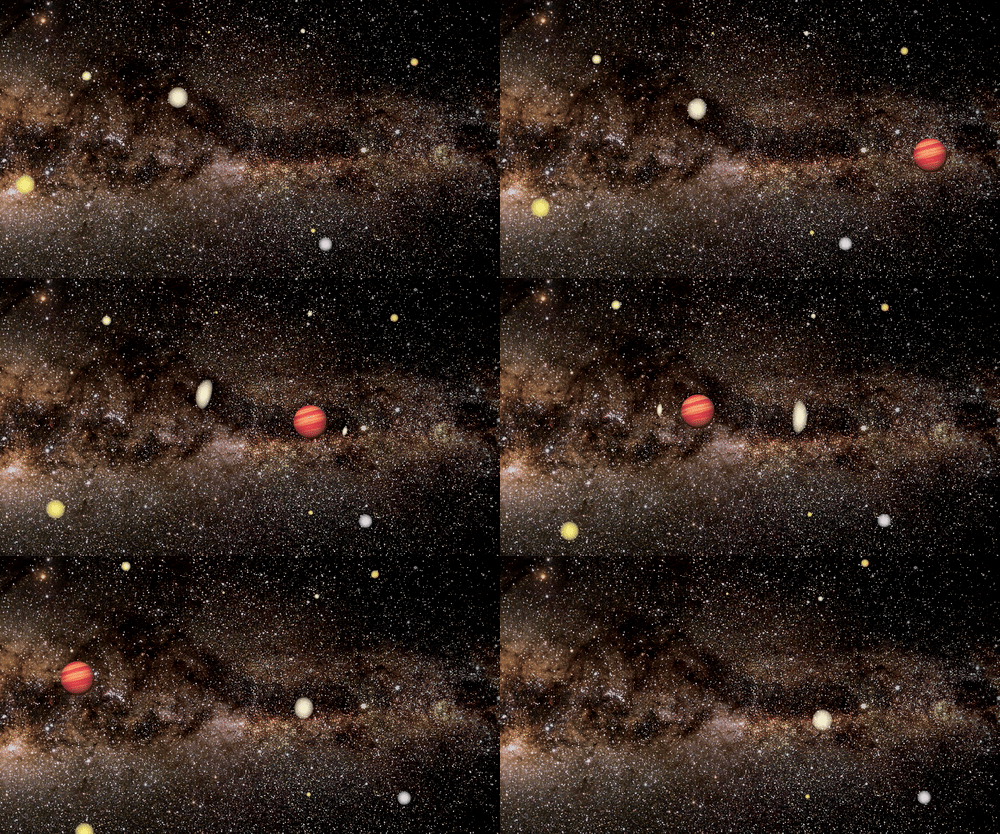
When a rogue planet drifts in front of a star, the world's gravitational field can act like a lens, amplifying the star's apparent brightness and letting astronomers infer the rogue planet's existence. Up to now, researchers detected about a dozen potential rogue planets with this method.