Asus revised the liquid metal application on its $4,000 ROG Matrix RTX 5090 cards — der8auer says retail versions come with 'much more professional' spread
The retail versions of the ROG Matrix RTX 5090 shipping out to customers will come with an updated TIM application that should help against accidental liquid metal leakage. Previously, sample GPUs showed a poor spread that would barely seal the metal in, with a crooked ring around the core. Now, we see several neatly-organized lanes that are much closer to the IHS, too.
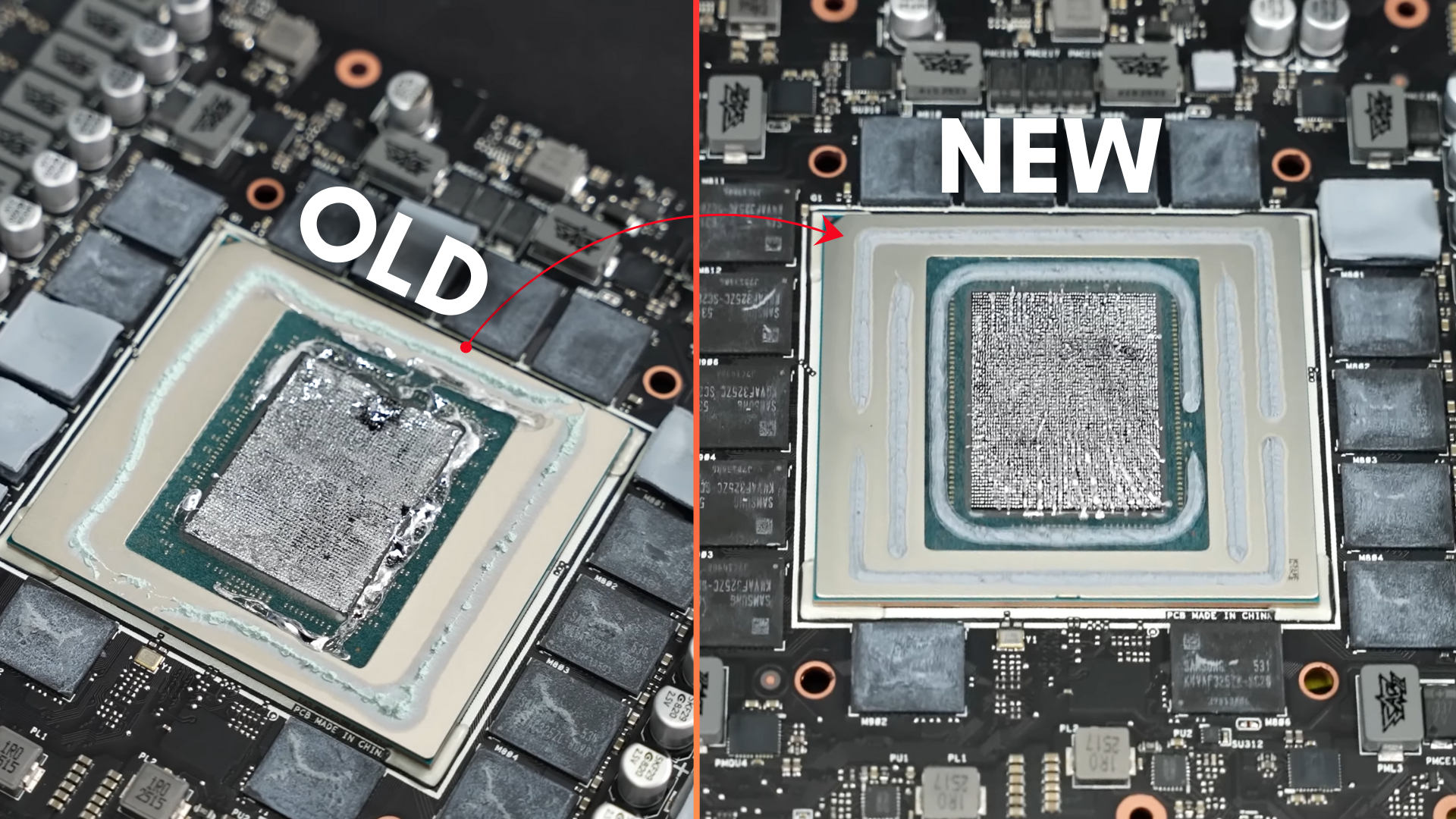
(Image credit: der8auer on YouTube)
Last month, reports of Asus' hyper-expensive ROG Matrix RTX 5090s being recalled started popping up, with the company saying that "product optimizations and enhancements" were in order. At the time, the leading theory pointed toward subpar liquid metal application on the GPU core, as called out by Roman 'der8bauer' Hartung, which has now been confirmed in his latest video. He takes the card apart to find a different spread that should hold up much better over time.
After Recall Rumors: ASUS Secretly Changed RTX 5090 Matrix Liquid Metal - YouTube 
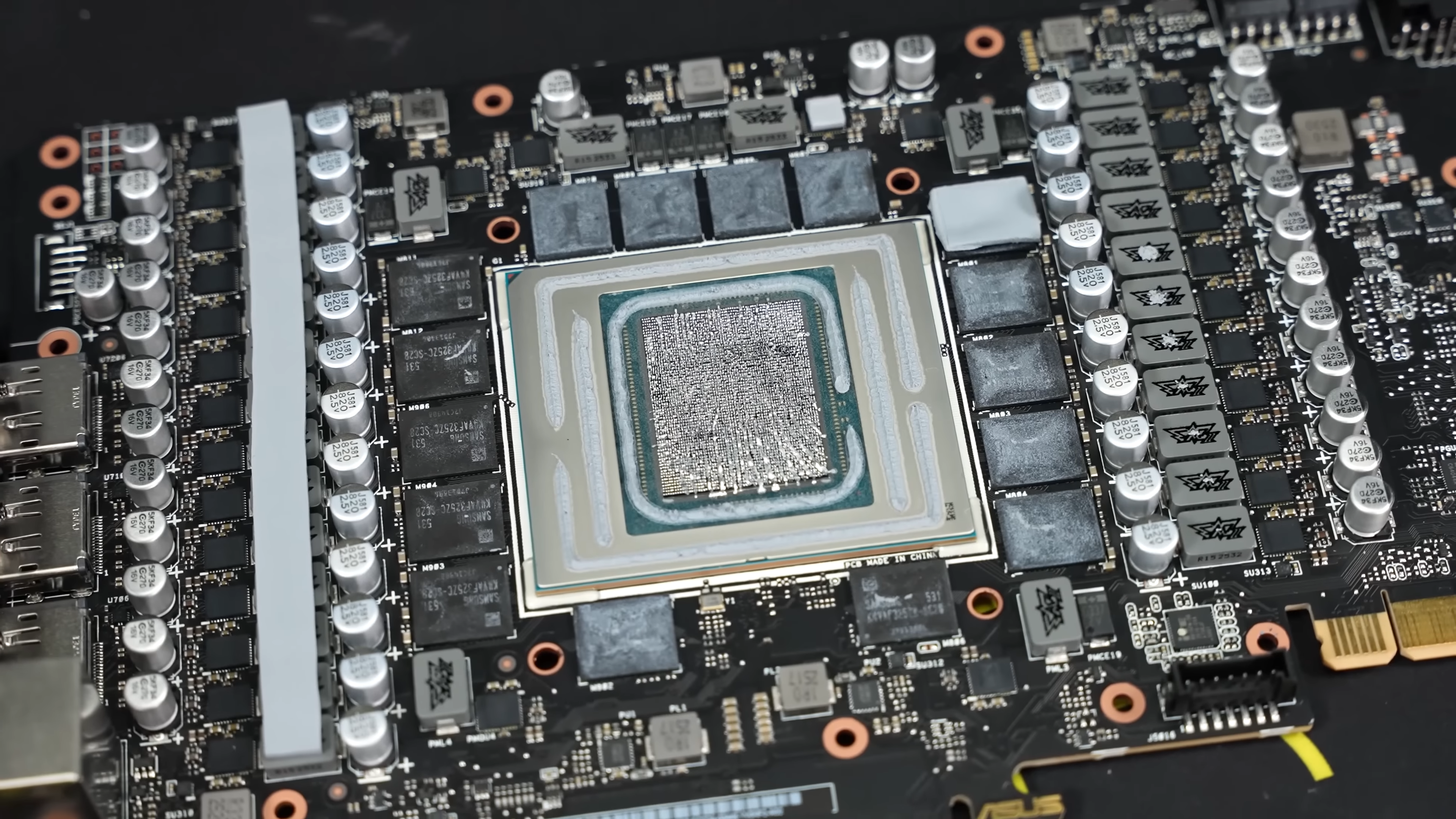
(Image credit: der8auer on YouTube)
As you can see above, the liquid metal now essentially hugs the thermal paste on the substrate, with two more lanes of it blocking the metal from ever coming out. There are cutouts in the application to ensure breathability and facilitate thermal expansion when the GPU is actually running. Apart from the thermal paste application, the liquid metal itself behaves a bit differently on this card, too.
Der8auer put the compound in an SEM for material analysis to find silicon oil mixed with the metal, likely to make mass application easier. The findings aren't conclusive, but Asus seems to have used some printing technique to form liquid metal droplets, which were then mixed with silicon, so factories could have an easier time consistently replicating the TIM spread.
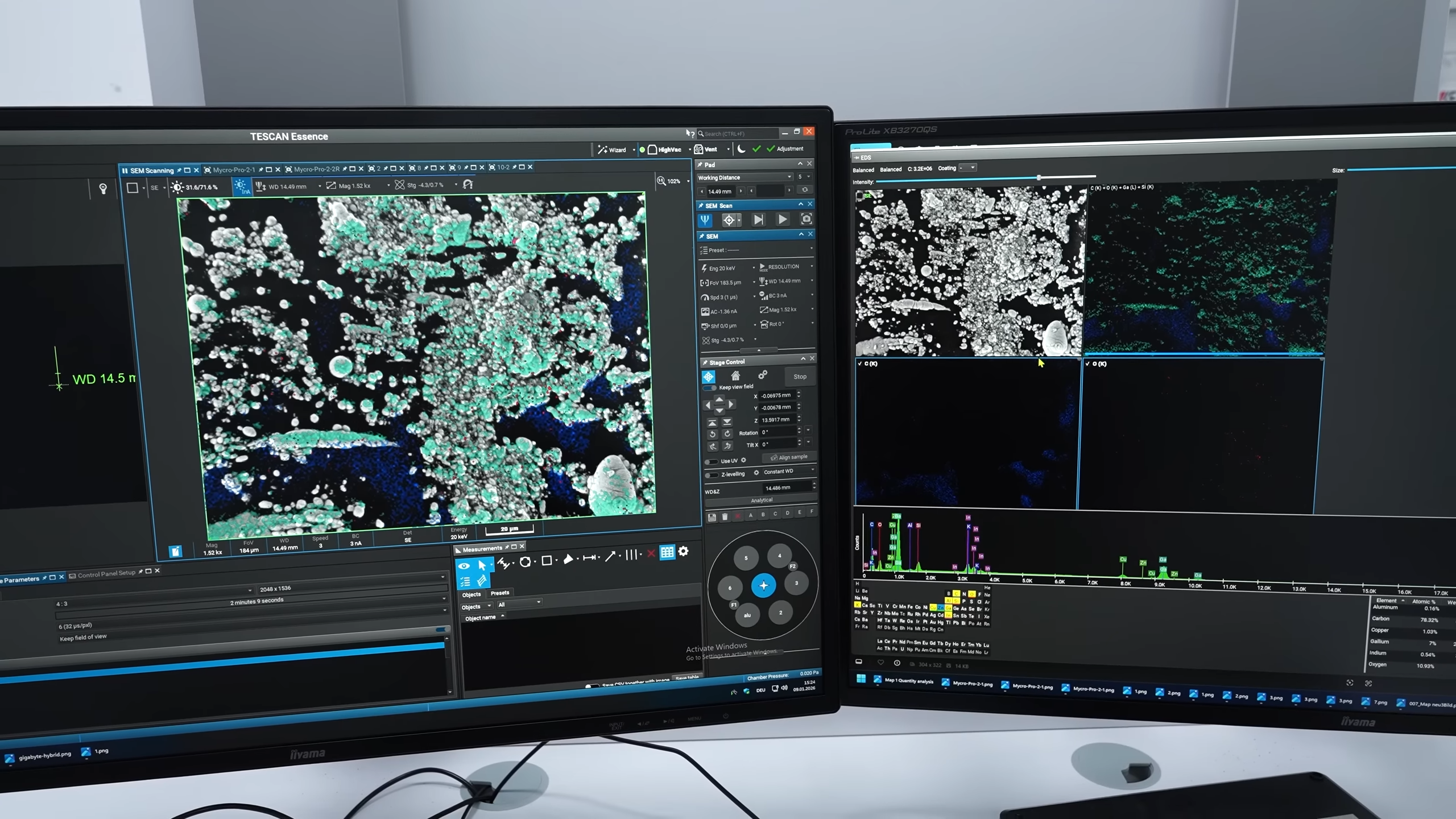
(Image credit: der8auer on YouTube)
Apart from these under-the-hood cooling changes, the rest of the card is identical to its sample version, which is to say: very over the top. The GPU pulled almost 800W in FurMark with the fans spinning slightly slower than before. The temps remained lower, too, but that could have to do with the card's orientation on the test bench.
The video includes a lot of other interesting tidbits, such as a tease for a wired version of the WireView Pro, allowing the tool to be usable with any graphics card. Asus also shipped a few BTF (back connect) to 12V-2x6 adapters to der8auer, which he used for testing this card. The modder also appreciated the fact that these GPUs were recalled to fix a complaint; a costly effort, but one that's probably expected when $4,000 is on the line.