Asus teams up with HiFiMan for planar magnetic ROG Kithara gaming headset — extremely comfortable and excellent audio, for a price | Retrui News | Retrui
Asus teams up with HiFiMan for planar magnetic ROG Kithara gaming headset — extremely comfortable and excellent audio, for a price
SOURCE:Tom's Hardware|BY: Matt Safford
Asus’ latest ROG Kithara wired headset sports customized, open-back HiFiMan planar magnetic drivers, a removable MEMS boom mic, and a balanced cable with swappable plugs.
(Image credit: Tom's Hardware)
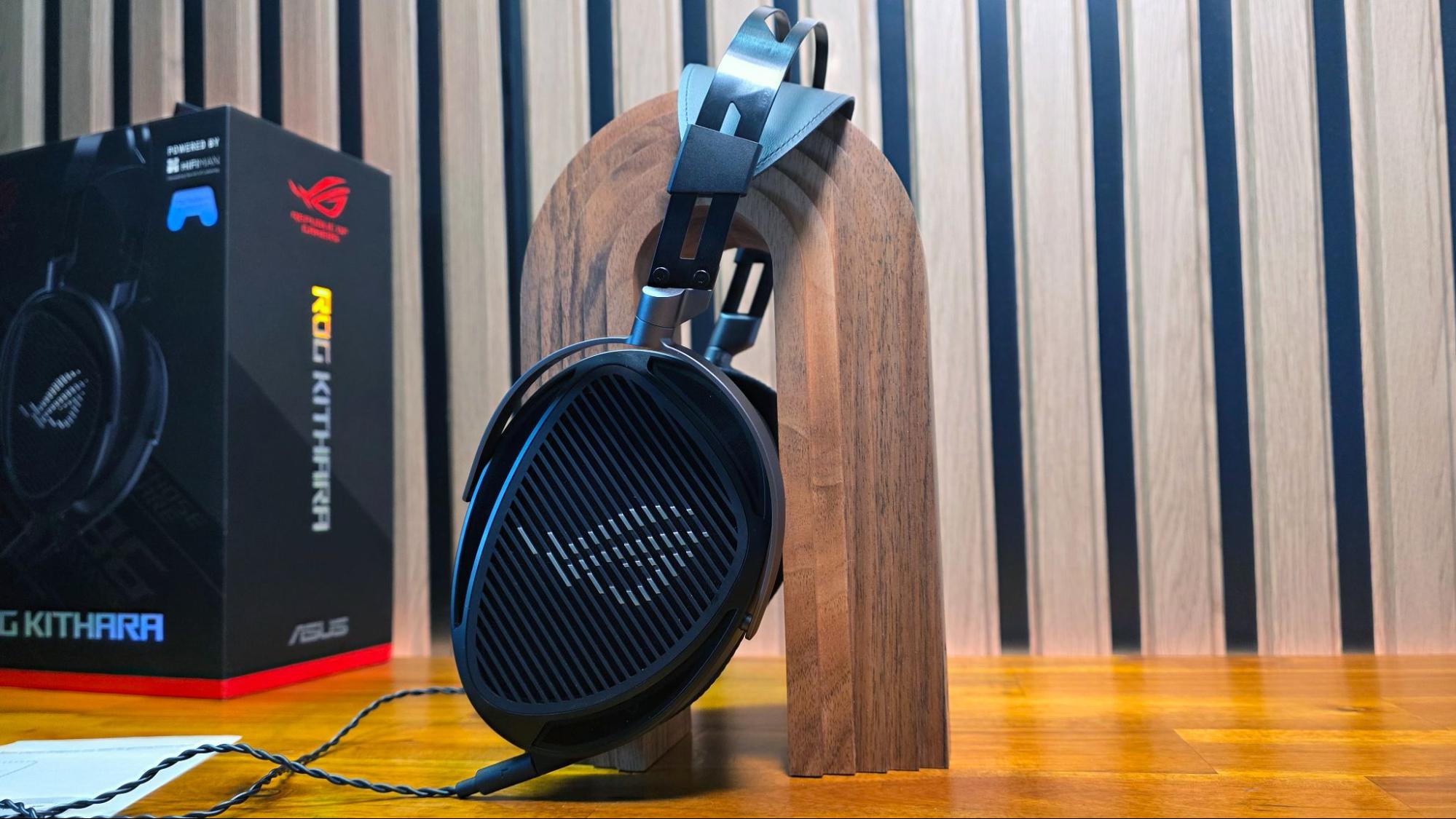
I did not have a partnership with Asus’ gaming arm and planar magnetic pioneers HiFiMan on my CES 2026 bingo card, but the ROG Kithara open-back planar magnetic gaming headset has just been announced. And after spending a few days with the fancy gaming cans before heading to Las Vegas, I can confirm they sound amazing – especially when I broke out a few CDs rather than relying on streaming. And at least to my head, they are extremely comfortable, despite weighing in at 0.93 pounds. That said, they will undoubtedly remain a niche product, as they come with all the trappings of audiophile headphones, like easily lost removable cables and adapters, a large, travel-unfriendly design, and a $359 price that – while reasonable for what you get – is pricier than our current pick for best gaming headset for audiophiles, Audeze’s Maxwell.
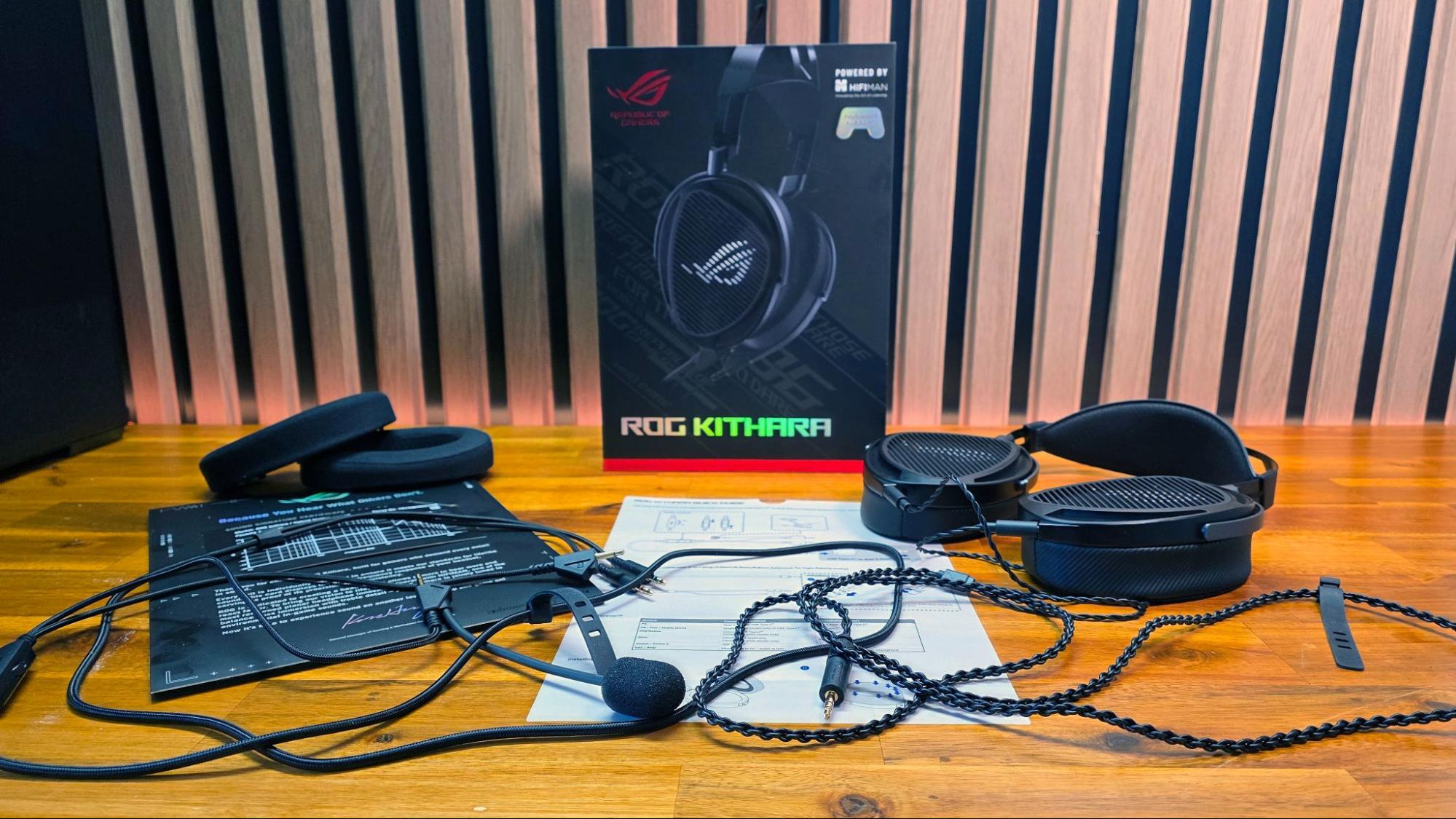
Asus clearly wants this headset to feel like an audiophile investment. Opening the box, I was greeted by a removable “sound signature certificate” and a note signed in foil ink by Kris Huang, the company’s GM of the gaming and workspace gear business. Under this foam-backed sheet, the headset and its four connectors (3.5 mm, 4.4 mm, and 6.3 mm) present themselves, along with a USB-C adapter that lets you connect the headphone and audio jacks and plug into a PC or other device. The various connectors screw onto the balanced audio cable, which plugs into the bottom of each ear cup. This is all pretty standard stuff for high-end wired headsets (or in-ear monitors), but will probably feel fiddly and foreign to many coming from the gaming headset realm.
But that’s just for using the Kithera as a pair of headphones. If you want to use the mic (you know, to use the headset as a headset), you’ll need to use the shorter braided cable with its permanently attached mic and in-line controller for muting and volume adjustment. The microphone plugs into the left earcup, with the other jack connecting on the right side. This cable is OK, but at only about seven feet, it could be restrictive if you plug the headset into the jacks at the rear of your PC (as you generally should for the best possible audio).
(Image credit: Tom's Hardware)
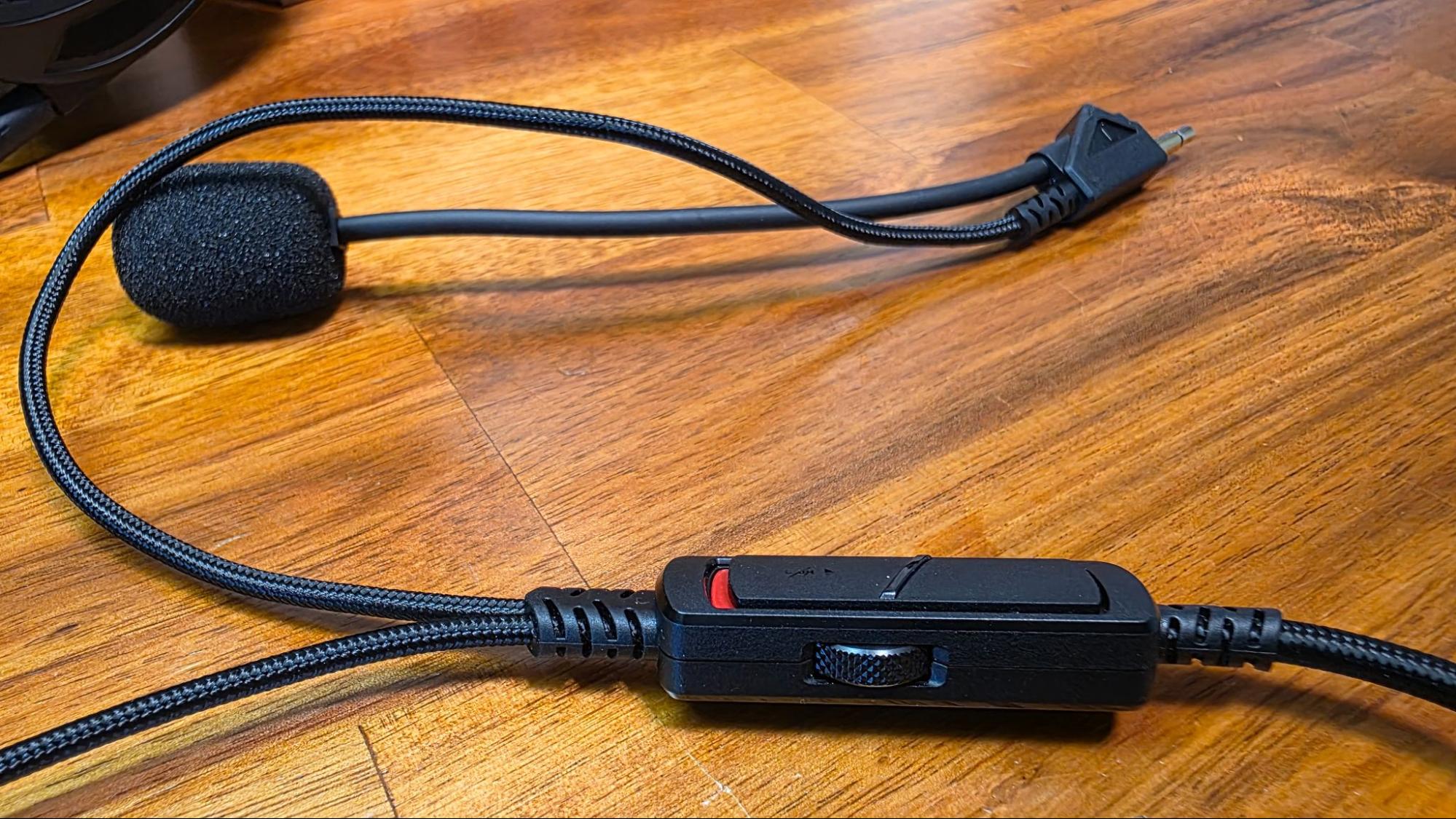
The in-line controller on this cable is the cheapest-feeling part of the Kithera kit, by far. The front houses a large plastic slider for muting the mic (with some red plastic visible so you can tell you’re muted if you look down at it). And there’s a volume wheel on the side, which I’d honestly suggest just not using. Like the in-line controller as a whole, it feels cheap, and it is so sensitive that you can go from zero to max volume with just slightly more than one roll of your thumb. When starting at full volume, I found it difficult to get to a pleasing level of around 75%. As soon as I started to move the wheel, the sound output was too quiet. I quickly resorted to just leaving the volume roller at max and adjusting sound output levels from my keyboard.
In all, there are a lot of connectors, adapters, and cables here. I personally feel like I’d lose something important before too long. But Asus does at least include a full-sized sheet of translucent paper documenting how to connect and use everything. I’d probably lose that, too.
(Image credit: Tom's Hardware)
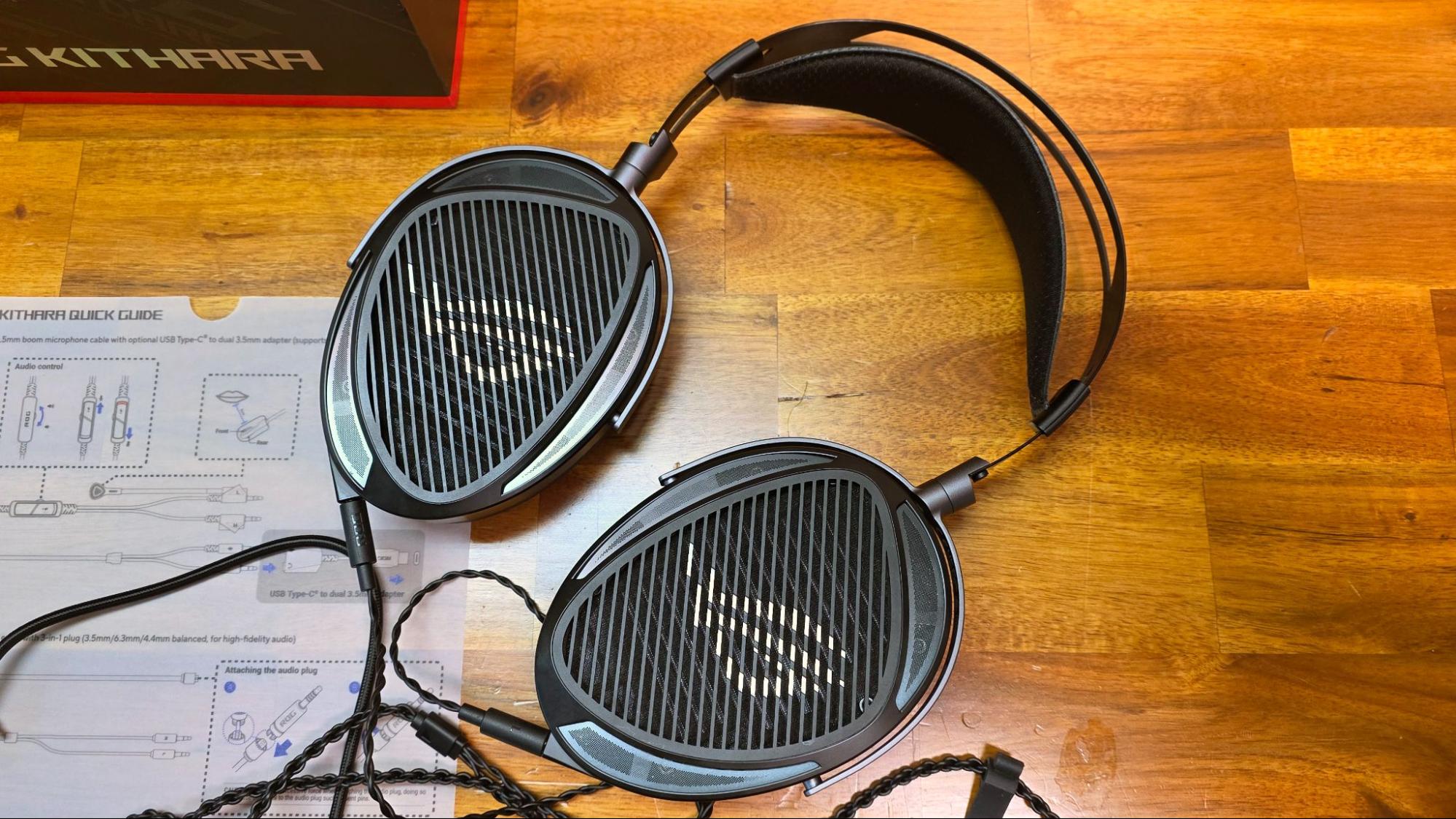
The headset itself feels quite solid, and the only nod to its gaming cred is the ROG logo embossed on each large earcup. Otherwise, the design looks a lot like a stealthier version of HiFiMan’s Ananda line.
I’m not a huge fan of the bare steel headband, which feels a bit utilitarian for something this inexpensive, but the leatherette and mesh interior band, combined with cushy ear pads, make the Kithara the most comfortable headset I’ve worn in… possibly ever. Two sets of ear pads are included, with a second velour pair letting more sounds in and out than the pre-installed pads. To me, both were similarly comfortable, though I might prefer the velour pads in the warmer days of summer, as they feel a bit more breathable. Sound quality aside, there’s a lot to be said for paying a premium for comfort – especially in a device that you may be wearing for several hours a day if you use the Kithera both for work, gaming, and media playback. So I like that these cans are comfy, and that Asus included two sets of ear pads – which are also fairly easy to detach and swap.
Get Tom's Hardware's best news and in-depth reviews, straight to your inbox.
These are open-back headphones, though. So don’t expect exterior sounds to be muted or silenced like with closed-back and / or noise-cancelling headphones. And people near you will definitely be able to hear what you are listening to.
Personally, I prefer open-back headphones for their wider sound stage and lower general ear fatigue. For the same reason, I prefer using my AudioEngine PC speakers when working and gaming. But I mostly work from home, with nothing to annoy or distract me other than my cat – open-backs certainly aren’t for everyone, especially if you don’t have other audio solutions for travel or in-office work.
But as these are large, wired headphones, it isn’t likely that many people will regularly be taking the Kithara on their commute or long treks of travel. I have a pair of Sennheiser Momentum 4s for on-the-go listening, and sometimes use them at home, too. But the ROG Kithara headset sounds better and is more comfortable for long-term listening.
I didn’t have enough time to truly test the headset’s removable mic in games. But in a quick check using Windows’ Sound Recorder, it seemed plenty sensitive, but not great at minimizing plosives, despite its foam covering.
After a rough start with the Mattel Aquarius as a child, Matt built his first PC in the late 1990s and ventured into mild PC modding in the early 2000s. He’s spent the last 15 years covering emerging technology for Smithsonian, Popular Science, and Consumer Reports, while testing components and PCs for Computer Shopper, PCMag and Digital Trends.