Australia’s summer bares its teeth as the heat is unfurled from the west
The worst heatwave since 2020 began in the far west and has yet to leave the east.
As it always does, the heat came from the west, building up over the vast interior of Western Australia before crashing across the continent.
When it hit Port Augusta in outback South Australia on Wednesday, the streets emptied, Mayor Linley Shine said. “We’re very used to extreme weather in Port Augusta, so people here generally know how to handle it.”

This week’s heatwave spilled across the country from the west.Credit: Bureau of Meteorolgy
One of the town’s residents was more colourful. “It feels like we’re micro-dosing on heat stroke,” said Tata Jane in a comment on social media after the temperature hit the state’s maximum of 46.3 degrees.
It was too much for the local Mr Whippy ice-cream van. In a Facebook post, the van’s owners announced that they were taking a break due to the high temperatures.
Much of Australia is experiencing the worst heatwave in six years, with the mercury climbing over 40 degrees in five states and territories.
“This looks to be … the most significant heatwave event on a multi-day level for inland south-eastern Australia since 2019-2020,” Angus Hines, a senior meteorologist with the Bureau of Meteorology, said.
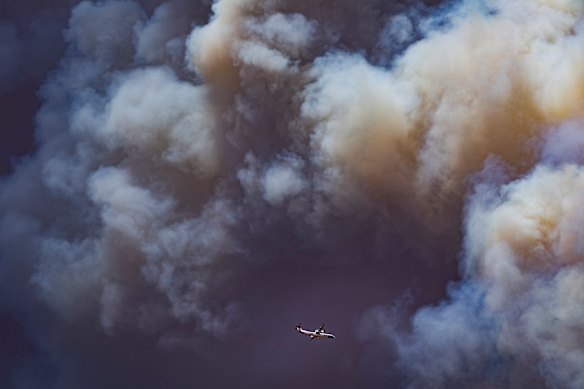
A firefighting aircraft circles the Longwood fire in Victoria as temperatures accelerated fire emergencies. Credit: Jason South
So far, the highest temperature recorded has been at Onslow on Western Australia’s Pilbara coast, where the temperature reached 49 degrees.
Hines said that the heatwave affecting south-eastern Australia started with this build-up of heat in inland and northern WA.
“That’s often called the heat engine of Australia,” he said. “We just see this very hot weather accumulate in the north-west of the country pretty routinely during our summer months.
“And then when the weather pattern changes … the wind can drag that heat and move it to other areas,” he said. “In this case, that hot air is moving in really quickly … so it gets dragged across the desert and it stays extremely warm.”