Best of CES 2026: Android Authority’s top products from the show!
Here are the Android Authority Best of CES 2026 Award winners.
A new year means a fresh CES, and once again Las Vegas turned into tech central for CES 2026. Our team spent the week on the ground, walking the show floors, chasing down announcements, and getting hands-on with as many products as humanly possible.
Nobody can see everything at CES, since the show is massive, but we focused on the gear that genuinely stood out. This year brought big upgrades in smart home tech, plenty of creative ideas in mobile and wearables, smarter displays, and a few products that simply put a smile on our faces.

Edgar Cervantes / Android Authority
So let’s get into it. Here are the Android Authority Best of CES 2026 Award winners.
Samsung Galaxy Z TriFold
Lanh Nguyen / Android Authority

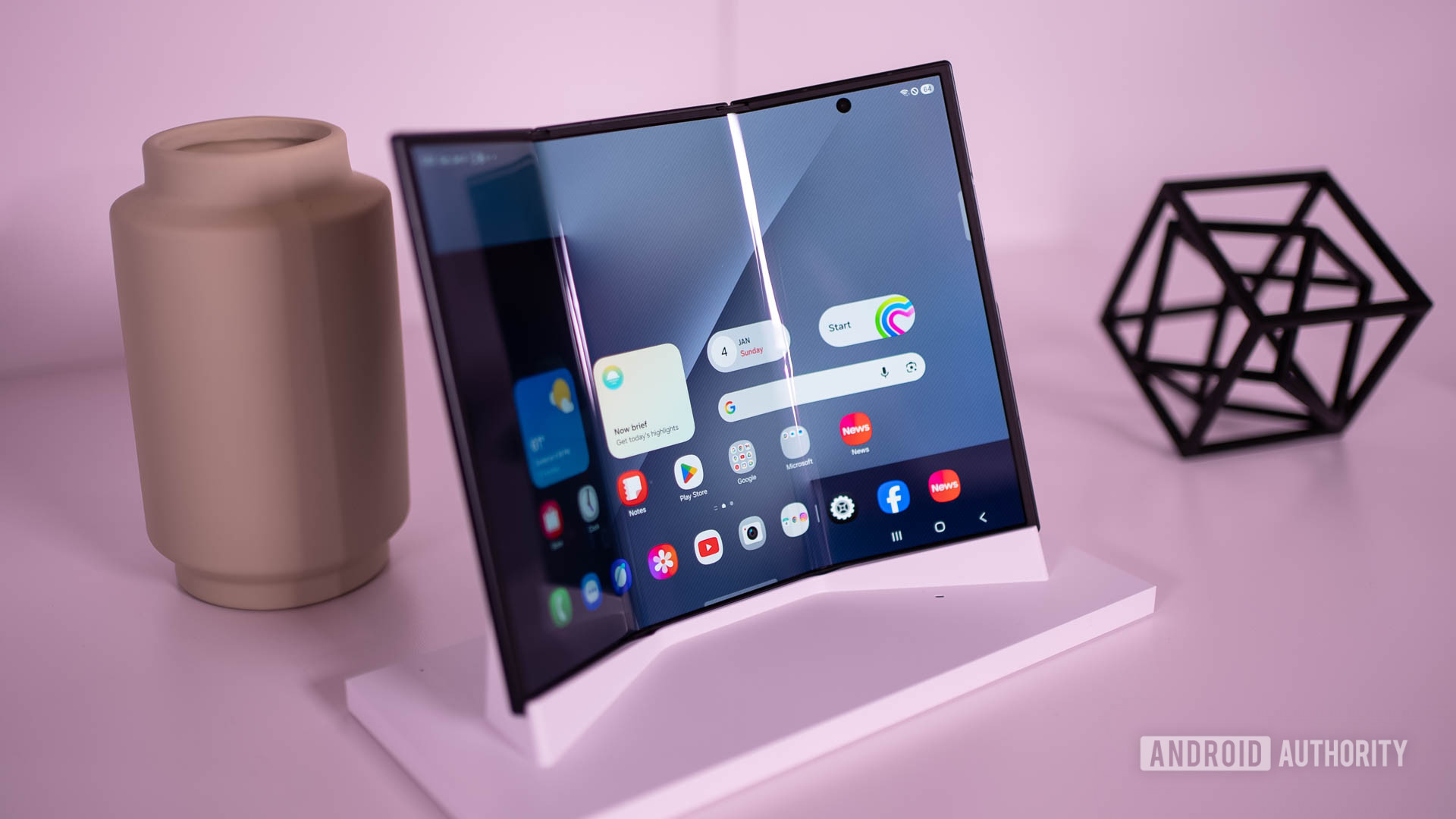
Samsung’s boldest foldable yet made its public debut at CES 2026. The Galaxy Z TriFold immediately feels like both a glimpse of what’s next and a reminder of how hard that future is to reach. This is Samsung’s first phone that folds twice, opening from a standard cover display into a full 10-inch AMOLED tablet. The TriFold finally delivers on the long-promised idea of a tablet that actually fits in your pocket.
Internally, the Galaxy Z TriFold shares a lot with the Galaxy Z Fold 7, including the Snapdragon 8 Elite chip and the same camera setup, but adds a larger 5,400mAh battery to help power the much bigger screen.
The Galaxy Z TriFold feels like the future in your hands.
Where the TriFold really separates itself is software. One UI 8 on Android 16 enables true three-app multitasking, splitting the screen into equal thirds without crushing app layouts. Samsung DeX can also run directly on the device, turning the inner display into a full desktop workspace without an external monitor.
The Galaxy Z TriFold is an engineering statement more than a mass-market product, but as a Best of CES pick, it shows just how far Samsung is willing to push form factors.
SPONSORED
ARZOPA D14 Digital Photo Frame
Edgar Cervantes / Android Authority
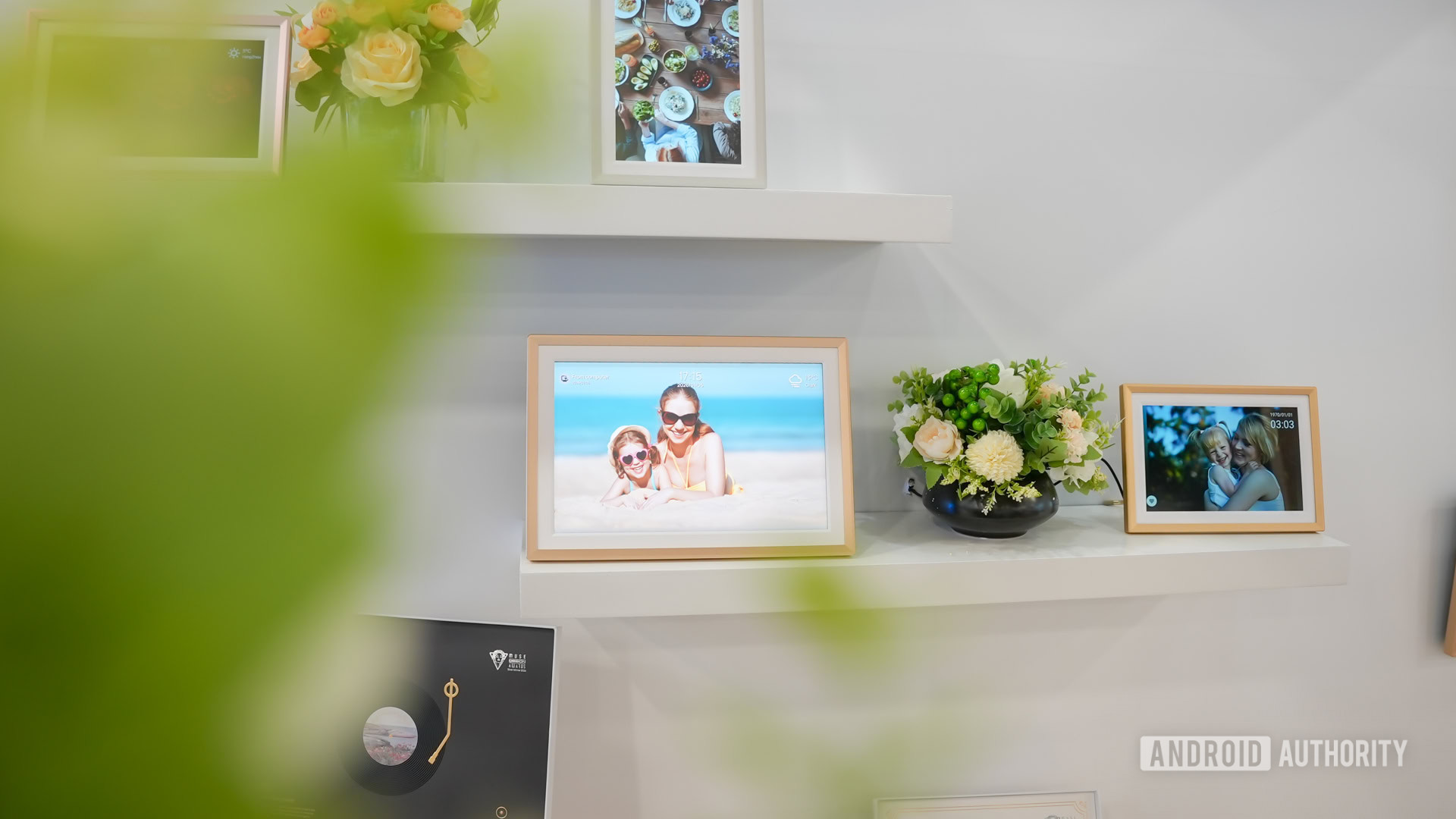
ARZOPA is known for its innovative, affordable digital display technology, designed to elevate how we work, play, and connect. And while Christmas might be behind us, you don’t need special occasions to give your family gifts, especially when it’s something as thoughtful and bound to bring a whole lot of joy as the ARZOPA D14 Digital Photo Frame.
While you might be away from your family, the D14 digital photo frame lets you still share beautiful moments and memories instantly. With just a tap, you can send photos and videos to any D14 photo frame anywhere in the world, so every update becomes a shared moment, with share-anytime-anywhere convenience.
Of course, multiple family members can send photos and videos directly to the frame, keeping you instantly connected to your family, even if you’re thousands of miles apart.
With a gorgeous 14-inch IPS anti-glare display with a Full HD resolution, every photo and video stands out in beautiful detail. It connects to Wi-Fi, so pictures and videos are uploaded and available instantly, and you can even send 2-minute video messages through the frame. With 32GB of built-in storage, microSD card support, and free and unlimited cloud storage, you can share plenty of memories for years; no subscriptions or fees to worry about.
It’s easy to set up and use, and is designed to blend seamlessly into any space around your or your family’s home. Whether it’s for your parents, grandparents, siblings, or your own household, the ARZOPA D14 Digital Photo Frame is a gift that grows more and more meaningful the more you share.
TCL NXTPAPER 70 Pro
C. Scott Brown / Android Authority
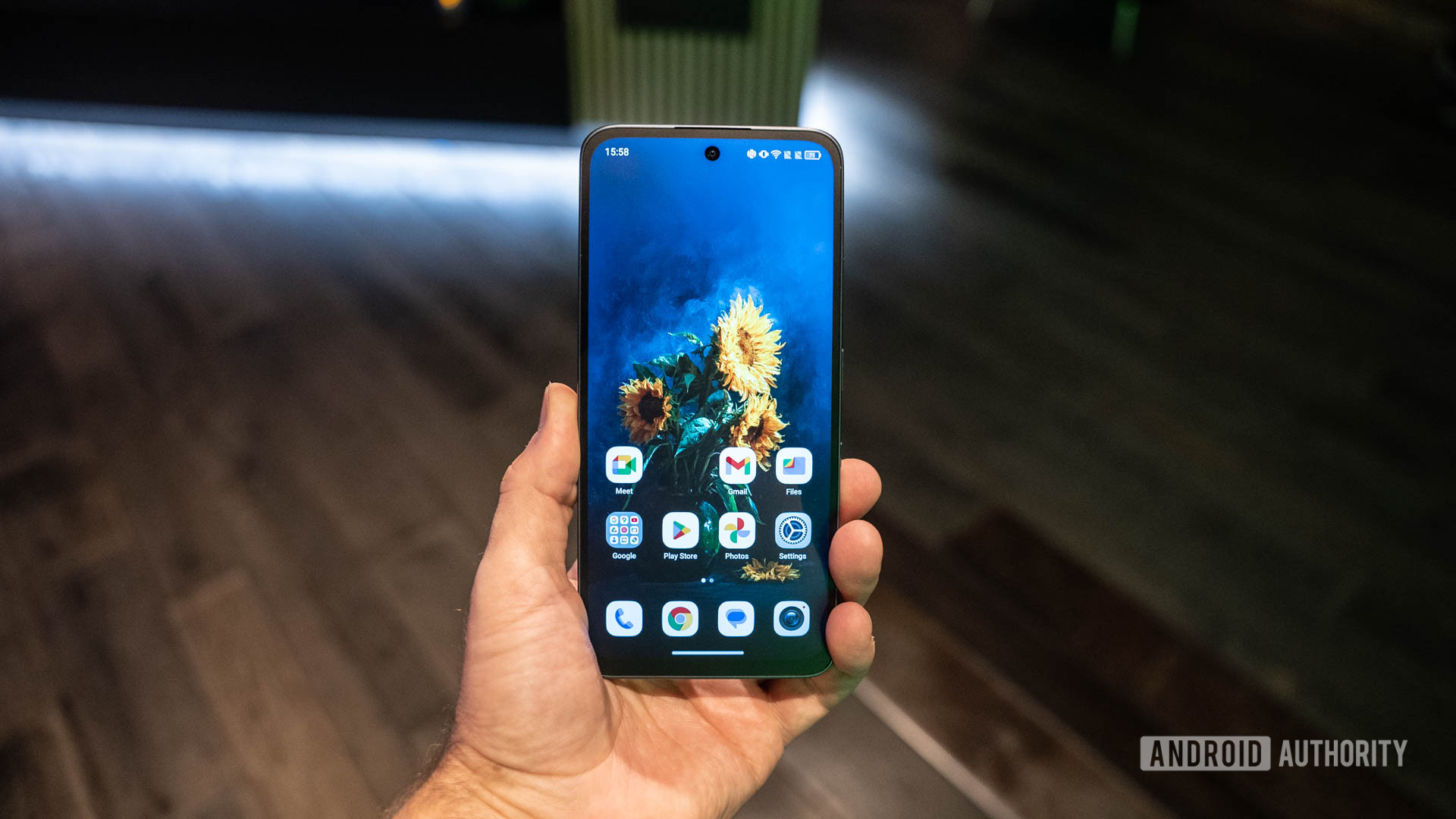
TCL doubled down on eye comfort at CES 2026 with the NXTPAPER 70 Pro, a phone built for people who spend a lot of time staring at their screens. Using NXTPAPER 4.0, the 6.9-inch FHD+ 120Hz display has a matte, paper-like finish that cuts glare and reflections without sacrificing smoothness. It feels closer to reading on paper than a normal display and that difference is obvious the moment you pick it up.
The dedicated NXTPAPER button returns, letting you switch between display modes, including a high-contrast monochrome option that is ideal for reading. TCL also improved the anti-flicker tech, which not only reduces eye strain but makes the screen easier to film without visible banding, a small touch that shows how much thought went into real-world use.
The NXTPAPER 70 Pro proves that screen comfort can matter more than raw specs.
Under the hood, the NXTPAPER 70 Pro keeps things sensible. You get a 50MP main camera with optical stabilization and TCL’s MuseFilm processing, a Dimensity 7300 chip, and a 5,200mAh battery. Performance is not chasing flagships, but that is not the point here. Optional T-Pen support and built-in AI translation features add to the phone’s practical appeal.
Priced from around $400, the TCL NXTPAPER 70 Pro stands out by offering a genuinely different smartphone experience.
SPONSORED
DREO TurboCool™ Misting Fan 765S
Edgar Cervantes / Android Authority
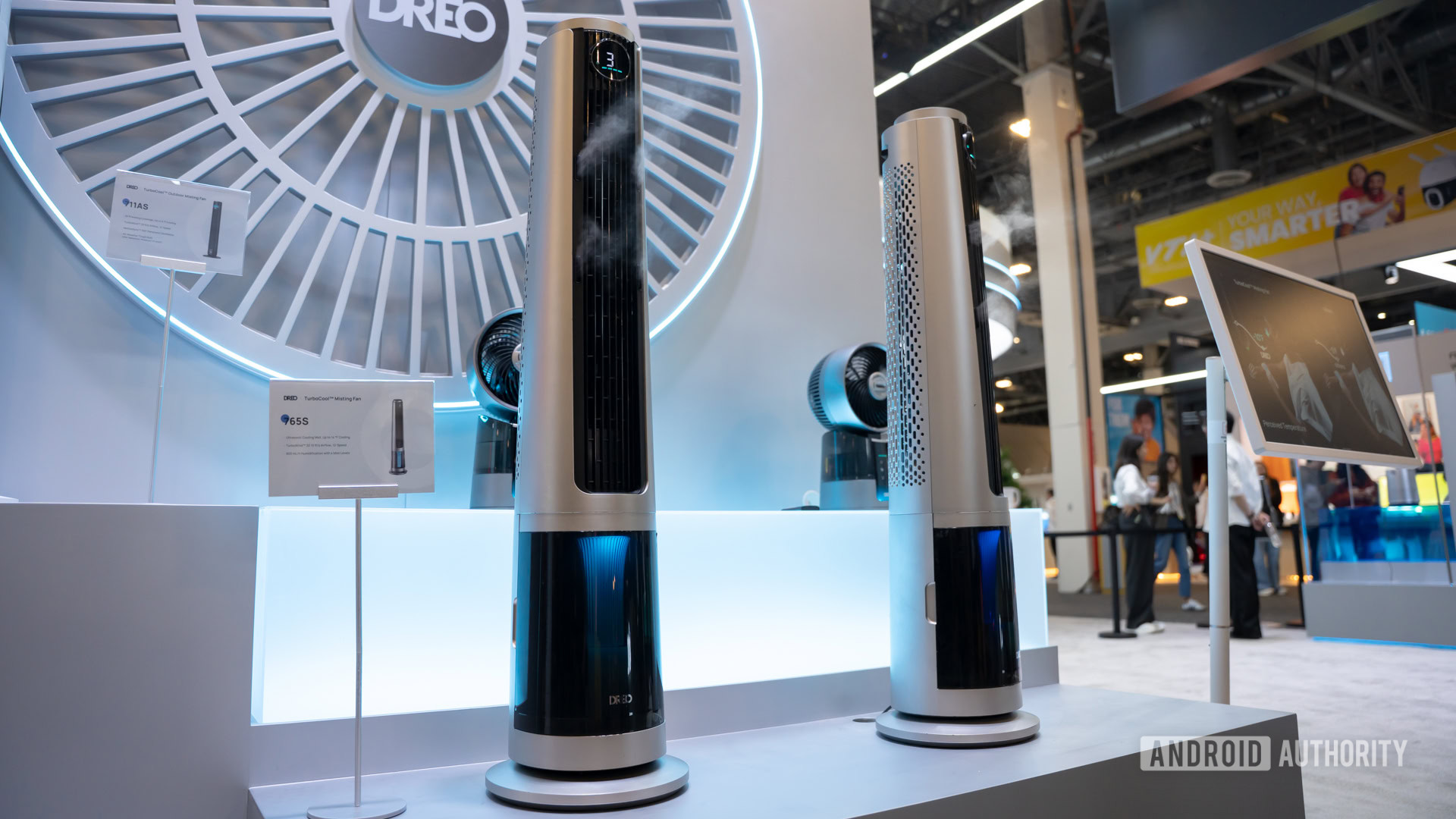
DREO is known for its intuitive, efficient, powerful, and elegantly designed home appliances. From tower fans and ceiling fans to portable ACs, humidifiers, heaters, and more, DREO offers a massive portfolio of performance-focused, user-centric products that make your home life easier. And the brand is bringing all that expertise to its latest product showcase at CES 2026 – the TurboCool™ Misting Fan 765S.
As its name suggests, the Misting Fan 765S delivers faster, stronger cooling you can feel immediately. It’s dramatically cooler from the get-go, beyond anything you’d get from traditional fans and evaporative coolers, with lab tests showing a massive ambient temperature drop of up to 10°F.
When used as a misting fan or humidifier, it’s designed for mess-free indoor use. The device produces ultrafine 17 μm mist that evaporates rapidly without condensing, even at the highest mist output levels. A dedicated internal blower system and an advanced dual-channel flow system separate air and mist paths, preventing the formation of large droplets. You won’t have to worry about damp floors or furniture when using the fan in Mist or Humidifier modes.
Its HyperSilent™ operation, going as low as 20 db, makes it ideal for bedrooms, nurseries, and close-range use. Whether you’re working, watching TV, or sleeping, the Misting Fan 765S won’t be a distraction.
And finally, the Misting Fan 765S is easy to manage and maintain. Its pump-free architecture eliminates mold and bacteria buildup, and it’s easy to remove, clean, and refill the 6L tank. The large tank provides up to 7 hours of Turbo cooling, or up to 30 hours in lower settings.
You get independent wind and mist adjustments, 12 fan speeds, and integrated temperature and humidity sensors so you can find the perfect balance. Everything is easy to set up and control, via the app, using your voice (compatible with Alexa and Google Assistant), or with a remote.
The DREO TurboCool™ Misting Fan 765S is priced at $179.99 and will be available from April 2026.
SPONSORED
Linkind SP6 Smart Solar Pathway Light
Edgar Cervantes / Android Authority
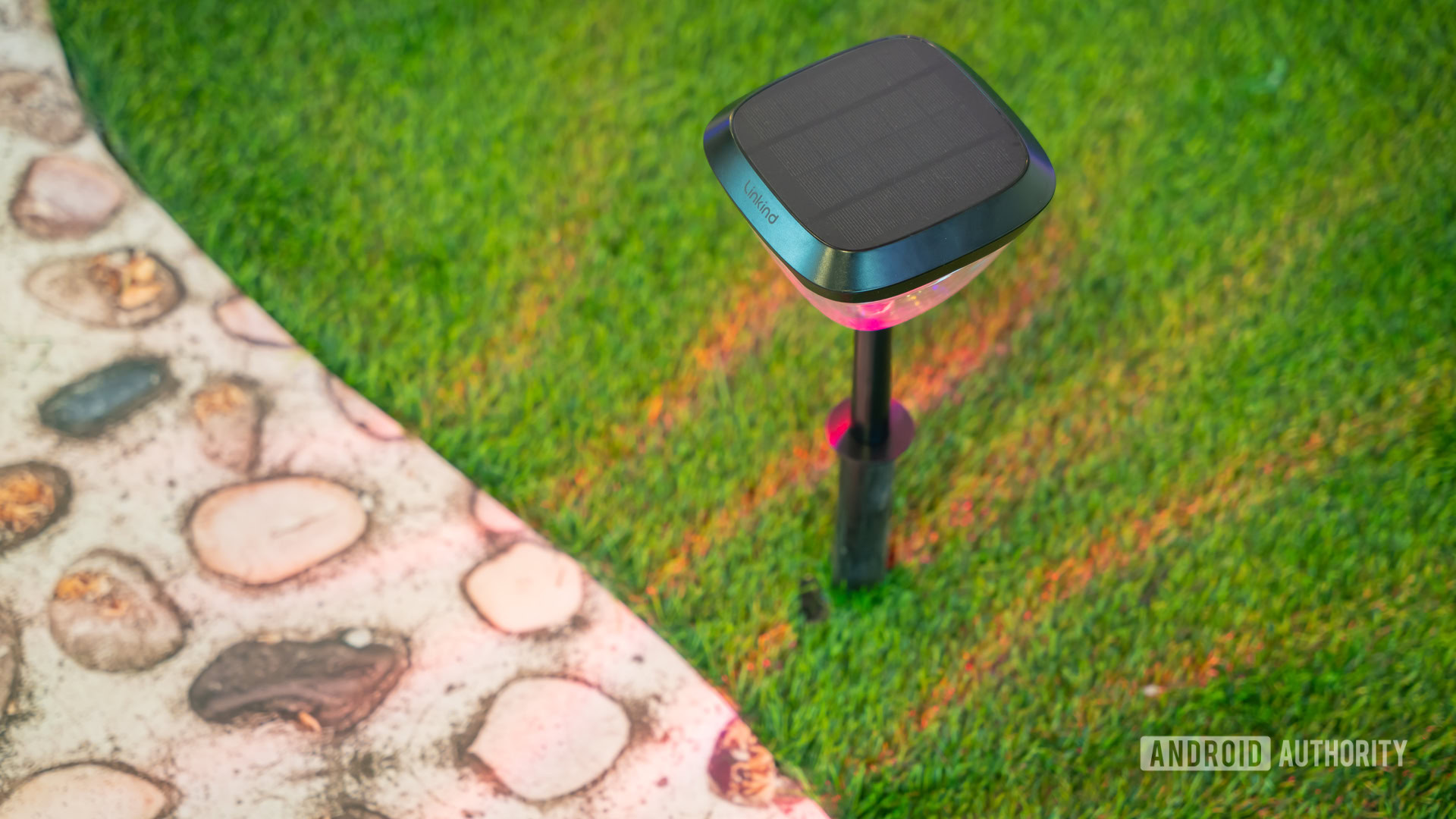
We see lots of smart lighting showcased at events like CES, and this year is no different. One that truly stands out from the crowd is the Linkind SP6 Smart Solar Pathway Light. Designed for backyards and lawns with pathways, the SP6 is ideal for anyone looking to upgrade their pathway lighting, bringing not only safety but also a touch of style and elegance to your home’s outdoor areas.
What makes the SP6 pathway light special is the inclusion of five interchangeable projection lenses that let you create patterns like Ripple, Concentric, Radial, Circular, and Lozenge. The best part? It’s all managed and controlled through the AiDot app; no tools required, and you don’t have to swap lenses manually to change the projection pattern.
With 60 lumens of output and tunable white and full-spectrum RGB color adjustment, the possibilities for your outdoor decor are endless.
The SP6 Smart Pathway Lights are easy to install and durable, and are powered by an advanced MPPT system that optimizes solar charging, especially in low-light conditions. A full charge gives you 12 hours of brightness, and there’s also an Eco Mode for extended running. And if solar power isn’t enough, say, during poor weather, you can also charge the lights via the built-in USB-C port.
With multiple lights, you can turn your walkway into a personal lighting experience. With Bluetooth Mesh, you get automatic syncing across connected devices without a hub or Wi-Fi. And through the app, you also get 43 preset modes, music-sync capability, and scheduling for seamless, coordinated lighting effects.
If you’re looking to enhance your outdoor pathway lighting, the Linkind SP6 Smart Solar Pathway Lights offer the convenience and ease of use like no other and are a great way to improve your outdoor safety and ambiance.
Roborock Saros Rover
Stephen Schenck / Android Authority
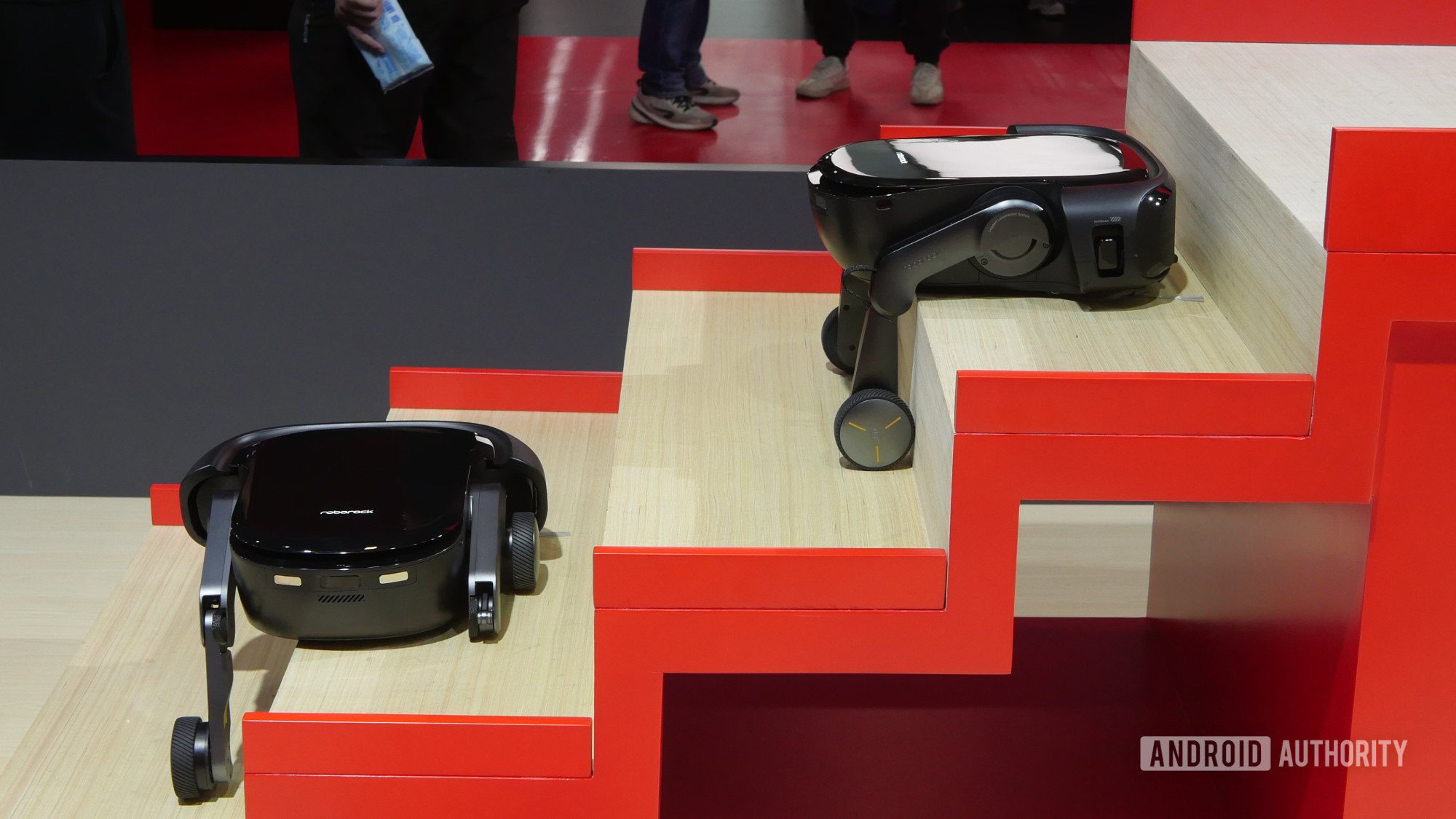
Roborock went big at CES 2026 with the Saros Rover, a robot vacuum that rethinks mobility in a way we have not seen before. Instead of trying to work around obstacles, the Rover deals with them head-on. It uses a pair of hinged wheel-legs that let it balance, lift itself, and move over uneven surfaces, including stairs. Yes, it can climb stairs, and it can clean them while doing so.
Unlike earlier stair solutions that simply carry a vacuum from one floor to another, the Saros Rover stays active the entire time. As it climbs, one leg remains planted on the step below to keep the body stable, while the other moves forward. That lets the Rover clean each step individually on the way up or down. Roborock says the system also works on curved staircases and ramps, which makes it far more flexible than past attempts at vertical cleaning.
Yes, it can climb stairs, and it can clean them while doing so.
The Rover is still a preview rather than a finished product, and Roborock is not ready to talk pricing or launch timing yet. Even so, seeing it operate in person makes one thing clear. This is a strong attempt to solve one of the last major problems in robotic cleaning, and it hints at a future where no part of your home is off-limits to a robot vacuum.
Motorola Razr Fold
Ryan Haines / Android Authority
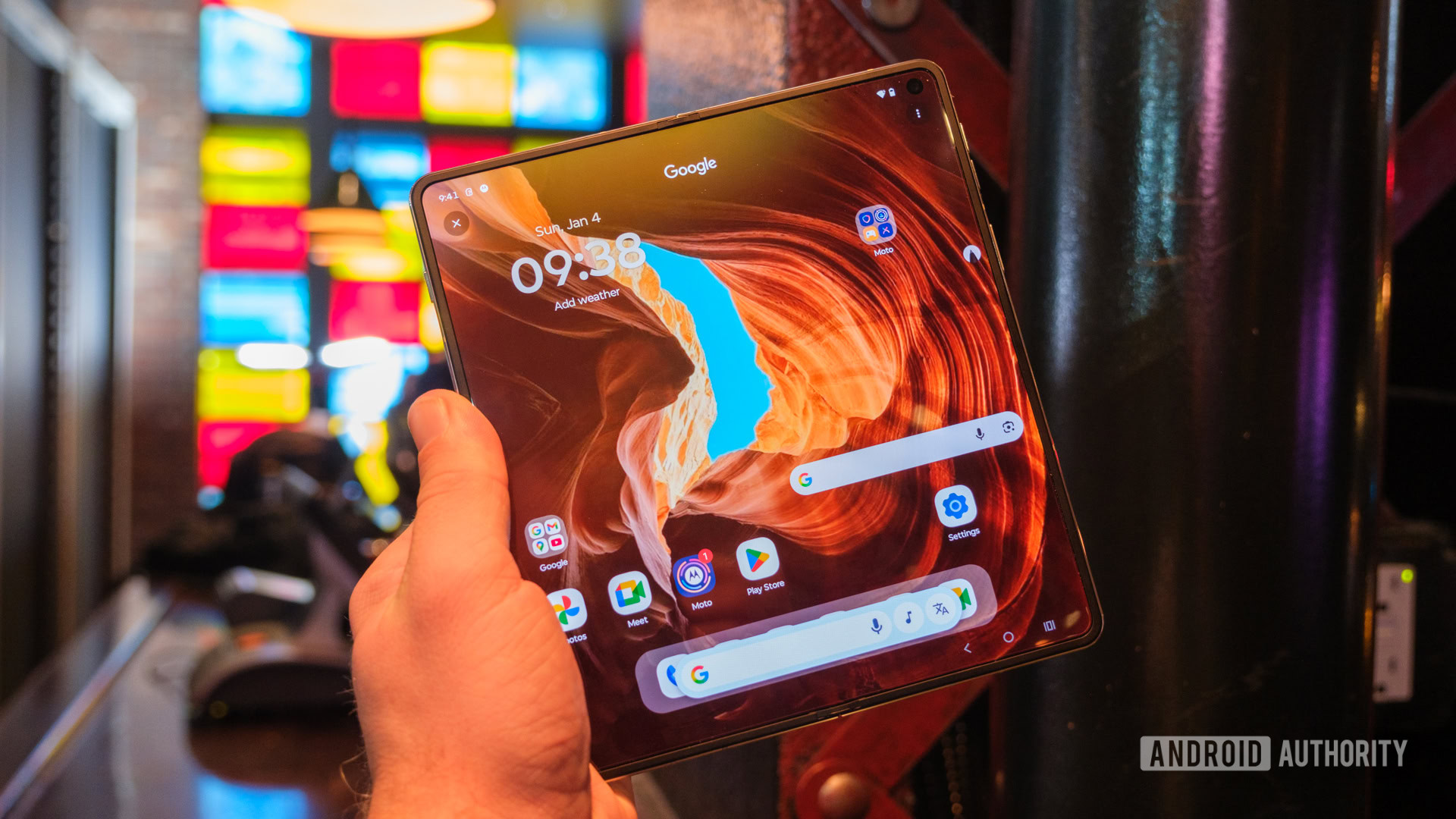
Motorola made its biggest foldable leap yet at CES 2026 with the Razr Fold, the company’s first book-style foldable and a clear signal that the Razr brand is no longer limited to clamshells. Built around an 8.1-inch inner display and a tall outer screen, the Razr Fold feels immediately familiar if you have used other large foldables. But it still carries Motorola’s design DNA, from its clean software look to its signature materials and finishes.
In hand, the Razr Fold strikes a balance between size and comfort. It opens into a spacious tablet-like canvas that feels well-suited for any task. Meanwhile, the outer display remains useful enough to handle quick tasks without unfolding. Motorola’s hardware confidence shows here. The hinge feels solid, the displays are bright and smooth, and the overall design feels well thought out.
Motorola’s software approach also plays to its strengths. The experience stays close to stock Android, with light customization and thoughtful touches carried over from the Razr flip lineup. Even in early hands-on time, the interface feels calm and approachable on a large screen, which is not always a given with foldables.
The Razr Fold shows Motorola is ready to think bigger without losing what makes Razr feel familiar.
The Razr Fold marks Motorola’s entry into large foldables with a clear focus on design, usability, and brand identity. If Motorola can follow through on polish and long-term support, the Razr Fold has the potential to become a compelling alternative for people who want an approachable large foldable.
MemoMind MemoOne

C. Scott Brown / Android Authority
XGIMI surprised us at CES 2026 by stepping away from projectors and into wearable tech with the Memo One, the lead product under its new MemoMind brand. These AI glasses actually look and feel wearable, weighing just 28.9g and designed for all-day use without calling attention to themselves. In person, the Memo One feels closer to normal eyewear than most smart glasses we have seen so far.
The Memo One uses dual-eye displays paired with built-in speakers to deliver information discreetly. The system focuses on short, relevant interactions, such as live translation, summaries, reminders, note-taking, and contextual guidance. Powering all of this is a hybrid AI system that dynamically selects the best model for each task, pulling from multiple major AI platforms in the background.
Comfort and personalization are clearly a priority. XGIMI offers multiple frame styles and interchangeable temples, along with full prescription lens support. Battery life is also handled sensibly, with all-day use from the glasses themselves and a charging case that can stretch total runtime close to a full week.
The MemoOne feels like AI that stays out of your way, which is exactly what smart glasses need.
At around $599, the MemoMind Memo One are not cheap, but they feel thoughtfully positioned. If AI glasses are going to move beyond novelty, this is the kind of approach that gives them a real shot.
Lenovo Legion Go 2 with Steam OS
Ryan Haines / Android Authority
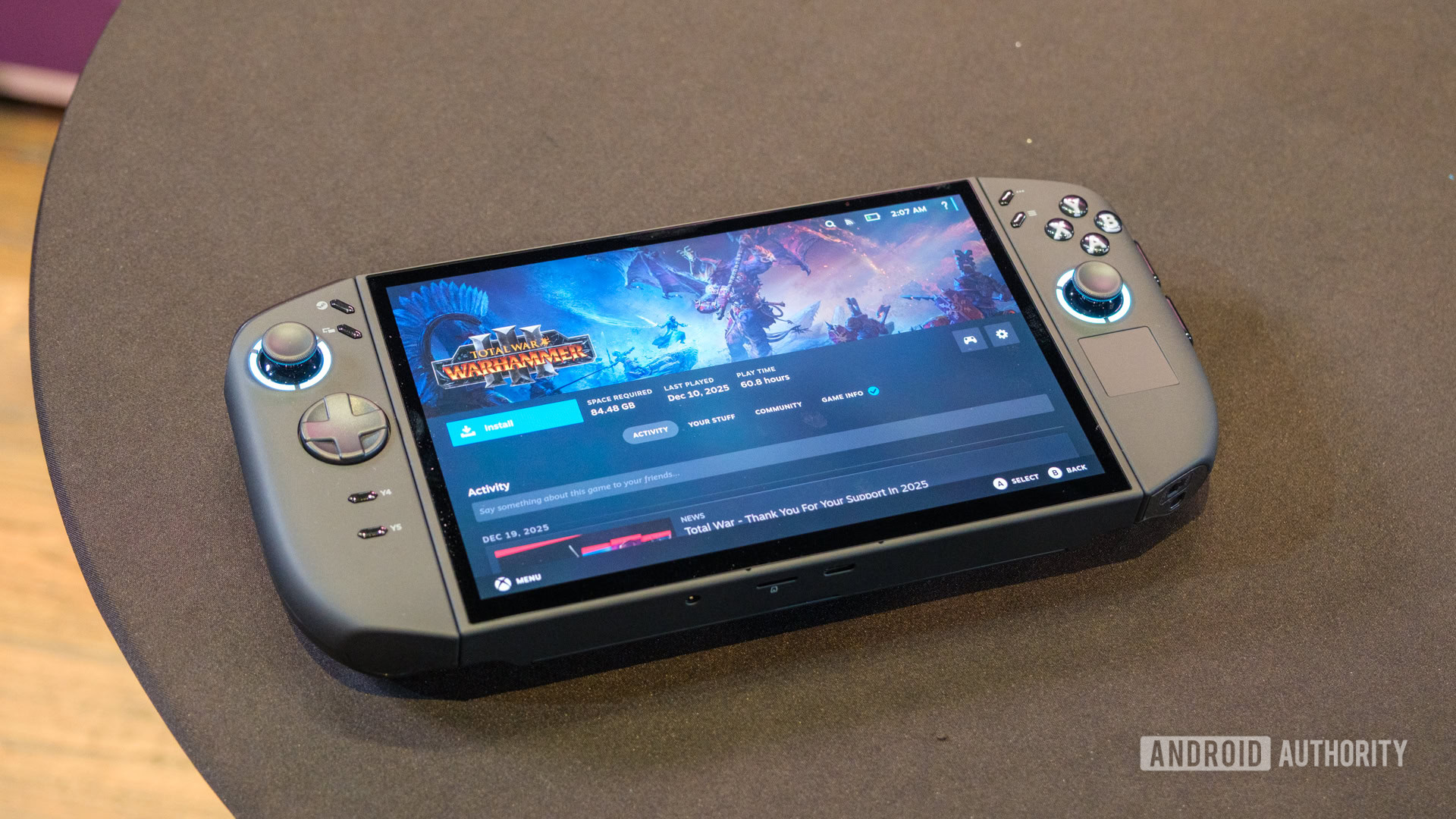
Lenovo brought a more focused handheld experience to CES 2026 with the SteamOS version of the Legion Go 2. It is the same second-generation hardware as the Windows model, but paired with Valve’s controller-first operating system for players who want their handheld to feel closer to a console than a tiny PC.
The pitch is simple and effective. SteamOS handles quick suspend and resume, native Steam library access, cloud saves, and a UI built around buttons and sticks rather than menus and windows. Lenovo says this is its most powerful handheld to ship natively with SteamOS. You get an 8.8-inch OLED display with a 144Hz refresh rate, an AMD Ryzen Z2 Extreme chip, up to 32GB of LPDDR5X memory, and up to 2TB of storage with microSD expansion.
This is Lenovo’s premium hardware paired with a console-style Steam experience.
What makes this model appealing is choice. Windows is there for flexibility and broad compatibility, while SteamOS is for players who want a cleaner, more predictable gaming experience without desktop friction. That mirrors what Lenovo already did with the Legion Go S, and it feels like a smart continuation of that strategy.
Starting at $1,199 and launching around June 2026, the SteamOS Legion Go 2 is clearly positioned above the Steam Deck on price. Lenovo is aiming at players who want top-tier handheld hardware and prefer SteamOS to do exactly one thing well: play games.
Dreame X60 Max Ultra
C. Scott Brown / Android Authority
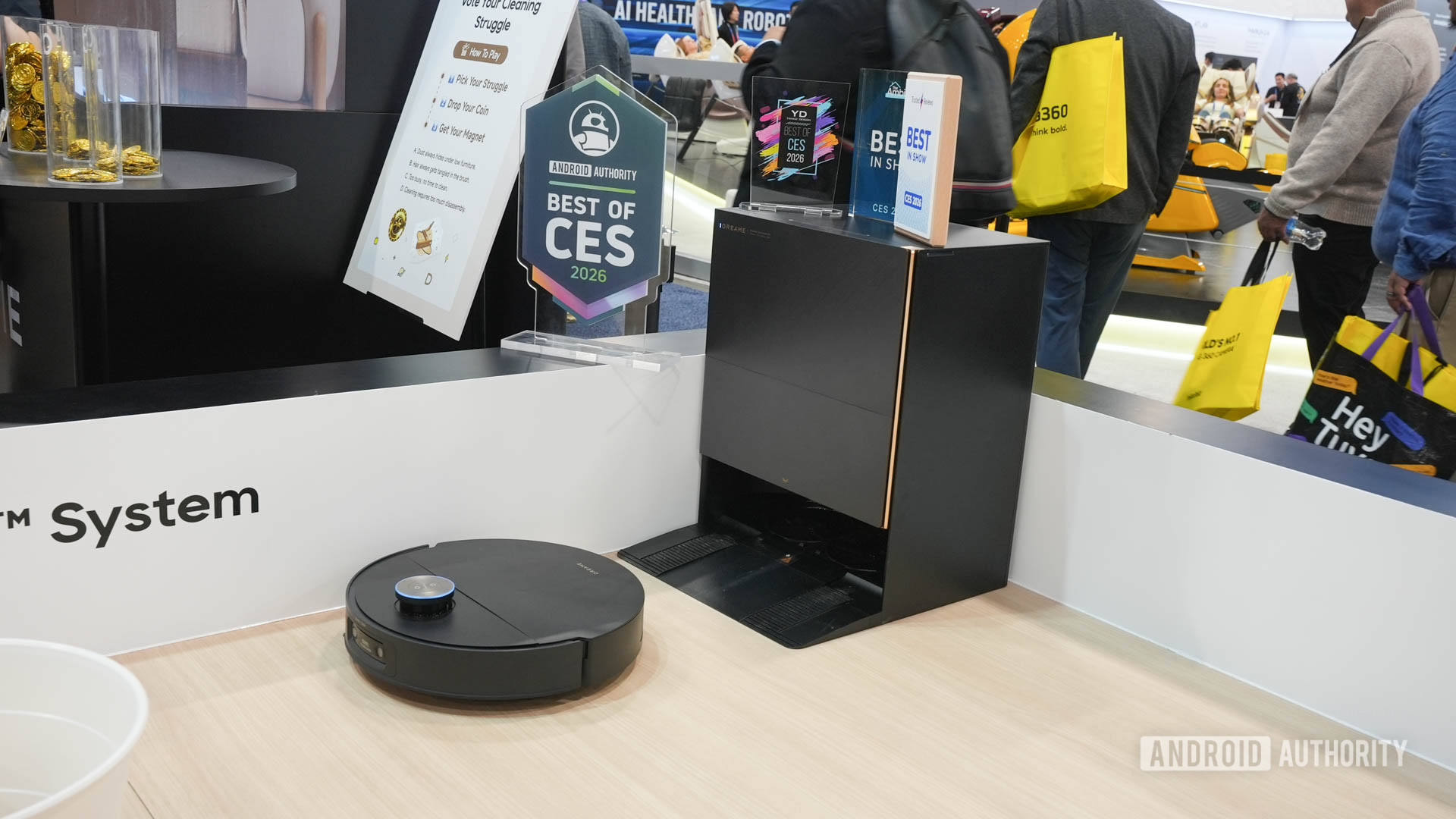
Dreame returned to CES 2026 with a clear goal: refine its flagship robot vacuum without making compromises. The X60 Max Ultra builds on last year’s stair-climbing concept and pushes it further, letting the robot roll over obstacles up to 8.8cm high. That still will not handle a full staircase, but it is enough to deal with raised thresholds, room dividers, and other problem spots that usually stop a robot in its tracks.
Dreame really managed to slim things down with this new model. The X60 Max Ultra measures just 7.95cm tall, making it the company’s lowest-profile robot yet. To pull that off, Dreame uses a retracting LiDAR system that lowers itself when the robot moves under furniture, then pops back up to maintain full mapping accuracy. Paired with the latest OmniSight navigation system, Dreame claims significantly faster path planning and more confident object recognition.
The X60 Max Ultra focuses on solving real robot vacuum limits.
Mobility is handled by the new FlexiAdapt system, which uses retractable legs and swinging arms ahead of the wheels to lift the robot over raised surfaces instead of avoiding them. Combined with strong suction and a full mopping setup, the X60 is designed to clean more of your home in a single pass, rather than asking you to prep the space first.
The high-end dock rounds things out with hot-water mop washing at 100°C, cutting down on odors and manual maintenance. Priced at $1,699, the Dreame X60 Max Ultra is firmly in flagship territory, but it earns that spot by tackling multiple real-world pain points all at once.
Beatbot AquaSense X
Edgar Cervantes / Android Authority
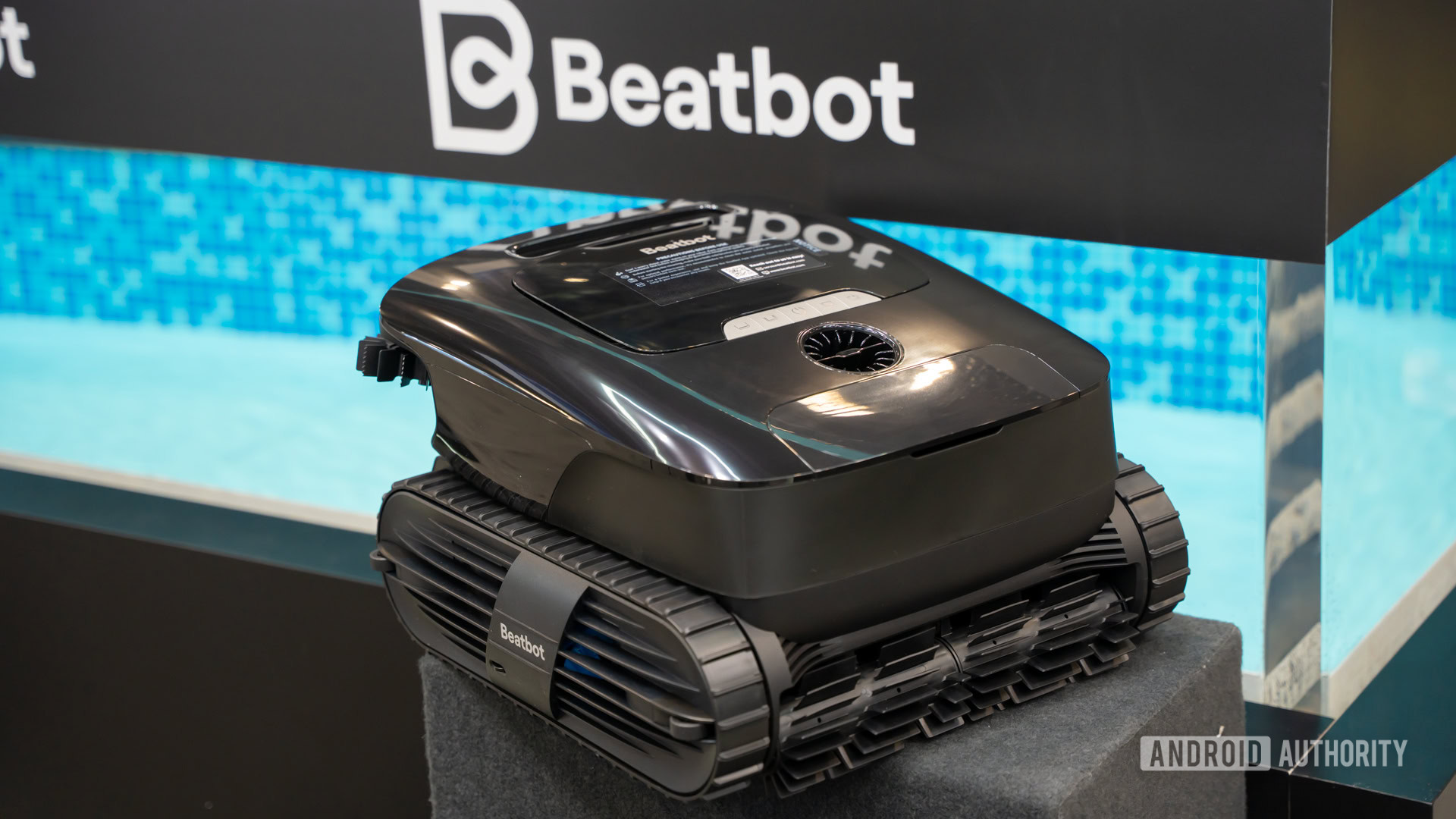
Beatbot used CES 2026 to show just how far robotic pool care has progressed, and the AquaSense X is the clearest example yet. AquaSense is a system designed to make pool maintenance feel close to self-managing, from cleaning to post-cycle upkeep.
The standout feature is the AstroRinse Cleaning Station, a self-cleaning dock that automatically rinses the robot’s internal filter, flushes debris into a sealed bag, and starts recharging once a cycle is finished. For pool owners, this removes one of the most annoying parts of robotic cleaning. No more handling wet filters or rinsing debris by hand after every run. The large-capacity debris bag is built to last weeks between emptying, even with frequent cleaning.
AquaSense X pushes pool cleaning closer to a truly hands-off experience.
Beatbot AI 2.0 and HybridSense AI Vision combine cameras with infrared and ultrasonic sensors to identify dozens of debris types across the pool floor, walls, waterline, and surface. Navigation adapts dynamically to pool shape and depth, allowing a single cycle to handle areas that often require separate passes on other robots, including shallow ledges and surface debris.
At $4,250, the Beatbot AquaSense X is a premium product. But by addressing both cleaning and the maintenance that follows, it can conceivably take care of the pool in the background, which feels like the real next step for this category.
TCL X11L SQD-Mini LED TV

C. Scott Brown / Android Authority
TCL went all-in on premium TV performance at CES 2026 with the X11L Series, a flagship Mini LED TV that is clearly aimed at ending the usual OLED versus LED debate. The X11L combines extreme brightness, deep black levels, and unusually accurate color in a well-rounded package.
At the core of the X11L is TCL’s new SQD-Mini LED display system, built around Super Quantum Dots, a new UltraColor filter, and advanced color processing. Users get BT.2020 color coverage with far more consistency than we usually see from Mini LED panels. TCL pairs that color performance with up to 20,000 dimming zones and peak brightness hitting 10,000 nits. This combo of features should translate into intense highlights, strong contrast, and minimal blooming even in difficult scenes.
TCL’s upgraded Halo Control System and new 26-bit backlight controller allow for tighter light control and cleaner shadow detail, while the TSR AI Processor handles motion, upscaling, clarity, and sound tuning. The panel itself is ultra-thin, just 0.8 inches (20mm) deep, with a flat back designed to sit flush on a wall, reinforced by an Art Mode that helps it blend into a living space when not in use.
The X11L is TCL’s clearest statement yet that Mini LED can deliver both brightness and black levels at the highest end.
Audio is similarly ambitious. Bang and Olufsen tuning is built in, with the option to expand into a full wireless Dolby Atmos setup over time, including a subwoofer and surround speakers. Starting at $6,999 for the 75-inch model, the TCL X11L SQD-Mini LED sets its own bar for what a no-compromise premium TV should look like in 2026.
Razer Project Motoko
Joe Maring / Android Authority
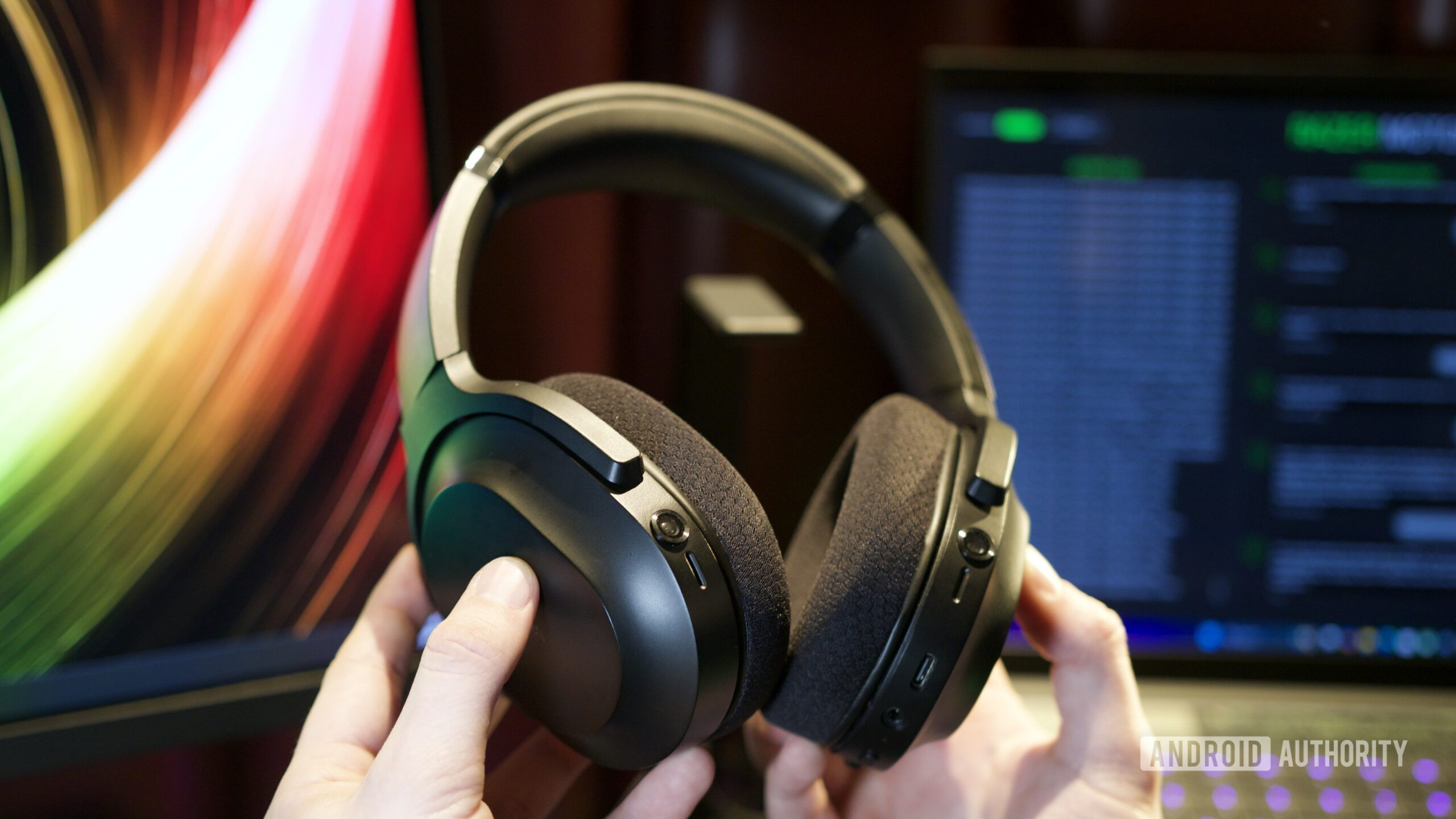
Razer brought one of the more unexpected ideas to CES with Project Motoko, a concept that asks a simple question: what if smart glasses worked just as well without sitting on your face. Instead of lenses, Motoko builds its AI experience into a pair of over-ear headphones that look and feel like regular wireless cans.
Project Motoko delivers the smart glasses experience without asking you to wear smart glasses.
The trick is a pair of forward-facing cameras embedded into the headphones, capturing a first-person view of the world around you.
Motoko delivers the same kind of contextual help we have come to expect from smart glasses. Live translation, object recognition, price comparisons, directions, and weather updates all worked smoothly in demos. The system is not locked to a single assistant either, with support for platforms like Gemini, ChatGPT, and others depending on what you prefer.
What makes Motoko stand out is the form factor. Unlike smart glasses, these headphones blend in. On the head, they feel like normal everyday headphones, and visually, nothing about them signals experimental tech. For people who like the idea of ambient AI help but do not want a visible wearable, that matters a lot.
Project Motoko is still a concept, with no pricing or release details yet. If Razer decides to take this further, smart headphones could end up being a far more natural home for everyday AI than glasses ever were.
LG Display 27-inch Gaming OLED Monitor Panel with 720Hz Refresh Rate
C. Scott Brown / Android Authority
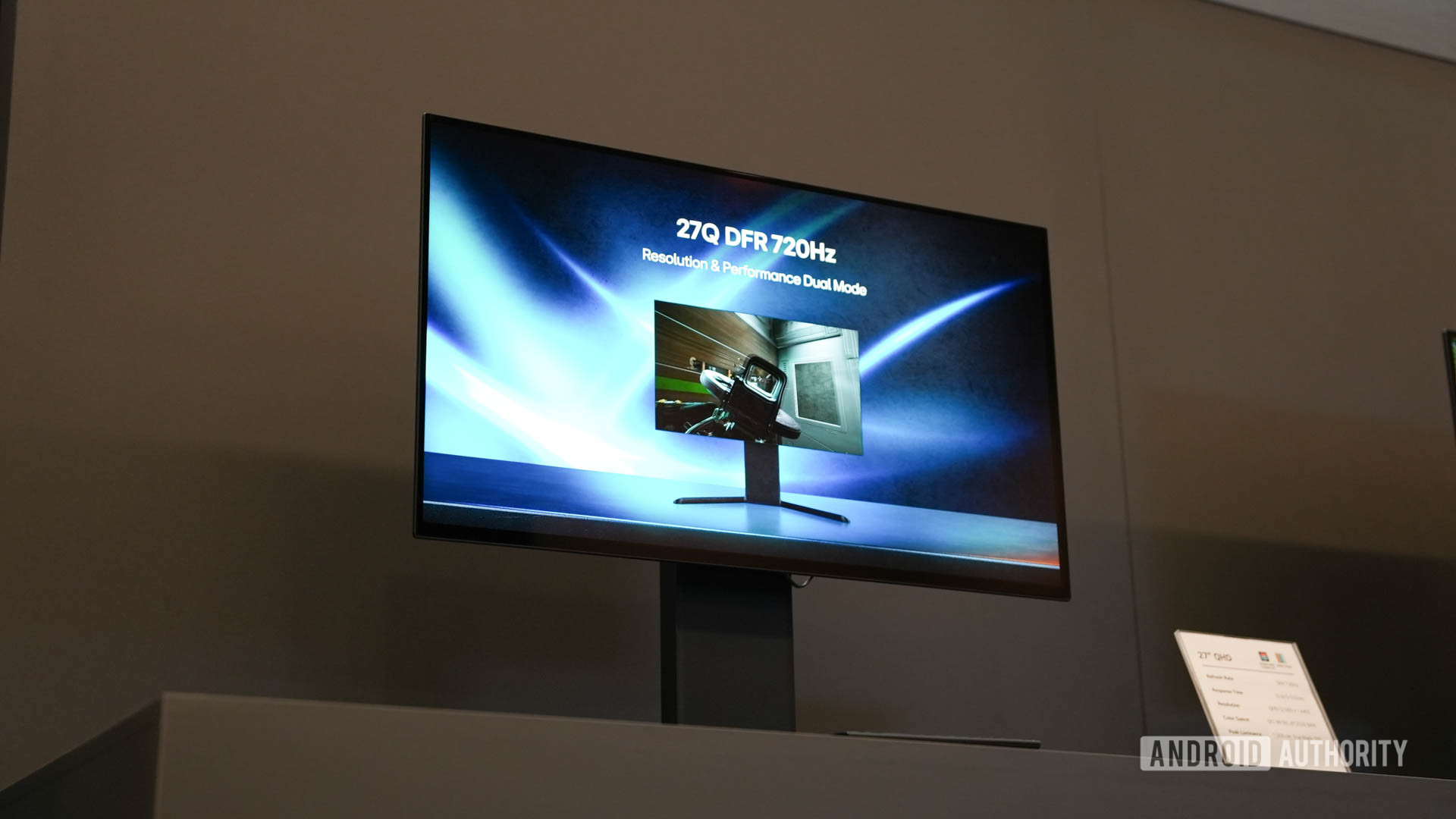
LG Display showed off one of the most extreme gaming panels we’ve seen with a 27-inch OLED monitor panel built for pure speed. This is a QHD display that pushes refresh rates far beyond what most gamers have ever seen, topping out at a staggering 720Hz.
The headline feature is Dynamic Frequency and Resolution, or DFR. This lets players choose what matters most in the moment. In Performance Mode, the panel runs at a full 720Hz for the smoothest possible motion. Switch to Resolution Mode, and it delivers QHD clarity at 540Hz, still far beyond today’s mainstream gaming monitors. Paired with a 0.02ms gray-to-gray response time, motion blur and latency are pushed to levels that LCD panels simply cannot match.
Because this is OLED, image quality keeps up with the speed. The panel delivers perfect blacks, up to 1,500 nits of peak brightness, and near-complete DCI-P3 coverage with strong BT.2020 support. Color depth and contrast remain intact even at extreme refresh rates, which is not something high-speed panels have always managed in the past.
This panel is built for players who care about speed above everything else.
LG Display also leaned into comfort, with flicker-free operation, reduced glare, and low blue light output to support longer play sessions. As a technology showcase, this 720Hz OLED panel sets a new ceiling for competitive gaming displays and signals where the very top end of esports hardware is heading next.
Samsung Galaxy Book 6 series

Lanh Nguyen / Android Authority
Samsung expanded its PC ambitions at CES with the Galaxy Book 6 lineup, pairing Intel’s newest Panther Lake processors with a clearer performance hierarchy and the return of the Ultra model. The series includes the Galaxy Book 6, Book 6 Pro, and the Galaxy Book 6 Ultra, covering everything from thin-and-light productivity to heavy creative and gaming workloads.
All models are built around Intel Core Ultra Series 3 chips, delivering a sizable jump in performance and efficiency. The base and Pro models rely on Intel Arc integrated graphics, while the Galaxy Book 6 Ultra stands apart by offering NVIDIA RTX 50 series GPUs. The Ultra can also be configured with up to 64GB of memory, reinforcing its position as the most powerful Galaxy Book yet.
With Panther Lake and RTX 50 series graphics, the Galaxy Book 6 Ultra finally feels like a true flagship laptop.
Displays remain a strong point. The Pro and Ultra feature Samsung’s latest Dynamic AMOLED panels with high resolution, dynamic 120Hz refresh rates, strong brightness, and anti-reflective coatings. For battery, Samsung claims up to 30 hours of video playback on the Pro and Ultra. Design tweaks are subtle but intentional, including cleaner branding and a more uniform keyboard layout.
Samsung has not yet announced pricing for the Galaxy Book 6 series. Availability begins later this month in select markets, with US sales expected to start in the spring.
Lenovo Legion Pro Rollable Concept
Ryan Haines / Android Authority
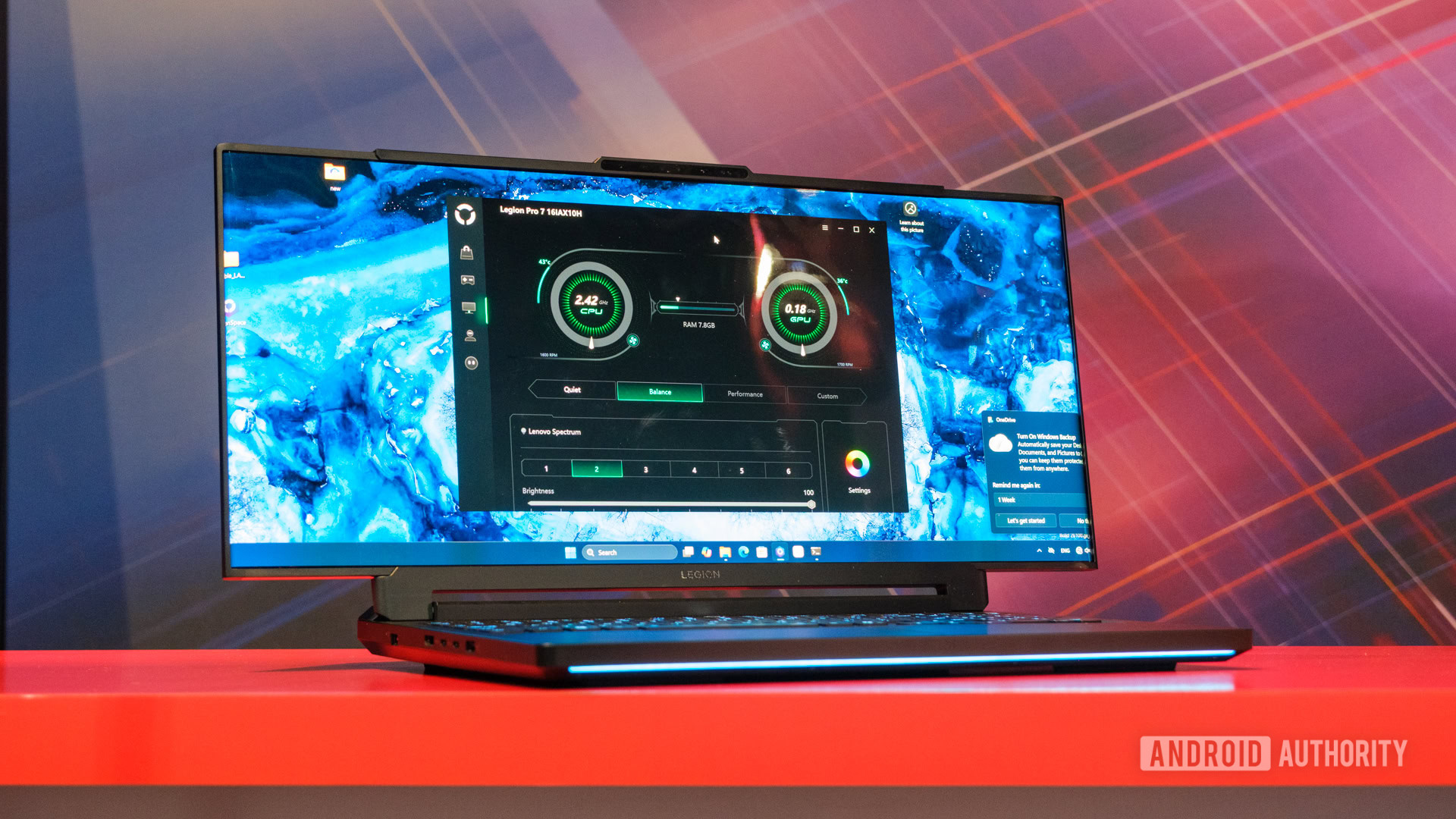
Lenovo continued its rollable push at CES 2026 with the Legion Pro Rollable Concept, a gaming laptop that takes the idea of an expanding display to an extreme. Built for esports and high-end gaming, this concept starts as a fairly normal 16-inch laptop and then unfurls into something much larger, turning into a desktop-style gaming screen on demand.
The rollable PureSight OLED display can expand up to 24 inches in “Arena mode,” or stop at 21.5 inches in “Tactical mode” for setups where space is more limited. That flexibility is the real hook here. You can travel with a reasonably sized gaming laptop and still get a massive screen once you sit down to play.
The Legion Pro Rollable shows how rollable displays could finally make sense for gamers.
Lenovo uses a dual-motor system to extend the display smoothly, aiming to keep vibration and noise to a minimum during the transition.
Under the hood, the concept is based on the Legion Pro 7i, which means top-tier hardware. Lenovo confirmed that the system is paired with Intel Core Ultra processors and an NVIDIA GeForce RTX 5090, making it clear this is not just a visual experiment.
This is still very much a concept, and Lenovo has not said when or if it will reach production. Even so, it feels like a natural next step after the company’s first commercial rollable laptop.
Pebble Round 2
Joe Maring / Android Authority
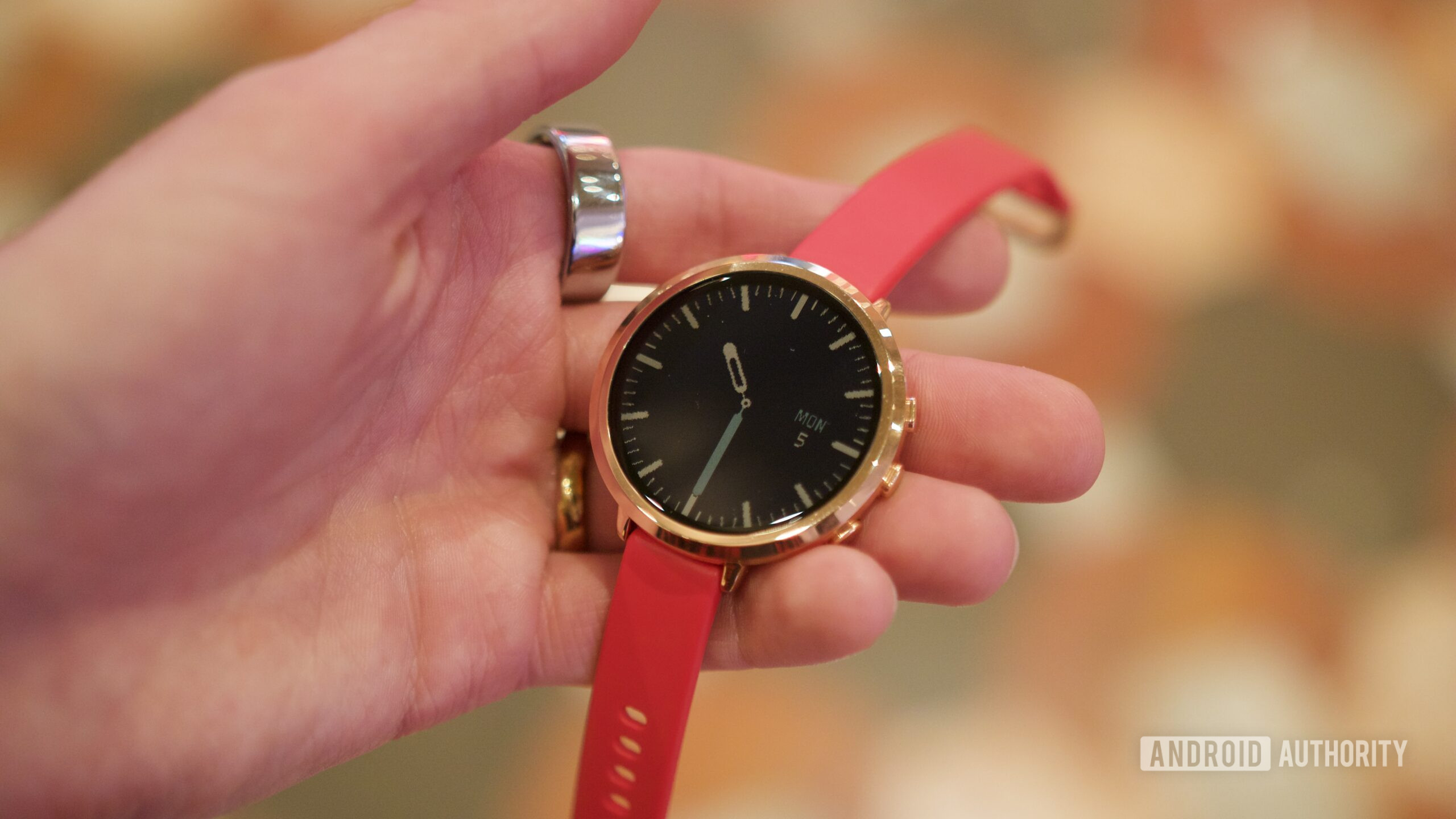
Pebble made an unexpected and welcome return to Las Vegas with the Pebble Round 2, a smartwatch that feels deliberately out of step with modern wearables, in the best way possible. It is a spiritual follow-up to the Pebble Time Round, keeping the same ultra-thin, lightweight circular design while fixing its biggest flaw with a much larger, edge-to-edge display.
The new 1.3-inch e-paper screen completely changes how the watch feels day to day. Notifications are easier to read, watch faces finally have room to breathe, and visibility in bright light is excellent without relying on a backlight. Pebble sticking with e-paper is a clear statement that this watch prioritizes readability and battery life over flashy visuals.
Comfort is where the Pebble Round 2 really stands apart. The case is extremely thin and light, to the point where it almost disappears on your wrist. For people with smaller wrists, or anyone tired of bulky smartwatches, this is refreshing. It feels closer to wearing a traditional watch than a mini computer.
Pebble Round 2 is built to do one thing well, and it fully commits to that idea.
There are obvious omissions. No heart rate sensor, GPS, NFC, speaker, or fitness tracking. That is intentional. The Pebble Round 2 is designed to be a notification-first smartwatch with up to 14 days of battery life, nothing more.
Pebble Round 2 costs $199 and is expected to start shipping in May.
ROG XREAL R1
C. Scott Brown / Android Authority
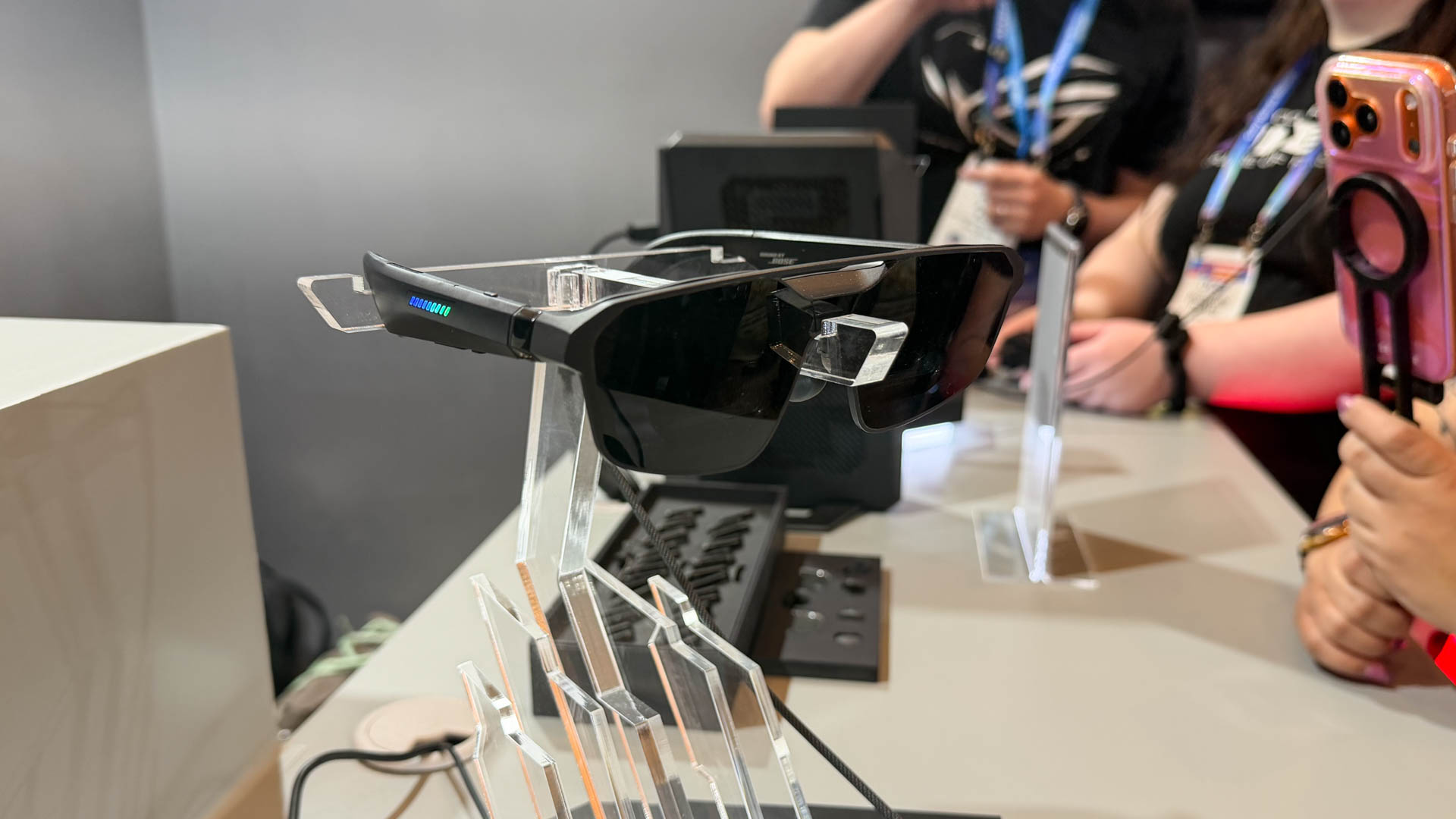
A collaboration between XREAL and ASUS, the ROG XREAL R1 is a gaming-first take on AR glasses that puts a high-refresh display directly in front of your eyes. This is not positioned as a general-purpose wearable. It is designed to function like a portable gaming monitor, and the hardware reflects that focus.
Each lens features a 1080p micro-OLED display running at up to 240Hz, with latency rated at just three milliseconds. That combination makes fast motion feel smooth and responsive, closer to what you would expect from a dedicated gaming display than from a wearable. A wider 57-degree field of view helps the virtual screen feel more immersive without dominating your entire vision.
The ROG XREAL R1 feels like a high-refresh gaming monitor you can wear.
The R1 fits neatly into ASUS’ gaming ecosystem. It connects over USB-C for simple plug-and-play use and pairs especially well with devices like the ROG Ally. A dedicated dock lets you switch between multiple inputs, while built-in head tracking allows the display to stay anchored in space as you move. Audio is handled through Bose-tuned speakers built into the arms, keeping the setup self-contained.
Automatic electrochromic lens tinting adjusts to ambient light, making the glasses easier to wear across different environments. Pricing has not been announced yet, but availability is expected in the first half of 2026.
Our CES 2026 Breakthrough Awards
Edgar Cervantes / Android Authority
Our annual Best of CES awards highlight products that stand out at the very top of the show. But the event has always been about more than established names and headline launches. It is also a proving ground for smaller teams and newer brands looking to break through with fresh ideas.
To recognize that side of the show, we created the Best of CES 2026: Breakthrough Awards. The products below may not come from the biggest players, but each one brings something new to the table and shows real potential.
Here are the 10 Best of CES 2026 Breakthrough Award winners. Keep an eye on them, as any of these could shape where tech goes next.
- Narwal Flow 2: A next-gen robot vacuum that pushes autonomy further, using AI vision to recognize and avoid objects while pairing powerful suction and hot-water mopping with a base station built to minimize hands-on maintenance
- Govee Floor Lamp 3: Ambient lighting gets smarter here, with a floor lamp that reacts to music, scenes, and room vibes without feeling like a gimmick.
- LLVision Leion Hey2: Lightweight AI glasses built around practical features like live translation and contextual prompts, all packed into a form that still resembles normal eyewear.
- AWOL Aetherion Max: A high-end ultra-short-throw laser projector aimed at people who want a wall-filling image without dedicating an entire room to home theater gear.
- Aiper Scuba V3 Ultra: Cordless and self-contained, this pool-cleaning robot tackles floors, walls, and waterlines without hoses or external pumps.
- Sylvox Frameless Pro: Designed for outdoor spaces, this TV drops bulky bezels to better blend into patios, decks, and backyard setups.
- MOVA Atomform Palette 300: A multi-material desktop 3D printer that uses a 12-nozzle system to print complex, multi-color designs in a single pass, removing much of the friction from advanced 3D printing workflows.
- Botslab Window Camera W101: This security camera is made for window mounting, offering outdoor monitoring without drilling holes or committing to permanent installs.
- Mammotion SPINO S1 Pro: A high-end robotic pool cleaner that uses AI navigation and a self-docking system to clean floors, walls, and waterlines with minimal hands-on effort.
- Segway Navimow X4: Wire-free robotic mower built for large lawns, using precise RTK and vision-based navigation to deliver consistent, hands-off mowing with minimal setup.
Which of these products is your favorite? Let us know the top Best of CES 2026 award winner in the comments below, and stay tuned for more!
Follow
Thank you for being part of our community. Read our Comment Policy before posting.