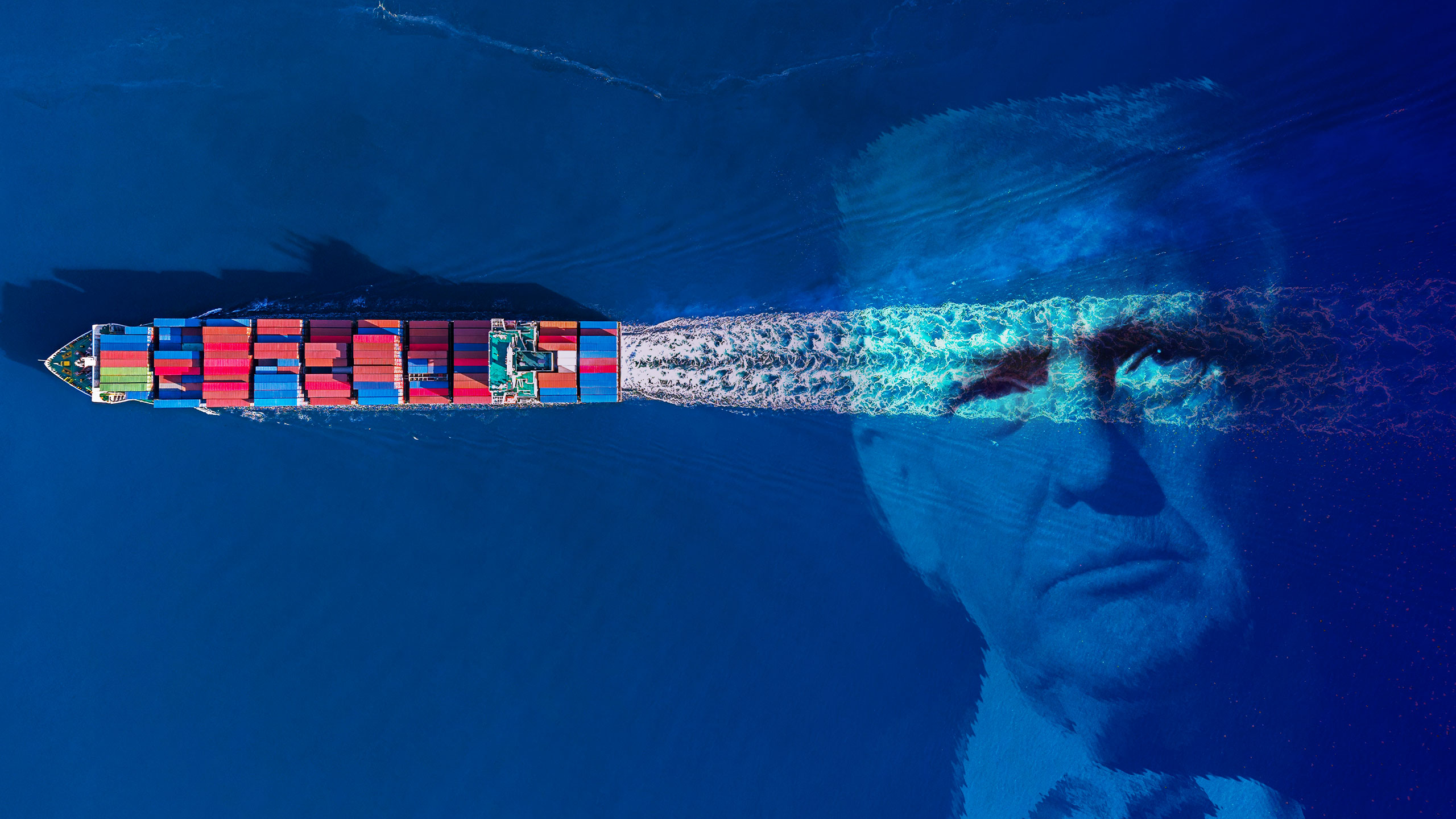
Big Tech basically took Trump’s unpredictable trade war lying down
SOURCE:Ars Technica|BY:
Ashley Belanger
From Apple gifting a gold statue to the US taking a stake in Intel.
Kissing the ring
From Apple gifting a gold statue to the US taking a stake in Intel.
Credit: Aurich Lawson | Getty Images
Credit: Aurich Lawson | Getty Images
As the first year of Donald Trump’s chaotic trade war winds down, the tech industry is stuck scratching its head, with no practical way to anticipate what twists and turns to expect in 2026.
Tech companies may have already grown numb to Trump’s unpredictable moves. Back in February, Trump warned Americans to expect “a little pain” after he issued executive orders imposing 10–25 percent tariffs on imports from America’s biggest trading partners, including Canada, China, and Mexico. Immediately, industry associations sounded the alarm, warning that the costs of consumer tech could increase significantly. By April, Trump had ordered tariffs on all US trade partners to correct claimed trade deficits, using odd math that critics suspected came from a chatbot. (Those tariffs bizarrely targeted uninhabited islands that exported nothing and were populated by penguins.)
Costs of tariffs only got higher as the year wore on. But the tech industry has done very little to push back against them. Instead, some of the biggest companies made their own surprising moves after Trump’s trade war put them in deeply uncomfortable positions.
Apple gives Trump a gold statue instead of US-made iPhone
Right from the jump in February, Apple got backed into a corner after Trump threatened a “flat” 60 percent tariff on all Chinese imports, which experts said could have substantially taxed Apple’s business. Moving to appease Trump, Apple promised to invest $500 billion in the US in hopes of avoiding tariffs, but that didn’t take the pressure off for long.
By April, Apple stood by and said nothing as Trump promised the company would make “made in the USA” iPhones. Analysts suggested such a goal was “impossible,” calling the idea “impossible at worst and highly expensive at best.”
Apple’s silence did not spare the company Trump’s scrutiny. The next month, Trump threatened Apple with a 25 percent tariff on any iPhones sold in the US that were not manufactured in America. Experts were baffled by the threat, which appeared to be the first time a US company was threatened directly with tariffs.
Typically, tariffs are imposed on a country or category of goods, like smartphones. It remains unclear if it would even be legal to levy a tariff on an individual company like Apple, but Trump never tested those waters. Instead, Trump stopped demanding the American-made iPhone and withdrew other tariff threats after he was apparently lulled into submission by a gold statue that Apple gifted him in August. The engraved glass disc featured an Apple logo and Tim Cook’s signature above a “Made in USA” stamp, celebrating Donald Trump for his “Apple American Manufacturing Program.”
Trump’s wild deals shake down chipmakers
Around the same time that Trump eased pressure on Apple, he turned his attention to Intel. On social media in August, Trump ordered Intel CEO Lip-Bu Tan to “resign immediately,” claiming he was “highly conflicted.” In response, Tan did not resign but instead met with Trump and struck a deal that gave the US a 10 percent stake in Intel. Online, Trump bragged that he let Tan “keep his job” while hyping the deal—which The New York Times described as one of the “largest government interventions in a US company since the rescue of the auto industry after the 2008 financial crisis.”
But unlike the auto industry, Intel didn’t need the money. And rather than helping an ailing company survive a tough spot, the deal risked disrupting Intel’s finances in ways that spooked shareholders. It was therefore a relief to no one when Intel detailed everything that could go wrong in an SEC filing, including the possible dilution of investors’ stock due to discounting US shares and other risks of dilution, if certain terms of the deal kick in at some point in the future.
The company also warned of potential lawsuits challenging the legality of the deal, which Intel fears could come from third parties, the US government, or foreign governments. Most ominous, Intel admitted there was no way to predict what other risks may come, both in the short-term and long-term.
Of course, Intel wasn’t the only company Trump sought to control, and not every company caved. He tried to strong-arm the Taiwan Semiconductor Manufacturing Company (TSMC) in September into moving half its chip manufacturing into the US, but TSMC firmly rejected his demand. And in October, when Trump began eyeing stakes in quantum computing firms, several companies were open to negotiating, but with no deals immediately struck, it was hard to ascertain how seriously they were entertaining Trump’s talks.
Trump struck another particularly wild deal the same month as the Intel agreement. That deal found chipmakers Nvidia and AMD agreeing to give 15 percent of revenue to the US from sales to China of advanced computer chips that could be used to fuel frontier AI. By December, Nvidia’s deal only drew more scrutiny, as the chipmaker agreed to give the US an even bigger cut—25 percent—of sales of its second most advanced AI chips, the H200.
Again, experts were confused, noting that export curbs on Nvidia’s H20 chips, for example, were imposed to prevent US technology thefts, maintain US tech dominance, and protect US national security. Those chips are six times less powerful than the H200. To them, it appeared that the Trump administration was taking payments to overlook risks without a clear understanding of how that might give China a leg-up in the AI race. It also did not appear to be legal, since export licenses cannot be sold under existing federal law, but government lawyers have supposedly been researching a new policy that would allow the US to collect the fees.
Trump finally closed TikTok deal
As the end of 2025 nears, the tech company likely sweating Trump’s impulses most may be TikTok owner ByteDance. In October, Trump confirmed that China agreed to a deal that allows the US to take majority ownership of TikTok and license the TikTok algorithm to build a US version of the app.
Trump has been trying to close this deal all year, while ByteDance remained largely quiet. Prior to the start of Trump’s term, the company had expressed resistance to selling TikTok to US owners, and as recently as January, a ByteDance board member floated the idea that Trump could save TikTok without forcing a sale. But China’s approval was needed to proceed with the sale, and near the end of December, ByteDance finally agreed to close the deal, paving the way for Trump’s hand-picked investors to take control in 2026.
It’s unclear how TikTok may change under US control, perhaps shedding users if US owners cave to Trump’s suggestion that he’d like to see the app go “100 percent MAGA” under his hand-picked US owners. It’s possible that the US version of the app could be glitchy, too.
Whether Trump’s deal actually complies with a US law requiring that ByteDance divest control of TikTok or else face a US ban has yet to be seen. Lawmaker scrutiny and possible legal challenges are expected in 2026, likely leaving both TikTok users and ByteDance on the edge of their seats waiting to see how the globally cherished short video app may change.
Trump may owe $1 trillion in tariff refunds
The TikTok deal was once viewed as a meaningful bargaining chip during Trump’s tensest negotiations with China, which has quickly emerged as America’s fiercest rival in the AI race and Trump’s biggest target in his trade war.
But as closing the deal remained elusive for most of the year, analysts suggested that Trump grew “desperate” to end tit-for-tat retaliations that he started, while China appeared more resilient to US curbs than the US was to China’s.
In one obvious example, many Americans’ first tariff pains came when Trump ended a duty-free exemption in February for low-value packages imported from cheap online retailers, like Shein and Temu. Unable to quickly adapt to the policy change, USPS abruptly stopped accepting all inbound packages from Hong Kong and China. After a chaotic 24 hours, USPS started slowly processing parcels again while promising Americans that it would work with customs to “implement an efficient collection mechanism for the new China tariffs to ensure the least disruption to package delivery.”
Trump has several legal tools to impose tariffs, but the most controversial path appears to be his favorite. The Supreme Court is currently weighing whether the International Emergency Economic Powers Act (IEEPA) grants a US president unilateral authority to impose tariffs.
Seizing this authority, Trump imposed so-called “reciprocal tariffs” at whim, the Consumer Technology Association and the Chamber of Commerce told the Supreme Court in a friend-of-the-court brief in which they urged the justices to end the “perfect storm of uncertainty.”
Unlike other paths that would limit how quickly Trump could shift tariff rates or how high the tariff rate could go, under IEEPA, Trump has imposed tariff rates as high as 125 percent. Deferring to Trump will cost US businesses, CTA and CoC warned. CTA CEO Gary Shapiro estimated that Trump has changed these tariff rates 100 times since his trade war began, affecting $223 billion of US exports.
Meanwhile, one of Trump’s biggest stated goals of his trade war—forcing more manufacturing into the US—is utterly failing, many outlets have reported.
Likely due to US companies seeking more stable supply chains, “reshoring progress is nowhere to be seen,” Fortune reported in November. That month, a dismal Bureau of Labor Statistics released a jobs report that an expert summarized as showing that the “US is losing blue-collar jobs for the first time since the pandemic.”
A month earlier, the nonpartisan policy group the Center for American Progress drew on government labor data to conclude that US employers cut 12,000 manufacturing jobs in August, and payrolls for manufacturing jobs had decreased by 42,000 since April.
As tech companies take tech tariffs on the chin, perhaps out of fears that rattling Trump could impact lucrative government contracts, other US companies have taken Trump to court. Most recently, Costco became one of the biggest corporations to sue Trump to ensure that US businesses get refunded if Trump loses the Supreme Court case, Bloomberg reported. Other recognizable companies like Revlon and Kawasaki have also sued, but small businesses have largely driven opposition to Trump’s tariffs, Bloomberg noted.
Should the Supreme Court side with businesses—analysts predict favorable odds—the US could owe up to $1 trillion in refunds. Dozens of economists told SCOTUS that Trump simply doesn’t understand why having trade deficits with certain countries isn’t a threat to US dominance, pointing out that the US “has been running a persistent surplus in trade in services for decades” precisely because the US “has the dominant technology sector in the world.”
Justices seem skeptical that IEEPA grants Trump the authority, ordinarily reserved for Congress, to impose taxes. However, during oral arguments, Justice Amy Coney Barrett fretted that undoing Trump’s tariffs could be “messy.” Countering that, small businesses have argued that it’s possible for Customs and Border Patrol to set up automatic refunds.
While waiting for the SCOTUS verdict (now expected in January), the CTA ended the year by advising tech companies to keep their receipts in case refunds require requests for tariffs line by line—potentially complicated by tariff rates changing so drastically and so often.
Biggest tariff nightmare may come in 2026
Looking into 2026, tech companies cannot breathe a sigh of relief even if the SCOTUS ruling swings their way, though. Under a separate, legally viable authority, Trump has threatened to impose tariffs on semiconductors and any products containing them, a move the semiconductor industry fears could cost $1 billion.
And if Trump continues imposing tariffs on materials used in popular tech products, the CTA told Ars in September that potential “tariff stacking” could become the industry’s biggest nightmare. Should that occur, US manufacturers could end up double-, triple-, or possibly even quadruple-taxed on products that may contain materials subject to individual tariffs, like semiconductors, polysilicon, or copper.
Predicting tariff costs could become so challenging that companies will have no choice but to raise prices, the CTA warned. That could threaten US tech competitiveness if, possibly over the long term, companies lose significant sales on their most popular products.
For many badly bruised by the first year of tariffs, it’s hard to see how tariffs could ever become a winning strategy for US tech dominance, as Trump has long claimed. And Americans continue to feel more than “a little pain,” as Trump forecasted, causing many to shift their views on the president.
Americans banding together to oppose tariffs could help prevent the worst possible outcomes. With prices already rising on certain goods in the US, the president reversed some tariffs as his approval ratings hit record lows. But so far, Big Tech hasn’t shown much interest in joining the fight, instead throwing money at the problem by making generous donations to things like Trump’s inaugural fund or his ballroom.
A bright light for the tech industry could be the midterm elections, which could pressure Trump to ease off aggressive tariff regimes, but that’s not a given. Trump allies have previously noted that the president typically responds to pushback on tariffs by doubling down. And one of Trump’s on-again-off-again allies, Elon Musk, noted in December in an interview that Trump ignored his warnings that tariffs would drive manufacturing out of the US.
“The president has made it clear he loves tariffs,” Musk said.
Ashley is a senior policy reporter for Ars Technica, dedicated to tracking social impacts of emerging policies and new technologies. She is a Chicago-based journalist with 20 years of experience.