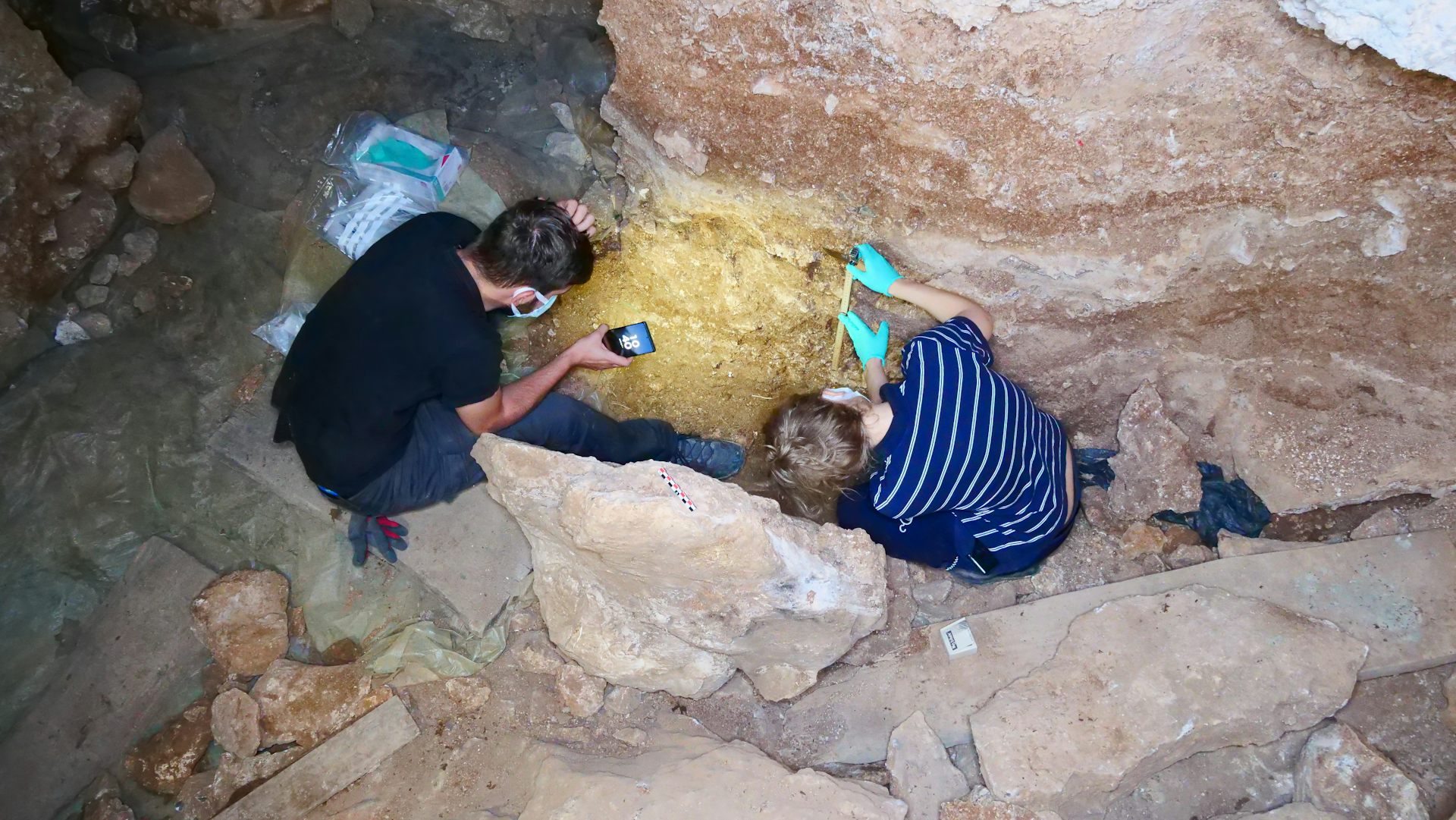
'Biological time capsules': How DNA from cave dirt is revealing clues about early humans and Neanderthals
DNA from soil could soon reveal who lived in ice age caves, research shows.
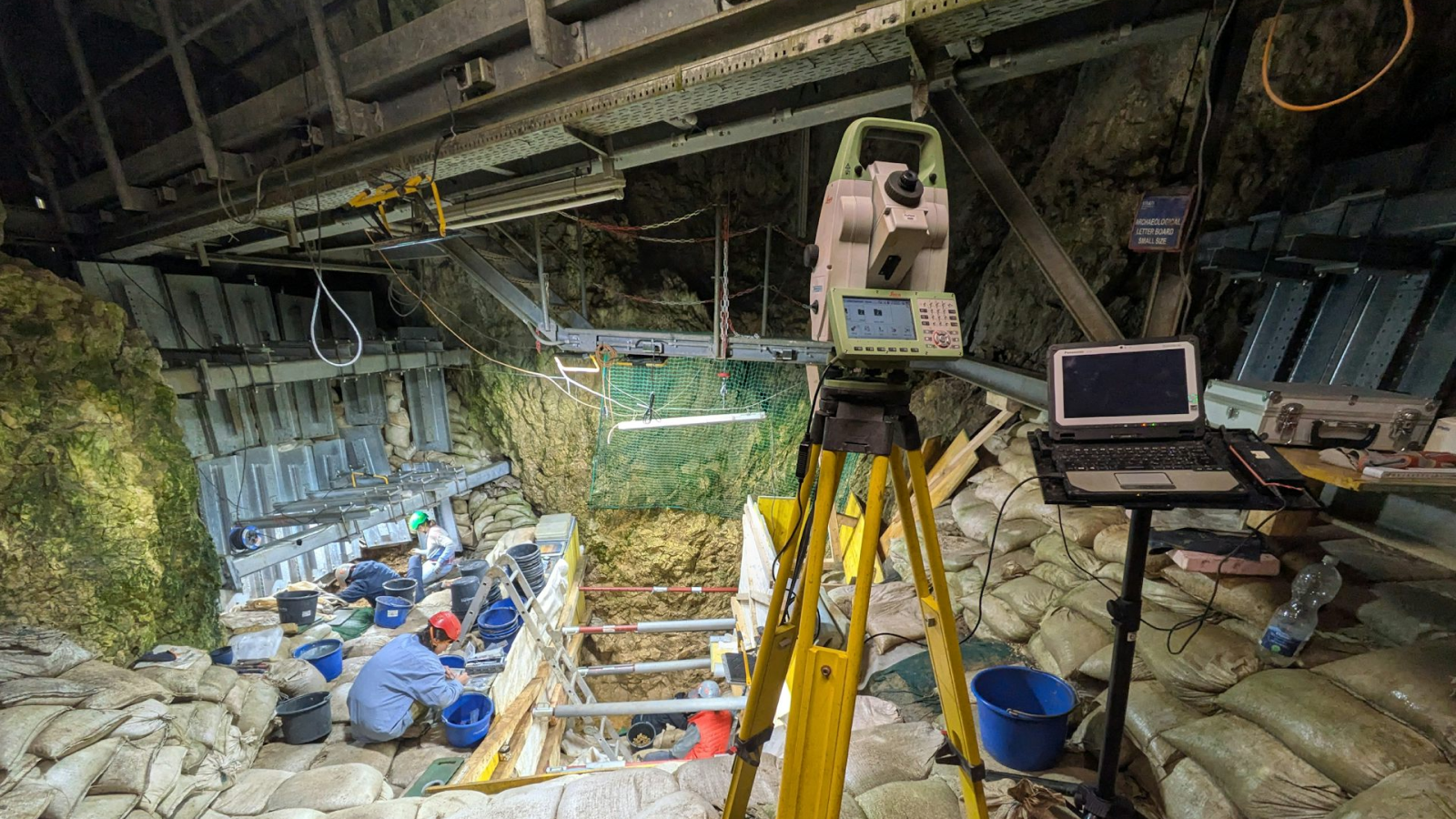
The team at GACT has been analyzing sediments from Hohle Fels cave in Germany. (Image credit: GACT)
The last two decades have seen a revolution in scientists' ability to reconstruct the past. This has been made possible through technological advances in the way DNA is extracted from ancient bones and analyzed.
These advances have revealed that Neanderthals and modern humans interbred — something that wasn't previously thought to have happened. It has allowed researchers to disentangle the various migrations that shaped modern people. It has also allowed teams to sequence the genomes of extinct animals, such as the mammoth, and extinct agents of disease, such as defunct strains of plague.
Caves can preserve tens of thousands of years of genetic history, providing ideal archives for studying long-term human–ecosystem interactions. The deposits beneath our feet become biological time capsules.
It is something we are exploring here at the Geogenomic Archaeology Campus Tübingen (GACT) in Germany. Analyzing DNA from cave sediments allows us to reconstruct who lived in ice age Europe, how ecosystems changed and what role humans played. For example, did modern humans and Neanderthals overlap in the same caves? It's also possible to obtain genetic material from faeces left in caves. At the moment we are analyzing DNA from the droppings of a cave hyena that lived in Europe around 40,000 years ago.
The oldest sediment DNA discovered so far comes from Greenland and is 2 million years old.
Paleogenetics has come a long way since the first genome of an extinct animal, the quagga, a close relative of modern zebras, was sequenced in 1984. Over the past two decades, next-generation genetic sequencing machines, laboratory robotics and bioinformatics (the ability to analyze large, complex biological datasets) have turned ancient DNA from a fragile curiosity into a high-throughput scientific tool.
Get the world’s most fascinating discoveries delivered straight to your inbox.
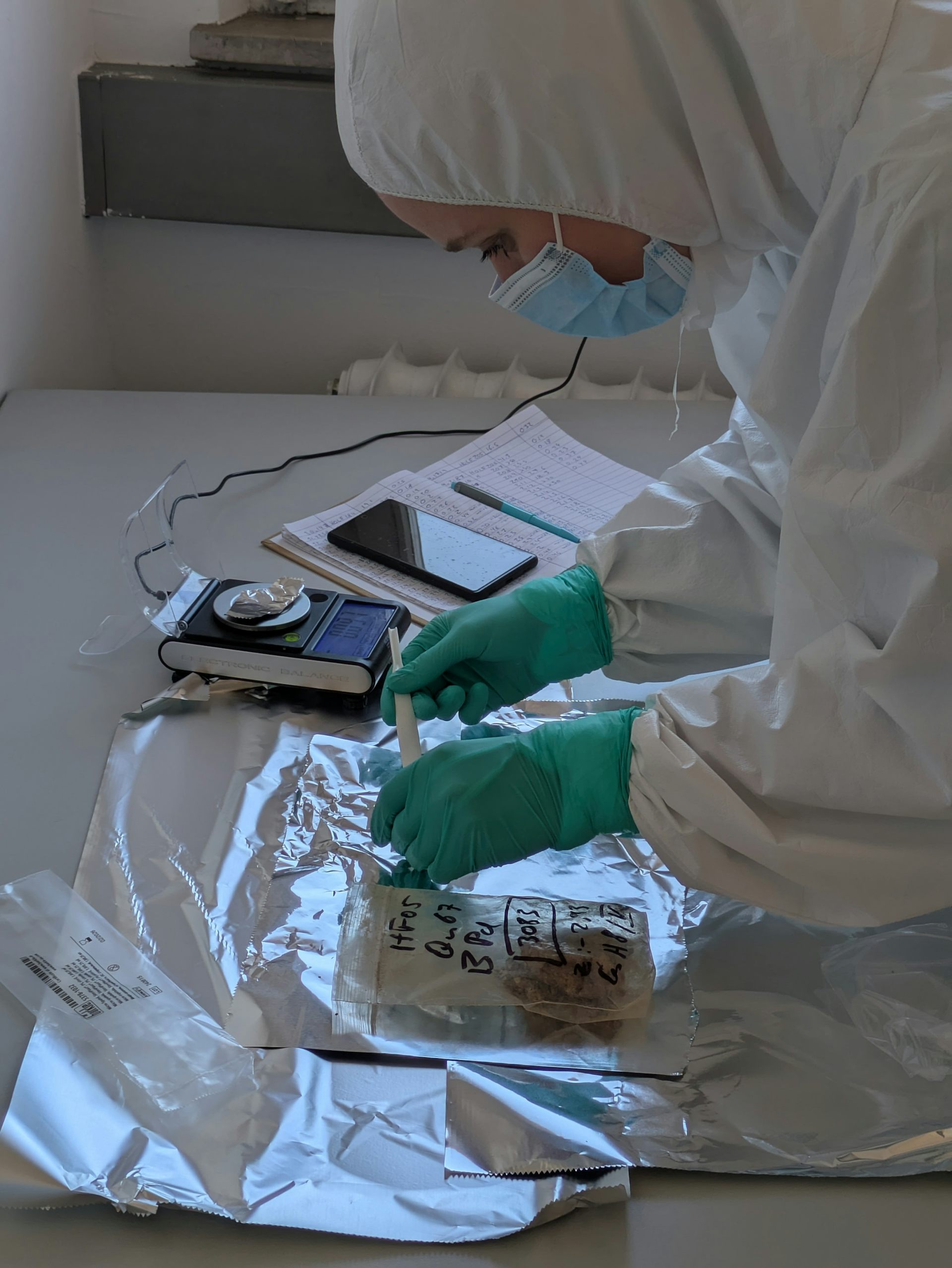
The sediment samples from Hohle Fels are divided up for different analysis methods. Some go to the clean room, some to the geochemical laboratory. (Image credit: GACT)
Today, sequencing machines can decode up to a hundred million times more DNA than their early predecessors. Where the first human genome took over a decade to complete, modern laboratories can now sequence hundreds of full human genomes in a single day.