Broadcom reinvents AMD's APU moniker as it launches Wi-Fi 8 chip — this accelerated processing unit doesn't include a GPU but has 10GbE connectivity
Broadcom’s BCM4918 applies the APU label to a Wi-Fi 8 processor integrating compute, networking, AI, and security without graphics
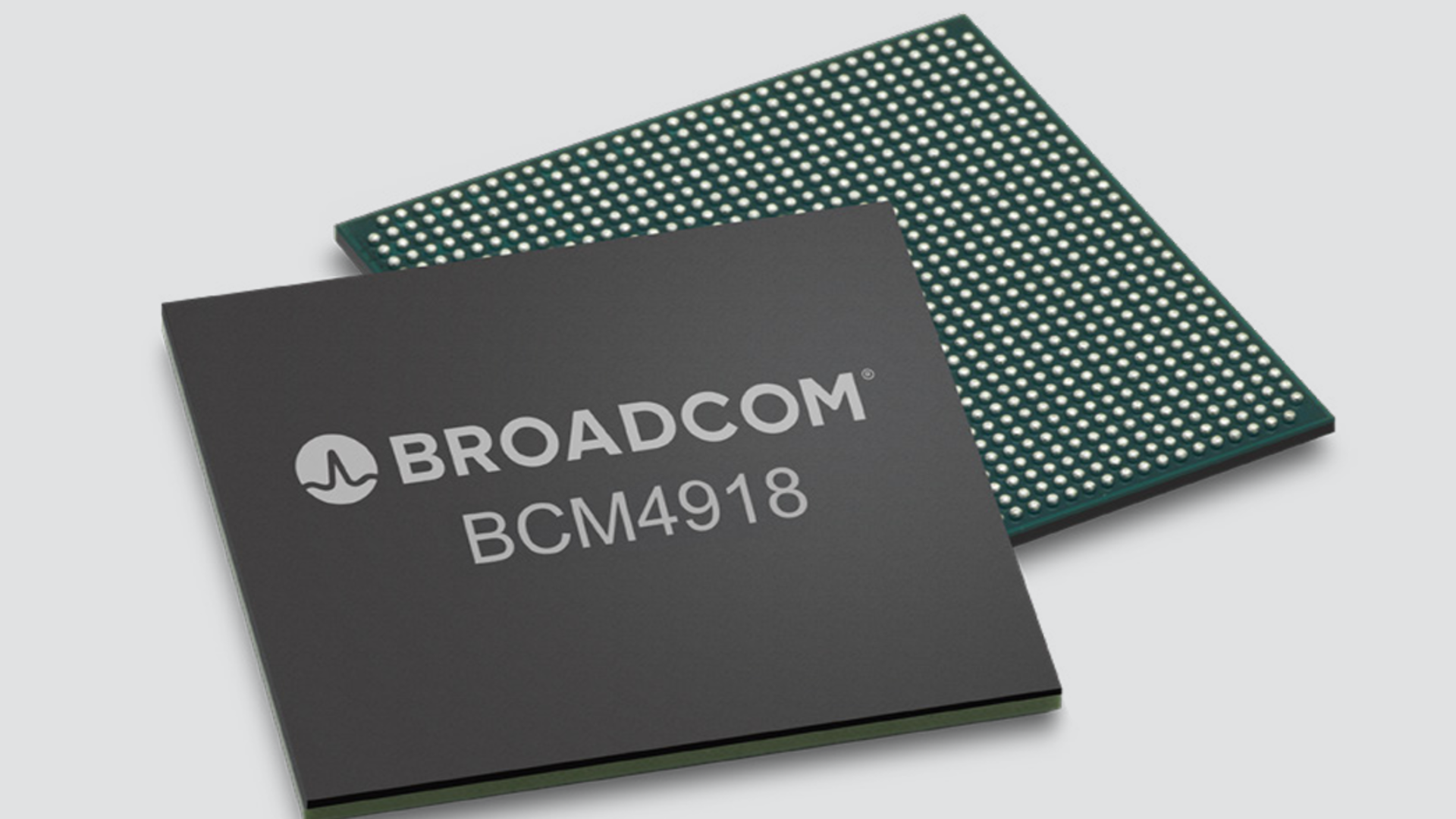
(Image credit: Broadcom)
- Broadcom repurposes the APU label for networking silicon rather than graphics integration
- The BCM4918 shifts packet handling away from CPUs through dedicated offload engines
- Wi-Fi 8 access points increasingly resemble compact edge computing platforms
Broadcom has introduced the BCM4918 network processor for high-end Wi-Fi 8 residential access points, reviving the accelerated processing unit label in a context far removed from its original meaning.
Historically, the APU term described AMD processors that combined a general-purpose CPU with integrated graphics on one die.
In contrast, Broadcom applies the phrase to a system-on-chip that integrates compute cores, networking offload engines, security blocks, and on-device AI logic, without any GPU capability at all.
Compute and packet handling architecture
At the center of the BCM4918 sits a quad-core ARMv8-compatible CPU complex intended for control-plane operations and customer software.
Instead of handling traffic directly, the CPU is complemented by a dual-issue runner packet processor that manages wired and wireless data paths independently.
This design allows most network traffic to bypass the CPU entirely, reducing contention and avoiding software bottlenecks under sustained throughput demands.
Such separation between control and data planes is common in higher-end networking equipment, though its effectiveness in residential access points will depend on vendor firmware implementations.
Sign up to the TechRadar Pro newsletter to get all the top news, opinion, features and guidance your business needs to succeed!
Broadcom includes its Neural Engine as part of the BCM4918, enabling local inference for selected machine learning tasks.
This capability supports the idea of access points functioning as edge computing platforms rather than simple connectivity devices.
However, the available documentation does not quantify inference performance, supported models, or realistic workloads.