Cats meow more at men to get their attention, study suggests
A small study reveals that cats greet male owners more vocally than female ones. But the findings could be a result of cultural norms among the participants, rather than a universal cat behavior, scientists say.
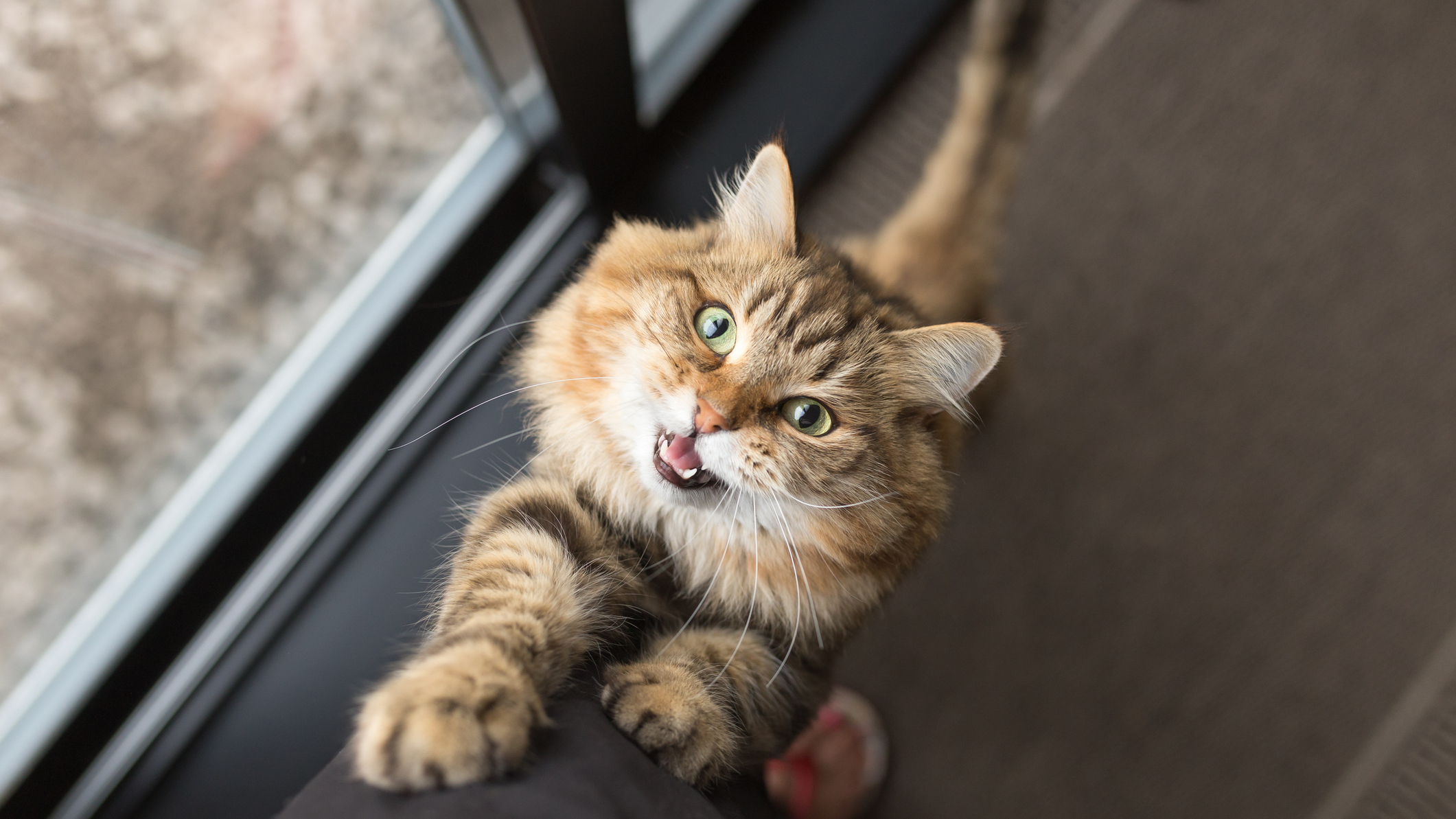
A new study found that cats are more vocal when they greet men than women. (Image credit: marieclaudelemay via Getty Images)
Over 10,000 years of domestication, cats have learned to meow to get exactly what they want from their human servants. Now, researchers in Turkey have found that cats greet men far more vocally than they do women — and this could be another way they manipulate us to get the attention they deserve.
The new research reveals "cats' ability to categorize bonded individuals and modulate their responses," said study co-author Kaan Kerman, principal investigator of the Animal Behavior and Human-animal Interactions Research Group at Bilkent University in Turkey. "This shows that cats are not automata and possess cognitive abilities that enable them to live alongside humans in an adaptive manner," he told Live Science in an email.
"Both the public imagination and the scientific community for a time viewed cats as loners with little need for social bonds," Kerman said. However, "cats are more social than previously assumed. They do not interact with humans solely to obtain food. They actively seek social contact and form bonds with their caregivers."
Greeting is a key part of that sociability, as it helps reinforce bonds between domestic cats (Felis catus) and their humans, the researchers wrote in the study, which was published Nov. 14 in the journal Ethology.
To find out more about how cats greet humans, the researchers fitted 40 cat owners with cameras. They were asked to film the first 100 seconds of their interactions with their cat after returning home. The participants were told to act normally so they could capture typical interactions. The researchers then analyzed the footage to assess whether certain behaviors are related, and whether different demographic variables influenced the cats' behaviors.
Nine people were excluded from the study for various reasons, but videos from the remaining 31 participants revealed that the cats were far more vocal toward men than women when their humans first walked in. "No other demographic factor had a discernible effect on the frequency or duration of greetings," the researchers wrote.
Get the world’s most fascinating discoveries delivered straight to your inbox.
The researchers then accounted for different factors, such as the animals' sex, pedigree status and number of cats in the household — but found that the sex of the human was the only significant influence on cat vocalizations.
The researchers suggest this could be because women are typically more verbally active with their cats and better at interpreting what their cats want. Men, on the other hand, may need a lot more prompting before they pay sufficient attention to their cats, the researchers hypothesized in the study.