Celestis books Stoke Space rocket for 2nd-ever deep space memorial flight for human remains
This historic 2026 'Infinite Flight' service will blast off via a Stoke Space Nova rocket
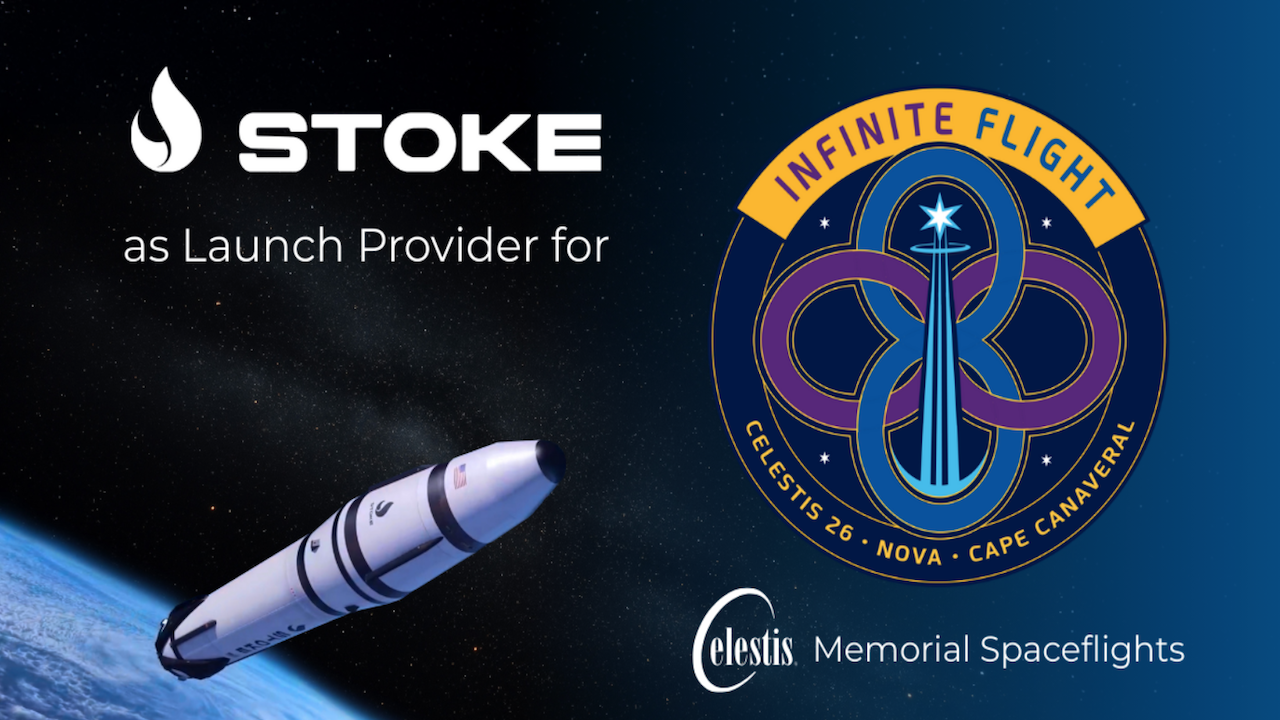
"Infinite Flight" plans on launching sometime on late 2026 (Image credit: Stoke Space)
Texas-based Celestis Inc., the space burial remembrance company that has made a name for itself delivering cremated remains and DNA samples of friends, celebrities, and loved ones into near-space, Earth orbit, the moon and into deep space is expanding its horizons with the announcement of a new launch partner for a future Voyager flight.
After a comprehensive selection process, Celestis has chosen Stoke Space and its new Nova rocket as the launch provider for its next deep-space Voyager mission named "Infinite Flight," traveling beyond our Earth-moon system and into a permanent heliocentric orbit up to 185 million miles away.
This mission is slated to lift off from Space Launch Complex 14 at Cape Canaveral sometime in late 2026 and represents only the second commercial odyssey of its, the first of which was 2024’s "Enterprise Flight" that carried remains of "Star Trek" luminaries, three former U.S. Presidents, and "2001: A Space Odyssey's" Douglas Trumbull.

Promotional art from Celestis. (Image credit: Celestis)
"The 'Infinite Flight' continues what began nearly thirty years ago when we promised that remembrance could itself be an act of discovery," said Charles M. Chafer, Celestis Co-Founder and CEO. "Our Voyager missions ensure that every story we carry into space helps extend humanity’s presence across the solar system. To fly aboard Nova, one of the most advanced reusable launch systems ever built, is both a technical and symbolic leap forward."
Stoke Space's Nova is a medium-lift, 100% reusable two-stage rocket built by the Kent, Washington-headquartered aerospace firm founded by former Blue Origin principles, Andy Lapsa and Tom Feldman. It’s schedule to lift off on its first orbital test flight in 2026.
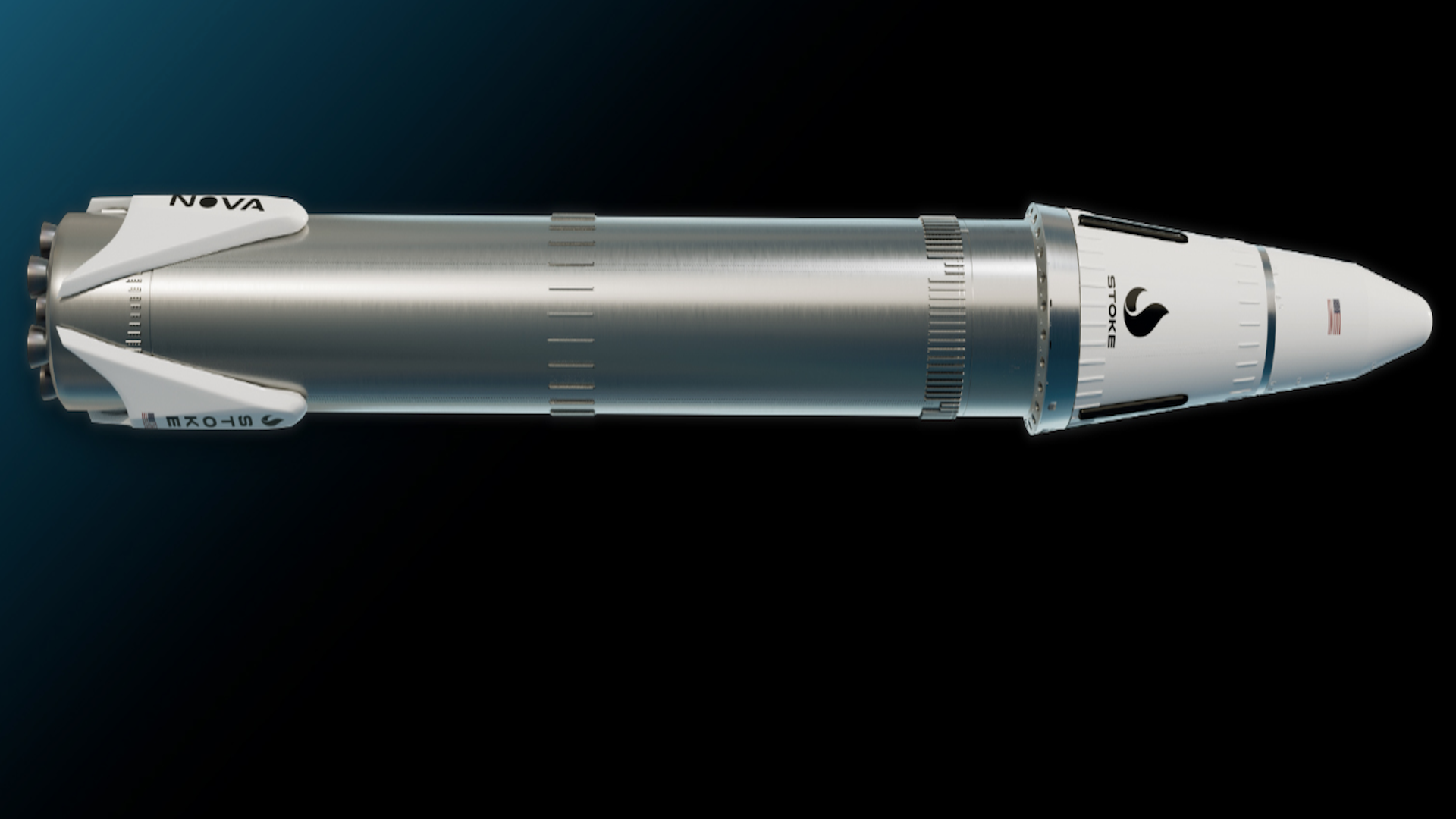
Stoke Space's new Nova rocket will commence orbital testing in 2026. (Image credit: Stoke Space)
Last month, Charles Chafer revealed news that his company has opened reservations for its pioneering "Mars300" spaceflight that endeavors to send human DNA to orbit around the Red Planet as early as 2030 once a suitable launcher becomes available.