Centuries-old 'trophy head' from Peru reveals individual survived to adulthood despite disabling birth defect
A researcher has documented a cleft lip in an ancient mummified head from the Andes, a condition that may have been seen as a "blessing" rather than a disability.
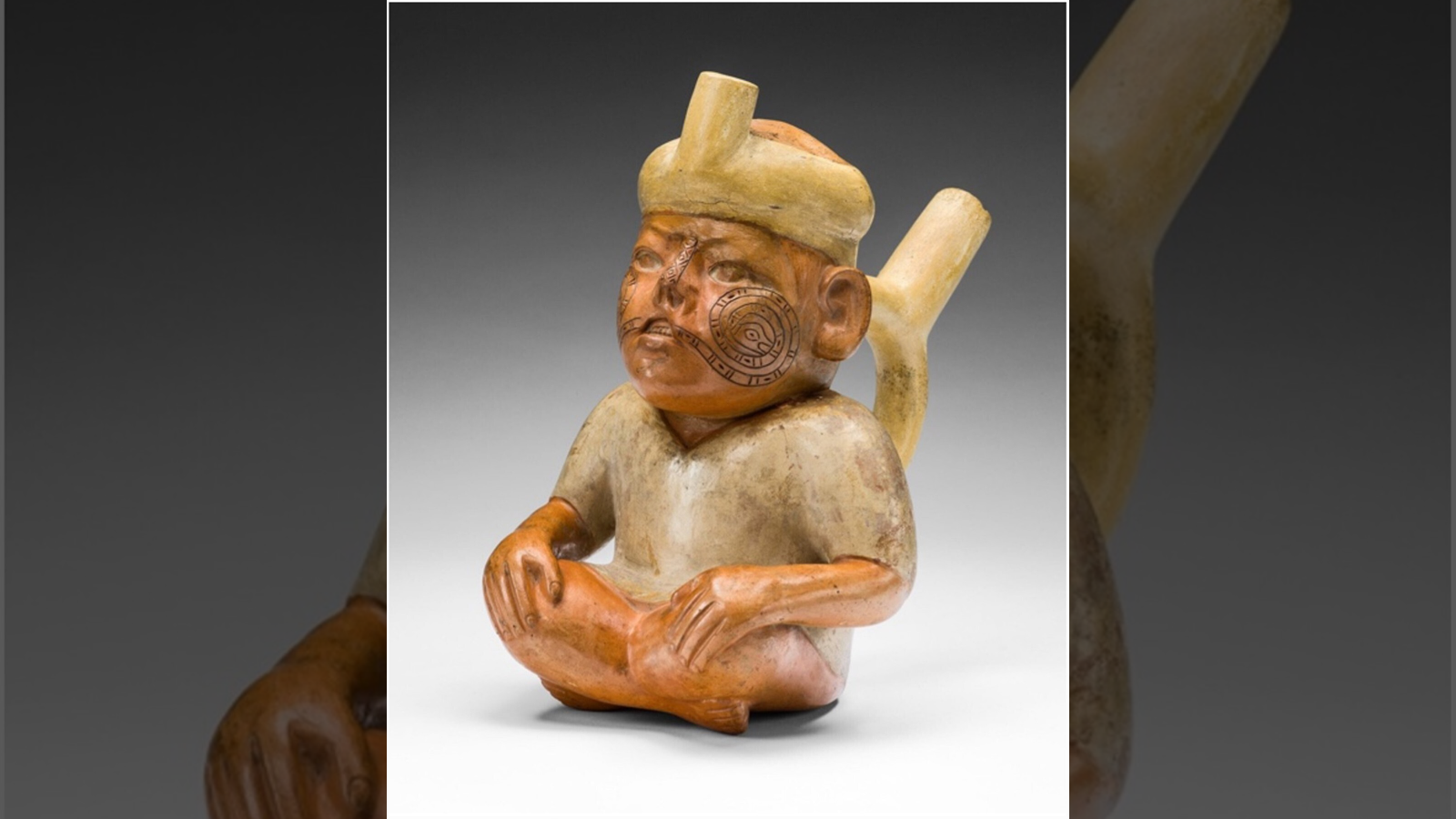
A ceramic vessel depicting a man with a cleft lip that is attributed to the Peruvian Moche culture and dates to around A.D. 100 to 500. (Image credit: The Art Institute of Chicago. CC0 Public Domain Designation)
Centuries ago in Peru, a decapitated individual's head was turned into a "trophy." Now, a careful look at this trophy head reveals that despite a potentially problematic birth defect, the individual survived into early adulthood.
Based on several photos of the head, a researcher spotted that the individual was born with a cleft lip, Beth Scaffidi, an assistant professor of anthropology and heritage studies at the University of California, Merced, wrote in a new study.
The latest study, published Nov. 3 in the journal Ñawpa Pacha, is the first time an orofacial cleft has been documented in an Andean trophy head, offering a "unique opportunity" to explore how ancient peoples of the region viewed such conditions, Scaffidi wrote in the paper.
"This finding is important because it shows that people survived, and even thrived, with this condition in the ancient Andes," Scaffidi told Live Science in an email. "It helps show that what we define as a disability and how we respond to it is culturally, rather than biologically, determined."
Trophy heads
For millenia, ancient peoples in parts of the Andes mountains in South America, as well as the surrounding regions, collected severed heads as trophies, processing them for preservation and display purposes, Scaffidi said. Most known examples date to between roughly 300 B.C. and A.D. 800, often originating from around modern-day Nazca in coastal Peru's Ica department (Peru has 24 departments, or regions). Trophy heads were likely passed down as heirlooms through generations, Scaffidi said.
"Most trophies were mummified naturally in the arid desert environment, and many preserve hair and flesh," Scaffidi said. "We still debate whether these heads were lovingly curated remains of beloved ancestors or souvenirs of violent conquest of enemies, but many do also display violent injuries received before and around the time of death."
Get the world’s most fascinating discoveries delivered straight to your inbox.
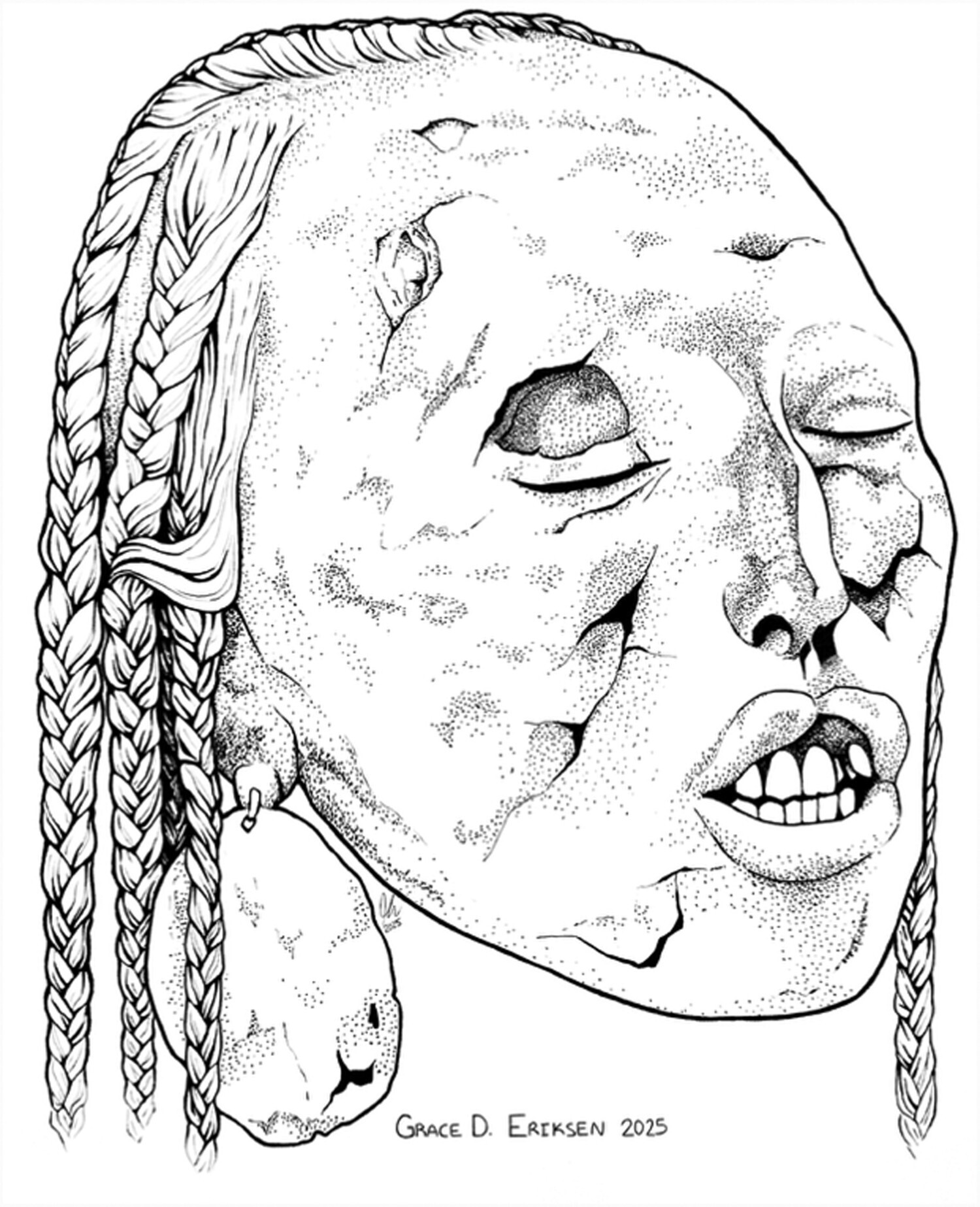
An illustration of the newly analyzed Andean trophy head, which an artist drew based on catalog photos. (Image credit: Grace D. Eriksen; )