CEO of most popular AI coding tool warns: Close your eyes to code; watch everything crumble
The CEO of AI coding startup Cursor is sounding the alarm about relying too heavily on AI for software development, dubbing it 'vibe coding.' He emphasizes that while AI is a powerful assistant, developers absolutely need to grasp the code's intricacies. Ignoring this can lead to shaky foundations for sophisticated applications, despite AI's growing presence in coding.
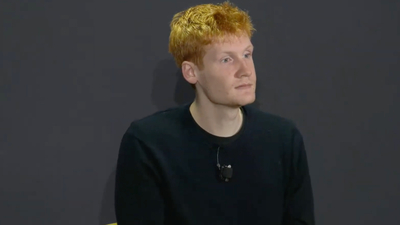
The CEO of AI coding startup Cursor is sounding the alarm about relying too heavily on AI for software development, dubbing it 'vibe coding.' He emphasizes that while AI is a powerful assistant, developers absolutely need to grasp the code's intricacies. Ignoring this can lead to shaky foundations for sophisticated applications, despite AI's growing presence in coding.
The CEO of one of Silicon Valley's hottest AI coding startups is issuing a stark warning: developers who blindly trust AI to write their software are building on shaky ground. Michael Truell, the 25-year-old CEO of Cursor—a $29.3 billion AI coding assistant used by over one million developers daily—told Fortune's Brainstorm AI conference that "vibe coding" may work for quick prototypes but creates unstable foundations for serious applications.
"If you close your eyes and don't look at the code and have AIs build things with shaky foundations, as you add another floor, and another floor, things start to kind of crumble," Truell explained. He compares the hands-off approach to constructing a house without understanding the electrical wiring or plumbing. He adds that it might look fine initially, but structural problems inevitably emerge as complexity grows.Truell's concerns come as AI is transforming software development across the industry. Google CEO Sundar Pichai revealed AI now writes over 30% of new code at Google, up from 25% just months earlier, while Anthropic CEO Dario Amodei claimed Claude generates 90% of his company's code. But Truell drew a clear line between AI-assisted coding—where developers remain engaged and understand what's being built—and vibe coding, where programmers essentially outsource everything to AI without reviewing or comprehending the output.
Big Tech's $70 Billion AI Move: Silicon Valley Bets On India, Snubs Trump's 'America First' Diktat
Even AI coding pioneers admit the approach has serious limitations
Truell isn't alone in his skepticism. Boris Cherny, who created Anthropic's Claude Code, acknowledged vibe coding works well for "throwaway code and prototypes" but fails when developers need "maintainable code" where they must be "thoughtful about every line." Andrej Karpathy, the former Tesla AI director who actually coined the term "vibe coding" earlier this year, recently admitted the method proved useless for his Nanochat project, which he wrote entirely by hand because AI agents "just didn't work well enough.