Chanakyaneeti or sidelined: Why is Vance missing from Trump's Venezuela triumph?
SOURCE:Times of India|BY:TOI WORLD DESK
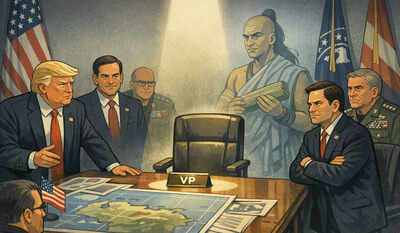
While Trump’s inner circle toasted the capture of Nicolás Maduro, a spectacle equal parts action movie and reality show, the Vice President was nowhere to be seen. In the impromptu “war room” where Trump green-lit the raid on Caracas, Vance’s chair was reportedly empty. And when the administration brass held a press conference to celebrate their “perfect” operation, Vance was again absent, leaving Rubio to play the starring role as the public face of America’s newest foreign intervention.
When President Donald Trump triumphantly unveiled his Venezuela gambit at Mar-a-Lago last weekend, the usual suspects crowded the stage. Secretary of State Marco Rubio beamed with hawkish pride. Pete Hegseth, the newly minted Secretary of War, stood at attention. Intelligence chiefs hovered near a tactical map.
Even Stephen Miller lurked with a proprietary smirk.But one face was conspicuously missing from this tableau of victory: Vice President J.D. Vance.
White House Denies Claims Of JD Vance's Absence During Venezuelan Operation; ‘He Was Just…’
While Trump’s inner circle toasted the capture of Nicolás Maduro, a spectacle equal parts action movie and reality show, the Vice President was nowhere to be seen. In the impromptu “war room” where Trump green-lit the raid on Caracas, Vance’s chair was reportedly empty.
And when the administration brass held a press conference to celebrate their “perfect” operation, Vance was again absent, leaving Rubio to play the starring role as the public face of America’s newest foreign intervention.In Washington, there are two kinds of absences. The first is human: a missed meeting, a delayed flight, a migraine, a child’s recital, a bad breakfast burrito. The second is political: the person was missing on purpose, or was made missing.
This one felt like the second.The whispers began immediately. Where’s JD? Has anyone checked on him? Is he sulking? Is he sick? Or drafting a post-liberal manifesto reminding Washington that he once served in Iraq?Equally absent, if to a lesser extent, was another unlikely Trump recruit: Director of National Intelligence
Tulsi Gabbard
. Days later, she surfaced only briefly on social media to congratulate American forces for the “flawless execution” of Operation Absolute Resolve.
The tone was stiff enough to suggest she typed it with the same enthusiasm one reserves for filing GST.It was her first and only comment. It was also a remarkable evolution. The Tulsi Gabbard of the late 2010s excoriated US pressure on Venezuela as imperial impulse disguised as moral concern. Now she sits inside the machine she once condemned, offering one carefully measured “kudos” and then disappearing again.Gabbard’s reticence looked like discomfort.
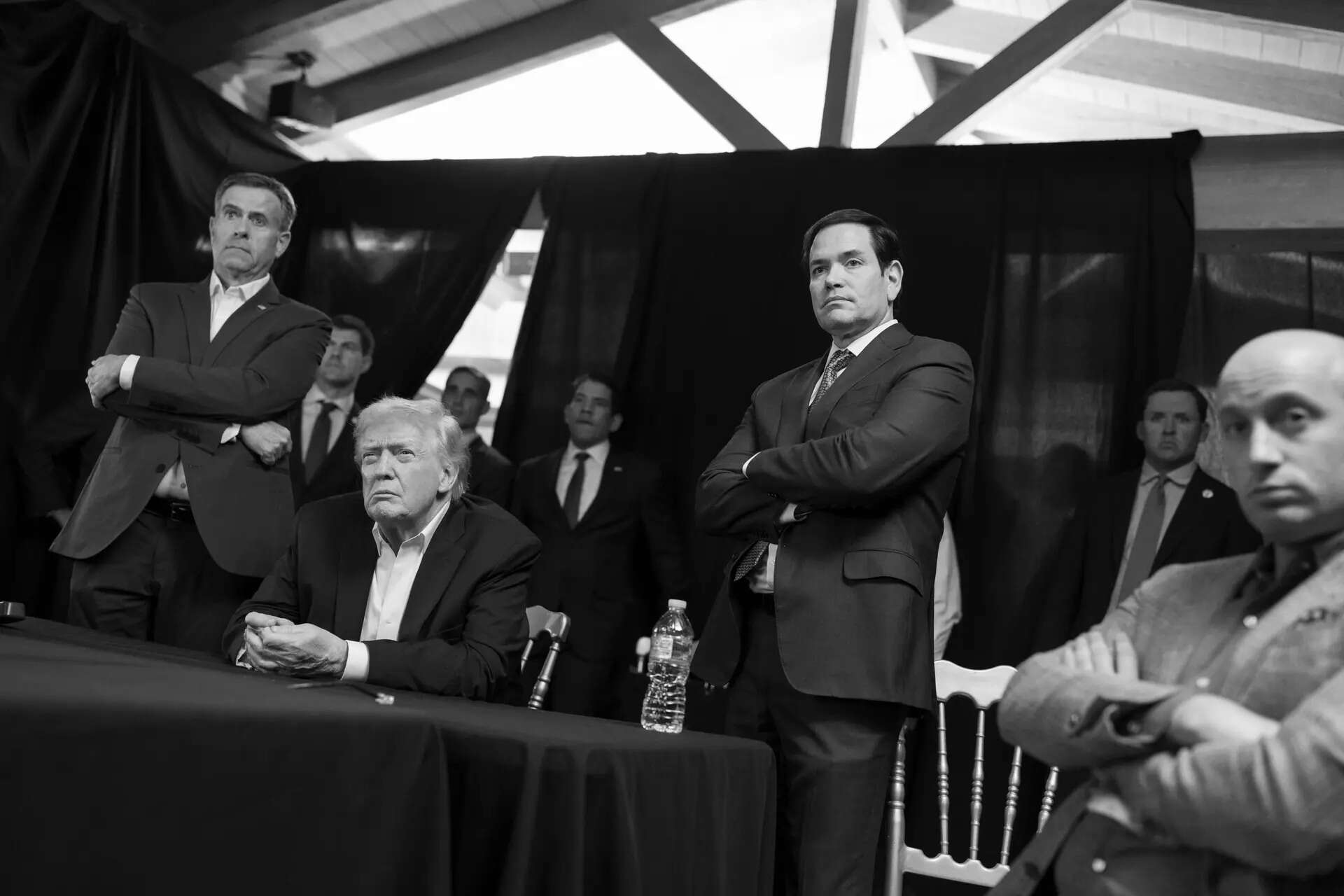
In this photo released by the White House, President Donald Trump monitors U.S. military operations in Venezuela, with CIA Director John Ratcliffe, left, Secretary of State Marco Rubio and White House deputy chief of staff Stephen Miller, right, at Mar-a-Lago in Palm Beach, Fla., Saturday, Jan. 3, 2026. (Molly Riley/The White House via AP)
The operational details, at least as presented publicly, were meant to communicate competence. A secretive raid. A high-value target. A fast extraction. The kind of thing that makes cable news anchors use words like “precision” with a sheen of admiration, even as the legal and geopolitical questions remain politely unasked.But the storytelling quickly frayed. Trump spoke as if the US would “run” Venezuela.
Rubio framed the move as an anti-Communist strike against a regime allegedly propped up by Cuban security networks. Other voices emphasised narcotics, cartels and hemispheric security. Trump himself kept circling back to the clearest explanation of all: oil. Lots of it. Forever.In a coherent administration, this is where the Vice President becomes the bridge. The translator. The person who goes on Sunday shows, smooths contradictions, and makes action sound inevitable rather than impulsive.
Vance, the detail man on a ticket built around instinct and spectacle, is uniquely suited to that role.Which is precisely why his disappearance mattered. When the White House needed a salesman, the salesman wasn’t on the floor.There are two explanations. One, he was sidelined by hawks who wanted a clean, uncomplicated show of force. Two, he sidelined himself. Both point to the same uncomfortable truth: Venezuela is politically risky, and Vance understands risk in a way most of Trump’s chest-beaters do not.
What Vance said on X, and what he didn’t
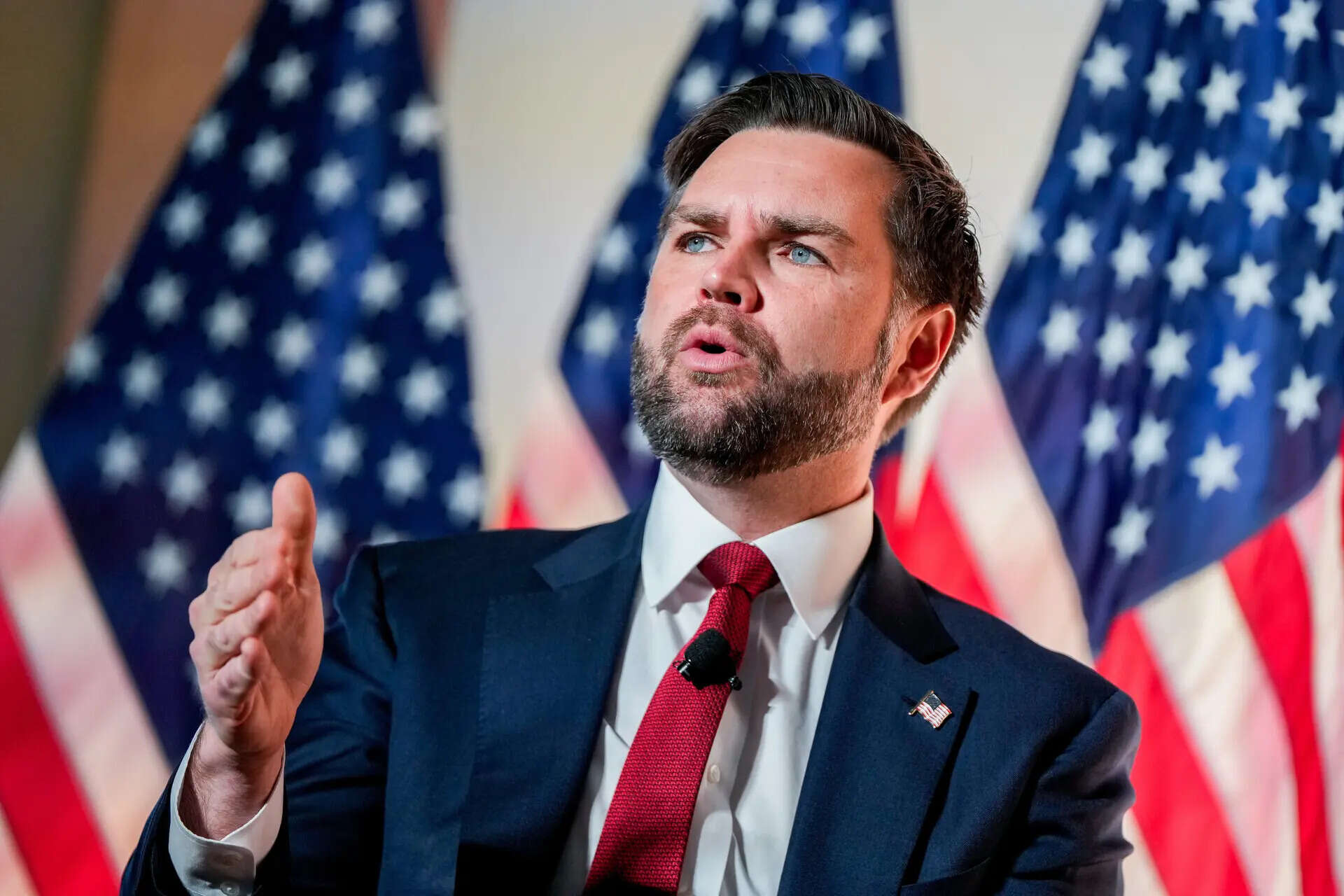
FILE - Vice President JD Vance speaks with Breitbart News Washington bureau chief Matthew Boyle at Andrew W. Mellon Auditorium, Nov. 20, 2025, in Washington. (AP Photo/Julia Demaree Nikhinson, File)
If Trump and Rubio approached Venezuela with chest-thumping bravado, Vance sounded like a cautious legal brief written under duress. Faintly lawyerly. Quietly anguished. As if he were drafting an argument he did not fully believe but had to submit before a deadline.He ticked through the approved rationale. Venezuela, he argued, is a source of drugs and a profit centre for cartels. If not fentanyl, then cocaine. The implication was clear: America was acting to protect its communities from narcotics and organised crime.Then came the awkward part. Oil.
Vance acknowledged criticism about oil with the care of a man stepping over broken glass. He referred to past expropriation of American oil assets, describing them as stolen property used, “until recently,” to fund narcoterroristic activity. That phrase, “until recently,” did the work of a carefully drafted footnote. It left room.He ended with a rhetorical question that sounded more plaintive than stirring: are we just supposed to allow a communist to steal our stuff in our hemisphere and do nothing?This is not how leaders build public support for major foreign policy.
This is how they explain a contradiction.Vance also avoided what mattered most: the endgame. Was this a one-off hit or the beginning of a longer entanglement? He offered no vision, only justification. Something that can be clipped into a headline, not something that can sustain a doctrine.Which raises the obvious question: why did he sound so reluctant?
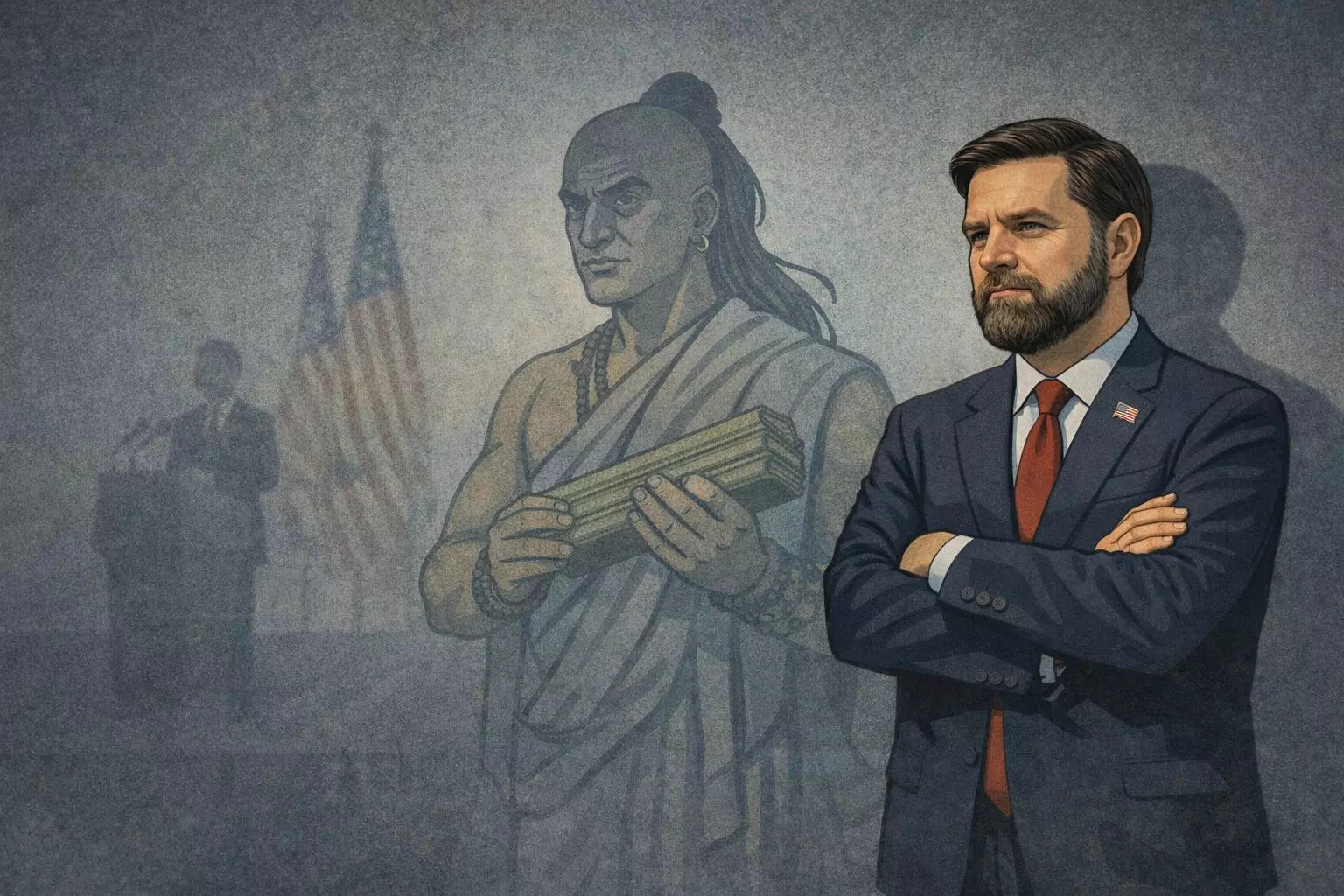
Chanakyaneeti, or keeping your hands clean
Most Indians are familiar with Chanakya, the ancient strategist and author of the Arthashastra, a blunt manual on power, alliances, espionage and survival.
His premise was unsentimental: morals are luxuries in the courtroom of power; the smartest operator keeps options open, reads loyalties early, and ensures his name is not the first blamed when plans unravel. Given Vance’s personal India connection through his wife and his fondness for “civilisational” language, it is not implausible that he understands this template.
Strategic restraint can be as lethal as open aggression.There is a form of political intelligence that does not announce itself. It does not storm press conferences or thump chests. It watches. It calculates. It remembers that today’s triumph can become tomorrow’s albatross.Vance fits that mould. He has gone from calling Trump "cultural heroin" to his most vocal attack dog. The Venezuela operation is the most consequential foreign-policy act of Trump’s second term so far.
It is also woefully undertheorised in public. Explanations have ranged from narcotrafficking to anti-Communism to the lustre of oil. That is not a narrative. It is a pile of talking points.This matters because Americans are wary of military adventures, especially those that resemble regime change. Trump’s own base contains a strong non-interventionist streak. “No new wars” was sold as a virtue of Trumpism, a contrast with the Bush era.Vance knows this. His political identity has been built partly on scepticism of interventionism, tied explicitly to his Iraq service. He presents himself as someone who has seen the cost of elite folly.So what happens when the boss launches a raid in Caracas and starts talking about controlling oil?You have a problem.If Vance embraces it too enthusiastically, he owns it. He becomes complicit in a project that can be labelled imperial and incoherent.
If it goes badly, he wears the stain.If he opposes it publicly, he risks Trump’s wrath. In Trump’s universe, dissent is not a policy disagreement. It is betrayal.So Vance chooses the third path. He hedges. He stays absent at the celebration. He lets Rubio take the victory lap. He waits. He reads the room. Then he posts a careful defence that signals loyalty without joy and justification without ownership. That is Chanakyaneeti in a MAGA suit.
Stay close to power. Keep options open. Avoid fingerprints on the knife.
The succession question
In any other administration, the Vice President’s absence from a major foreign-policy event would be a curiosity. Here, it immediately becomes a succession story. Vance is widely viewed as the most plausible heir to Trump’s movement, the crown prince in a party where Trump remains the sun.Rubio is a rival, or at least a competitor for future relevance.
He has remade himself as a Trumpist while retaining hawkish instincts. Venezuela is his terrain, a stage on which he can sound purposeful, ideological and tough. Vance is different. He is a post-liberal populist sceptical of grand interventions, at least by Trumpworld standards. He also understands the MAGA coalition is not one thing but a patchwork of voters who want domination, restraint, cheaper fuel, tougher borders, and above all, victory.A successor has to hold that patchwork together. Vance’s path depends on being loyal enough to survive and distinct enough to promise continuity without chaos. That is why restraint matters. If Venezuela becomes popular, he can endorse it more warmly later. If it becomes unpopular, he can point to his distance. Either way, he remains viable.This also explains Rubio’s prominence. Trump has leaned on a hawk to sell a hawkish move.
Vance, the cautious heir, has stayed partially outside the frame. The contrast feels deliberate, a division of labour.Rubio is the man of action. Vance is the man of continuation.
Hillbilly Hope, reinterpreted
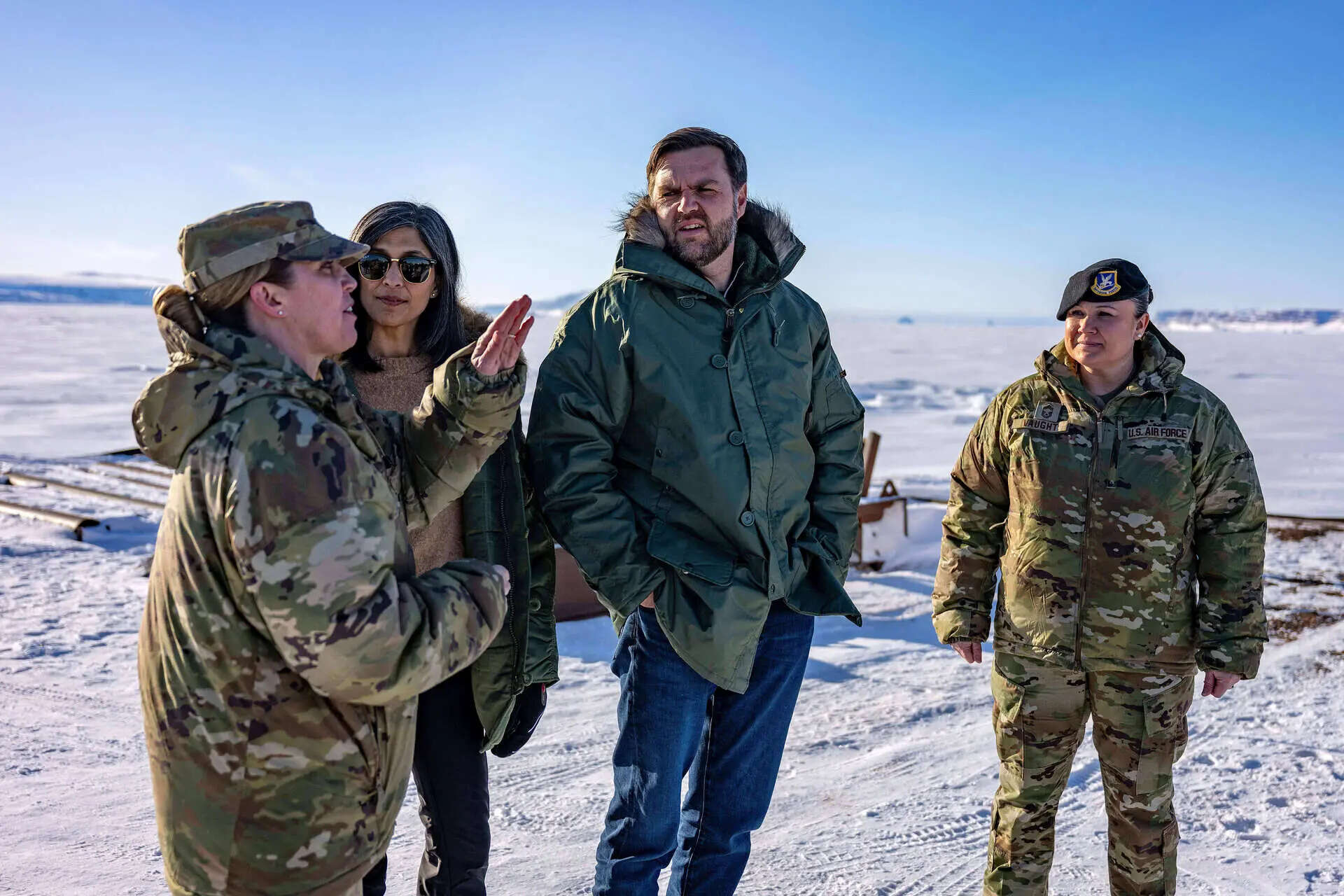
FILE - Vice President JD Vance and second lady Usha Vance tour the U.S. military's Pituffik Space Base in Greenland, March 28, 2025. (Jim Watson/Pool via AP, File)
There was a time when J.D. Vance was not a court insider but a cultural apparition. Hillbilly Elegy made him an unlikely oracle of American decline, the boy from Middletown who climbed out of chaos and returned with a diagnosis. For a liberal establishment desperate to understand Trump voters without forgiving them, Vance was explanation incarnate.
For conservatives, he represented something rarer: proof that resentment could be translated into sentences, and anger into theory.That early promise came to be known as Hillbilly Hope. The idea that someone forged in dysfunction and neglect could still believe in order and renewal. That Vance did not merely rage against the system but sought to master it.The absence, the careful language, the refusal to celebrate.
These are not the gestures of a man unsure of power. They are the gestures of a man who understands it too well. Hillbilly Hope was never about purity. It was about survival. About learning the rules of a rigged game well enough to outlast it.The Vance of 2026 is no longer the narrator of American pain. He is its most methodical student.His behaviour during Trump’s Venezuela triumph is not a betrayal of Hillbilly Hope but its evolution.
The boy who once explained how systems fail has become the man who knows how systems punish. He has watched what happens to vice presidents who mistake principle for protection. He understands that in Trump’s universe, dissent is remembered longer than loyalty, and silence can be safer than applause.So he waits. He watches. He lets others carry the banners and take the photographs. He files his justification not as a believer, but as a custodian of future plausibility.
This is not the politics of inspiration. It is the politics of endurance.Hillbilly Hope, stripped of sentimentality, was always about one thing: outlasting the moment without being consumed by it. By staying offstage while history was loudly declared, J.D. Vance revealed not absence but intent.He does not want to be remembered as the man who clapped the hardest. He wants to be remembered as the man who was still standing when the music stopped.And in American politics, especially in the age of Trump, that may be the only form of hope that survives.