Chinese President Xi Jinping's New Year address has a message for Nvidia and Donald Trump
China's leader Xi Jinping declared significant AI and chipmaking advancements, framing US restrictions as catalysts for tech independence. Despite American embargoes, Chinese startups like DeepSeek AI are challenging global leaders, and domestic chipmakers are flourishing. Global investors are increasingly favoring Chinese tech, seeing strong policy support and rapid AI monetization as key drivers for future growth.
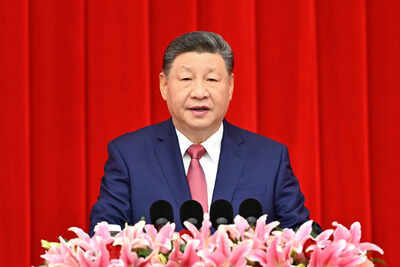
China's leader Xi Jinping declared significant AI and chipmaking advancements, framing US restrictions as catalysts for tech independence. Despite American embargoes, Chinese startups like DeepSeek AI are challenging global leaders, and domestic chipmakers are flourishing. Global investors are increasingly favoring Chinese tech, seeing strong policy support and rapid AI monetization as key drivers for future growth.
Chinese leader Xi Jinping used his New Year's address to send a clear signal to Washington: American chip restrictions aren't slowing down China's AI ambitions. Speaking from Beijing on Wednesday, Xi celebrated his country's homegrown AI models and chipmaking breakthroughs, highlighting how China has turned trade barriers into opportunities for tech independence."Many large AI models have been competing in a race to the top, and breakthroughs have been achieved in the research and development of our own chips," Xi said in his annual address. He emphasized that these innovations have made China "one of the economies with the fastest-growing innovation capabilities."
Trump's chip embargo inadvertently fueled China's tech sector
The timing of Xi's remarks is significant. His celebration comes after years of escalating US trade restrictions under both the Biden and Trump administrations, which were designed to limit China's access to advanced AI chips from companies like Nvidia.
Rather than crippling Chinese tech development, these restrictions appear to have accelerated domestic innovation.In January, it was the DeepSeek AI startup of China that made waves in Silicon Valley by announcing its R1 model, a rival to OpenAI's lineup, enough to send even Nvidia's stock down over 17% on the news. Meanwhile, homegrown Chinese chip makers continued to thrive under the export ban, founders like Chen Weiliang of MetaX Integrated Circuits climbed into the billionaire ranks.
Global investors are betting big on Chinese tech independence
The shift hasn't gone unnoticed by Wall Street. UBS Global Wealth Management recently rated Chinese tech as "most attractive" to investors, citing strong policy backing and rapid AI monetization. Investment firms like UK's Ruffer are now increasing stakes in Chinese giants like Alibaba while deliberately limiting exposure to US tech stocks.In December, Trump tried a pivot toward reassurance by allowing Nvidia to sell H200 chips to cleared Chinese customers. But analysts say the damage may already be done. Beijing's push for technological self-sufficiency, combined with increasing investor confidence in Chinese AI prospects, means Xi's call for technological independence is finding an audience well beyond China's borders.