Delhi air pollution: AQI hits 391, city back in ‘severe’ category
Delhi grappled with severe air pollution on Sunday, with smog obscuring landmarks like Akshardham Temple and reducing visibility across the city. Several areas recorded 'very poor' and 'severe' air quality, with AQI levels exceeding 400 in some parts. In contrast, Mumbai experienced moderate air quality with a light fog.
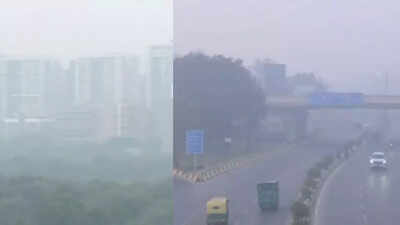
Image Credit: ANI
NEW DELHI: Delhi continued to struggle with toxic air on Sunday, with several areas recording ‘very poor’ and ‘severe’ air quality levels, as a dense layer of smog blanketed the city.The overall Air Quality Index (AQI) in Delhi on Sunday reached 391, entering the 'severe' category, with some regions exceeding 400, according to the Central Pollution Control Board (CPCB).
'Delhi NOT Most Polluted': Doctor's Shocking Reveal On Toxic Monster; And How To Fight Back
Morning visuals from Akshardham Temple showed the iconic structure fading into a thick, dense layer of smog that drastically reduced visibility. The AQI (Air Quality Index) in the area stood at 445, placing it in the ‘severe’ category, according to the Central Pollution Control Board (CPCB). Around AIIMS, the AQI was measured at 340, categorised as ‘very poor’. Meanwhile, visuals from the ITO area showed the city shrouded in a thick blanket of smog, with hazy conditions reducing visibility. The AQI there had crossed 400, also falling under the ‘severe’ category.Meanwhile, in Mumbai, a light layer of fog enveloped the Bandra Kurla Complex, where the AQI was measured at 123, classified as ‘moderate’.Authorities have invoked Stage III measures under the Graded Response Action Plan (GRAP), which include restrictions on construction and industrial activities.
The ‘No PUC, No Fuel’ rule is being enforced to curb emissions.
Officials attributed the worsening conditions to a combination of cold weather, calm winds, and dense fog that trap pollutants close to the ground. Experts warn that the cycle of poor air quality is expected to continue under current weather patterns. The Commission for Air Quality Management has advised vulnerable groups, including children, the elderly, and people with respiratory issues, to limit prolonged outdoor exposure and wear masks.