Everything you need to know about the federal Bondi royal commission
SOURCE:Sydney Morning Herald|BY:Brittany Busch, Mike Foley
Prime Minister Anthony Albanese’s announcement comes after weeks of pressure, and is a major backdown from his previous refusal to hold a Commonwealth inquiry.
Prime Minister Anthony Albanese has ended more than three weeks of speculation and announced a Commonwealth Royal Commission on Antisemitism and Social Cohesion following the Bondi terror attack on December 14, in which a Hanukkah celebration was targeted and 15 people were killed.
Albanese reversed his previous opposition to the inquiry after weeks of pressure from community groups, leaders and the media. He had argued a national inquiry would take too long to deliver its findings and would provide a platform for antisemitic views that could be canvassed in the investigation.
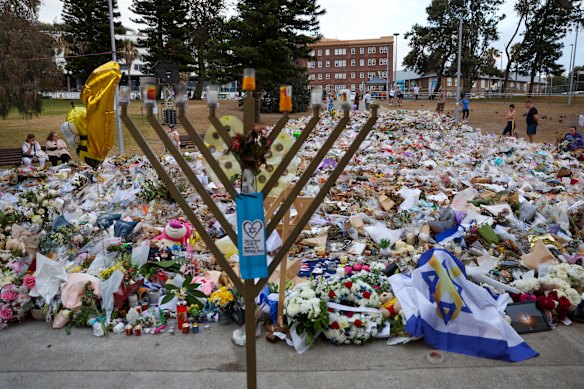
A menorah frames flowers laid in grief a week after the December 14 massacre at Bondi Beach. Credit: Getty
The antisemitism inquiry announced on Thursday is the first Commonwealth royal commission since the Morrison government established an inquiry into defence and veteran suicide in 2021.
What are the royal commission’s terms of reference?
The royal commission will focus on antisemitism in Australia, social cohesion and the circumstances leading up to the worst terror attack in the nation’s history.
Loading
It will investigate the prevalence of antisemitism in the nation – including how it is driven by religious and ideologically motivated extremism and radicalisation – and make recommendations to help law enforcement and security agencies tackle antisemitism and train to respond to antisemitic conduct.
The inquiry will also examine the circumstances surrounding the Bondi attack, and make any other recommendations that could strengthen social cohesion.
The prime minister said the inquiry would also consider the role of social media in spreading religious extremism.
He said the terms of reference instructed the commissioner, former High Court judge Virginia Bell, to conduct the inquiry in a manner that did not prejudice criminal proceedings against the surviving gunman, Naveed Akram.
Albanese and Home Affairs Minister Tony Burke had in recent weeks opposed a royal commission, arguing it would create a platform for antisemitic views. Albanese said on Thursday that Bell had been instructed to ensure that did not occur.
What does the Commonwealth royal commission mean for the Richardson and NSW inquiries?
The prime minister said on Thursday that Richardson would continue his work, and his findings – due in April – would become an interim report to support the royal commission’s investigation.
Following Albanese’s press conference, NSW Premier Chris Minns said the state inquiry would no longer proceed but the Commonwealth commission would have the full co-operation of the NSW government.
When will the inquiry be completed and the findings published?
The timeline of the inquiry is a critical question, given the prime minister had insisted for weeks that a royal commission would take too long to deliver the urgent answers raised by the tragic event at Bondi.
He said on Thursday that he had asked for the royal commission to conclude before December 14, 2026, one year on from the attack.
“This won’t be a drawn out process,” Albanese said.
Loading
Who is the commissioner?
Former High Court judge Virginia Bell, 74, has had a long and respected career in the law, including serving on the nation’s highest court for more than a decade.
Bell assisted as counsel to the Wood royal commission into NSW police corruption between 1994 and 1997, and in 2022 led the inquiry into former prime minister Scott Morrison’s self-appointment to multiple ministries, after which she said his actions were “corrosive of trust in government”.
Jewish leaders have criticised Bell for her role in upholding freedom of political communication rights – a legal precedent which was used in NSW to overturn the state government’s ban on a pro-Palestine march across the Sydney Harbour Bridge last year.
Why did it take the prime minister 3½ weeks to launch the inquiry?
Albanese had stubbornly rejected calls for a royal commission, arguing his government would co-operate fully with the NSW inquiry and warning that a Commonwealth royal commission would provide a national platform for antisemitic views that must be canvassed in the investigation.
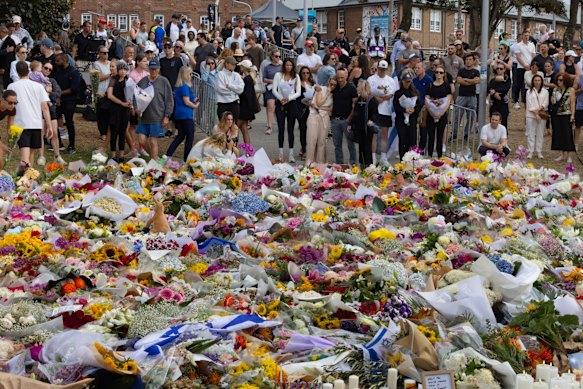
People gather at Bondi Beach on December 16 to pay their respects to those who lost their lives and to the families affected by the massacre.Credit: Jessica Hromas
The government had announced it would deliver a package of federal measures including the largest firearms buyback since 1996, tougher gun laws, adopting special envoy Jillian Segal’s plan to tackle antisemitism, new hate crime provisions and the Richardson review, and would co-operate with the NSW royal commission.
Albanese argued those measures were sufficient, but reversed his position on Thursday amid mounting pressure from victims’ families, Labor luminaries, and prominent Australians from the sporting, business and legal communities.
What has the Jewish community said?
Antisemitism envoy Jillian Segal on Thursday welcomed the announcement, and credited Albanese for listening to advocates.
“I believe the government’s decision ... to establish a royal commission into antisemitism is the right one, and an important one,” she said, appearing alongside the prime minister.
Executive Council of Australian Jewry president Daniel Aghion, KC, said he expected the terms of reference would allow “an honest examination of government policies and … key institutions and figures in major sectors of our society”.
“On behalf of the Australian Jewish community, we welcome the prime minister’s announcement,” he said.
The families of most of the victims of the Bondi attack penned an open letter in December demanding a royal commission be established, arguing the government had done “not nearly enough” since the shooting.
Loading
“We need to know why clear warning signs were ignored, how antisemitic hatred and Islamic extremism were allowed to dangerously grow unchecked, and what changes must be made to protect all Australians going forward,” the letter read.
The Jewish Council of Australia, an organisation of Jewish Australians who support the Palestinian cause, has supported calls for an investigation into the Bondi attack but warned against it being politicised.
Executive officer Sarah Schwartz said any royal commission must “prioritise safety for all over culture wars”.
What has the opposition said?
The Coalition published its own terms of reference for a potential royal commission in December.
It demanded a wide-ranging inquiry to focus on antisemitism in Australia, anti-Israel sentiment, extremism, immigration, government departments and ministers’ conduct, law enforcement, intelligence agencies, and an investigation of how the media, arts, and education sectors may have contributed to the Bondi attack.
Opposition Leader Sussan Ley said on Thursday that Albanese’s back down was evidence that his “litany of excuses” for not holding an inquiry had collapsed.
“Anthony Albanese relented, not because he believed a Commonwealth royal commission was the right thing to do, but because he was forced to do so by the Australian people,” she said.
Loading
Ley criticised the government’s appointment of a sole commissioner, rather than three, and said this would be inadequate for a matter of such complexity and significance.