Fans blow. Could tiny speakers be a smarter way to cool down devices?
An ultrasonic "fan on a chip" could be the next big breakthrough in mobile cooling.
Stephen Schenck / Android Authority
TL;DR
- xMEMS is showing off its µCooling system that uses ultrasonic speakers to move air.
- The system is silent, water-resistant, and can small enough to be used in wearables.
- A ducted µCooling solution for phones could move up to 0.1 cubic feet of air a minute.
Heat is arguably the biggest enemy of modern processors. We can build incredibly fast chips, but run them too fast, and they’re going to start to melt down. As a result, nearly every device we use has to make some sort of balance between performance and thermal emissions. This year at CES in Las Vegas, we’re learning about an innovative new way that xMEMS is trying to tackle that problem, giving even compact mobile devices another option for staying cool.
Heat, heat, go away
Cooling stuff down isn’t too complicated, at its core: Expose your hot thing to something cooler, and the heat will start to even out between the two of them. The problem is that our chips keep generating more and more heat, so we need them to interact with cooler things over and over again. Maybe you’ve got a fancy PC rig that pumps water around to achieve that goal, but by far the most popular way to get there is by using air as your medium, and ensuring a steady supply of cool air by moving it with a fan.
That works, but fans present all sorts of problems themselves — especially for mobile devices. Noise is a big one (as you PC gamers surely know), and while it’s not impossible, trying to make a phone with a fan water-resistant introduces all new challenges.
From speaker to air pump
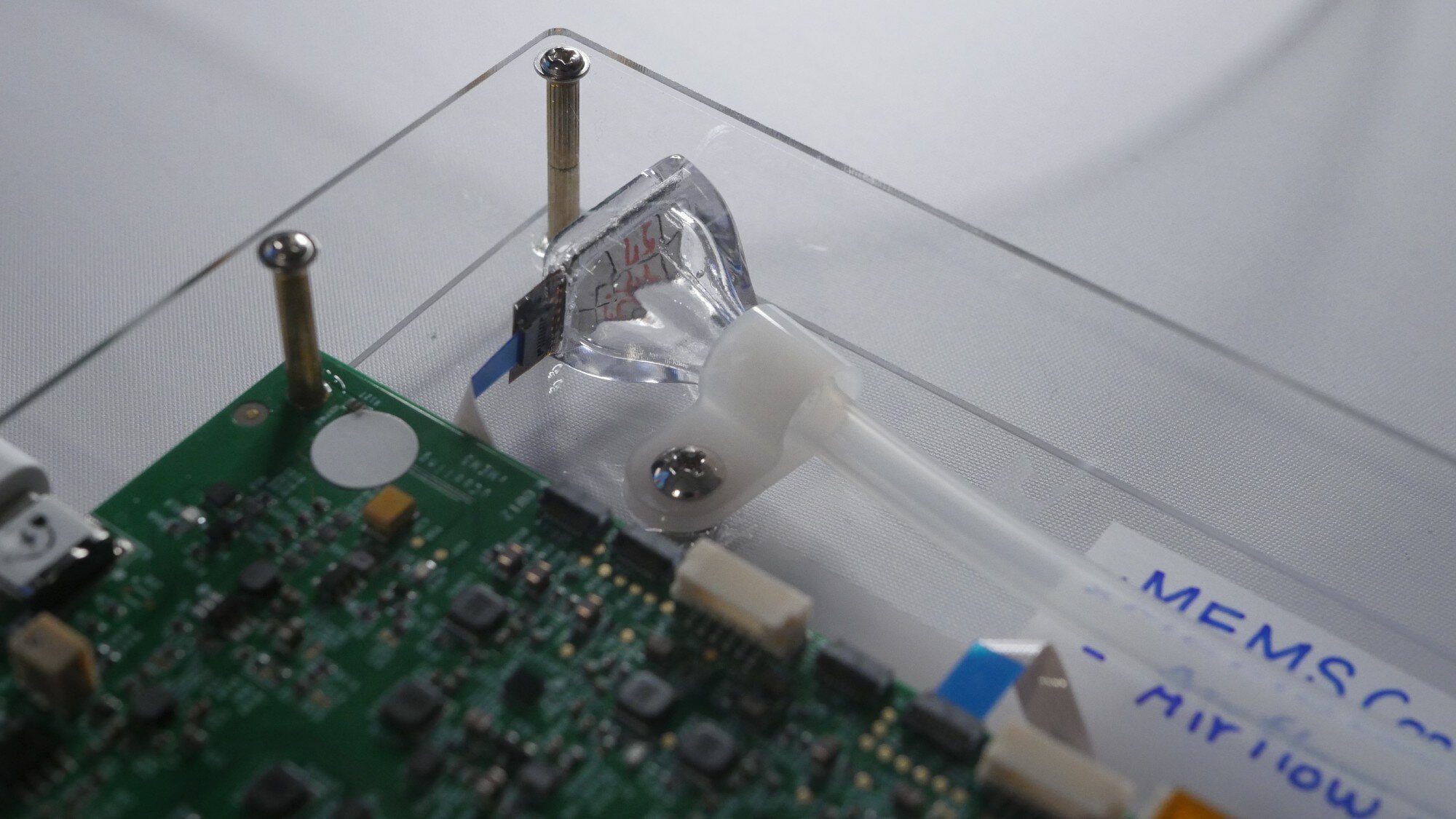
Solid-state MEMS (micro-electromechanical systems) components like speakers and microphones are already commonplace in mobile tech. They’re tiny, and they vibrate — either to produce sound, or as they’re detecting in. But the team at xMEMS looked at these parts and asked themselves, “What else can we do with this?” As it turns out: cooling!
Stephen Schenck / Android Authority
Instead of vibrating a MEMS speaker in the audible range, xMEMS dialed up the frequency to ultrasonic territory — north of 50kHz. When positioned just right, those vibrations can move air in a specific direction. Add in some ducting to direct that air towards the components you want to cool off, and you’ve got yourself a near-silent, robust, water-resistant cooling system.
Making MEMS cooling a reality
At CES this week, we got to visit with xMEMS and check out what it’s calling its µCooling thermal management system. Sure enough, when a µCooling module is fired up, you can feel a gentile stream of air coming off of it.
Stephen Schenck / Android Authority
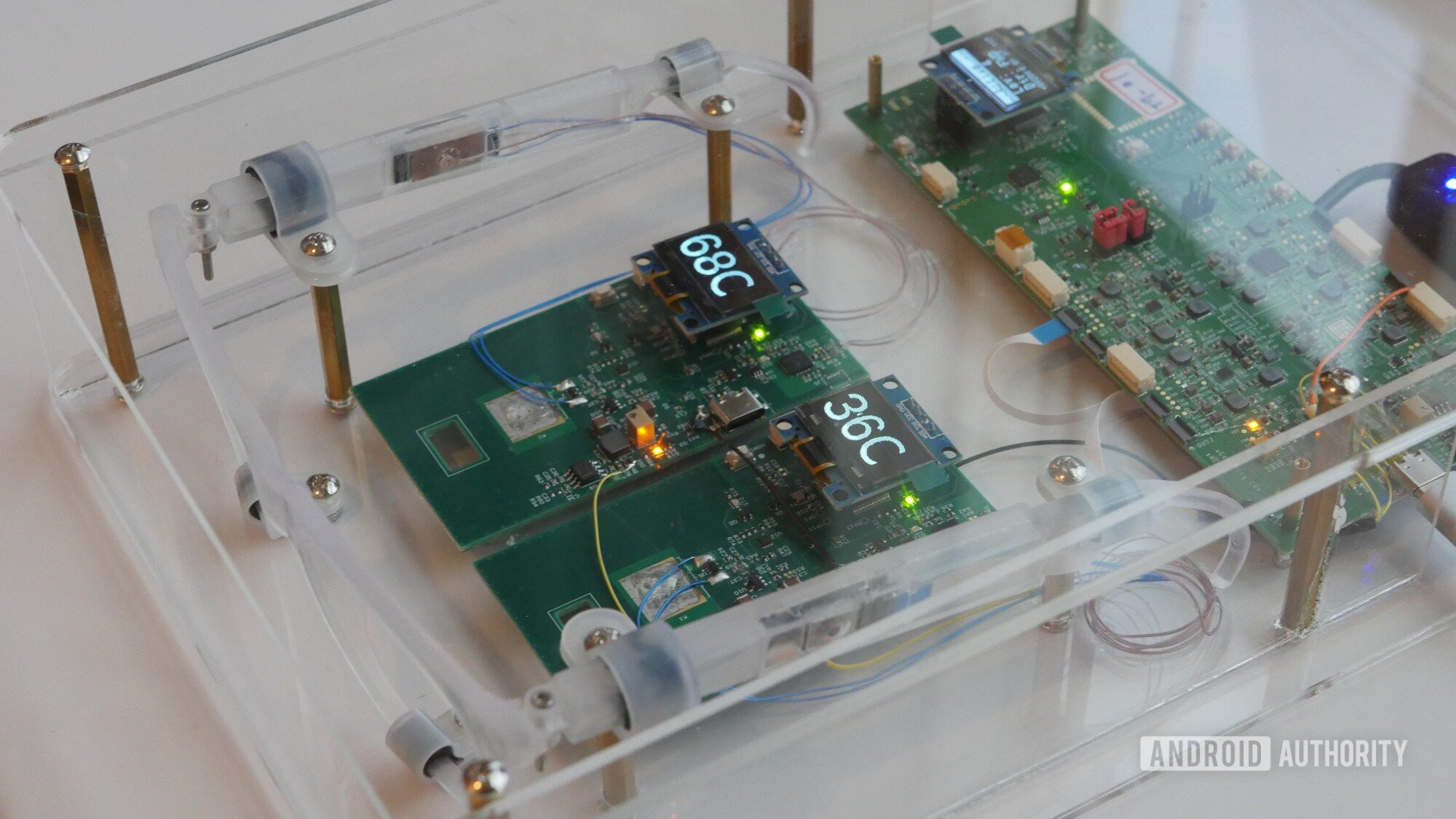
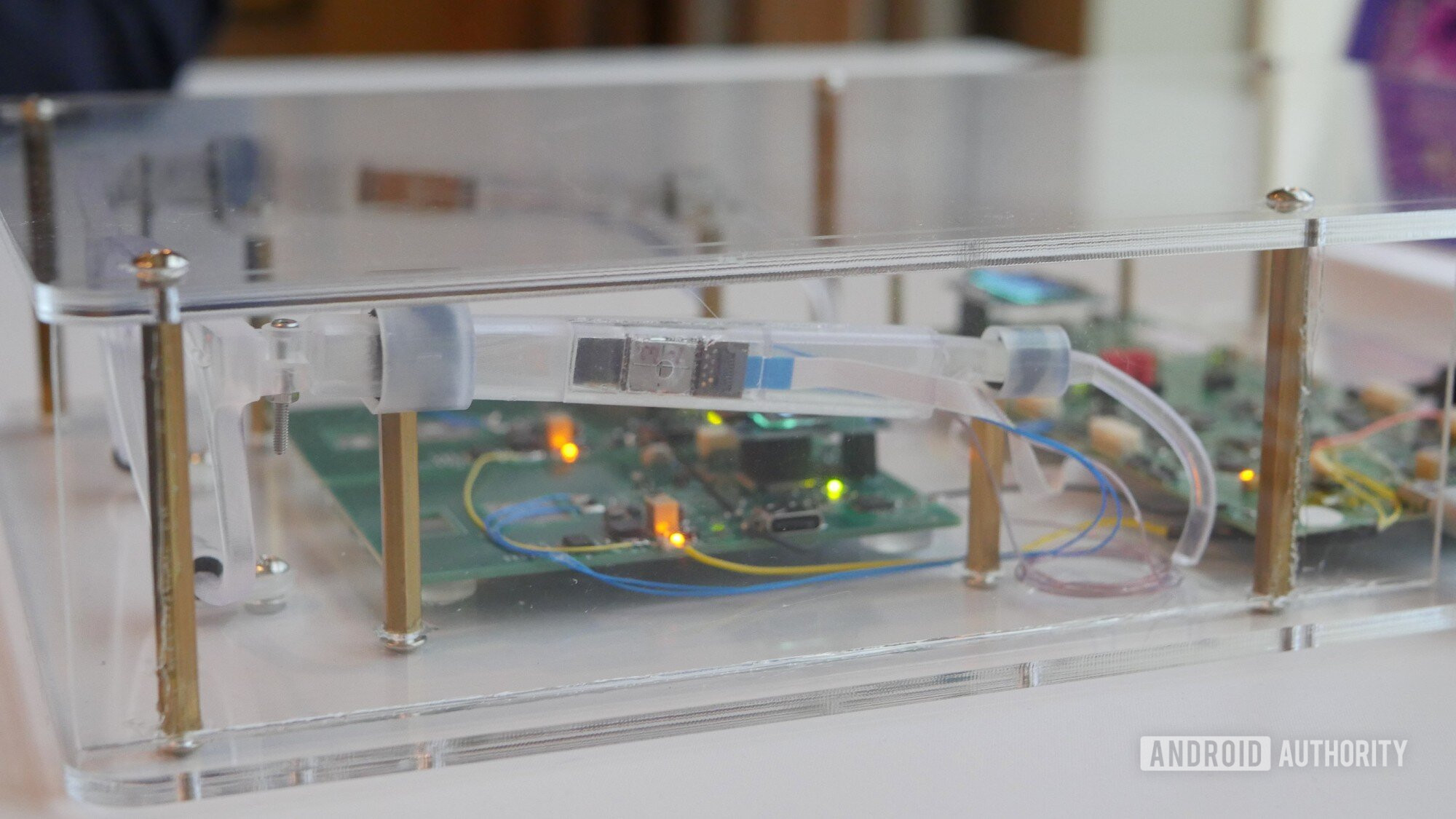
In order to demonstrate some potential use cases for this tech, xMEMS set up an example with one of the hottest-growing segments of the wearables market: smart glasses. Putting lots of processing power right up against your temples could get uncomfortable fast, but with just a little air pumped through one arm, you can see a pronounced temperature differential: In the images up above, one arm has µCooling enabled, while the other does not.
What about phones, though?
For as important as it is to keep wearables cool, let’s face it: Phones are a much bigger problem. We demand much more out of them, and they’re already running right up at their limits. Can µCooling help them, too?
xMEMS thinks so, and describes a ducted approach to the problem. By building a phone with a microscopically thin duct cut through it, a µCooling module could move up to 0.1 cubic feet of air a minute over your phone’s hottest components. That’s not a lot, sure, but it’s enough to make a difference while keeping the solution quite discreet.
Right now, it sounds like the ball is in the court of device manufacturers. xMEMS tells us that it’s already gotten samples into the hands of major smartphone companies, and with a little luck, in the next couple years we might start seeing the availability of phones incorporating this kind of silent cooling system.
With chips only getting more powerful (and producing more heat), that day can’t get here soon enough.
Follow
Thank you for being part of our community. Read our Comment Policy before posting.