Final Fantasy Tactics' ending completely redefines its opening cutscene
For Delita, desperate times call for desperate measures.

Published 5 hours ago
Exploding the hagiography of Delita Heiral
Final Fantasy Tactics never wants you to forget that history is a lie
 Image: Square Enix via Polygon
Historiography is the study of how history is written. Rather than facts, it's about the biases, agendas, and theoretical frameworks that influence the scholars and thinkers who shape our past. Final Fantasy Tactics writer Yasumi Mitsuno and his narrative team must have had at least a passing familiarity with the concept, since it's absolutely crucial to a hidden double meaning in the game's opening sequence that gives Delita Heiral's story the closure it's otherwise missing in its final moments.
[Ed. note: This piece contains spoilers for the ending of Final Fantasy Tactics]
My first clue that something was off with the War of the Lions' history came right after Arazlam's narrative introduction. When a story introduces a character as a hero, and not just any hero, but one who singlehandedly stopped a civil war, it sets some lofty expectations. Those expectations rise higher when a subsequent cutscene shows this valiant hero riding knight-ily on a sturdy chocobo, crossing field and vale in pursuit of what must assuredly be a most noble goal.
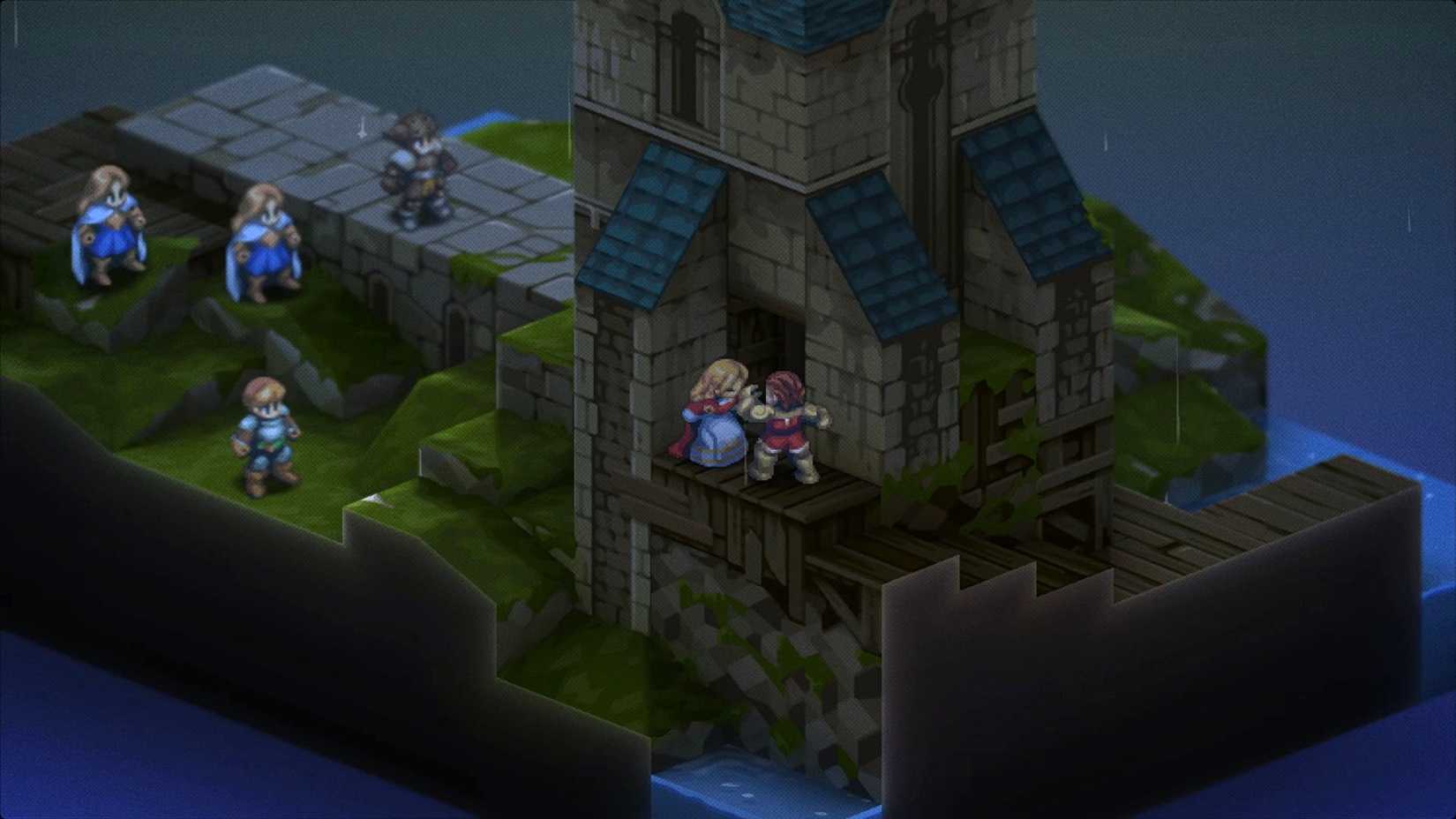Image: Square Enix via Polygon
What it doesn't make you think is that this hero's gonna punch a princess and kidnap her from a place of hallowed sanctuary, which is exactly what Delita Heiral does in Final Fantasy Tactics' first 10 minutes. Fast-forward a few dozen hours and who-knows-how-many challenging battles later, and his childhood frenemy Ramza gallops off into the sunset for adventures new, and Delita's wife stabs him. Delita stabs, and presumably kills, her in return, before wondering whether he or Ramza made the right choice in the end. I was not impressed.
The angry peasant failed and became part of the system he hated, while the good-hearted nobleman found the path of righteousness. It was all a bit too much like a Victorian morality tale, a warning that real change only comes from privileged people using their privilege in enlightened ways — not from pushing back against oppression. With how often Final Fantasy Tactics is praised for its social awareness, I was more than a little disappointed once the story drew to a close.
Then, I thought back to Arazlam's introduction and how Ivalice remembered Delita as a hero, not as a cautionary tale. The designation "hero" serves a purpose for whoever's writing, just like in real-life history. Usually, it supports some nation-building narrative or acts as a tale of inspiration that enforces norms. Usually, it doesn't match that person's actions or even actual fact. The history of a nation like Ivalice, governed by an entitled aristocracy, wouldn't enshrine this princess-punching upstart without reason, and a church that burns one of its own just for writing down the truth isn't going to support a king who has even more potential to upset the status quo than some wayward priests.
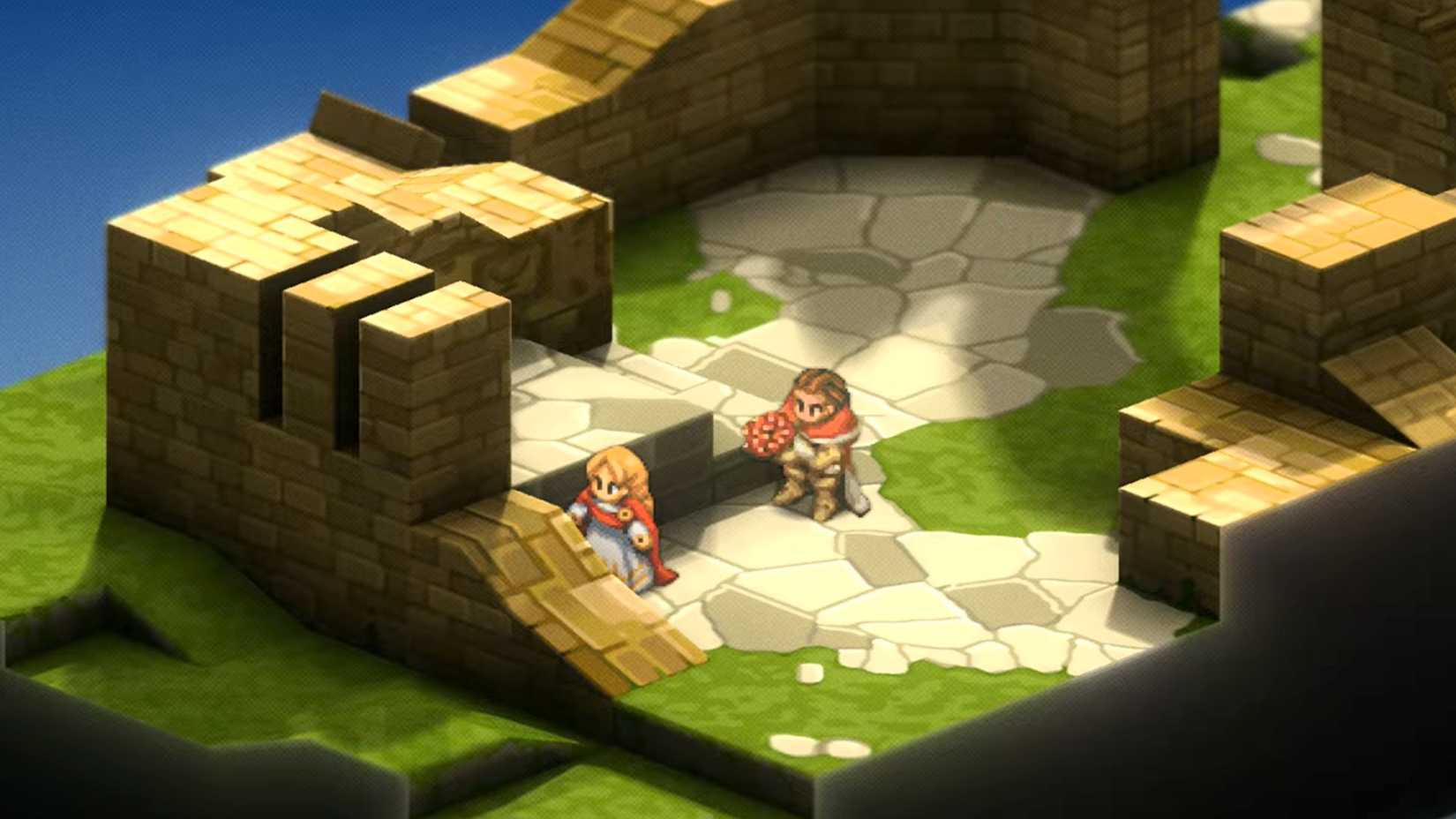Image: Square Enix via Polygon
Final Fantasy Tactics does things in twos — two lions, two wars, two brothers, two sisters — so, of course, there's a second meaning behind calling Delita a hero. It's Delita's final degradation, a victory over the rabble who sought to upend the social order. He's Ivalice's hero because he betrayed his values and his comrades in pursuit of vengeance. Yes, he ended the war (sort of). But his moral downfall is Ivalice's real salvation, or, at least, salvation for the elites’ way of life.
And really, who could blame Delita for what he did? Final Fantasy Tactics takes pains to show the impossible strain he lived under. Compared to most commoners, he and his sister live in relative comfort.. But they're also met with constant reminders that they don't belong. Hell, despite being almost part of the noble Beoulve household, he's only ever a guest in Ramza's party, there only by the grace and goodwill of his benevolent betters. He's forced to watch his adopted family treat people like him hoorribly, then his sister dies at the hands of a noble — one of the most obnoxious and bigoted of the lot. It's a tragedy of nearly Shakespearean scale. Macbeth's fatal flaw is that he wanted too much, and Hamlet couldn't make a choice to save his life. Delita's flaw? He couldn't take it anymore.
The chronicle that forms the basis of Final Fantasy Tactics gives the forgotten hero Ramza his due at long last. But with Arazlam admitting there's another, true hero, in the beginning, it also sets Delita free. He's not a hero anymore. And he's no more of a villain than any of the countless desperate people driven to extremes during the War of the Lions. He's just another broken soul in the pattern of Ivalice's sad history.