Frore Systems' LiquidJet and AirJet Pak cooling systems in the flesh — live demo with production hardware display impressive cooling capacity
Frore Systems' LiquidJet and AirJet Pak cooling system live demos at CES 2026
(Image credit: Future)
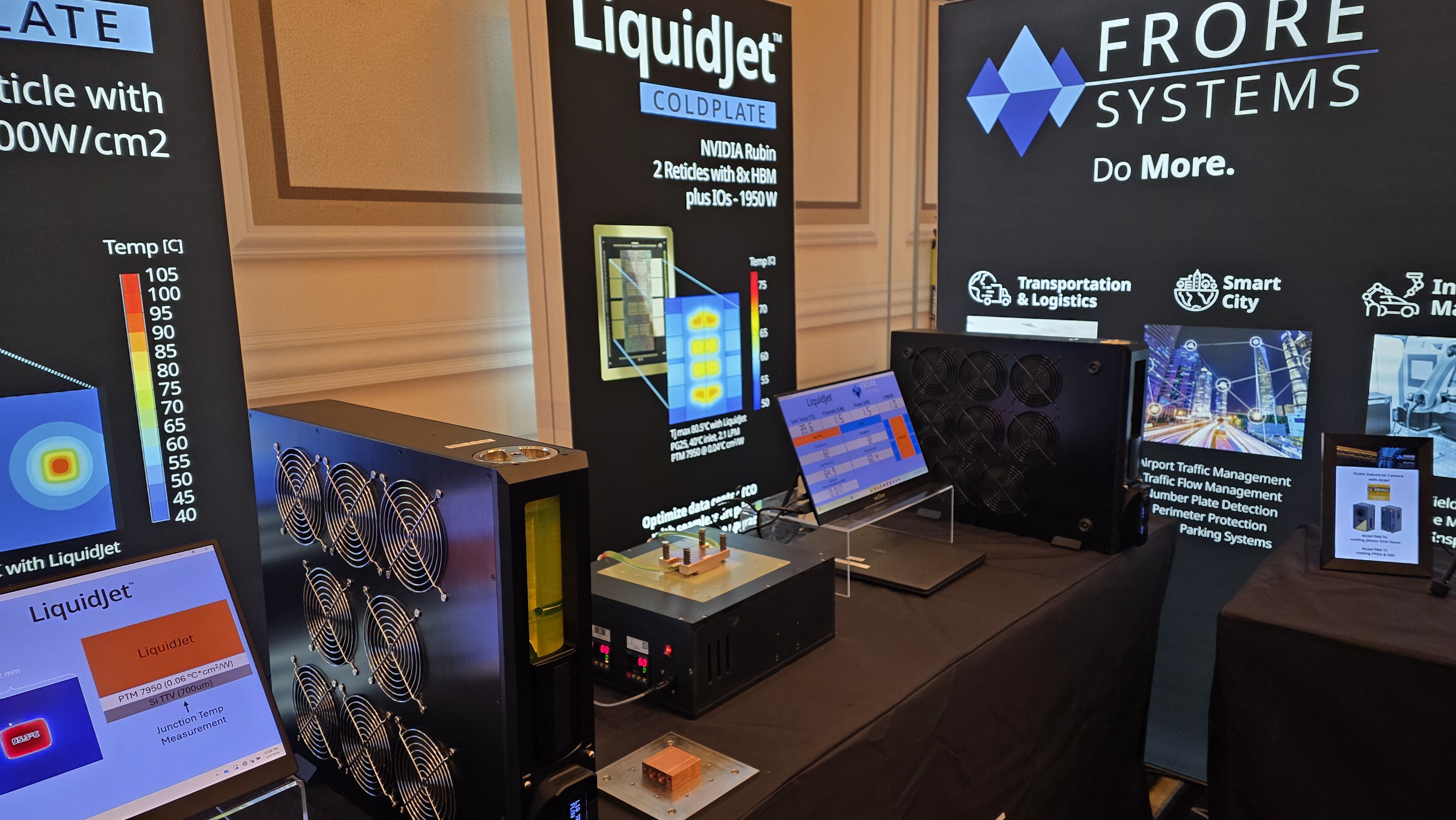
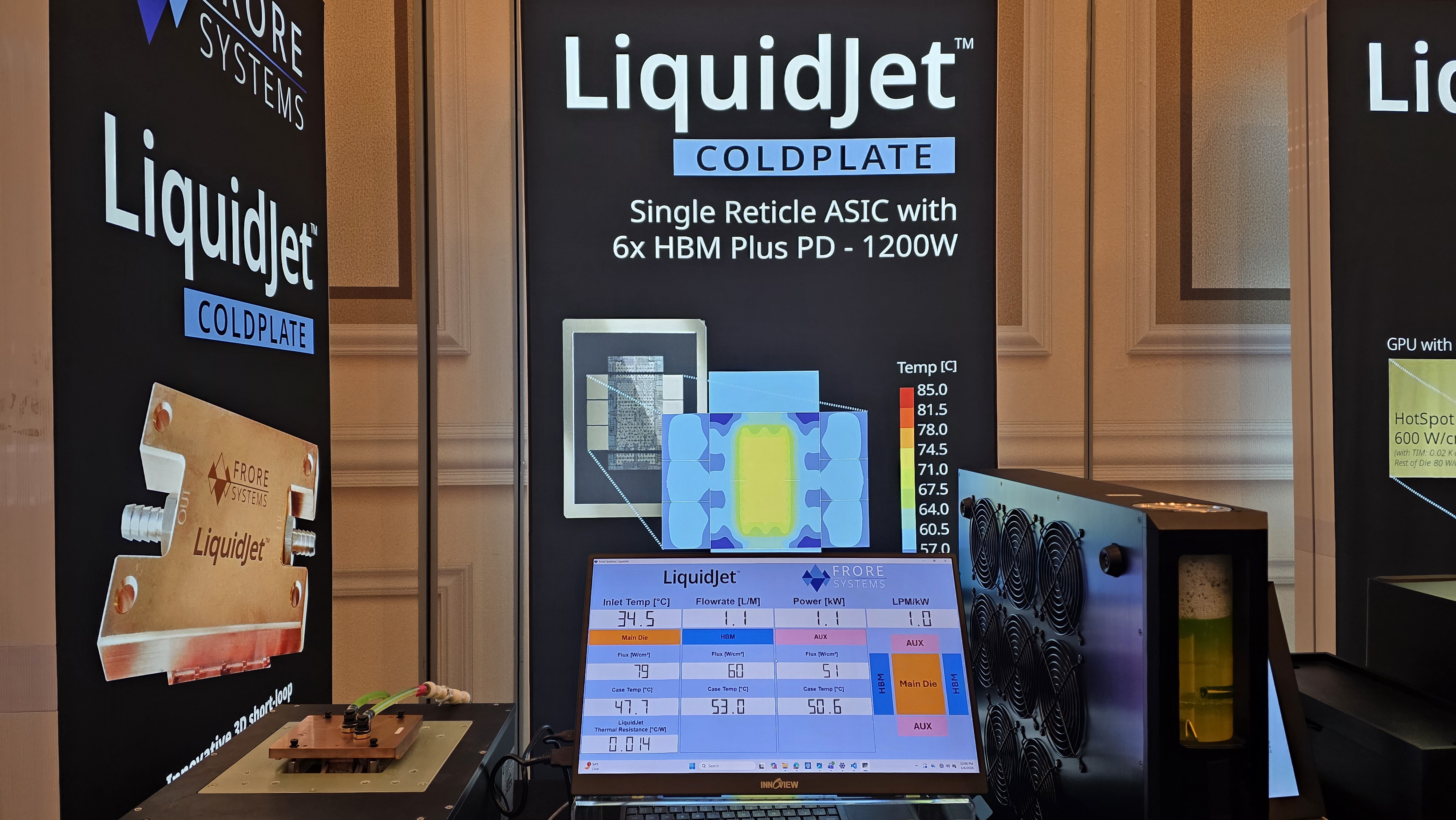
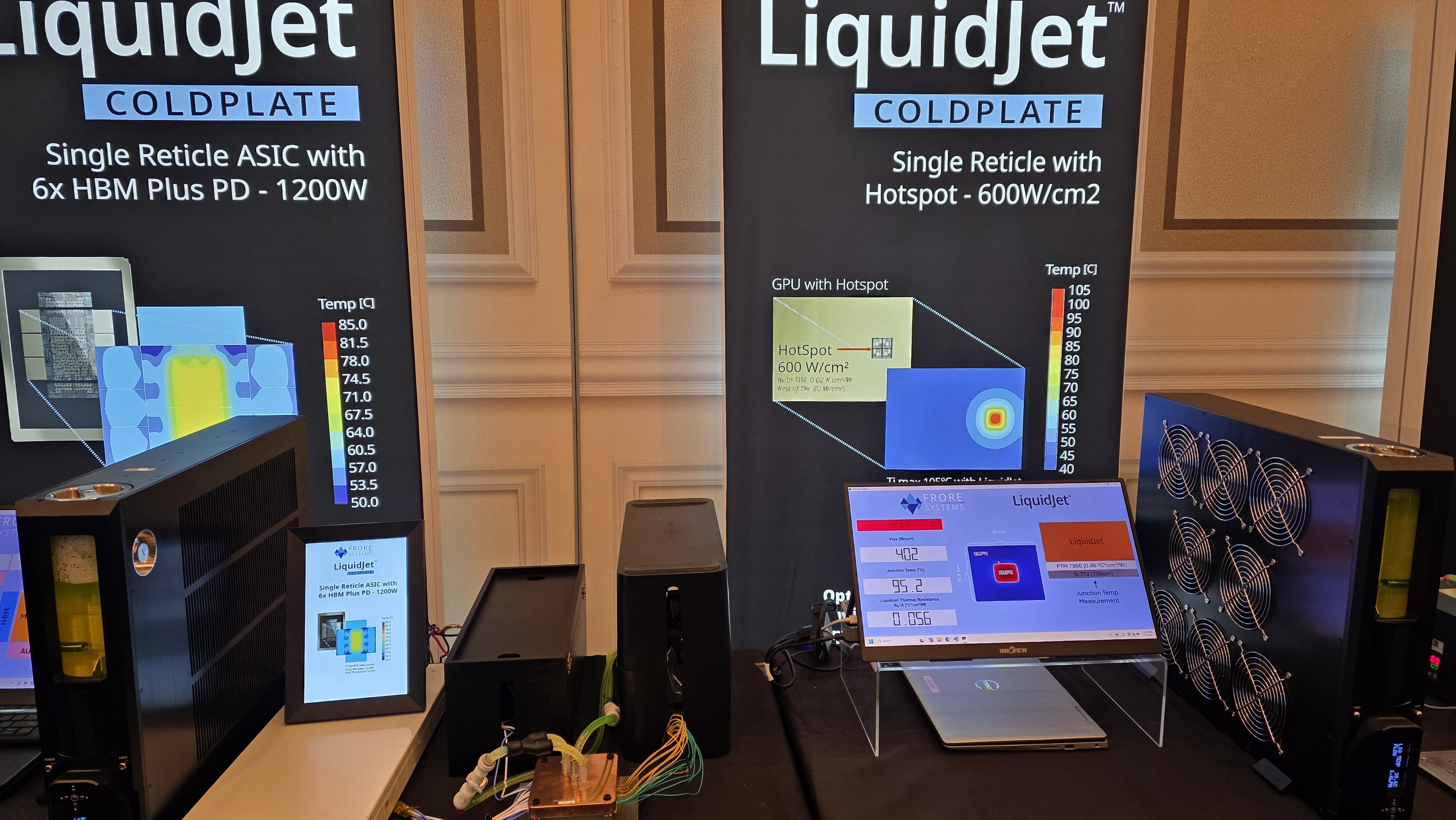
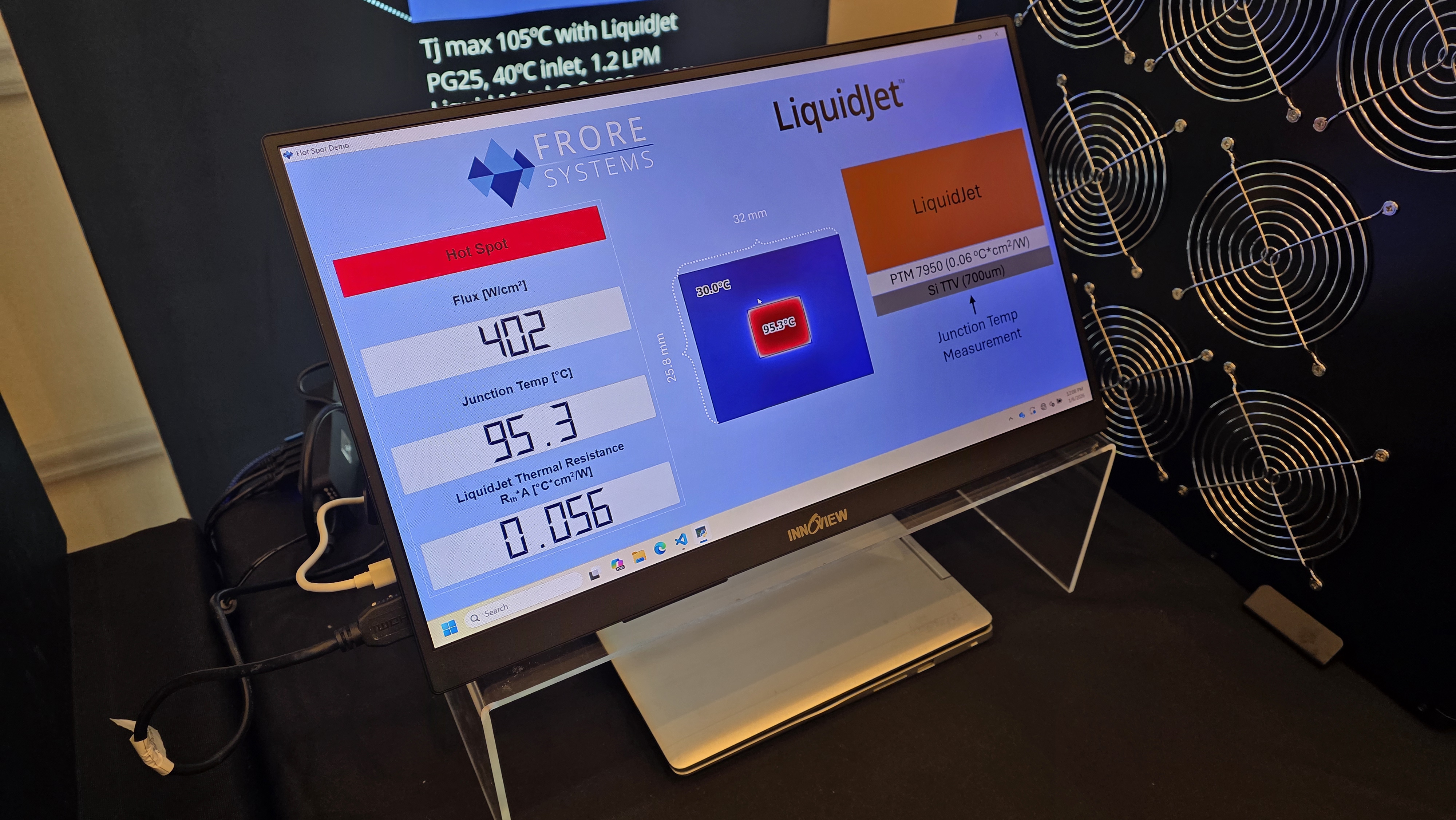
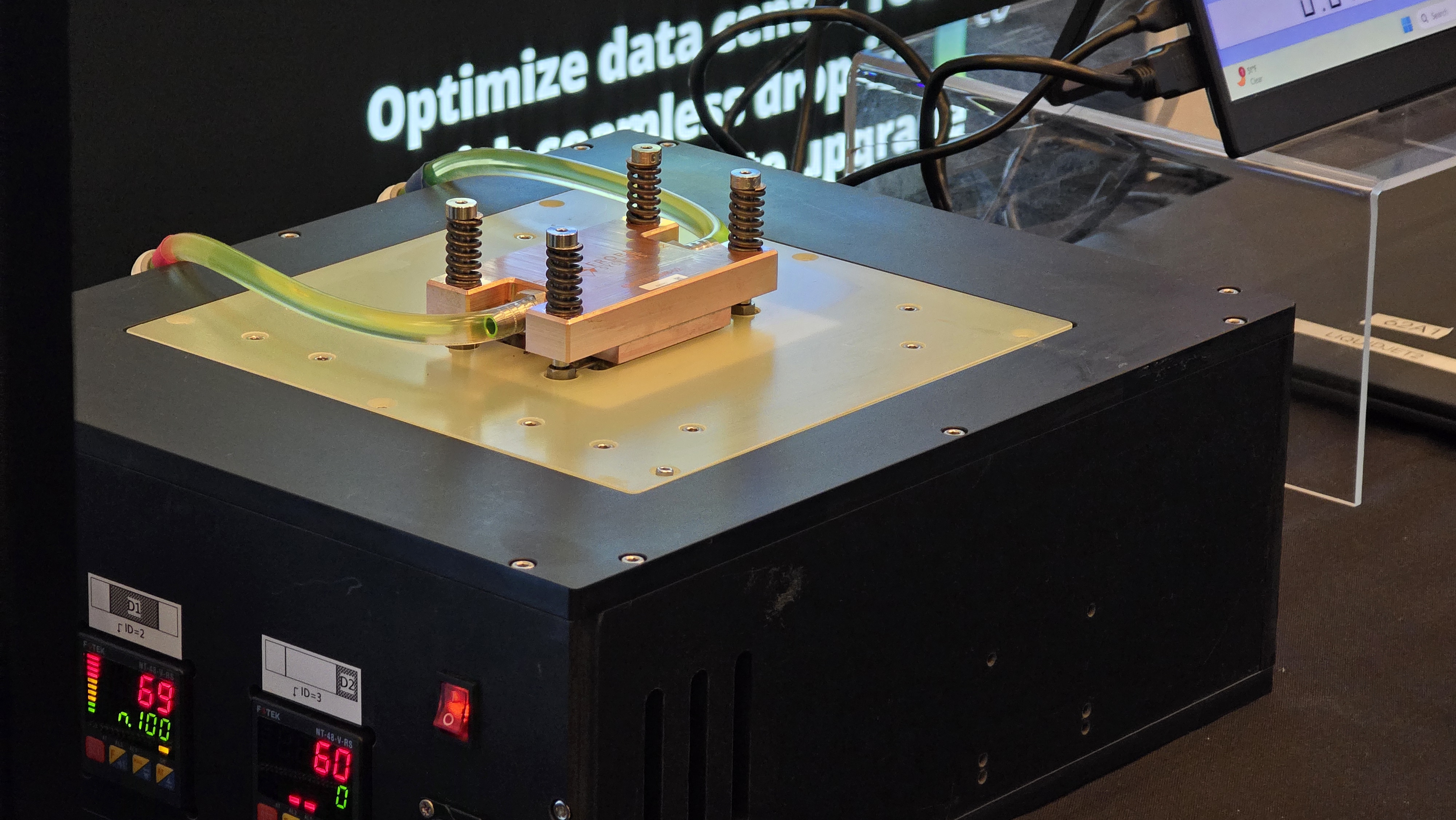
Frore Systems' seemingly magic apparatuses for both air and liquid cooling have long been in the news, claiming to offer performance up to several times that of existing designs. Some companies are already using Frore's designs, like Qualcomm with its Snapdragon X2 Elite reference platform, and many others are integrating the products as we speak. At CES, Tom's Hardware photographed some rather impressive live demos.
The company's wares are the AirJet and LiquidJet lines, each for a different cooling medium as their names imply. The AirJet Mini G2 is the building block, so to speak, of a cooling package that Frore calls an AirJet Pak and includes several Minis with vibrating membranes for near-silent or even fully passive operation. The company is aiming these at ultraportables, laptops, and mini-PCs — roughly any application requiring up to around 45 W. The units are dust-proof, too, and water-resistant.
(Image credit: Future)
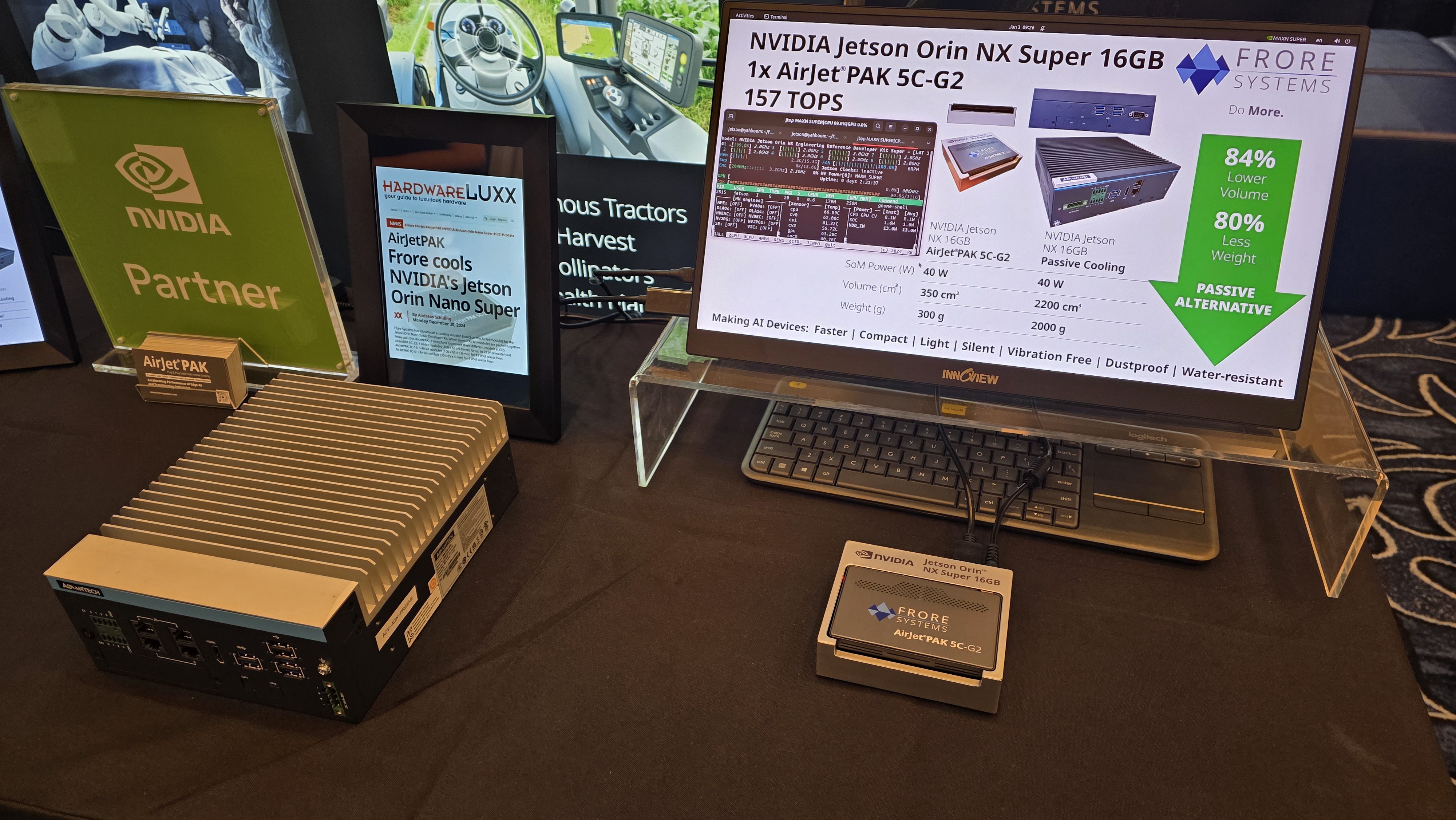
One of the most impressive demos is this one, an AirJet Pak 5C (five AirJet Mini G2 units) cooling a Nvidia Jetson Orin NX Super machine (40 W steady TDP), with a 300g apparatus containing a cooling package not much larger than a 2.5" hard drive performing the same duty as a massive heatsink weighing in at a whole two kilos.
(Image credit: Future)
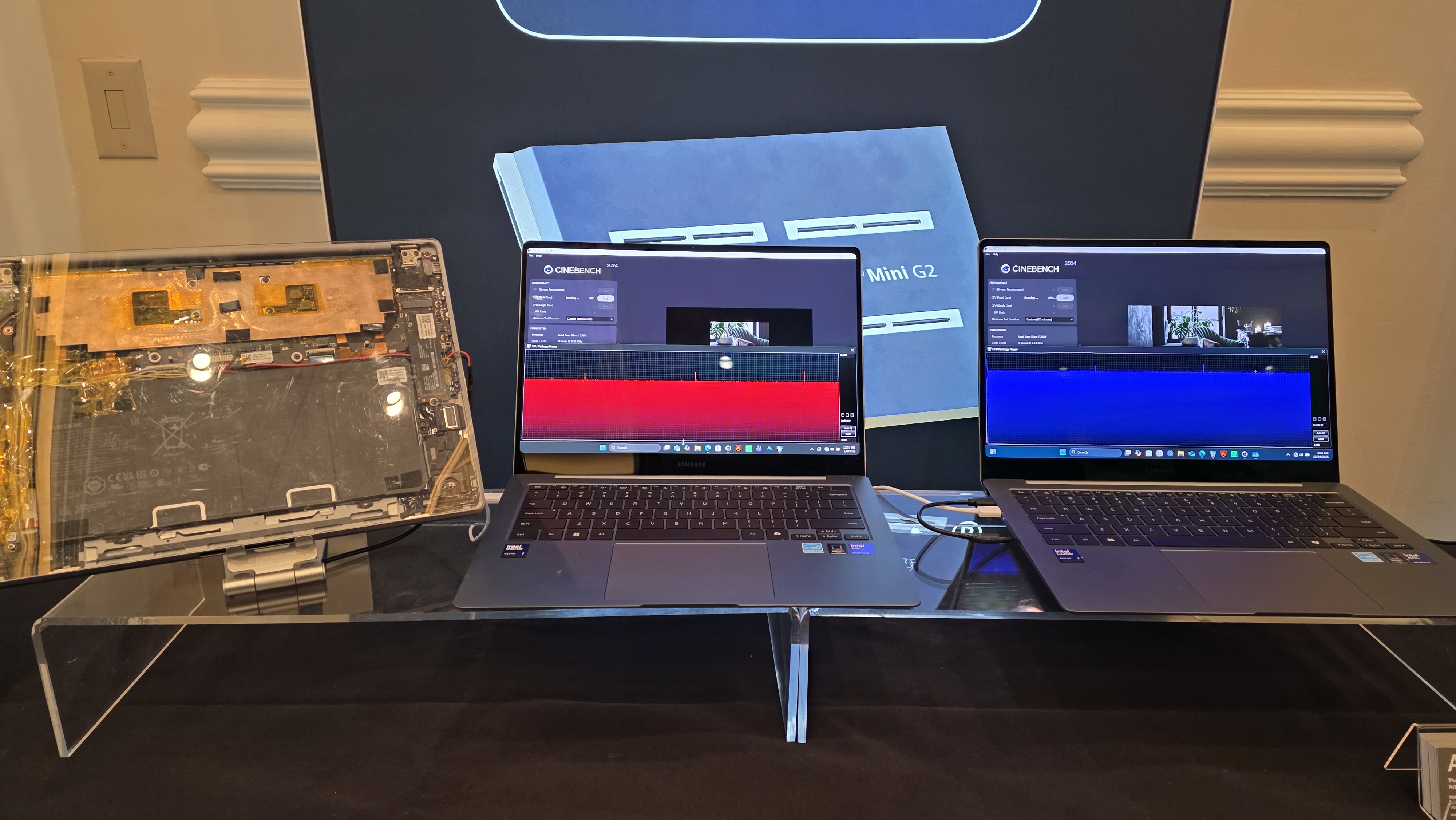
The same theme carries over to this Galaxy Book 5 Pro 14" that replaces its two-fan, 32-37 dbA bog-standard laptop cooling setup with a design packing four AirJet Mini G2s, offering an even higher TDP (24 W over 20 W), while simultaneously operating silently at the base noise measurement level of 27 dbA. As additional bonuses, theoretically, the AirJet-clad unit won't ever need cleaning, either. Not only is it much quieter, but the AirJet variant also goes significantly faster thanks to the higher steady-state TDP, as shown by the running Cinebench tests.