Govt bans high-dose nimesulide painkiller pills citing health risk
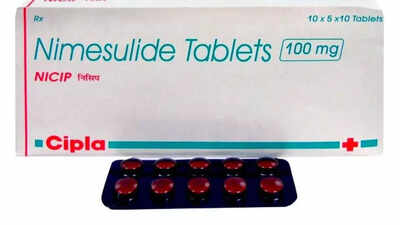
Nimesulide tablets
NEW DELHI: The Centre has banned the manufacture, sale and distribution of all oral formulations of nimesulide above 100 mg in immediate-release form, citing risk to human health and the availability of safer alternatives.In a notification issued on Dec 29 and published in The Gazette of India, the health ministry said it was satisfied that continued use of higher-dose nimesulide was "likely to involve risk to human beings" and that the prohibition was necessary in public interest.Nimesulide is a non-steroidal anti-inflammatory drug (NSAID) commonly used for pain, inflammation and fever. The ban applies only to oral formulations above 100 mg in immediate-release form and takes effect immediately.
Lower-dose formulations are not covered.The order has been issued under Section 26A of the Drugs and Cosmetics Act, 1940, after consultation with the Drugs Technical Advisory Board (DTAB), and bars manufacturers, distributors and sellers from producing or supplying the banned formulations.Nimesulide has been under regulatory scrutiny for over a decade. In 2011, the central govt prohibited six drugs, including nimesulide, following DTAB recommendations, and barred its use in children below 12 years amid concerns over liver toxicity.
Earlier this year, the Indian Council of Medical Research (ICMR) also flagged safety concerns, recommending restrictions on nimesulide use in patients below 18 years and above 60 years, and advising that formulations above 100 mg be banned. In India, the drug is sold under brands such as Nimulid, Nimtex and Nicip, with Nise among the largest-selling brands.Welcoming the move, Dr Rommel Tickoo, director, internal medicine, Max Hospital, Saket, said, "This is a prudent and timely decision taken by govt. The restriction on high-dose immediate-release nimesulide addresses a long-standing safety concern, especially when misused or taken without supervision. With safer NSAID alternatives readily available, limiting exposure to higher doses is clearly in the interest of patient safety.
"