How the property market finished 2025 in a way nobody expected
Home values rose throughout the year as the Reserve Bank delivered three rate cuts. Then the market changed.
The property market finished 2025 in a different state to the way it began, as early hopes of mortgage relief were ultimately dashed.
Home values rose throughout the year as the Reserve Bank delivered three cash rate cuts, enabling buyers to borrow more. But by late 2025, economists were predicting there would be no more to come in this cycle.
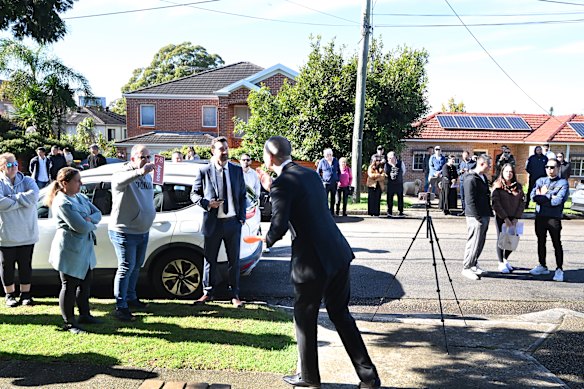
Property values rose about 7.7 per cent in 2025.Credit: Peter Rae
Cotality head of Australian research Eliza Owen said Australian home values rose 7.7 per cent over the year to the end of November, above the last calendar year’s result of 5.2 per cent – and above the 20-year average of 5.1 per cent.
The result was boosted by a property boom in the smaller capitals, however. Sydney home values rose a more modest 5.1 per cent and Melbourne 4.2 per cent.
“Falling rates pushed the market into outperformance this year,” Owen said. The cash rate is now 3.6 per cent.
Loading
“The rate relief delivered through 2025 created a relatively rapid response from the major banks in terms of reducing mortgage rates. And I think up until the final quarter of the year, there was a strong consensus that we would get further rate relief in 2026.”
She said this led to a strong start to the spring selling season, but that towards the end of the year, a pick-up in inflation changed the rate outlook which in turn started to affect the property market. This led to value growth plateauing in Sydney and Melbourne over the four weeks to mid-December.
“As we’ve come to the very end of the year, market conditions have turned pretty drastically from where they were during spring,” she said.
Owen added that ongoing high mortgage costs, despite the reductions this year, had prompted buyers to consider homes at the more affordable end of the market, pushing up their values. The cheapest 25 per cent of homes rose in value by 9.5 per cent this year, compared with only 6.2 per cent for the most expensive 25 per cent of homes.
“Stretched affordability has meant that middle- and high-income buyers have been diverted to the lower end of the property value spectrum, and that’s increased home values most in some relatively low-value pockets of the market,” Owen said.