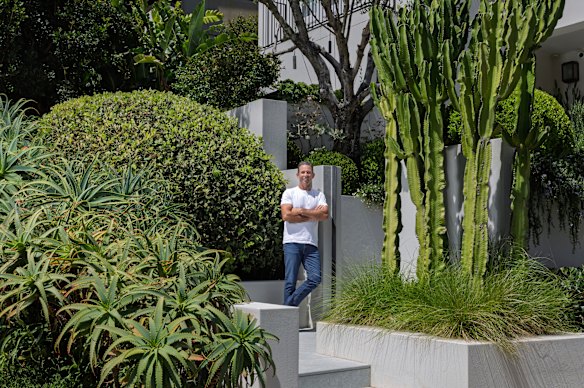
How to get a harbourside garden, even if you don’t live near the water
Garden designer Anthony Wyer says think of your garden like a house – “full of rooms”, each of which is a destination for a particular activity.
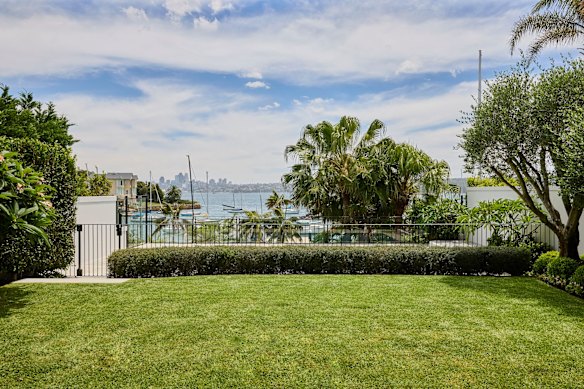
Sydney’s showstopping prestige houses normally grab the headlines. But a new book puts the city’s harbourside gardens in the spotlight instead.
Anthony Wyer, creative director of landscape design firm Wyer & Co, has been behind some of Sydney’s most beautiful gardens over nearly two decades. He says gardens, like homes, can have room-like divisions and be designed to be used throughout the year.
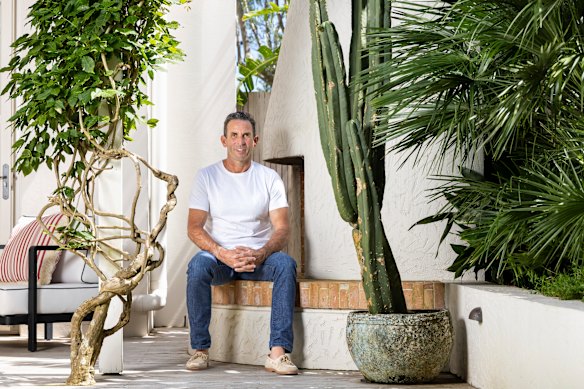
Anthony Wyer in his own garden. His recently released book, Harbourside Gardens, is a glossy ode to Sydney’s iconic waterfront.Credit: Sitthixay Ditthavong
Wyer’s recently released book, Harbourside Gardens, is a glossy ode to Sydney’s iconic waterfront. It charts the evolution of what he calls a “Sydney style” via 20 of his garden projects which are nestled on, or within walking distance of, the harbour.
“It’s a bit relaxed, but it has some formality to it,” says Wyer of his designs. “The Sydney garden is meant to be used all year round.”
Wyer’s gardens reflect a lifestyle centred on socialising, eating and spending time outdoors. The gardens are not ornamental, but designed for all-year, all-weather outdoor living.
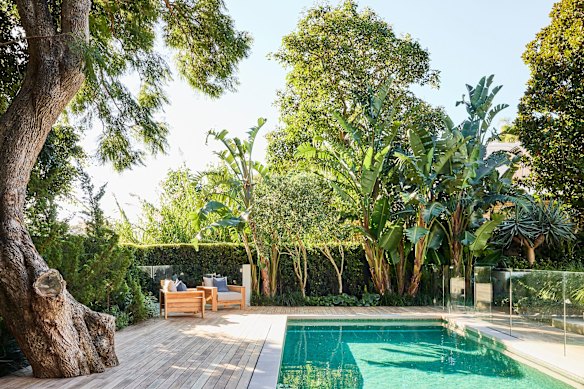
Because of this, Wyer thinks of a garden like a house. It is “full of rooms”, each of which is a destination for a particular activity. “Whether it’s to eat, whether it’s to sit and take advantage of the view. We’re creating destination spaces in the garden,” he says.
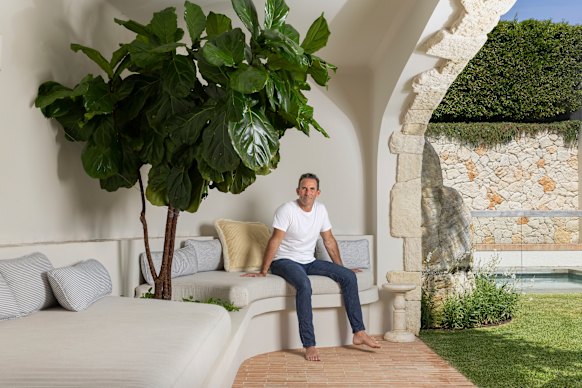
Wyer thinks of gardens like a house, with a series of rooms. Each one is a destination for a particular activity.Credit: Sitthixay Ditthavong
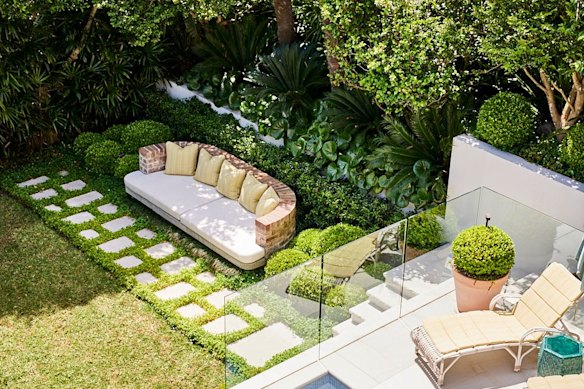
On views, Wyer also considers what a garden looks like from above, when it’s not being used. “A lot of people just look onto gardens. So there’s a value in that too if you love gardens,” he says.
Jacaranda House in Rose Bay and Modern Classic in Vaucluse, two of the eastern suburbs gardens featured in the book, are examples of where Wyer has used these principles.
Botanical plants and natives sit together comfortably, with the style, he said, representing a development from a Mediterranean garden. Some natives favoured by Wyer include species such as banksia integrifolia, lomandra, casuarina “Cousin It”, pandanus, agaves, dragon trees.