‘I forget’: Haryana man who has son after 10 daughters struggles to recall children’s names
Haryana showcases its gender paradox with contrasting births: a daughter celebrated with a traditional son's ritual, while an 11th son was welcomed after 10 daughters, highlighting both progress and persistent son preference. Despite awareness campaigns, deep-rooted bias remains evident in the state's transition.
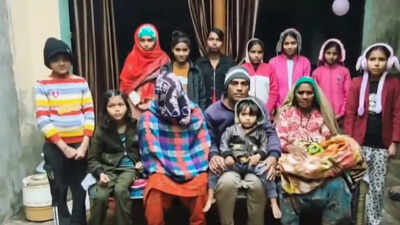
Image Credit: X
JIND: A daughter was welcomed like a son. A son was welcomed after 10 daughters. Haryana this week offered a stark snapshot of its gender paradox — son preference under pressure and yet undefeated.In Pauli village of Julana block in Jind district of central Haryana, Sanjay organised a Kua Pujan — a well was worshipped, a ritual traditionally reserved for male births — to celebrate the arrival of his daughter. Music filled lanes as villagers gathered for a feast.
Chandigarh Headlines Today — The Biggest Updates You Need to Know.
“We performed this to symbolise respect and equality,” Sanjay said. He added that his sister, born 39 years ago, was the last girl born in his family. His wife said daughters today excel in sports, education and even the armed forces, proving they are no less than boys.
Father struggles to recall all 10 daughters’ names
The village sarpanch said the entire community shared the family’s joy. About 115km away, in Dhani Bhojraj village of Fatehabad district in western Haryana, another celebration unfolded — this one for a son. Sanjay, a daily-wage labourer, welcomed his 11th child after 10 daughters. “After 19 years, my mother’s wish is fulfilled,” he said. “My eldest daughter studies in class 12. Everyone in the family and village is happy.
”
Yet the contrast cut deeper. Speaking to reporters, the father struggled to recall all his daughters’ names. “Sometimes I forget,” he said. He spoke of dreams of making his son an officer. He had no such plan for his daughters.The birth took place at a govt hospital in Uchana Kalan, a town in Jind district. Doctor Santosh, who handled the case, called it high-risk. The mother’s haemoglobin level was just 5 grams. The baby suffered from low amniotic fluid.
“Despite complications, she delivered a healthy baby boy through normal delivery. Both are stable,” the doctor said.She warned sharply against repeated pregnancies. “They pose serious risks to both mother and child. I strongly advise families not to opt for a third child, let alone 11.”Haryana has long grappled with deeprooted patriarchy, reflected in skewed sex ratios and persistent pressure on women to bear sons.
In the 2011 census, the state ranked among the country’s worst performers, with just 834 girls per 1,000 boys.A decade of awareness campaigns, stricter enforcement of laws against sex selection and changing social aspirations has nudged the numbers upward. Yet the celebration of an 11th child solely because he is male underscores how entrenched son preference remains. Together, the two births reflect a state in transition, where visible progress coexists uneasily with enduring bias.