I found the cutest (and strangest) Android phone at CES 2026
It's two phones in one, or something like that.
Ryan Haines / Android Authority
I know that the Clicks Communicator got a lot of love at CES this year. Honestly, it probably deserves most of it — a physical keyboard with a fingerprint reader hidden in the spacebar is a cool design. It wasn’t much of a surprise, though, as we’d heard rumblings about big things out of Clicks leading up to the show.
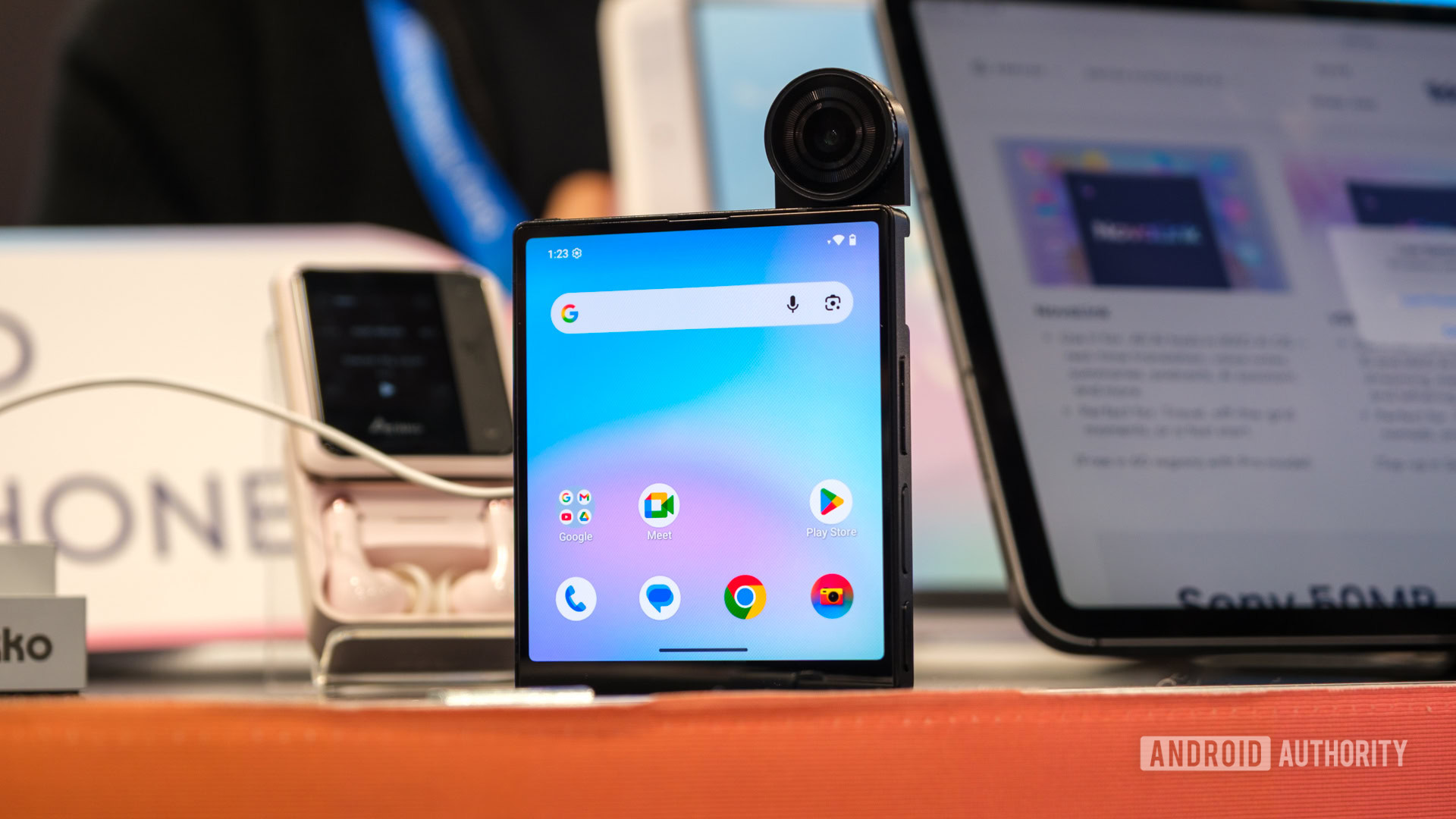
However, as I wandered the show floor on my last day in Las Vegas, I stumbled upon another tiny little Android device, and I think it might have stolen some of the Communicator’s thunder. It’s called the Ikko MindOne, and it’s exactly the type of quirky little device I love to find at CES.
If an iPhone and a Motorola Razr had a baby…
Ryan Haines / Android Authority
The moment my colleague, Joe Maring, and I rounded the corner on the show floor at CES, the Ikko MindOne immediately caught our eyes. I could describe it as looking like so many other Android phones or AI gadgets, yet it’s not a perfect match for any of them. It’s as if you chopped off the cover screen of a Motorola Razr, shrank an iPhone down into a square, or made the Rabbit R1 practical. It’s kind of awesome.
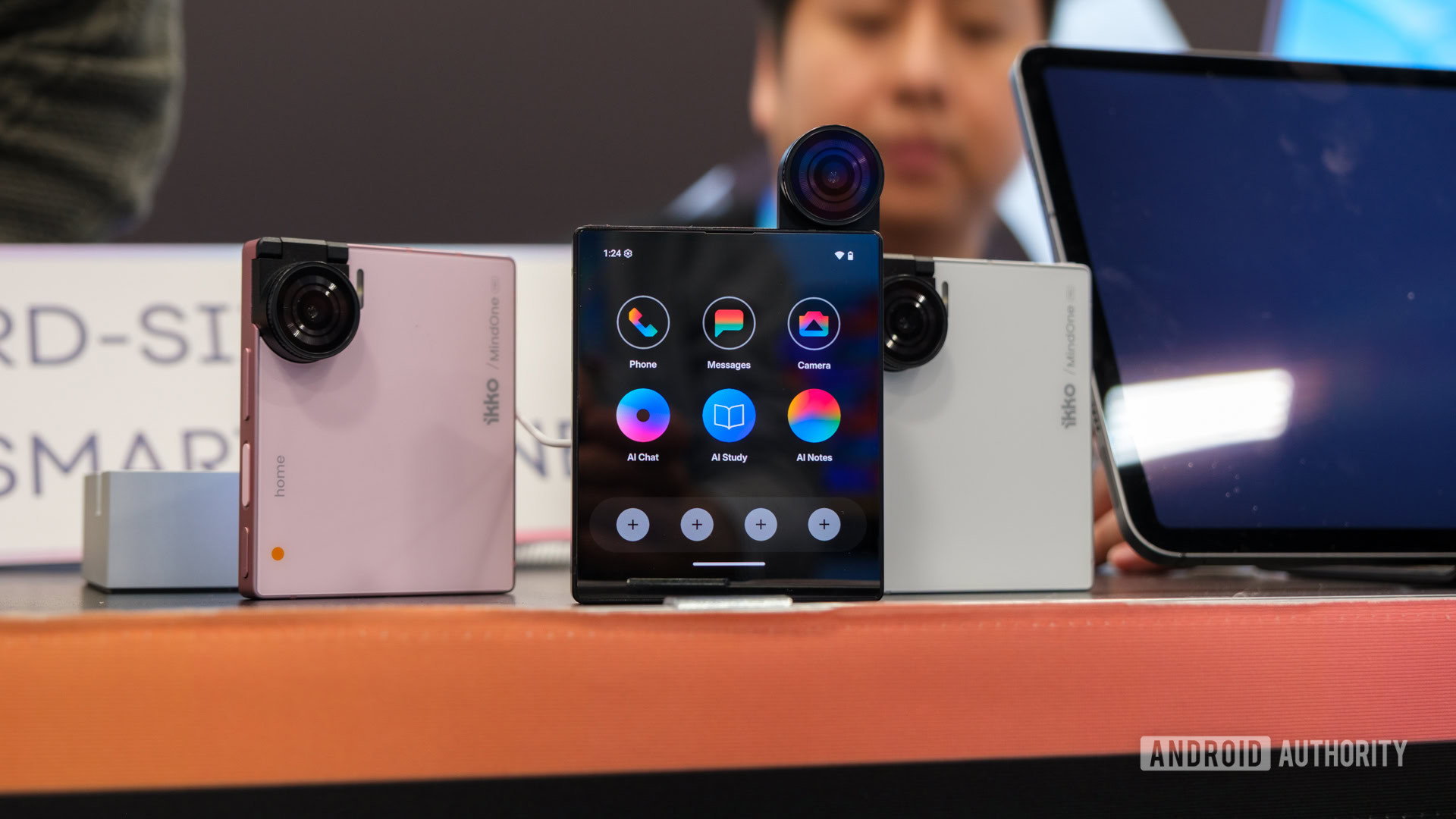
More specifically, the MindOne is an almost-square Android phone that also runs an Ikko AI operating system with the flip of a virtual switch. That means it comes out of your pocket feeling like the (slightly dated) Android 15 experience you’re already used to, but you can switch to a secondary app drawer that lets you use AI to take meeting notes, help with homework, and create real-time translations. Then, when you’re done with that, you can flip right back to Android 15 and put the AI features away for a little while.
I need a status report on how many flips the camera can handle, because I know I'm going to fidget with it.
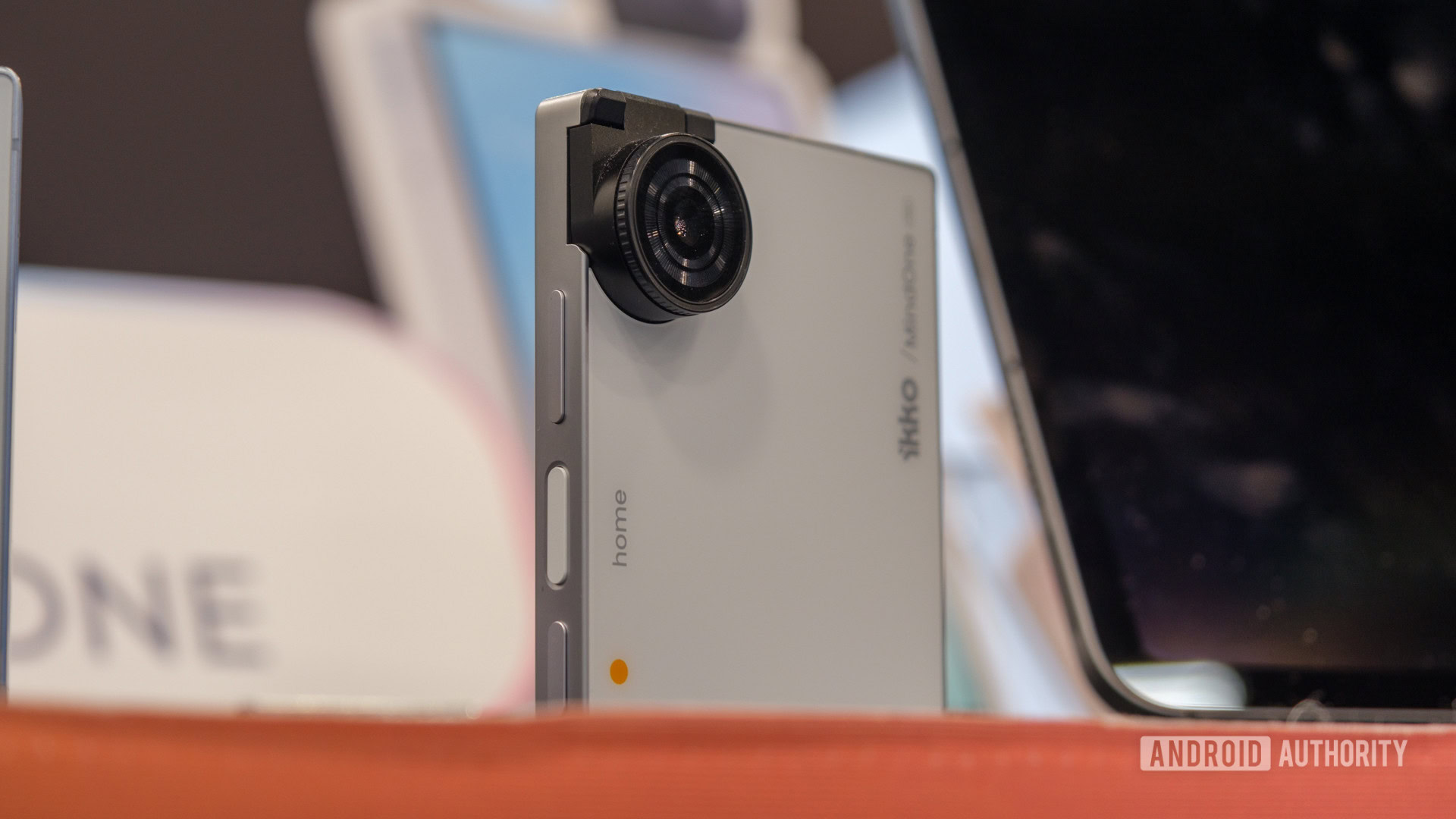
Before I got to any of those AI options, however, I had to give Ikko’s hardware a good, long look. Its buttons feel like what you’d expect on a small Android phone, with a power button and fingerprint reader tucked below the volume rocker on the side, and the AI trigger is located on the top edge. What’s really interesting, though, is Ikko’s choice of camera. The MindOne features a single 50MP 1/1.56-inch sensor from Sony, which may seem inconvenient at first, but it actually has a unique advantage: you can flip it 180 degrees to function as a selfie camera as well. It’s equal parts fidget toy and practical design choice.
I am, of course, a shameless hardware nerd, so I loved the feel of the MindOne in my hand. Who wouldn’t when it’s got a sapphire glass display and measures less than 9mm thick? I’ll admit that its dual operating system setup surprised me. Oh, and because the square design might not be comfortable at first for some people, Ikko also has a snap-in keyboard case for your physical typing needs. It gives you back screen real estate while also adding a 3.5mm headphone jack and a Hi-Fi DAC for improved audio output.
Not just an Android phone
Ryan Haines / Android Authority
I wasn’t sure how switching between Android and a dedicated AI interface would feel, but the Ikko team has made it pretty smooth.
There’s not much need to explain the Android 15 experience to you — it’s a lightweight skin that reminds me of a mix between Google’s Pixel UI and Motorola’s Hello UX — so I’ll mostly focus on the AI OS half of the equation. It’s… equally lightweight and straightforward. Ikko built out ways to use its camera to ask questions, help with homework, and a bunch more, while also giving the MindOne one of the more flexible chatbot setups I’ve seen.
Basically, you’re not limited to just one AI model. When you open the AI Chat app, it populates with a menu of different voices and a selection of ChatGPT models, Claude, DeepSeek, and Gemini within thumb’s reach. I’m not sure whether you need to go through the process of logging into the models that require premium subscriptions, but I’m excited to find out once I spend a bit more time with the phone.
What I do know, though, is that the MindOne prides itself on offering free data — at least for some users. It apparently relies on NovaLink for data access to its AI tools in more than 60 countries, while also supporting vSIM and a Nano-SIM slot for wider coverage. I’ll be curious to see just how well that coverage works, as well as how quickly Ikko’s three promised Android updates are delivered after launch.
The MindOne makes a lot of lofty promises, and I really hope it can deliver for $429.
In the meantime, I’m excited to give the MindOne a longer run as my secondary device. I hesitate to elevate it to primary device status because I’m not sure what mobile bands it will support just yet, but I’ll happily put its AI features to the test against the likes of Google and Samsung. If it can, I’ll be more than happy to free up some pocket space with an even smaller design. If it can’t, there’s always the Clicks Communicator.
Follow
Thank you for being part of our community. Read our Comment Policy before posting.