I tried Motorola’s new Razr Fold, and now I’m worried about it
I have high hopes, but also more than a few concerns.
I take great pride in my reputation as the ‘flip phone guy’ here at Android Authority. Whenever someone needs to go to bat for the small, pocket-friendly form factor, you can almost guarantee that it’ll be me. And yes, that means I’ll be the one to beat the drum for Motorola’s Razr — especially the Razr Ultra — harder than anyone. I think it offers the best mix of hardware and software on a flip phone, especially its cover screen.
Now, there’s a new Razr that I should be throwing my support behind. Motorola has just announced its first book-style foldable, the Razr Fold, and I know I should be excited, but I’m not sure I can be — at least not yet. I still have many questions about how the Razr Fold will compete with the likes of the Galaxy Z Fold and Pixel Pro Fold, and I’m concerned it may not find a large enough audience.
Here are the questions Motorola needs to answer before it will win me over.
Can Motorola’s software thrive on the big screen?
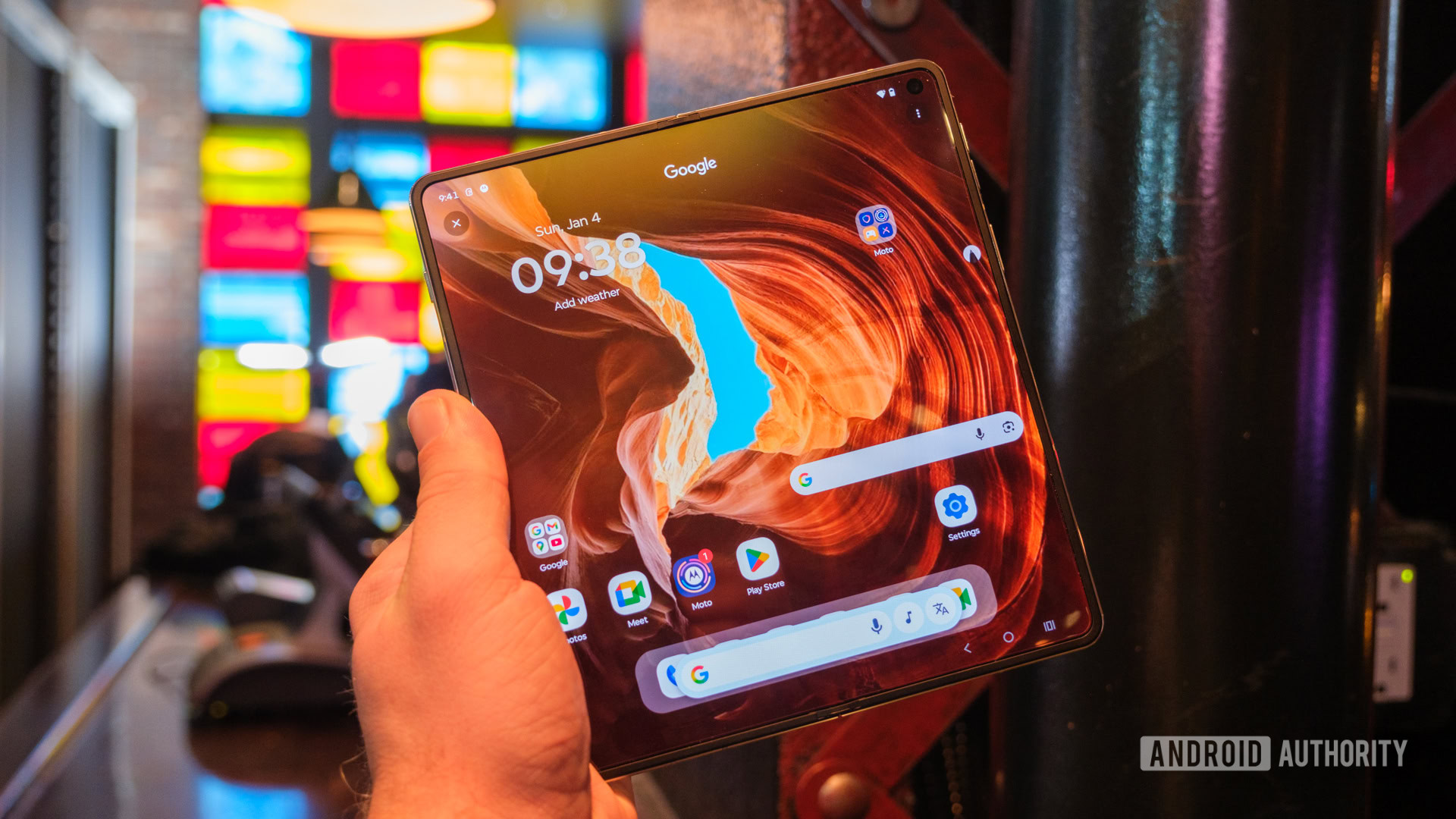
Ryan Haines / Android Authority
Software — it’s a foldable phone challenge as old as time itself. Aside from the hinge and the display crease, it’s probably the number one thing I look for when reviewing a foldable, because it makes (or breaks) the experience from the moment you turn on the phone. And, with the traditional Razr lineup, I think Motorola nailed it. It found the right balance between apps and widgets on the cover screen, and I’ve always loved the clean Pixel-like experience of Motorola’s full-sized software.
However, expanding a software experience is significantly more challenging than shrinking it. You can’t get away with swapping to widgets and compressing the amount of information you show — instead, you have to do the opposite. You have to give things the room to breathe without making them comically large, as Google learned with its original Pixel Fold. Sorry, but a sideways-oriented Strava isn’t what anyone asked for.
Of course, I was never that worried about Google (or Samsung) figuring out how to transition its software to a book-style foldable because both already had longer histories with tablets. They’d figured out what works for the likes of the Pixel Tablet (and Nexus tablets before it) and the Galaxy Tab series. Motorola doesn’t really have that history. Yes, it launched a Moto Pad 60 Pro in India last year, but it shipped with Android 14 and a weak update commitment — not exactly instilling confidence.
I've never used Motorola's software on a big screen, and I'm worried it'll fold under the pressure.
So, I have to see Motorola hit the ground running with a software experience that’s at least within striking distance of Google and Samsung. It already has to have its multitasking experience locked in, hopefully with a version of Open Canvas now that it’s Google’s standard, and apps need to stick the landing on the massive 8.1-inch display while they’re at it.
And although I’ve had a tiny taste of the foldable’s software, as you can see above, I’m not sure that it’s done any of that yet. I wasn’t allowed to do much with the phone during a pre-CES briefing — just swipe around the interface — so I still have a lot of questions. Motorola was very clear about the fact that its software experience is currently the least polished part of its build, and wouldn’t let me test the camera app, Moto AI features, or, well, much else.
Will “good enough” cameras be good enough?

Ryan Haines / Android Authority
In a similar vein, the expectations I have for a flip phone camera are quite a bit different from those I have for a book-style foldable. Obviously, with a flip phone, real estate is at a much higher premium, so two cameras are usually the limit, and smaller sensors aren’t uncommon. The traditional Razr series figured this out, pairing solid wide and ultrawide cameras that double as some of the best selfie cameras around, but I’m worried about how Motorola will scale up again.
Notably, the two most popular book-style foldables, the Pixel 10 Pro Fold and the Galaxy Z Fold 7, still have camera issues. Samsung crammed all its megapixels into a single massive primary sensor, and Google’s setup is generally underpowered overall — even with a healthy dose of Pixel processing. Those aren’t first-generation foldables, either, so they’ve had time to start ironing out their kinks. Once again, Motorola hasn’t.
Cameras are often a sticking point for foldable... and Motorola hasn't been a camera king as it is.
On a base level, though, I don’t think Motorola will get too experimental. I won’t be surprised if it ports over the bulk of its camera experience directly from its flagship Edge series, even if it then has to rework the interface to work well on both the cover screen and the internal panel. I am, however, worried that by not getting very experimental, Motorola also won’t do anything notable.
The reason I say that, of course, is that the features that are unique on a flip phone aren’t the same on a book-style foldable. Camcorder mode transitions from a convenient one-handed feature to a cumbersome attachment on a much larger device. Using the rear cameras for selfies is about the same — if you’ve tried it on another Fold, you’ll know just how unwieldy it can be. Mix in the fact that many of Motorola’s editing features are lifted right from the default Google Photos experience, and there’s not much that’s unique about this triple-camera setup.
I, of course, wasn’t allowed to test the cameras during my brief hands-on session with the phone, so I hope that I’m wrong about the potentially modest ambitions — I’m just not sure yet.
Is this the right time for a Razr Fold?
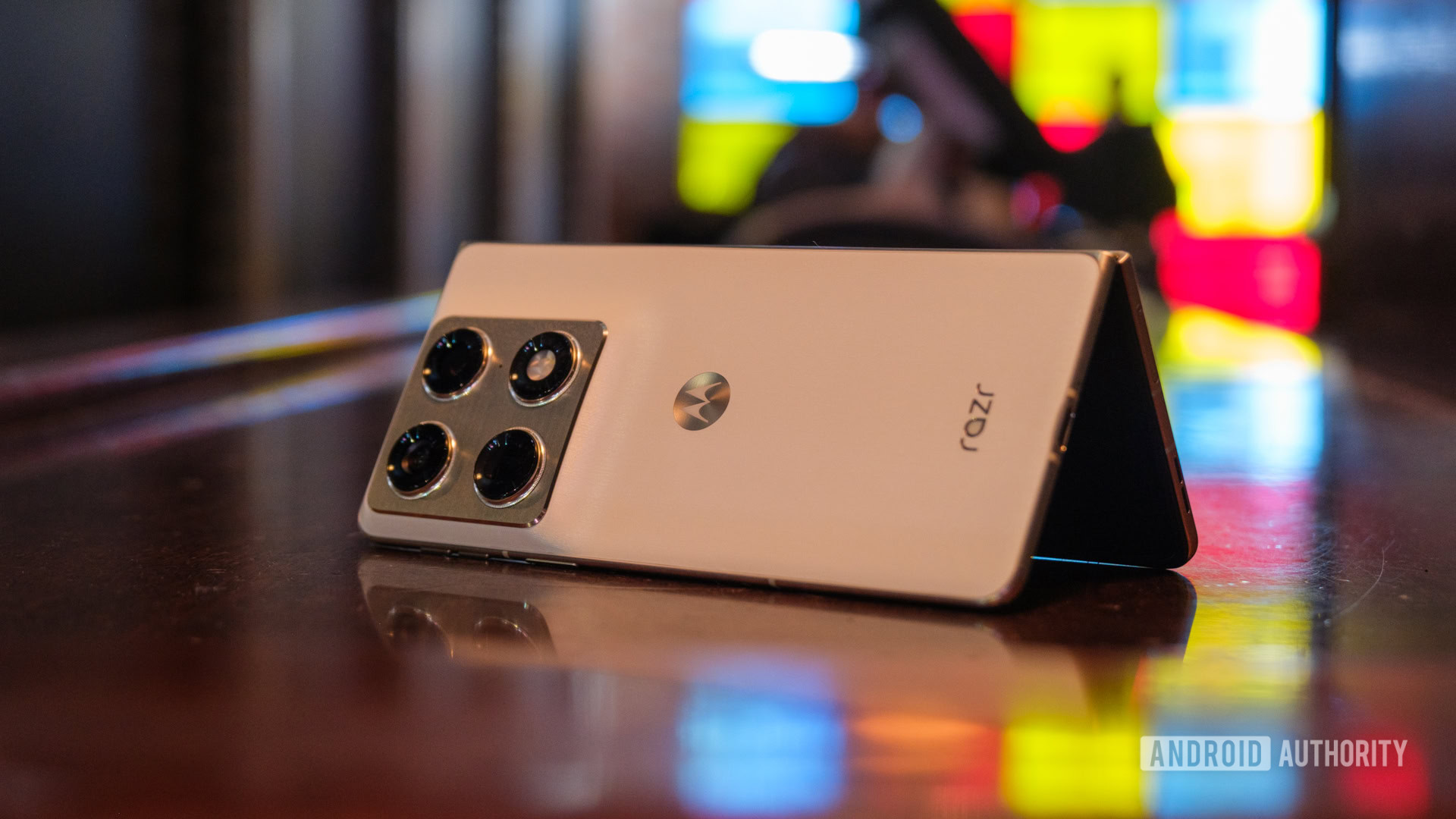
Ryan Haines / Android Authority
The last thing I have to ask of the Razr Fold is, “Why now?” It doesn’t seem like a difficult question, yet I’m left wondering why Motorola would enter a market with no experience at a time when its competitors are reaching maturity. Google will be on its fourth Pixel Fold, and Samsung will be on its eighth Galaxy Z Fold — not to mention the TriFold — with less room for error than ever before.
Even worse, the Razr Fold is likely to launch within a precious few months of Apple’s first foldable iPhone, which feels like the start of a David-and-Goliath situation. Yes, both phones represent debuts in a new category, but Motorola is putting a lot of faith in the Razr brand to outweigh the iPhone brand, and I’m not sure it will. It’ll rely on colorful Pantone finishes and interesting materials to draw buyers away from the reliability of iOS and the convenience of iMessage and FaceTime.
Pantone colors look pretty, but it's a lot to bank on a name.
And, when that’s your biggest strength, it’s fair to be worried. Although I personally love the Pantone colors and the interesting textures, I’m not sure they’re enough to compensate for what we don’t yet know. We have no idea how many updates the Razr Fold will get, how fast it will charge, how durable its display is expected to be, or anything else. Motorola has kept every teaser extremely close to the vest, leaving me with a ton of questions.
Unfortunately, I think the Razr Fold’s success hinges on a lot of unknowns at the moment, and I’m worried that the Motorola, Razr, and Pantone brands won’t be strong enough to unseat Google and Samsung, regardless of when Apple enters the fray.
Then again, I could be proven wrong. Motorola could pull a OnePlus and debut with a foldable like the OnePlus Open that swoops in and becomes a fast favorite. It could deliver a clean software experience with flexible cameras and follow it up with a page out of the base Razr’s book by undercutting the competition on price — I just don’t know yet, and a small part of me is too afraid to ask.
Follow
Thank you for being part of our community. Read our Comment Policy before posting.