'I was elected as Democratic Socialist': Decoding Zohran Mamdani's inaugural speech
The speech was light on implementation detail, but heavy on direction. Read closely, it sets out a governing philosophy built around direct cost relief, public provision, and an openly confrontational posture towards institutions that block change.
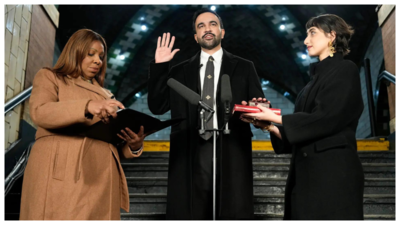
Zohran Mamdani
Zohran Mamdani’s inaugural address was notable not for its length or flourish, but for how explicitly it challenged the governing assumptions New York has lived with for years. Instead of emphasising constraints, he foregrounded ambition.
Instead of defending incrementalism, he framed it as failure. And instead of presenting affordability as an unfortunate by-product of global forces, he treated it as a problem government has actively chosen not to confront.The speech was light on implementation detail, but heavy on direction. Read closely, it sets out a governing philosophy built around direct cost relief, public provision, and an openly confrontational posture towards institutions that block change.
Zohran Mamdani Takes Oath On Quran In Historic First As New York Muslim Mayor | WATCH
Here is what Mamdani said, and what it actually means.
Resetting expectations: rejecting the politics of caution
“In writing this address, I have been told that this is the occasion to reset expectations, that I should use this opportunity to encourage the people of New York to ask for little and expect even less. I will do no such thing. The only expectation I seek to reset is that of small expectations.”What this signals:This is Mamdani’s clearest break from recent administrations. New York governance has increasingly been shaped by expectation management. Leaders promise process, cite constraints, and treat boldness as irresponsibility.Mamdani rejects that logic outright. He is not promising that everything will succeed. He is promising that failure will not be pre-empted by timidity.
This line sets the tone for a mayoralty that prefers visible effort over quiet restraint.
Using state power unapologetically
“To those who insist that the era of big government is over, hear me when I say this: No longer will City Hall hesitate to use its power to improve New Yorkers’ lives.”What this signals: This is a direct rebuttal to the post-1990s consensus that city governments should defer to markets and limit intervention. Mamdani is arguing that government’s failure has not been overreach, but underuse of authority.The emphasis here is not on expanding government for its own sake, but on abandoning hesitation.
It foreshadows regulatory fights, public provision, and policies that test the limits of what City Hall can do without waiting for permission.
Free buses: making relief immediate
“Getting on a bus without worrying about a fare hike or whether you’ll be able to get to your destination on time will no longer be deemed a small miracle, because we will make buses fast and free.”What this signals: Free buses are not presented as a transport reform alone. Mamdani frames them as a daily indignity that government has normalised.By choosing buses, he prioritises a policy that delivers immediate, visible relief across income and community lines. The political logic is clear: once a fare disappears, its return must be justified publicly.