Las Vegas, Nevada – The first thing you notice at CES, the world’s largest tech show, is how seamlessly everything is supposed to work. The televisions anticipate what you want to watch. The robot vacuums know where you left the breakfast cereal. The Lego bricks now talk to each other.
The second thing you notice, checking your phone between press conferences, is that a 37-year-old woman was shot dead by an immigration agent in Minneapolis, bushfires are raging across Victoria and US federal troops have captured the president of Venezuela.
Inside the CES bubble.Credit: AP
This year’s CES in Las Vegas was defined as much by what was outside the conference halls – the tariffs, the violence, the overwhelming volatility – as what was on show inside.
The battle for your living room
Loading
CES 2026 was a consumer technology trade show dressed in artificial intelligence clothing – every company is now spruiking AI, even companies that have no real right to be.
The dazzling gadgets were overshadowed by the economic realities of Trump 2.0, however. The Consumer Technology Association – the organisation that runs the show – released reports during the show indicating tariffs could increase smartphone prices by 31 per cent, laptops by 34 per cent, and video game consoles by as much as 69 per cent.
Every product announcement carried an unspoken asterisk about what it might actually cost.
The Korean giants went head to head regardless: Samsung unveiled its mammoth 130-inch Micro RGB display. LG countered with its OLED evo W6 “Wallpaper” TV – about the width of a ballpoint pen. Both are betting on Micro RGB technology – a shift from blue-and-white backlights to red, green and blue micro-LEDs producing dramatically richer colour. If you’ve wondered why your television doesn’t capture what your eyes see in real life, this is the answer the industry is proposing.
“Big screens are no longer the exception; they’re the expectation,” Samsung Australia’s Simon Howe said. Australia remains a top-10 market globally for premium televisions per capita – we love our screens even when budgets are tight.
Hisense expanded its RGB MiniLED range with the UR Series, bringing premium display technology to accessible price points. The company’s partnership with French audio specialists Devialet continues, and for gamers, 180Hz refresh rates promise competitive advantage.
Your AI assistant can recommend what to watch next. It cannot explain why the world outside your living room grows more volatile.
The new TVs will undoubtedly be popular locally but what stood out most wasn’t the hardware. It’s the insistence that artificial intelligence must be embedded in everything.
Samsung, LG and Hisense each spruiked new AI features full of promise. Tony Brown, LG’s television lead, made the pitch I heard all week: AI processes your content for optimal picture quality, scales up low-definition YouTube clips and navigates streaming abundance. Samsung’s “Visual AI Companion” lets you query sports statistics mid-game.
Yet the relentless AI branding still sits somewhere between actual innovation and a marketing arms race. After the pandemic drove a wave of TV upgrades, many consumers will be ready to upgrade again this year, particularly ahead of the FIFA World Cup. Questions about picture quality, size and price will still probably be more important than whether your TV can tell you which actor you’re looking at.
Loading
Lego’s surprise
The most novel announcement wasn’t from a tech company at all. Lego unveiled Smart Play, which the company calls its biggest innovation in 50 years.
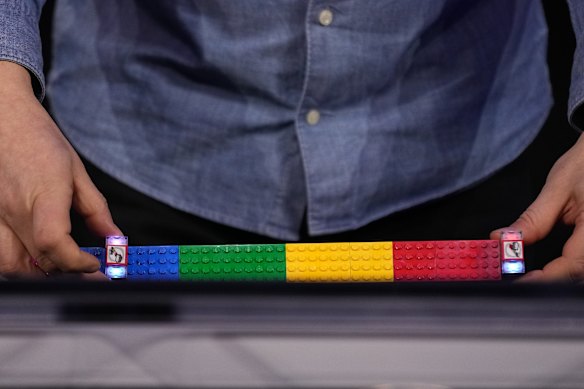
Eight years in development, the system embeds sophisticated electronics into standard bricks. A chip smaller than a LEGO stud combines sensors, microphones and computing into a 2x4 footprint. These smart bricks form a “decentralised computing network” – models built by different children can interact without prior connection.
Futurist Sally Dominguez, observing from the show floor, noted that purely digital AI products gave visitors “a really boring time walking around”, but when digital technologies create hybrid physical experiences, products can really sing.
Literally, in the case of Lego. The Lego demonstration drew audience excitement – and even some gasps – in ways that another slightly slimmer laptop simply couldn’t.
LEGO smart bricks are shown during a LEGO news conference ahead of the CES tech show.Credit: AP
Julia Goldin, the company’s chief marketing officer, framed it as consumer driven rather than technology driven. “This innovation came through understanding how kids play,” she said in an interview. The platform extends physical play time, encourages storytelling and crucially doesn’t require a screen or power button. Children can simply start playing.
The first Star Wars sets will be launched in March. Futurist Mark Pesce noted his hope that the system allowed unstructured play rather than constraining imagination to pre-programmed interactions. We’ll see.
The ‘zero-labour’ home
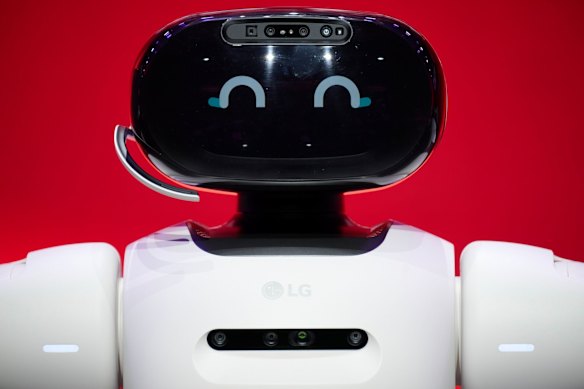
The broader theme was domestic liberation through robotics. LG demonstrated CLOiD, an AI-powered home robot representing the company’s vision of bringing intelligence from screens into the physical world.
The timeline for Australian homes? “A few years away”, but the direction is clear. Samsung’s AI smart kitchens and laundry appliances similarly point to a choreless future.
An LG Electronics CLOiD home robot.Credit: Bloomberg
More immediately, Ecovacs showcased robot vacuums with 30,000 pascals of suction and “perpetual runtime” batteries that fast-charge during cleaning pit stops. The company leads the Australian market and is integrating AI stain detection that identifies dried ketchup, sprays it, waits, then cleans. “You should be able to just decide that you want your floor cleaned, your windows cleaned, and let us take care of that,” says Karen Powell, Ecovacs’ Australian head.
Where was Australia?
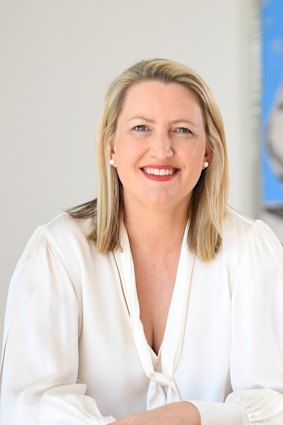
Dr Catherine Ball.Credit: Fairfax
Walking the floor, you encounter national pavilions from South Korea, France and Israel. They are co-ordinated presences where startups cluster under a common flag, making it easier for buyers and investors to find them. Australia, conspicuously, had nothing.
Dr Catherine Ball, a futurist who tracks the show, argues this represents a structural gap with very real costs. She says CES is one of the few places where buyers, investors, partners and media converge at scale – where a startup can move from “nice demo” to “let’s pilot this” in a single week. Australian founders hustle alone, making our IP harder to discover, harder to trust and easier to overlook.
She says that means fewer warm introductions, fewer conversations about distribution and less visibility in rooms where shortlists get written and awards doled out. A co-ordinated “Team Australia” booth would create a single front door for startups, she says.
It’s a reasonable question whether Australia’s innovation ambitions are serious or merely rhetorical. We talk about becoming a technology exporter while leaving our entrepreneurs to navigate the world’s largest innovation show without institutional support.
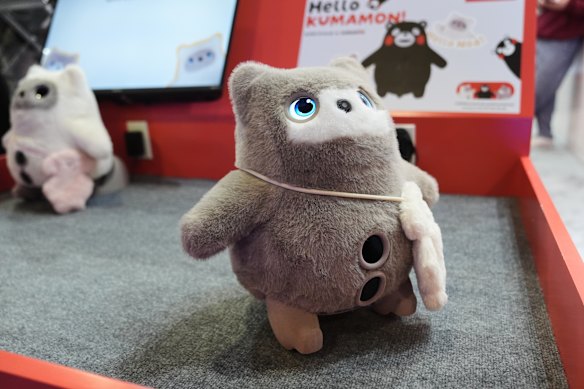
AI-enabled toys and robots were everywhere at CES.Credit: AP
The uncomfortable truth
As is often the case for the tech sector, CES exists in a bubble. Its 140,000 attendees were sealed off from reality in windowless convention centres. The overarching theme of the show was about making life easier and better, through AI, smart robots and bigger and brighter television sets.
Yet on the same day we watched demonstrations of robot companions designed to eliminate loneliness, an ICE agent shot a woman through her windshield, just a couple of days after US forces captured Venezuelan President Nicolás Maduro in a military operation and flew him to New York.
CES promises a world where your television understands your preferences, where smart LEGO bricks create new dimensions of play. The technology is impressive.
But this frictionless, AI-powered future is a jarring one, one being marketed to Australian consumers alongside a present where unarmed citizens are being shot in residential streets and foreign leaders are extracted by military force, while bushfires rage back home. Your AI assistant can recommend what to watch next. It cannot explain why the world outside your living room grows more volatile.
The robots don’t know, either. They just keep cleaning.
David Swan travelled to Las Vegas with support from Samsung, LG, Hisense and Lego.