India valuations cheaper now, but pricier than regional peers
Indian stocks offer a mixed outlook for 2026. Valuations are lower than historical averages, a positive sign. However, they remain pricier than regional markets like China and Korea. Foreign investors have stayed away for months. A turnaround in earnings, a trade deal with the US, or shifts in the US AI sector could draw them back.
Mumbai: As global fund managers reassess valuations of various markets afresh in 2026, two aspects of Indian equities will stand out: the Price to Earnings Ratio of its key indices is below their longer-term averages, while they are still more expensive than their regional peers.
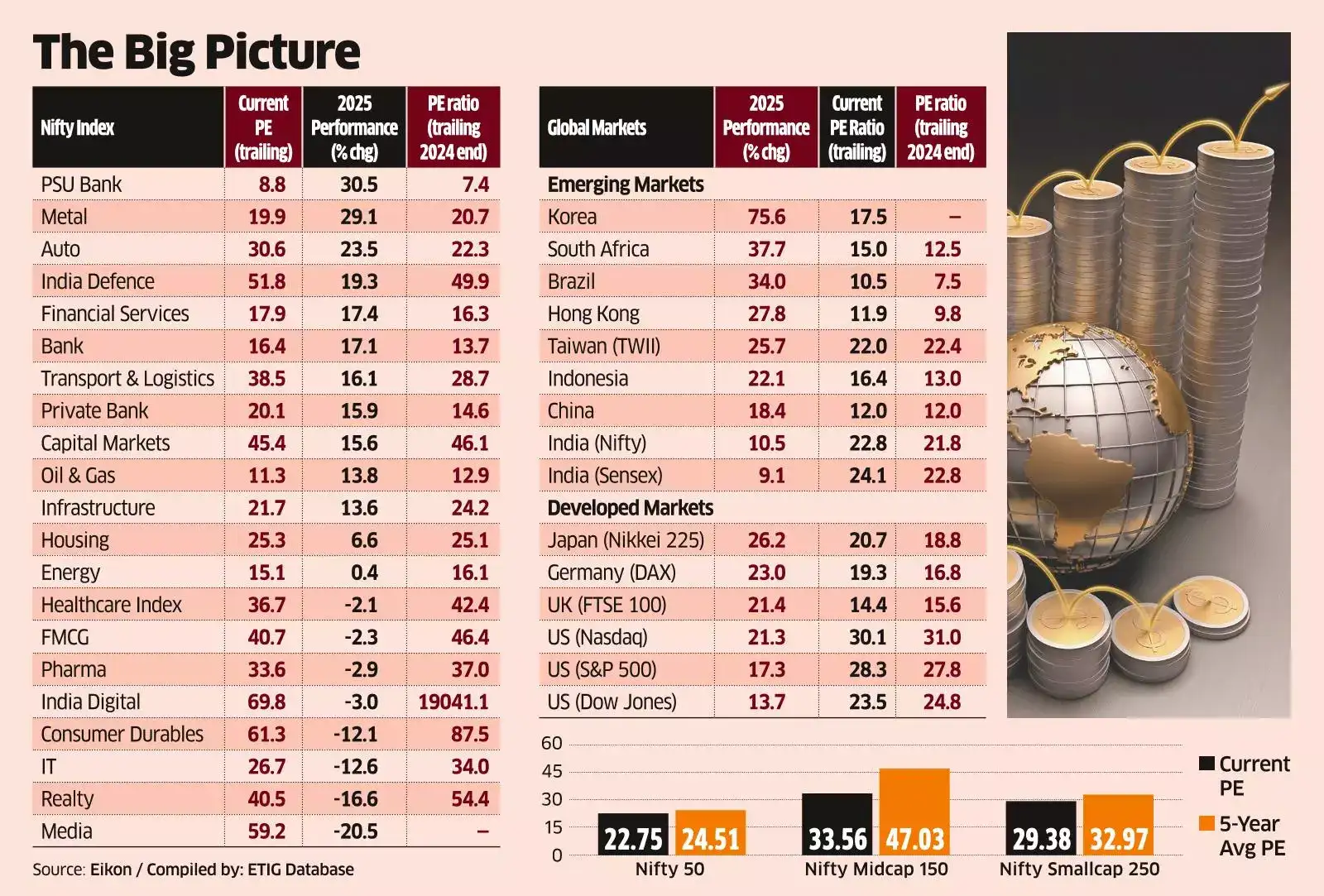
The Nifty is trading at a PE ratio - a key valuation measure - of 22.75 times below its five-year average reading of 24.51, underscoring that valuations are cheaper today. This is a silver lining for Indian markets after a year marked by foreign investor apathy and underperformance.
Yet that alone may not be a reason to rush back into India. Nifty's PE ratio is still above its emerging markets peers such as China, Korea and Hong Kong, among others, where valuations range between 12 times and 18 times. Taiwan equities, a bet on semiconductor chips, are closest to India in valuations across Asia.
 Agencies
Lower PEs mark a silver lining after underperformance, even as global investors stay cautious; US equities remain the most expensive
US equities, still on a record-breaking spree defying simmering concerns of overheating, remain the most expensive market. Resilient in the face of Donald Trump's tariff onslaught, stubborn inflation and economic uncertainty, Wall Street's rally has endured, led by the relentless rise in tech stocks.
As 2026 sets in, expectations are high that global investors will return to India after nearly 15 months of mostly staying away. For now, Indian stocks remain off their radar, but a reversal in the tepid earnings growth, a US-India tariff deal or even cracks in the US AI trade could be triggers for a relook.