INSV Kaundinya: Navy’s engineless ship to embark on maiden voyage — all you need to know
The Indian Navy's stitched sailing vessel, INSV Kaundinya, embarks on its maiden voyage from Porbandar to Muscat, retracing ancient maritime routes. Built using traditional stitched-plank technology without modern propulsion, the ship highlights India's rich shipbuilding heritage and its historical connections with West Asia.
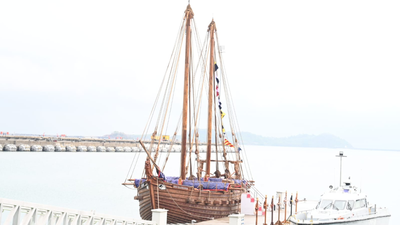
NEW DELHI: The Indian Navy’s stitched sailing vessel INSV Kaundinya will embark on her maiden overseas voyage on Monday, sailing from Porbandar in Gujarat to Muscat in Oman. The journey will symbolically retrace ancient maritime routes that once connected India with West Asia and the wider Indian Ocean world, testing traditional shipbuilding techniques that predate modern navigation by more than a millennium.The voyage marks a rare operational deployment of a vessel built entirely using ancient stitched-plank technology, with no engine, no metal fastenings and no modern propulsion systems. The ship will rely solely on wind and sails, recreating the conditions under which Indian mariners once undertook long-distance oceanic voyages.
A ship built without engines or metal
INSV Kaundinya is a non-combat sailing vessel constructed using a shipbuilding technique believed to date back to at least the 5th century CE.
Unlike modern naval platforms, the wooden planks of the vessel are stitched together using coir rope made from coconut fibre and sealed with natural resins, cotton and oils to ensure seaworthiness.
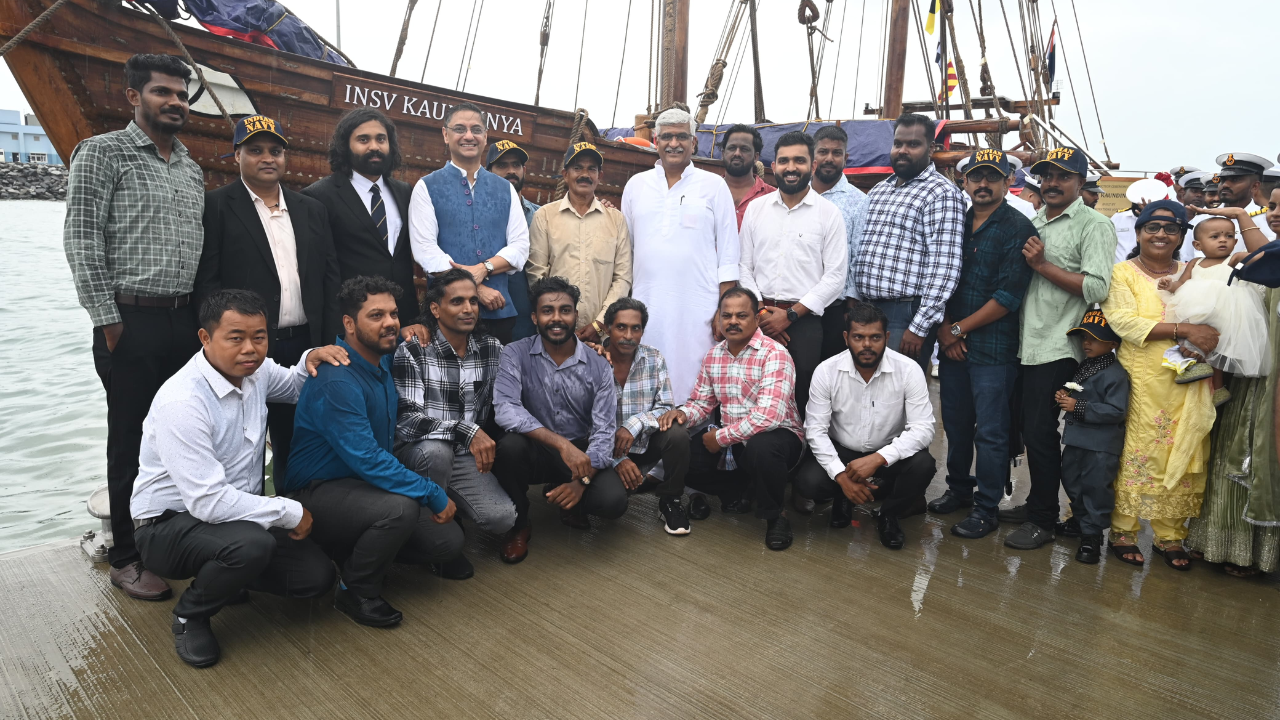
This stitched construction allows flexibility in the hull, enabling the ship to absorb wave energy rather than resist it rigidly. Such flexibility was crucial for ancient sailors navigating rough seas across the Arabian Sea, the Bay of Bengal and beyond.
Inspired by ancient Indian sources
The vessel’s design draws inspiration from depictions of ships found in the Ajanta cave paintings, descriptions in ancient Indian texts and accounts left by foreign travellers. With no surviving blueprints, the Indian Navy reconstructed the design through visual interpretation and scientific validation.Hydrodynamic testing and stability studies were conducted with the support of academic institutions, including IIT Madras, to ensure the vessel could safely undertake open ocean voyages despite its ancient design.
Dimensions and crew
INSV Kaundinya measures approximately 19.6 metres in length and 6.5 metres in width, with a draft of around 3.33 metres. The ship is powered entirely by sails and is crewed by about 15 sailors trained to operate the vessel under traditional sailing conditions.
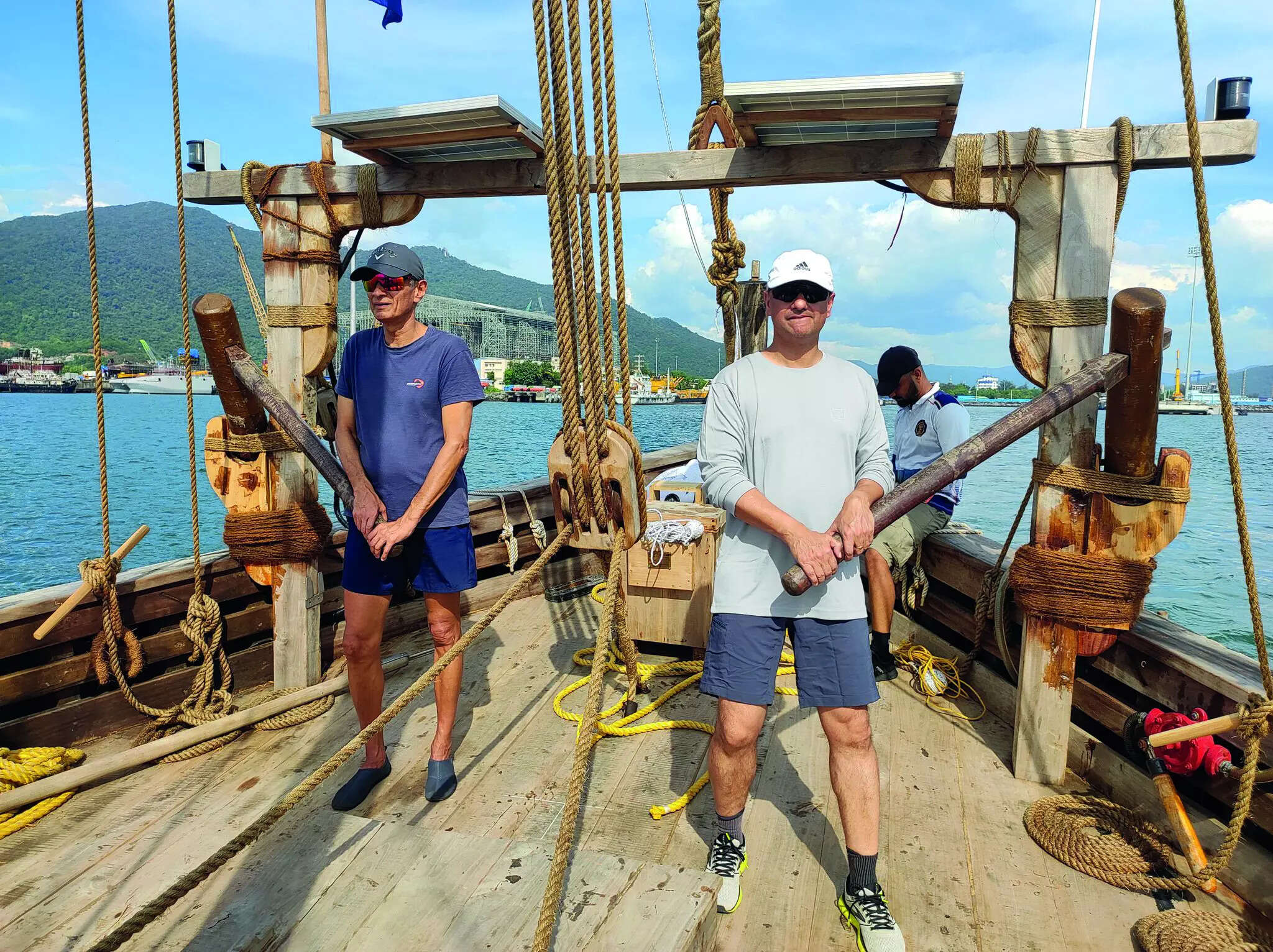
The construction follows the Tankai method, an indigenous Indian shipbuilding practice in which the hull is stitched first and ribs are added later, avoiding the use of metal entirely.