Iraq, Iran, Venezuela ...: Wars without declarations - the American way
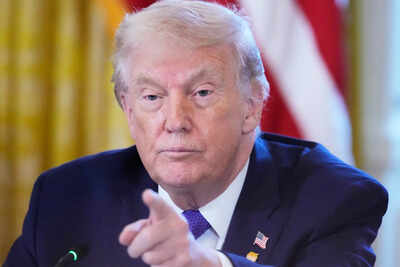
US President Donald Trump (AP)
America’s removal - and capture - of Nicolas Maduro unfolded with speed and precision. On January 3, in a mission later disclosed as Operation Absolute Resolve, US special forces captured the Venezuelan president and his wife, Cilia Flores, from their heavily fortified compound in Caracas.
They were brought to New York City, where they now face charges tied to what has been described as a “narco-terrorism conspiracy.”
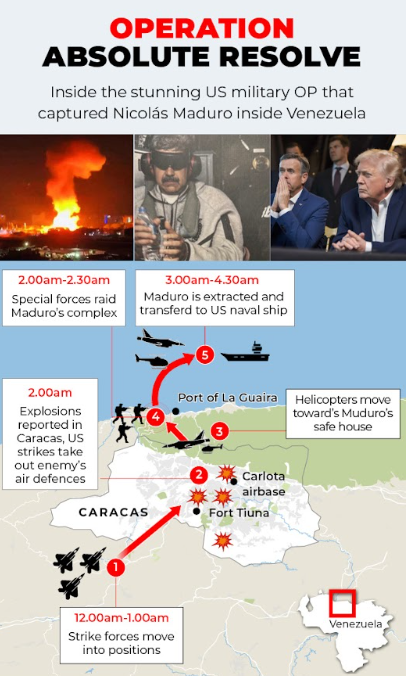
How Operation Absolute Resolve unfolded
And yet, this action did not occur within the framework of a formally declared war. While the US interventions in Vietnam, Afghanistan, and Iraq are widely described as “wars,” World War II was the last time the United States was involved in an officially declared war. America’s most recent engagement in a war-like situation came in June last year, when it intervened in support of its ally Israel against their common adversary, Iran.
Zelensky BEGS, Trump Shuts Him On ‘Capturing’ Putin & Aide Kadyrov After Maduro | ‘Not Necessary’
Given that the United States possesses the world’s most powerful economy and its most formidable military, this raises a fundamental question: why—and how—does it continue to fight wars without formally declaring them?
**US power: Economic and military
**
According to the International Monetary Fund (IMF), the US economy stood at $30.62 trillion as of October 2025, making it the world’s largest by far. The United States' corporate dominance is also reflected in the Forbes Global 2000 list, which included 612 America-based companies alone, led by JPMorgan Chase.
Militarily, the United States has long been regarded as the world’s most powerful nation. The killing of Osama bin Laden, the targeting of Abu Bakr al-Baghdadi, the assassination of Iranian General Qasem Soleimani, regular strikes against ISIS in Syria and the Houthis in Yemen, and now the removal and capture of Maduro, to name just a few, all underscore its military prowess.
The United States military is the strongest and most fearsome military on the planet, by far, with capabilities and skills our enemies can scarcely begin to imagine.
Donald Trump in his message announcing Maduro's capture
This dominance on both fronts provides any US president with tools of global influence, but how those tools are wielded depends largely on the individual in the Oval Office—a dynamic clearly illustrated by Trump’s approach to foreign adventurism.
The Trump factor
He is hardly the first commander-in-chief to preside over an overseas military operation by American forces. Yet no other previous Oval office incumbent—not even Trump during his own first term—has been as openly bellicose or as eager to brandish the full force of the United States’ military power as a central instrument of policy and personal authority.
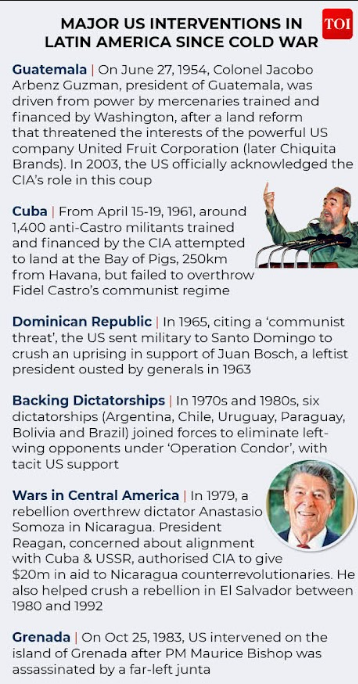
Major US interventions in Latin America
His remarks—along with those of the senior members of his national security team—at the post-Venezuela news conference were particularly revealing.
He has hinted that Colombia could be next, and his repeated comments about potentially “annexing” Greenland prompted leaders of Denmark and Greenland to urge him to stop issuing such threats.The Republican’s actions since his return to the White House, along with his remarks at the press conference on Operation Absolute Resolve, point to an approach in which the open threat of force appears poised to become a regular feature of Washington’s diplomacy—raising questions about how this posture aligns with Trump’s claim to be a “president of peace.”
Are such operations legal?
For Operation Absolute Resolve, the Trump administration began notifying Congress only after the mission was already underway. Similarly, Congress was not informed in advance of the strikes on Iran, raising questions about the legality of these and similar prior operations.The US Constitution, through Article I, grants Congress the exclusive power to declare war, a power it has exercised on 11 occasions, beginning with the declaration of war against Great Britain in 1812; the previous such declaration dating way back to 1942 during World War II.
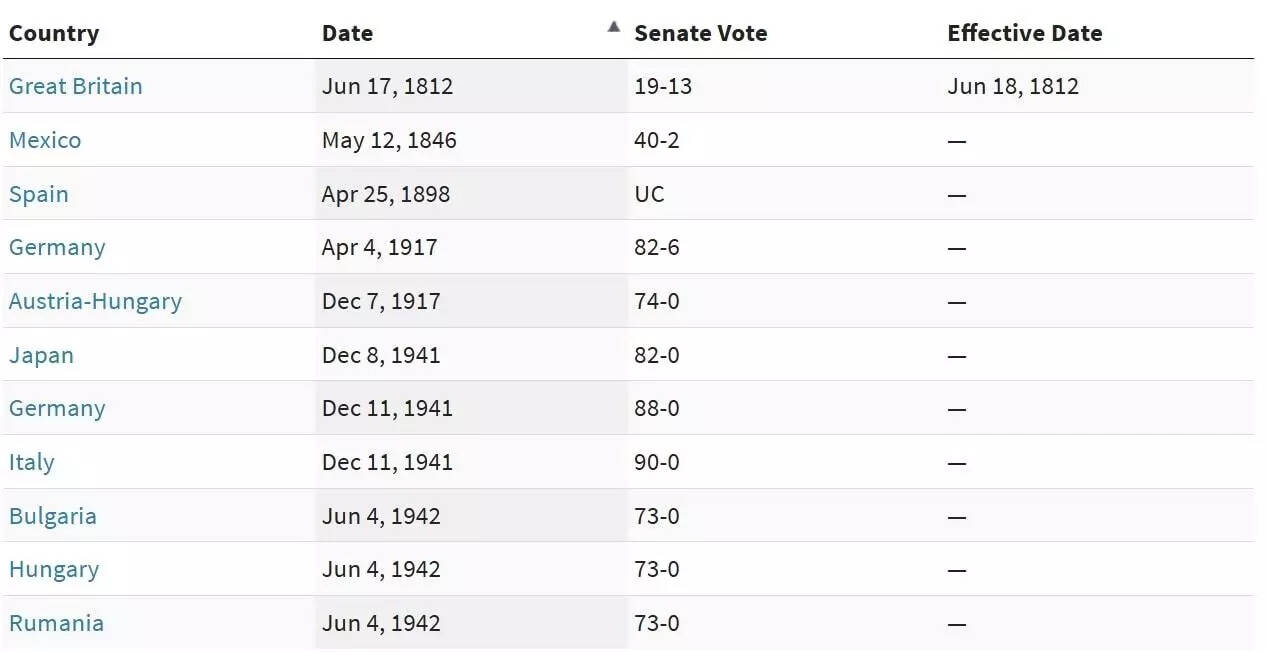
The 11 officially declared wars fought by US (Courtesy: Department of State)
However, senior White House officials had cited Article II to justify Operation Midnight Hammer—the strikes on three Iranian nuclear facilities— arguing that it empowers the president to direct US forces in engagements necessary to advance American national interests abroad.
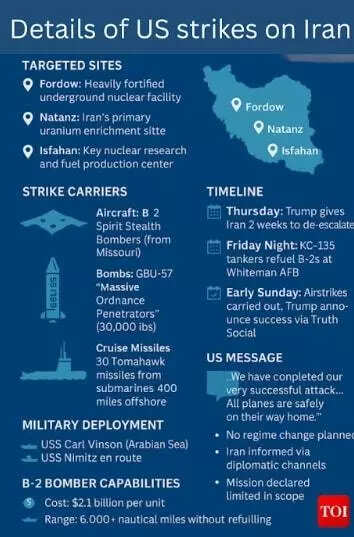
Operation Midnight Hammer
By contrast, the wars in Afghanistan and Iraq were authorised by Congress through Authorizations for Use of Military Force (AUMFs), which explicitly granted the president the authority to deploy US troops in those countries.
Economic warfare: Conflict beyond battlefield
Warfare is not limited to bullets and bombs. While the US economy is capable of sustaining traditional military conflicts, Washington often uses economic tools themselves as instruments of warfare to achieve strategic objectives. This is done primarily through sanctions and tariffs.Economic sanctions: The US International Trade Commission describes economic sanctions as “punitive measures imposed by a country, group of countries, or multilateral body on a target—be it a country, entity, or individual—that violates international norms.”
Here, the Office of Foreign Assets Control (OFAC) within the Department of the Treasury administers and enforces economic sanctions. Tariffs: The World Trade Organization (WTO) defines tariffs as “customs duties on merchandised imports.” According to the WTO, tariffs provide a price advantage to locally produced goods over imported ones and generate revenue for national governments. The term “tariff” gained renewed attention during Trump’s second term, when he implemented what became known as the “Trump tariffs” in April last year, three months after beginning his second stint in the White House.
Ukraine: Prime example of America’s ‘war without declaration’?
The United States has been Ukraine’s leading aid supplier, initially under Joe Biden, who was the Oval Office incumbent when Russia launched the war in February 2022, and continuing under Donald Trump. That, combined with the US’s status as the world’s most powerful nation and its longstanding rivalry with Russia, has led many to view the Russia-Ukraine conflict as a proxy struggle between Washington and Moscow - another example of the United States engaging in war without an official announcement or direct involvement.
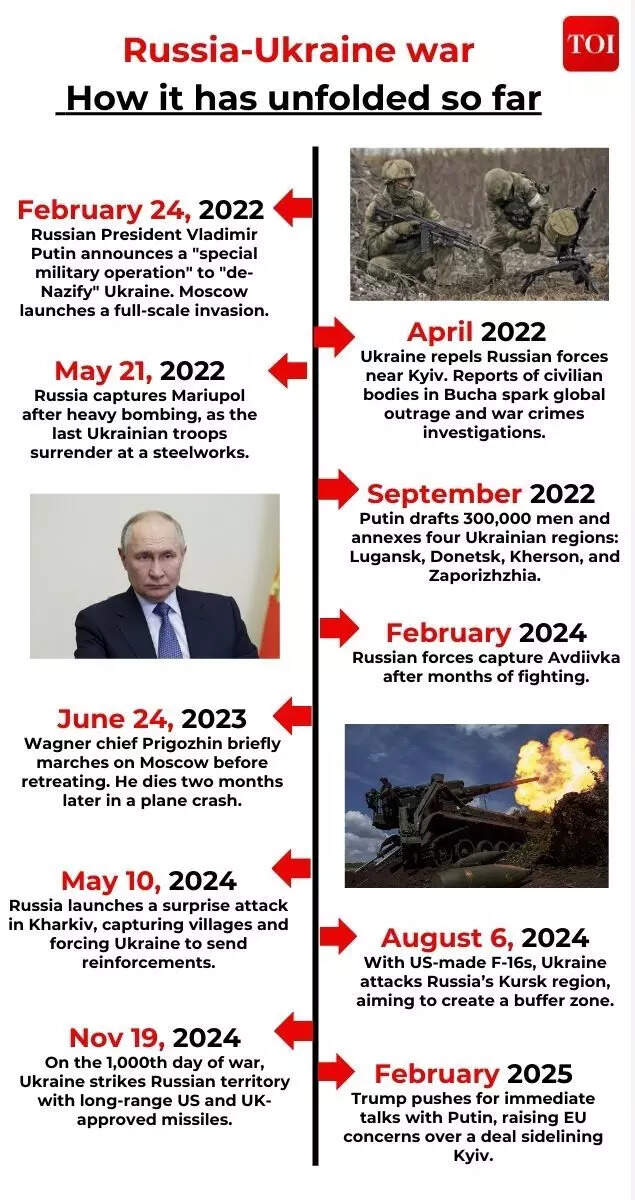
Ukraine war timeline
As per the Kiel Institute for the World Economy, a German think tank, as of August 2025, the US had provided Ukraine with $114.64 billion in assistance—including military, financial, and humanitarian aid—along with military hardware. By comparison, the European Union (Commission and Council) ranked a distant second, contributing $63.18 billion.Ukrainian President Volodymyr Zelenskyy’s remark that “the US knows what it should do next,” made in the wake of Maduro’s capture, was widely interpreted as both a call for the United States to help oust Vladimir Putin and a nod to Washington’s close involvement in the conflict in Ukraine.
Why US avoids formally declaring wars
So, what stops the United States from fighting a formally announced war? While not specific to the US, American political scientist Tanisha Fazal has argued a study that the growing body of laws governing conduct during warfare has significantly raised the costs of compliance.
The proliferation of codified jus in bello—the law of war governing belligerent conduct—has created disincentives for states to issue formal declarations.
Tanisha Fazal
Sarah Kreps, another American political scientist, wrote in a separate work that a further—albeit smaller—factor is that modern warfare can increasingly be conducted with minimal harm to a state’s own troops.
The approach of using drones, small numbers of special forces, and cyber warfare—rather than deploying large numbers of troops—does not inflict casualties on American forces that would draw public attention, thereby removing a key barrier to war.
Sarah Kreps
Also, that by avoiding formal declarations of wars that could prove unpopular if unsuccessful, members of Congress are able to sidestep responsibility for authorising them, thereby reducing potential electoral costs.Additionally, the absence of a formal declaration allows the White House to maintain plausible deniability by portraying military actions as limited or indirect, thereby reducing political, legal, and diplomatic consequences.Secretary of State Marco Rubio’s repeated insistence that the capture of Maduro “is not a war against Venezuela” exemplifies this strategy. Interestingly, even Putin has never officially announced war on Ukraine, instead referring to the invasion as a “special military operation”—language that frames Russia’s actions as the pursuit of limited strategic objectives rather than an outright war against its neighbour.
Projecting power without declarations
Under Trump 2.0, the United States looks set to continue projecting power without formally declaring war, and more aggressively than ever. Leveraging military strength and economic pressure, Washington influences global outcomes while minimising political and legal costs. Though this approach ensures flexibility and maintains US dominance, it also raises urgent questions about accountability and the future of modern warfare.