‘Is this the right thing to do?’ Grand Designs takes on smaller builds with bigger heart
For Grand Designs Transformations, hosts Anthony Bourke and Yasmine Ghoniem are just as interested in the people as the projects.
In all the rooms, in all the houses, in all the designs featured in ABC series Grand Designs Transformations, just one factor is essential. A home revamp – big, small, exorbitantly priced or built for a song – works best if it reflects those using it.
So says architectural expert Professor Anthony Burke, the show’s co-host, who believes aping spruiked home design trends means little if the result doesn’t complement home owners’ lives.
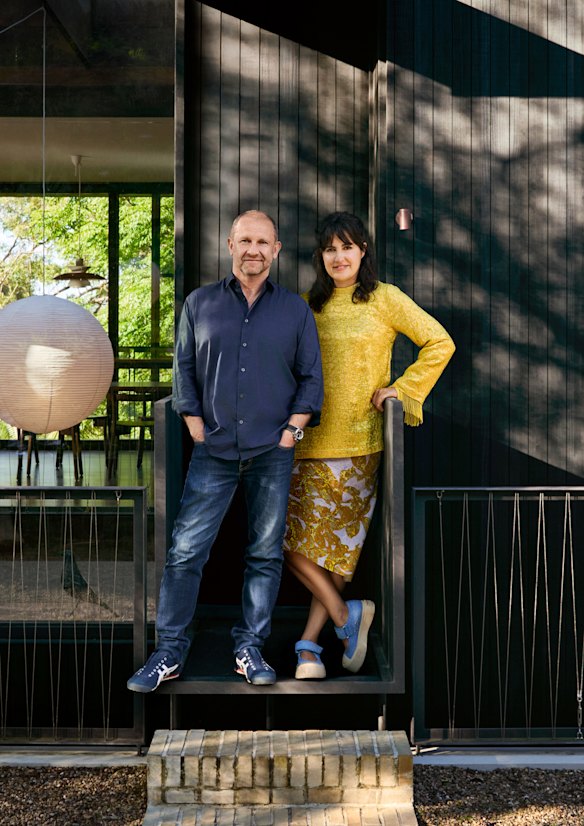
Grand Designs Transformations co-hosts Anthony Burke and Yasmine Ghoniem.
“A house is not a physical thing,” he says. “A house is a place where human relationships are fostered and made to grow and blossom. It’s the stage upon which life’s theatre plays out. So the actual play is the issue, not the stage. But the stage is necessary to support and promote the theatre, if you like.”
Loading
This philosophy features prominently in the second 10-episode series of Grand Designs Transformations, sibling to the ABC’s Grand Designs Australia and Restoration Australia, also hosted by Burke. Returning with co-host Yasmine Ghoniem, an award-winning interior designer, the show follows 20 new big-dream, all-budget redesigns across five states.
In every project, from a Paddington terrace to a Melbourne garage, from a forlorn chapel in a NSW country paddock to a 140-year-old glasshouse shipped from to Tasmania from the UK, the people and their stories are as important as the structure being tackled.
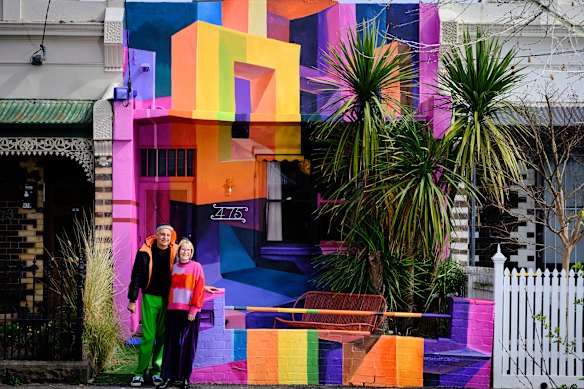
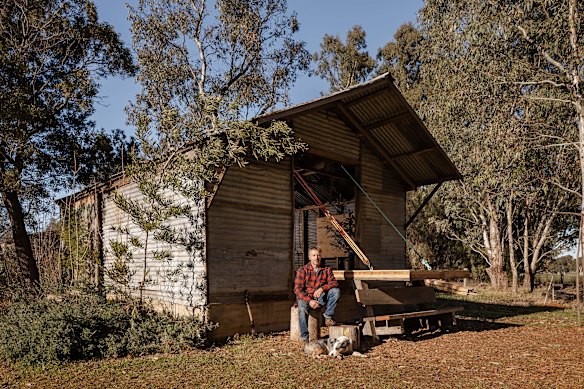
In one, a shed in Newstead, Victoria, becomes a Japanese-style bathhouse via a tiny budget and hard grunt. In others, a Queensland couple transform an old house after floods destroyed their original home; an inner-city Melbourne couple champion profuse colour design in the face of health challenges; and an Adelaide family rework a 19th-century bluestone villa into a home for three generations.
They’re familiar Grand Designs tropes, but Burke says this series puts greater focus on the stories and people behind each transformation.
“It’s important seeing that there’s an enormous amount at stake in these projects,” Burke says. “Even the smallest ones. There’s this consequence. While we can laugh and joke and talk about budgets and timelines, underneath it all is a question of, ‘Can I put myself against something that’s bigger than me? Something that’s going to impact my entire world, my family, all my friends? Is this the right thing to do? Am I going to be OK?’