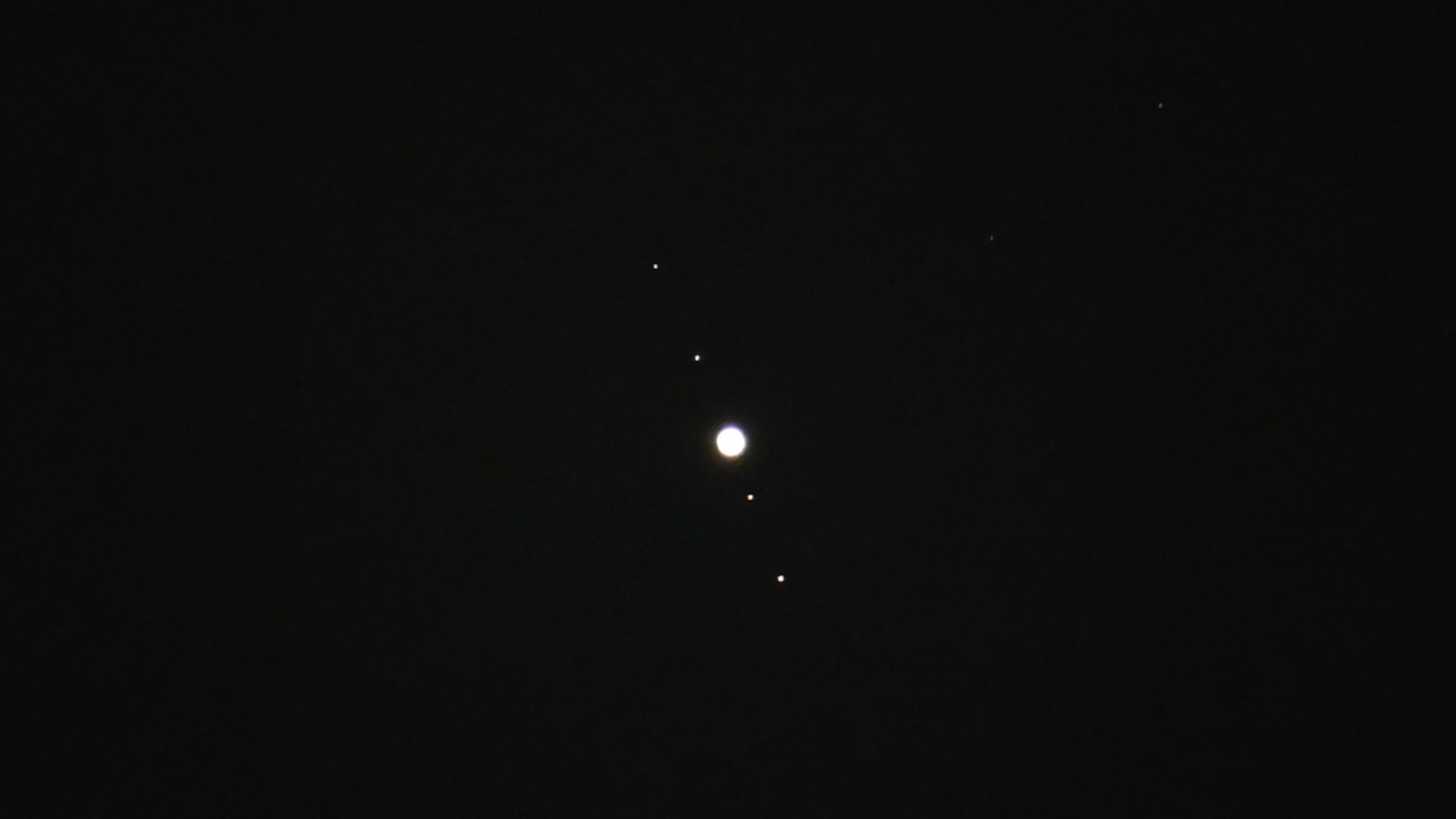
Jupiter is at its best and brightest of 2026 tonight! Here's what to expect as the gas giant reaches opposition
Jupiter reaches opposition overnight on Jan. 10, when it appears its brightest in 2026 opposite the sun in Earth's sky.
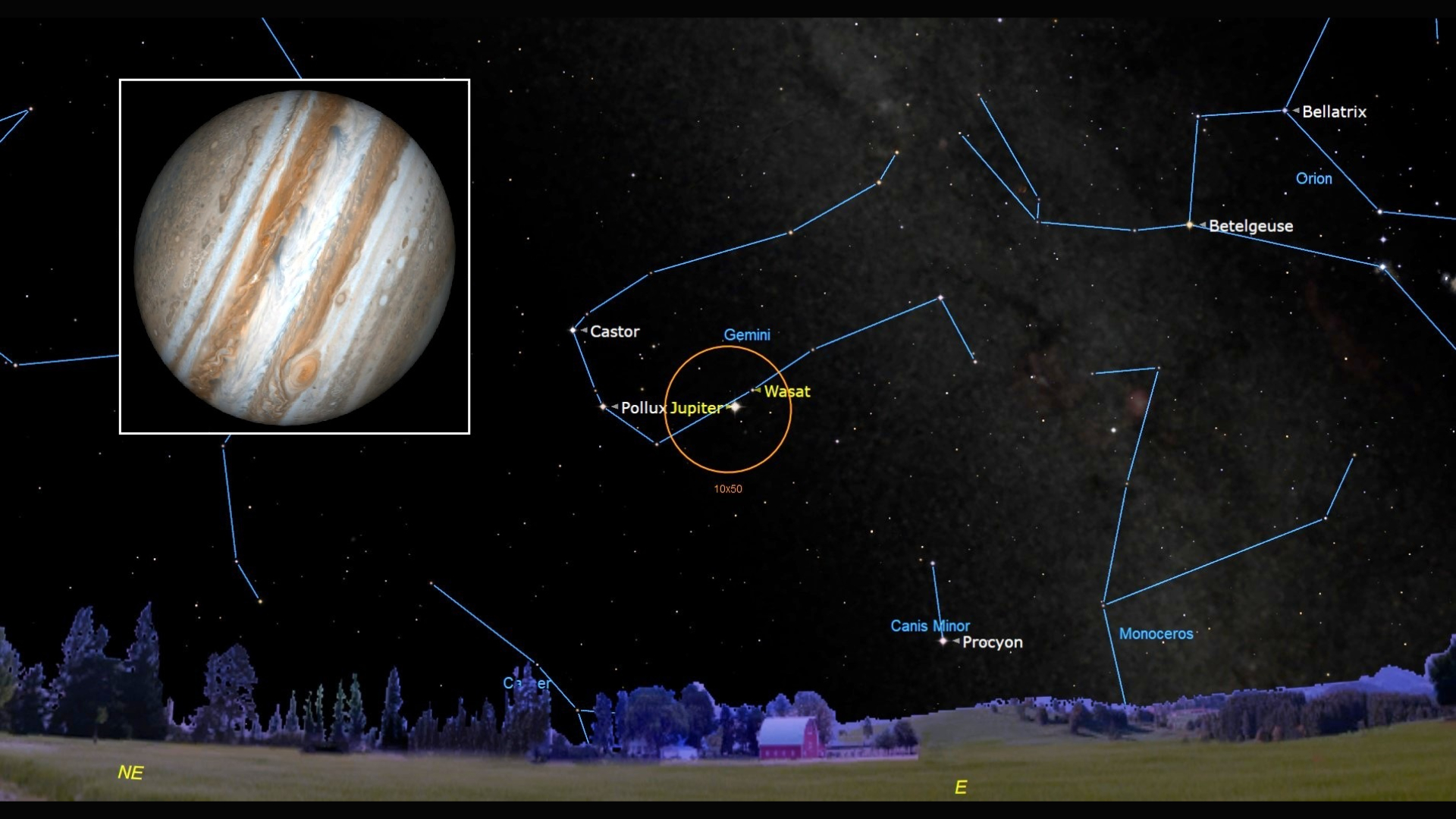
An illustration of Jupiter as it will appear in the night sky on Jan. 9, 2025 next to the twin stars of Gemini, Castor and Pollux. (Image credit: Starry Night/Chris Vaughan)
Jupiter will be at its most spectacular in 2026 in the early hours of Jan. 10, as it shines above the eastern horizon among the stars of the constellation Gemini. Here's where to look and what to expect as the gas giant draws closest to Earth around opposition.
The visibility of planets in the night sky varies dramatically based on their orbital positions relative to the sun and Earth. The best time to view superior planets — worlds that orbit the sun at a greater distance than our Blue Marble — is at their points of opposition, when they line up in our night sky directly opposite the sun, with Earth in the middle.
Celestron NexStar 8SE
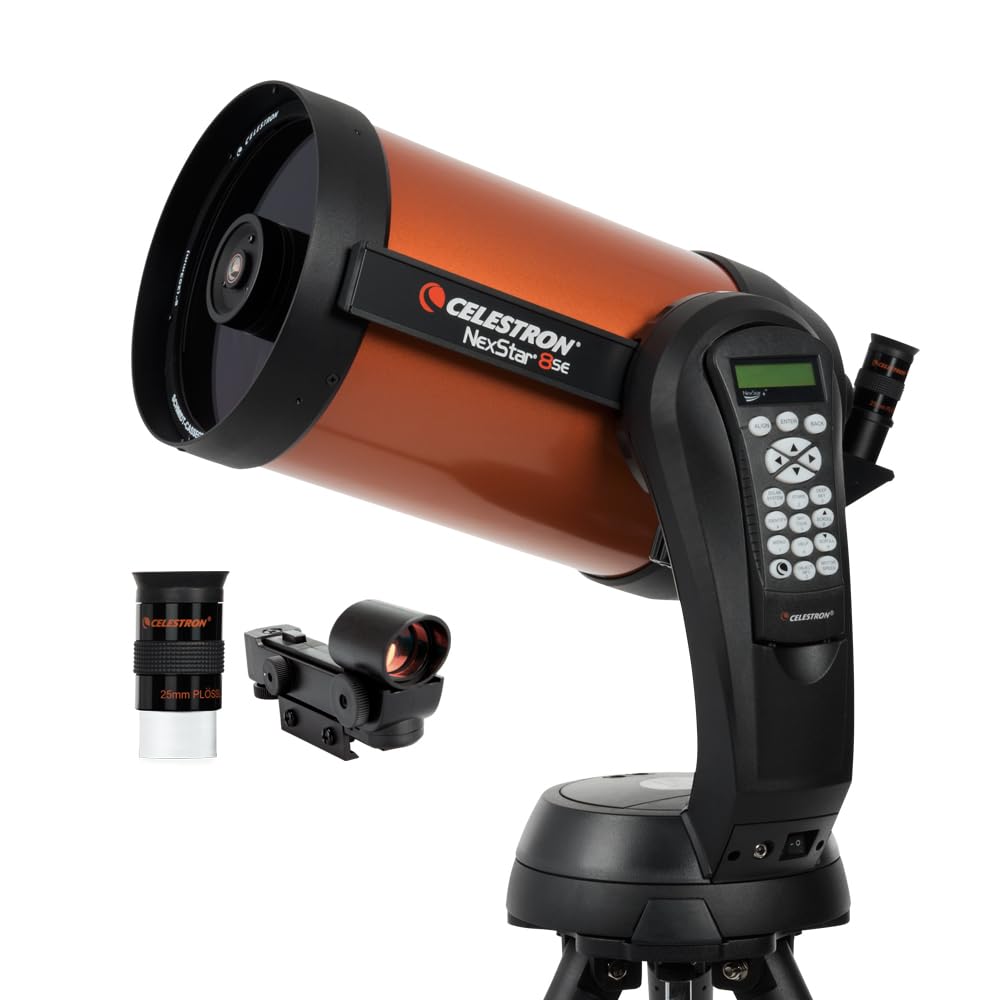
(Image credit: Celestron)
The Celeston NexStar 8SE has a huge 8-inch aperture which allows it to collect plenty of light to reveal stunning details in the atmospheric bands lining Jupiter's stormy cloud tops. Check out our Celestron NexStar 8SE review for a more detailed look at the easy going motorized telescope.
The moment of opposition coincides with when a planet draws near to its closest point to Earth in its orbit. As a result, Jupiter will appear brighter and subtly larger in the eyepiece of a telescope on Jan. 10, boasting an angular size of 45.6 arcseconds at opposition, as opposed to the 31.3 arcseconds it would occupy when furthest from Earth (when it would be hidden behind the sun). For context, the full moon takes up between 29.4 and 33.5 arcminutes, with each arcminute being the equivalent of 60 arcseconds.
Look to the eastern horizon at sunset on Jan. 10 to find Jupiter shining in the constellation Gemini, with Orion the "hunter" to its right and the bright star Capella above. The gas giant will arc high overhead before finally ending the night low on the western horizon as the sun rises on Jan. 11.